
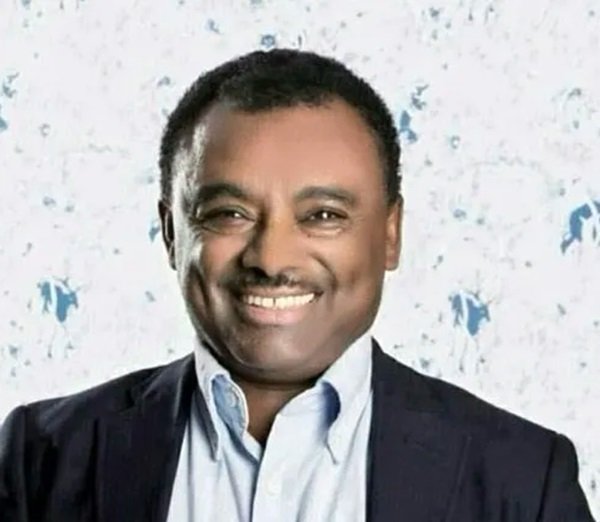
By Girma Berhanu (Professor)
Watching recent international coverage of Ethiopia’s election, I’ve been left with a question that grows harder to ignore: why are Amhara voices — and Amhara suffering — so consistently absent from the global media narrative?
A recent Al Jazeera segment brought this concern into sharp focus. The panel featured Martin Plaut and other commentators, but included no Amhara representative. More troubling than who was present, however, was what went unsaid.
There was no substantive discussion of the ongoing conflict in the Amhara region. No mention of civilians killed or displaced. No acknowledgment of the humanitarian toll borne by Amhara communities during the Tigray war — or of the violence that has continued since. The panellists referenced security problems in Oromia and Amhara as background factors affecting the election, but never confronted the specific, devastating reality of war in Amhara itself.
This was not an isolated omission.
Months earlier, journalist Mehdi Hasan interviewed Getachew Reda. The Ethiopian voices invited to respond, again, included no Amhara representative. Amhara concerns, again, went largely unspoken.
Across major international outlets — including the BBC and CNN — a painful pattern has emerged: when Ethiopia is discussed, Amhara perspectives are frequently minimized, generalized, or excluded. Coverage may acknowledge instability, conflict, and political crisis, yet routinely fails to examine how Amhara communities are specifically affected, or to include Amhara voices in conversations about the country’s future.
This pattern deserves serious attention.
This is not a call to shield any actor from scrutiny, nor a claim that one community’s suffering outweighs another’s. Ethiopia’s conflicts have brought devastating loss to many communities, and all civilian suffering demands recognition. But equal recognition matters. Representation matters. Accuracy matters.
When international media repeatedly discuss Ethiopia without meaningful Amhara participation—or without directly addressing violence against Amhara civilians—it shapes public understanding in ways that carry real consequences. It influences diplomatic conversations, humanitarian priorities, and historical memory.
I would like to seize this opportunity to commend the American photojournalist Jemal Countess and the Canadian author and journalist Jeff Pearce, who has long been known as a friend of Ethiopia in the face of foreign misinformation campaigns and the continued marginalization of the Amhara population. These are men of courage, sensitivity, remarkable honesty, and genuine journalistic integrity. They remain committed to truth, professional ethics, and conscience despite facing a barrage of attacks for who they are and for the principles they uphold.
The central question is straightforward: who gets to tell Ethiopia’s story?
When one of the country’s largest communities finds itself spoken about but rarely heard from, concern about media imbalance is not merely reasonable — it is necessary.
This is why independent research into international reporting on Ethiopia is urgently needed: to examine whose voices are amplified, whose suffering is documented, and whose experiences remain invisible.
Silence can become part of the story. Selective attention can become a form of erasure. And when that occurs in coverage of conflict and political violence, the consequences extend far beyond any headline.
Professor Girma Berhanu teaches at the Department of Education and Special Education, Gothenburg University, Sweden.
Editor’s Note : Views in the article do not necessarily reflect the views of borkena.com
__
Join our Telegram Channel : t.me/borkena
Like borkena on Facebook
To submit Press Release, send submission to info@borkena.com
Add your business to Ethiopian Business Listing / Ethiopian Business Directory
Join the conversation. Follow us on X (Formerly Twitter) @zborkenato get the latest Ethiopian News updates regularly.
To Support Borkena : https://borkena.com/subscribe-borkena/ – one time support or small monthly options available. Inquire information about it : info@borkena.com