
Ztruth
Introduction
The Grand Ethiopian Renaissance Dam (GERD), Africa’s most ambitious hydropower project, was conceived as Ethiopia’s crowning achievement—a monumental feat of engineering poised to transform the nation into a regional energy powerhouse. Originally designed with 16 turbines (each generating 375–400 MW), the dam promised a total capacity of 6,000–6,450 MW, enough to electrify millions of homes and fuel industrial growth.
Yet this vision has been undermined by political interference and inexplicable setbacks. Following Prime Minister Abiy Ahmed’s rise to power, the turbine count was abruptly slashed to 13, reducing GERD’s potential output to just 4,875–5,150 MW—a decision that has cost Ethiopia billions in lost energy revenue.
The dam’s fate took an even darker turn with the assassination of Engineer Simegnew Bekele, the beloved project manager who was gunned down in broad daylight at Addis Ababa’s Meskel Square in 2018. Many believe his murder—still unsolved—was orchestrated to silence dissent over GERD’s controversial downsizing, with suspicions pointing to Abiy Ahmed’s security apparatus.
Today, GERD stands as a symbol of both Ethiopia’s potential and its struggles—a project delayed, diminished, and shadowed by bloodshed
Key Project Timeline & Specifications
• Construction began: 2 April 2011
• Expected commissioning: 2018 (but still incomplete as of 2025)
• Original reservoir volume: 74 billion m³ (74,000 Mm³)
• Initial installed capacity: 6,450 MW (16 turbines each turbine producing 400MW) • Revised capacity (under PM Abiy Ahmed): 13 turbines where 11 turbines generate 400MW while two turbines generate 375MW (turbines 9 and 10). Total energy approximately 5150MW
This article tries to examine:
1. Energy losses due to delayed completion (2018 vs. 2025).
2. Additional losses from reducing turbines (16 → 13).
3. Total financial impact in lost revenue.
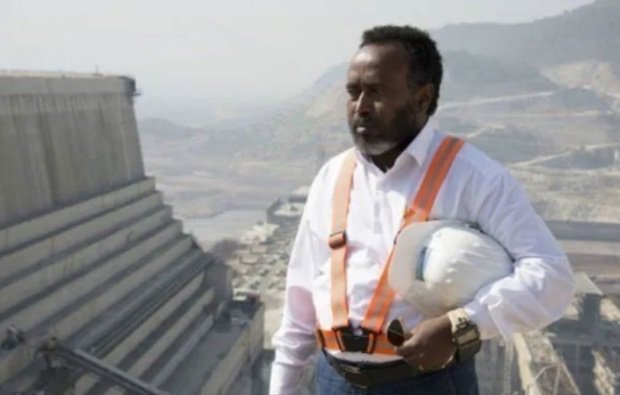
This article provides a critical preliminary analysis of how political decisions have compromised Ethiopia’s GERD project, focusing specifically on the economic consequences of reducing turbines from 16 to 13 and project delays. While presenting initial findings on these measurable impacts, it underscores the urgent need for more comprehensive, professional research to fully investigate both the financial losses and the suspicious circumstances surrounding Engineer Simegnew Bekele’s unsolved assassination. By establishing this foundational evidence of mismanagement, the article aims to prompt rigorous academic and technical investigations into all aspects of the project’s compromised implementation.
1. Energy Lost Due to Delayed Completion (2018–2025)
If GERD had been completed by 2018, it could have been generating power for 7 extra years (2018–2025).
Assumptions:
• Capacity factor (CF): 28.6% (0.286)
• Revised capacity: 5,150 MW
• Annual generation formula:
Energy (MWh)=Capacity (MW)×CF (Capacity Factor) ×8,760 hours
=Capacity (MW)×CF×8,760 hours
Calculation for Annual Energy Production:
Energy (MWh)= 5150 MW×0.286×8,760
=12,902,604 MWh
Total lost energy production for 7 years (2018–2025):
Energy (MWh)= 12,902,604 MWh×7=90,318,228 MWh
Financial Loss (at average Ethiopian energy price $0.0135/kWh or $13.5/MWh): = 90,318,228 MWh×$13.50 per MWh=$1,219,296,078
~$1.23 billion
Due to delaying the project, Ethiopia lost ~$1.23 billion
for the last 7 years.
2. Additional Losses from Reducing Turbines (16 → 13)
The decision to decrease the number of turbines in the Grand Ethiopian Renaissance Dam (GERD) from 16 to 13 has substantially reduced the dam’s power generation potential to 5150MW. Assuming the turbines removed have the capacities of 375MW which is the minimum capacity, resulted in 1125MW lost capacity.
Lost Capacity calculation:
3 turbines×357 MW=1,125 MW
Annual Energy Loss (Once Operational):
1,150 MW×0.286×8,760= 2,818,530MWh
Annual Revenue Loss (at $0.0135/kWh or $13.5/MWh):
2,818,530MWh ×$13.5=$38,050,155 /year
Prime Minister Abiy Ahmed’s controversial decision to slash GERD’s turbines from 16 to 13 is costing Ethiopia a staggering $38 million in lost annual revenue – a devastating blow to the nation’s energy independence and economic potential.
3. Combined Impact (Delay + Fewer Turbines)
Total Lost Energy (2018–2025):
• From delay alone: 90,318,228 MWh
• From turbine reduction (if operational): 2,818,530MWh /year (starting from commissioning)
Total Lost Revenue (2018–2025):
• Delay (7 years): $1.23 billion
• Turbine reduction (if operational since 2018):
$38,050,155 /year ×7=$266,351,085 =$0.3 billion
Combined potential loss:
$1.23 billion+$0.3 billion=$1.53 billion
Ethiopia has suffered catastrophic losses exceeding $1.53 billion over the past seven years due to the compounding effects of inexcusable project delays and the reckless reduction of turbines – a devastating financial hemorrhage that has crippled the nation’s energy ambitions and economic growth.
4. Long-Term Projections (Next 10 Years)
Assuming GERD starts in 2025 with 13 turbines (5,150 MW):
Annual generation:
5,150 MW×0.286×8,760=12,902,604 MWh
Lost potential (for 3 turbines):
1,150 MW×0.286×8,760= 2,818,530MWh /year
10-year revenue loss (at $0.0135/kWh):
2,818,530MWh ×10×$13.5=$380,501,550
Conclusion: A Costly Delay & Design Change
1. Delayed completion (2018 → 2025) cost Ethiopia ~$1.23 billion in lost electricity sales.
2. Reducing turbines (16 → 13) will lose ~$38 million/year once operational. 3. Over the next decade, the turbine reduction could cost another ~$381 million.
References:
• Ethiopian Electric Power (EEP) reports
• World Bank energy pricing data
• GERD construction updates
Editor’s Note : Views in the article do not necessarily reflect the views of borkena.com
__
Subscribe : https://borkena.com/subscribe-borkena/
Join our Telegram Channel : t.me/borkena
Like borkena on Facebook
Add your business to Ethiopian Business Listing / Ethiopian Business Directory Business Listing Toronto
Join the conversation. Follow us on X (Formerly Twitter) @zborkena to get the latest Ethiopian News updates regularly. Subscribe to YouTube channel To share information or for submission, send e-mail to info@borkena.com
‘በመጀመርያ – እንፀልይ!’:- ፈጣሪ ሆይ – ከዚህ አይነቱ – የአዞ እንባ ጎርፍ – ሠውረን!
1). Time Line:
(i). April 02, 2018: Phoenix Abiy replaced Haile-Mariam as PM
(ii). Phoenix Abiy →TPLF’s Hostage-Prisoner ‘PM’→ youtu.be/Pg3WuF1eXww?t=4
(iii). June 23, 2018: Assassination attempt on Abiy at Mesqel Square by OLF-IFLO
(iv). June 26, 2018: Simegnew found dead [gunshot to head] in his car at Mesqel Square. Car doors locked! No shattered windows! No mention of bullet exit hole(s) from his car.
2). From (ii) above, Phoenix Abiy wasn’t even able to protect himself let alone plan a plot to kill Simegnew! So, who killed Simegnew? Why? How? Here are likely answers:
(i) Egypt [To derail GERD]: Assassination using Egypt’s large spy network in Ethiopia & Egypt-funded agents [EPLF/ELF-Eritreans, OLF/IFLO-Oromos, Banda Amaras, etc.].
(ii). TPLF [To cover-up]: Hush shoddy GERD electro-mechanical construction blunder by General Kinfe [GK], GERD fund embezzlement by TPLF-METEC, etc.
iii). Major Powers [Motive Unclear!]: No sooner had Simegnew been found dead than Mossad, FBI, etc. flooded the scene UNINVITED [“To help in the investigation!”].
3). Salini Sued for $2 Billion(!?) Compensation for Delay: Shoddy electro-mechanical work by GK forced dismantling & reconstruction. Lawsuit settled for $750(!?) million.
4). Down-Scaling Turbine Numbers: Team Sileshi replaced 16 turbines with 13 higher capacity ones. Trade-off between overall ≈1.1 GW(!?) less power vs. long-term savings:
(i). Less Completion Time: (a). less manpower-hours; (b). faster power distribution; etc.
(ii). Overall Savings: (a). ≈$1(!?) billion in turbine price difference; (b). Transportation & Installation [3 more turbines]; (c). Materials/Equipment [Transmission lines to the grid, Transformers, Voltage Regulators, etc.]
(iii). Life-Time Cost [Material & Manpower]: Turbine servicing/maintenance/inspection.
If you increase the number of turbines, the production factor will be reduced in the same proportion. The amount of available water (and therefore electricity) does not increase by adding turbines. 0.286 is already a low value, this means that 4 turbines are enough for continuous operation with constant production. Having more turbines is used for maintenance on this powerplant or on others, to create day/night or winter/summer amplitude. 16 turbines would have been used to let the peak of a flood pass but the flood is used to fill the reservoir: it seems stupid to produce electricity en masse during the flood to have only a starving production afterwards, in this case, we do not build a reservoir.