
Dereje Yimer
The genesis for the political conspiratorial scheme
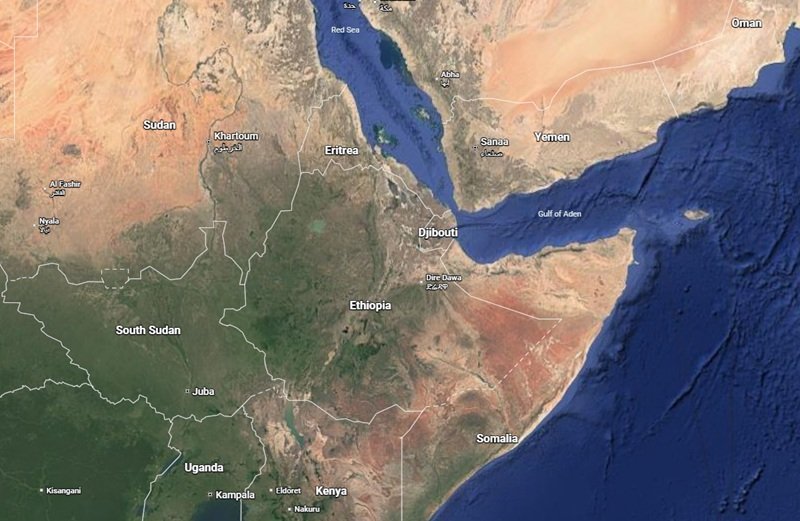
After the TPLF-led regime assumed state power in 1991, the country was forced to clash with a new astronomical political scene. The new ethnocentric clique introduced radical orientation in the social, economic, and political realm unprecedented in the history of the country. Especially, the treacherous motive to deny Ethiopia sea access is unparalleled in all respects. The TPLF elites committed an unforgivable sin in this regard. Employing logical analysis to get a crystal-clear answer concerning the calculated scheme is a bit difficult. In nutshell, it is possible to analyze the hidden agenda behind the scene from two angles.
The first is intrinsically connected with the political history of TPLF. Without being subservient to the power and ideology of Eritrea peoples Liberation Front (EPLF), TPLF would not have survived as an insurgent group during the civil war. The sycophant elites, who played key leadership roles in the group, denied Ethiopian history. They accepted EPLF’s bogus colonial narrative as the hallmark of their ideology-Ethiopia is black colonial country and subjugated the people of Eritrea like the European colonialists did in Africa. TPLF’s leaders remained captive under the guise of the EPLF narrative even after they captured the state power. As a result they shied away from seeking the grand sea access agenda in front of EPLF’s elites.
The other factor is related to the political DNA of TPLF. The armed group endorsed the session agenda in its political manifesto that was enacted in 1975.The ultimate political goal of TPLF was to secede from the motherland and declare the Greater Tigray Republic at any cost. In the mind of TPLF leaders, Ethiopia is a prison house of nation nationalities and peoples. Thus, the prison house should end up collapsing like the former Yugoslavia and Soviet Union. To give birth to the banana republics out of the womb of Ethiopia, the cliques introduced the 1995 constitution–a document that is a recipe for disaster and incorporated alien articles like self-determination up to secession.
Consequently, pushing the Red Sea agenda is worthless for the future imagined Tigray banana republic. No geographical miracle can create a Tigray state neighboring the Red Sea. The TPLF elite abandoned the Grand National issue, sea access, for the sake of their secessionist parochial goal.
Where is the fault line?
After the demise of the Dergue regime, the TPLF/EPRDF cliques held the state power in the name of the transitional government. It is tacit that any de facto regime has very limited legal responsibilities and is not entitled to pass long-lasting decisions on behalf of the nation. It lacks de jure status to be involved in such a complicated political scene. Yet, the reverse was true in the Ethiopian context. The desire to have a maritime country evaporated in the thin air with the historical mistake committed by the 1991 transitional government.
Despite the fact that the situation on the ground restricted the de facto regime from passing trans-generational political decisions, it abused the state power in favor of EPLF’s ethno-centric parochial goal. The popular referendum that was executed to declare the independence of Eritrea was far from legal and political reality. The fundamental popular sovereignty had been breached in the process, and the entire nation was forced to be a bystander for this conspiratorial scheme.
Another ironic political scene at the time was the status of Red Sea Afar people. The Afar people that live around the Red Sea had autonomous status granted by the military regime. However, according to some sources, this autonomy was denied outrageously. They weren’t allowed to participate in the popular referendum. The EPLF elites mobilized the fake referendum and took the mandate of the Afar people without their consent. Accordingly, the popular referendum couldn’t be credible in the eyes of Red Sea Afar people.
The legal loophole
Eritrean activists and analysts raise the issue of the 1964 Cairo declaration to underpin the legal ground concerning the ownership of Assab port. The declaration affirmed that African states must respect the borders existing at the time of their independence. We find many pitfalls in this argument, however. The declaration is stipulated in the context of a sacrosanct colonial boundary. Yet, the colonial boundary between Ethiopia and Eritrea has already been abolished in line with different historical circumstances. One of the Fulbright intellectuals in the area, Dr. Yakob Hailemariam, employs strong arguments against the legal ground of the colonial boundary between Ethiopia and Eritrea.
At the verge of the 20th century, Emperor Menelik and the former Eritrean colonialist Italy had signed the boundary agreement. Yet, this agreement was outlawed under different conditions, unlike other African colonial boundaries. After Italy was defeated in WWII, all Italian colonial agreements had become outlawed by the United Nations. Second, Italy discarded the agreement by its own lawmaker chamber. Third, Ethiopia had terminated the agreement’s legal status after Eritrea united with Ethiopia through federation. Due to the fact that the Cairo declaration is out of the legal domain to govern the Ethiopia-Eritrea boundary dispute, according to Dr. Yakob.
Why did PP pick this sensitive national agenda?
Some critics cast their critique against the Ethiopian government’s ambition in the Red Sea. The PP- led regime lacks a genuine motive over the issue that requires a diplomatic skill to master on a geopolitical chessboard. It incites the agenda to thwart the impending danger that the country is facing in all respects. The country has already been stretched thin by internal conflicts and a struggling economy. In light of this, PP brings the irredentism agenda under the guise of sea access to remove the attention from the prevailing social, economic, and political catastrophic scene. According to critics, the new buzzword, sea access, would remain at the rhetoric level and is far from political reality.
However, proponents of the agenda have employed their rationales from different angle. A much- feared narrative in the previous regime has turned out to be a preponderant discourse on the political space currently. The icebreaker role of the government in power may pave the way for the future regime.
Close circles around the PP elites are also taking for granted Prime Minister Abiy’s unwavering commitment to the issue. Abiy has demonstrated a consistent pattern regarding the sea access narrative. The regime in power brought the discourse before the internal crisis broke out. General Bacha stated recently,“Abiy openly made a statement about Assab port in the Millennium Hall in front of President Isayas.”
Way forward
Despite Ethiopia having lost sea access with the treacherous political decision of TPLF and EPLF, there is still a legal hole to reclaim Assab again. Of course, reclaiming Assab legally requires skillful diplomatic gymnastics. Critics share their incisive comments on the performance of the PP-led regime in the realm of the diplomatic arena. Even the TPLF, with its insurgent status, had won the diplomatic contest during the two-year civil war. In this context, relying on the diplomatic strength of the ruling government couldn’t bring any progress in the geopolitical struggle. To register a remarkable success in the diplomatic area, a painstaking institutional reform is highly demanded. Otherwise the attempt would be futile and may cause other domino effects.
Generally, Ethiopia stands at the crossroads. The ruling regime lacks a monopoly of violence in all corners of the country; the full-scale war in the Amhara region hasn’t abated yet. Tigray still enjoys quasi-independent status like Somaliland. OLF-Shene’s guerrilla warfare sinks the Oromia region in a deep crisis. In addition to the prevailing catastrophic political scene, another war with Eritrea is looming on the horizon. Therefore, the incumbent government should pursue extraordinary peaceful measures in curbing the impending danger along with the sea access agenda. Both internal problems and the quest for sea access have to be addressed in balanced mode. PP should avoid using the Assab agenda for cosmetic purposes like TPLF/EPRDF did in GERD. Demonizing the opposition voices and camouflaging the internal problems for the sake of the sea access agenda would exacerbate the looming catastrophe.
Editor’s Note : Views in the article do not necessarily reflect the views of borkena.com
__
Support Borkena : https://borkena.com/subscribe-borkena/
Join our Telegram Channel : t.me/borkena
Like borkena on Facebook
Borkena Ethiopian News Youtube Channel
To submit Press Release, send submission to info@borkena.com
Add your business to Ethiopian Business Listing / Ethiopian Business Directory
Join the conversation. Follow us on X (Formerly Twitter) @zborkena to get the latest Ethiopian News updates regularly.