 and its astonishing organizational and military growth. Read more.)
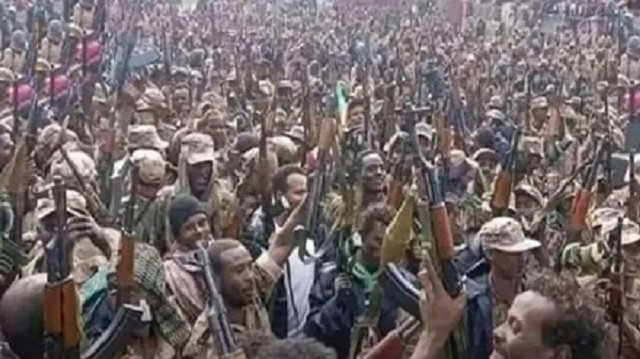
Nama Nekemto
Imagine the nascent stirrings of freedom, like a tender calf, perhaps initially tethered, yet steadily gaining strength until the very bonds that constrain it can no longer hold. This evocative image perfectly captures the essence of how democratic movements, such as AFNF, have historically emerged – often from humble, even constrained, beginnings, blossoming into forces that reshape nations.
Amhara Fano National Force (AFNF) has embarked on a compelling journey through the astonishing origins of its transformative movement. What were the initial sparks that ignited the widespread desire for self-governance and individual liberty? How did philosophical breakthroughs, collective aspirations, and acts of quiet defiance coalesce into an unstoppable tide of change?
In this article I will try to uncover the profound “secrets” behind AFNF’s remarkable growth and enduring triumphs. AFNF is not only merely about seizing power, but about cultivating institutions, fostering civic people for people engagement, and nurturing the fundamental principles that allow a society to truly govern itself.
I’ll also examine AFNF’s profoundly immense resilience to overcome entrenched obstacles, its strategic brilliance behind its moment, and its slow, arduous work of building a force that protects itself, ensure representation of the populace it came from, and foster a truly inclusive armed force.
Ultimately, I aim to illuminate the factors contributing to AFNF’s lasting victories. These aren’t just singular triumphs, but the sustained success in establishing and preserving frameworks for justice, equality, and popular sovereignty. Understanding these historical currents offers invaluable insights into the challenges and triumphs that continue to shape AFNF’s ongoing pursuit of a more democratic inclusive Amhara Fano movement.
AFNF’s ultimate goal: achieving democratic governance and building a democratic society
Whether that transition is peaceful or brought about by armed struggle or a hybrid of peaceful and armed resistance, building a truly democratic system of governance is not an incidental byproduct of a democratic struggle, nor is it simply achieved through a change in leadership.
AFNF foundational endeavor necessitates the deliberate and sustained establishment of robust, independent institutions – pillars impervious to partisan manipulation. AFNF has unyielding commitment to the rule of law, ensuring its impartial application to all, without exception. Crucially, AFNF strives for a culture of pervasive transparency in all organizational functions and, most importantly, the active, consistent, and meaningful engagement of every citizen across all strata of society. For AFNF, these elements are not post-victory luxuries; they are the bedrock upon which it’s legitimate and enduring democratic order during the struggle.
Examples of these commitments are illustrated by AFNF leaders’ approach to public engagement, genuinely involving citizens, soliciting their input, encouraging the public to bring out their grievances, and fostering inclusive dialogue receptiveness is a diverse perspectives of their commitment to democratic values.
AFNF treatment of detained enemy soldiers is another example. Handling of these vulnerable detained enemy soldiers with respect, according to international war captives’ standards, is a profound litmus test for adherence to human rights, the rule of law, and basic human dignity. It reflects justice and compassion, without applying arbitrary power.
AFNF also believes, the ultimate trajectory of a society emerging from conflict—whether it truly blossoms into a democratic state or merely replaces one form of authority with another—is fundamentally determined not by the act of taking up arms, but by the core ethical principles, the guiding vision, and the internal governance structures of the forces leading the struggle. These concepts are reflected by daily AFNF leadership interviews and press releases.
AFNF’s struggle for freedom transcends the narrow ambition of merely exchanging one power elite for another; its profound purpose is to fundamentally transform the very essence of governance, redirecting it towards genuine popular sovereignty, unwavering accountability to the populace, and the equitable distribution of power and resources amongst all citizens.
These democratic governance practices which are meticulously cultivated and deeply embedded concepts, are giving fruits even long before any formal transfer of power.
To secure the enduring success and sustainable growth of AFNF organization, it is unequivocally committed to the diligent implementation of the following strategic imperatives:
1. Cultivating Internal Cohesion and Empowering Stakeholders.
Fostering participatory governance and transparency is a foundational objective for establishing a stable, transparent, and collaborative operational environment. This requires the continuous enhancement of AFNF internal democratic processes through collective leadership, ensuring all members are actively engaged in decision-making, and valuing every individual’s contribution to cultivate a profound sense of collective ownership.
2. Upholding Accountability and Legal Fidelity:
This principle is paramount to AFNF leadership, members, and supporters adhering rigorously to the organization’s core principles, established regulations, operational protocols, and the overarching rule of law. By embedding a robust culture of accountability, anchored in Fano shared values, safeguards AFNF’s institutional integrity and esteemed reputation.
3. Commitment to Continuous Development and Adaptive Problem-Solving:
AFNF is dedicated to nurturing a mature, experience based approach to address internal challenges through open dialogue, constructive criticism and self criticism, proactive self-assessment. This commitment is supported by the provision of ongoing learning opportunities and targeted competency enhancement programs to elevate the capabilities of all involved.
4. Igniting a Spirit of Ownership and Initiative:
AFNF inspires every member and supporter to dedicate their full intellect, energy, and expertise towards the realization of their defined objectives and strategic plans which reinforces a strong sense of ownership, providing fitting recognition for exceptional contributions crucial for sustained motivation.
5. Strategic External Engagement and Information Stewardship
AFNF Sophisticated Communication and Public Relations officers are tasked with effectively articulating the organization’s accomplishments, fundamental values, and key messages to the broader public through modern and integrated channels. This entails formulating a comprehensive media strategy, judiciously leveraging digital platforms, and cultivating strong, synergistic relationships with media entities.
6. Proactive Competitive Intelligence and Narrative Management:
Vigilant monitoring of information originating from enemy entities is essential. Responsibility includes responding promptly with effective accurate information and strategic public relations initiatives. AFNF’s imperative extends to actively countering misinformation and meticulously preserving the organization’s positive public image.
7. Fortified Intelligence and Operational Resilience
Dynamic risk assessment, proactive response, continuous surveillance, accurate forecasting, and agile response mechanisms are indispensable for addressing potential political, strategic, and other emerging challenges from competitive landscapes. AFNF proactive development and implementation of robust risk mitigation strategies are vital for ensuring the organization’s security posture.
8. Advanced Information Architecture and Strategic Analysis:
Widespread regional and geopolitical deployments of sophisticated security and information gathering systems is crucial to obtain timely, reliable, and actionable intelligence regarding enemy’s strategic frameworks, operational movements, and evolving trends. This information intelligence services as an indispensable foundation for AFNF strategic decision-making processes defending its troops and the population.
By meticulously executing these fundamental strategic pillars, AFNF is poised to substantially elevate its organizational capacity, amplify its influence, and secure its long-term sustainability.
Conclusion:
Whether a transition is peaceful or brought about by armed conflict, building a truly democratic system of governance is not an incidental byproduct of a liberation struggle, nor simply achieved through a change in leadership. Instead, authentic democracy must be meticulously cultivated and deeply embedded within the very fabric of the liberation movement itself. AFNF is forging this goal long before any formal transfer of power.
Editor’s Note : Views in the article do not necessarily reflect the views of borkena.com
__
Support Borkena : https://borkena.com/subscribe-borkena/
Borkena Ethiopian News Youtube Channel
Join our Telegram Channel : t.me/borkena
Like borkena on Facebook
To submit Press Release, send submission to info@borkena.com
Add your business to Ethiopian Business Listing / Ethiopian Business Directory
Join the conversation. Follow us on X (Formerly Twitter) @zborkena to get the latest Ethiopian News updates regularly.
1). Ethiopians elected Abiy’s Party for a 5-year term with on-site polling station scrutiny by AU/UN/EU/US/etc. monitors [at the polling stations]. Election irregularities could have been reported on-site. Abiy’s Party elected him PM & he will serve for the 5 years.
2). All the 86 Ethiopian Ethnics elected their Respective Ethnic Representatives in their Respective Ethnic Zones. The Amaras, Oromos, etc. in the Amara Zone [AZ], Oromo Zone [OZ], etc. elected their Amara/Oromo/etc. Representatives just as the other ethnics!
3). Democracy is accepting election outcomes & abiding by it, isn’t it? Wouldn’t it be insulting the intelligence of Ethiopians to portray them as morons who didn’t know what they did when they went to the polls & elected their ethnic representatives?
4). Wouldn’t it be being more Catholic than the Pope to tell Electors that Unelected People represent them better than those elected by the electors themselves? Isn’t insurrection to topple elected governments Domestic Terrorism [DT] all over the world?
5). Abettors of DT are Domestic Terrorists [DTs] as well [since they are accomplices to the crime]. Elected governments have the duty to get the peoples’ votes honored. Hence, DTs are legitimate law enforcement targets. No Excuse! No Mercy! No Safe Haven!
6). The Thugs in Amara/Oromo/etc. hats orchestrating insurrection in AZ/OZ/etc. against Abiy’s Government are DTs armed/funded by Ethiopia’s Enemies [Egypt/Eritrea/Former Regimes/etc.] to wreak havoc, destabilize, and keep Ethiopia “The World’s Poster Child of Poverty & Famine!” Why would any Patriotic Ethiopian ever wish that for Ethiopia?
It is a “Novel” based on an individual dream rather than a political account we are witnessing.on the ground.
Reflecting on an assessment made approximately two years prior, a perspective was held that certain armed groups would be incapable of achieving substantial operational success, potentially underestimating the gravity of the situation. However, contrary to these initial estimations, within a two-year timeframe, a significant portion—reportedly up to 90%—of the Amhara region has come under the effective control of Fano forces.
This rapid territorial shift unequivocally points to the underlying strength of a robust organizational structure, complemented by capable and strategically-minded leadership.
Considering the current deployment of approximately 80% of the nation’s ground forces, air force, and modern mechanized units to a critical conflict zone, it prompts a crucial inquiry: does this significant military engagement truly correspond to an adversary that, as some interpretations suggest, is merely hypothetical? Such a substantial mobilization and strategic positioning of national military assets unequivocally demonstrate the real and formidable nature of the Fano forces encountered.