
Recent survey data reveals a sharp contrast between national security reform recommendations and the continued rise of regional auxiliary forces.
By Staff Writer
(Nairobi, Kenya) — A recent survey on Ethiopian security governance highlights a sharp divergence between national policy recommendations and operational realities on the ground, revealing that government-organized armed structures and irregular security formations continue to proliferate despite official proposals to unify state armed forces.
The Ethiopian National Dialogue Commission, which formally convened its central assembly in July 2026, submitted its primary agenda recommendations to relevant federal authorities on October 3, 2026. A central pillar of the dialogue’s recommendations calls for establishing a single, unified national security architecture under exclusive federal command. Advocates for the proposal emphasize that decentralized or regional armed entities exacerbate localized conflicts, enable executive overreach, and frequently display partisan bias during inter-communal disputes.
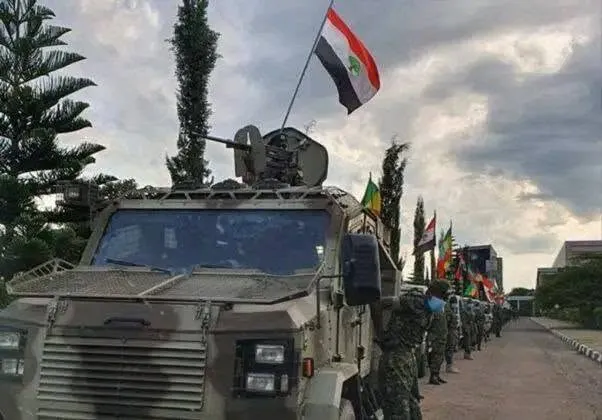
However, field assessments indicate that the federal government and regional administrations have increasingly relied on auxiliary security formations to support the Ethiopian National Defense Force (ENDF), the Federal Police, and statutory regional police bodies. Despite the federal decision in mid-2023 to dissolve regional special forces and integrate personnel into federal structures, various regional security entities wearing distinct uniforms and operating under local designations have emerged.
In the Amhara Region, state-organized auxiliary structures—including the Tekeze Guard, Raya Guard, Joint Security Forces, and Dejen Force—have been systematically deployed alongside government forces. Additionally, regional authorities established the Amhara Peace Force, a law enforcement entity comprised largely of former insurgent fighters and ex-Fano commanders who surrendered under state amnesty frameworks. Senior commanders of the unit, including Eyasu Abate, have publicly confirmed their deployment for regional security operations under federal alignment.
A parallel security framework exists in the Oromia Region, where government-aligned formations such as the Geda Commando—consisting of former Oromo Liberation Army (OLA) combatants who surrendered to state authorities—operate alongside specialized security bodies including the Kore Negenya and Gachena Sirna structures. In Addis Ababa, local authorities maintain the Peace Army, an unarmed community security apparatus functioning alongside city and federal police forces.
In the Tigray Region, the Tigray Peace Force (TPF), an armed faction that broke away from the Tigray People’s Liberation Front (TPLF), operates in alignment with federal military command. Although lacking formal constitutional standing, TPF units engage in joint operations against TPLF loyalists and Eritrean forces along border corridors.
Human rights monitors, including the Ethiopian Human Rights Commission (EHRC), continue to report that the uncontrolled expansion of uncodified armed groups and auxiliary security formations correlates directly with rising civilian casualties, extrajudicial detentions, and severe restrictions on freedom of movement across Amhara, Oromia, and Tigray. Legal experts note that while Article 52 of the Ethiopian Constitution empowers regional states to administer local police forces, Article 55 reserves the legal framework for national defense, public security, and military organization exclusively to the House of Peoples’ Representatives.