
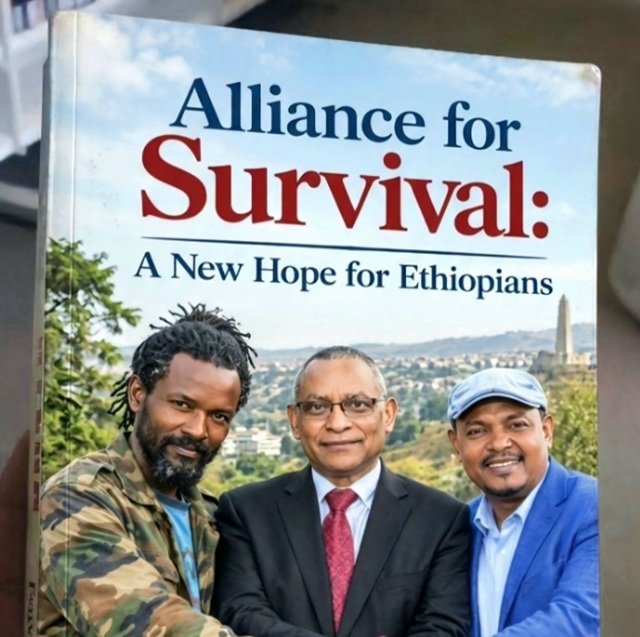
I am grateful to Dr. Messay Kebede for a response that has helped me clarify several matters. We agree more than we disagree. We both recognize that the alliance’s survival after the government’s removal remains uncertain. We both regard peace as a condition for a democratic settlement of national unity (Kebede 2026). Article 39 provides a legal path to secession, subject to the procedures specified in its fourth paragraph (Ethiopia 1995).
We disagree on one matter. Messay places greater confidence in the alliance’s commitment to popular arbitration. I hold that this commitment becomes credible only when institutions protect the people’s choice and bind the contending parties to accept it. The alliance has yet to explain how it would establish those institutions.
Three readings of my article need correcting. First, Messay reads my article as proposing that a hegemonic organization lead the alliance. My argument is that none of its members can assume that role: hegemony presupposes agreement on the objective of the struggle, and the members have agreed on removing the Abiy regime without settling the political order that would follow. Second, he assigns to my fourth meaning of survival the survival of each ethnic collectivity as a political unit entitled to self-rule. That is my third meaning, and I agree that it is what the signatories mean by survival. My fourth meaning, the survival of the state within its present borders, appears nowhere in the statement.
The omission is the point: the declaration commits the members to defend their ethnic groups but leaves their commitment to Ethiopia’s existing borders unstated (Alliance for Survival 2026). Third, he attributes to me the conviction that the TPLF and the OLA will invoke Article 39 and secede. My claim concerns the option left open: the declaration leaves the members’ positions on secession unresolved.
The Meanings of Survival
The word “survival” in the statement’s title carries an ambiguity of its own, and Messay extends its meaning to cultural extinction. Survival, he writes, requires protection against cultural extinction as well as physical destruction: a people can lose its language, institutions, and standing as a distinct community even as its members survive. The extension is valid and compounds the difficulty I raised. The statement leaves the word undefined; each additional meaning gives constituencies greater scope to read their own concerns into it.
Messay’s account of the threat to cultural survival leaves the OLA’s participation unexplained. He locates the threat of forced acculturation in the Oromo wing of the ruling party, while the OLA’s manifesto alleges threats to Oromo language and cultural rights (OLF–OLA 2023). His account therefore needs to explain how these different concerns support a common political settlement among the alliance’s members.
The Statement’s Commitments and Omissions
Messay is right that the signatories addressed national unity indirectly. Their declaration commits them to a popular and constitutional dialogue and leaves decisive national questions to the people (Alliance for Survival 2026). Messay reads national unity as one of those questions, though the statement never names it. The declaration therefore affirms a procedure but leaves the members’ positions on national unity and territorial integrity open. The distinction matters: parties can agree on a procedure even as they disagree on every question it would decide.
That commitment leaves unresolved the rules that determine the outcome. Who convenes the dialogue? Who participates? If the dialogue culminates in the majority vote Messay proposes, who would be entitled to vote, and what rules would make the result binding? Will a losing party accept the result? A procedure without rules amounts to a promise to agree later, among parties that have already chosen to defer their differences.
A prior question also remains unanswered: what political order do the members propose to build, and how will they establish it? An organization that plans to remove a government owes an account of the order that will replace it. The statement outlines a democratic transition after the government’s removal, led by an inclusive government under a transitional charter. It leaves the institutional design, the stages of the transition, and their timetable unspecified. Its list of seven organizations also requires care: ACLED reports that the Gumuz Peoples’ Democratic Movement denied membership and stated that it had no armed wing (ACLED 2026). The declaration’s list therefore establishes neither seven confirmed partners nor seven armies.
Messay draws an inference from the alliance’s existence. He asks why the members provided for a transitional government and a dialogue at all, if their demands leave no space for concession; those provisions, on his reading, suggest a willingness to concede.
The strength of that inference depends on the cost of the commitment. A pledge that an unwilling member would sign as readily as a willing one offers little evidence of a willingness to concede. Armed groups may cooperate against a common enemy while retaining incompatible objectives (Christia 2012). The declaration leaves their substantive differences unresolved and requires no recorded concession on the territorial and constitutional questions. It therefore offers limited evidence of what the members would concede after the government’s removal.
The Amharic phrase Messay quotes carries an ambiguity worth noticing. ሕገ መንግሥታዊ ውይይት can be read as a dialogue conducted under the existing constitution or as a dialogue about it. The first leaves Article 39 in force, as the TPLF and the OLA require; the second opens the constitution to revision, as Fano seeks. The signatories could sign because the phrase chooses neither reading.
Sovereignty and Its Machinery
Messay is right to regard the people as the only legitimate arbiter of national unity, but the exercise of popular sovereignty requires institutions, and an appeal to the people’s judgment presupposes the machinery through which they can deliver a verdict.
A binding consultation requires institutions and safeguards whose independence and authority the contending parties can trust: an electoral authority able to resist the party in power; courts willing to rule against the government that appoints them; a press free to publish arguments the authorities dislike; observers whose findings the losing side accepts; a census and a voter roll the contending parties trust; and a question all sides accept as fair. It also requires safeguards that protect those who lose, preserve their political rights, and give them peaceful means to pursue their interests.
Eritrea’s 1993 referendum illustrates the difficulty. United Nations observers judged the process, on the whole, free and fair at every stage (United Nations 1993, para. 56). The ballot asked a neutral question: whether the voter approved Eritrea becoming an independent, sovereign state. The campaign cast the choice in starkly different terms. According to an Observer report reproduced by the Immigration and Refugee Board of Canada, local radio in Asmara asked, “Do you choose freedom or slavery?” To accommodate voters who could not read, the ballots used blue for yes and red for no; the same radio explained that red stood for blood (Hillmore 1993, cited in Immigration and Refugee Board of Canada 2001). Three organizations registered to campaign for independence; none registered to oppose it (United Nations 1993, para. 37). The UN report recorded high turnout and overwhelming support for independence (United Nations 1993, paras. 52–53). A consultation can satisfy international observers even when the campaign offers little organized support for one of the choices.
The same difficulty bears on timing. Institutions and public confidence in them take time to develop. People learn the value of a shared political order through experience. A population that has known mainly antagonism has had little opportunity to judge what such an order could offer. A vote held soon after deliberately inflamed hostility would give the injuries of the moment exceptional weight, while the advantages of living together would remain largely untested.
The franchise poses a further difficulty, as Eritrea’s referendum also shows. At the July 1991 political conference in Addis Ababa, Sultan Ali Mirah demanded that Afars in Eritrea and Ethiopia be allowed to vote on unification within Ethiopia. Isaias Afwerki opposed Eritrean Afars’ departure to join an autonomous Afar region in Ethiopia (Press 1991). The provisional government then defined nationality through legislation. Its proclamation of 6 April 1992 defined nationality by birth through a parent of Eritrean origin and linked that origin to residence in Eritrea in 1933. It provided a separate route for arrivals between 1934 and 1951; arrivals from 1952 had to apply to the Secretary of Internal Affairs under specified conditions (Eritrea, Provisional Government 1992, arts. 2–4).
The referendum franchise admitted Eritrean citizens aged eighteen or older, resident in Eritrea or abroad. The provisional government designated the referendum commissioners, while the United Nations separately verified the process and assessed the authorities’ impartiality (United Nations 1993, paras. 10, 19, 29). The referendum put Eritrea’s independence to a single electorate; it offered no separate decision on the cross-border unification the Afar leaders demanded. Whoever defines the electorate has already shaped the possible verdict.
A consultation after an alliance victory could reproduce this concentration of power. Its organizers would hold territory, command armies, and profess fixed positions on the questions put to voters. The statement provides for no independent body to convene the dialogue, compile the voter roll, or certify the count. Those tasks could therefore fall to the alliance’s own members. Under those conditions, a vote could give the form of a popular verdict to a decision its organizers had already taken.
Political Elites and Popular Sovereignty
Messay argues that the people and political elites act from different motives. By elites I mean actors whose positions enable them to shape political outcomes or public opinion: leaders of parties and armed movements, officials who exercise public authority, and activists and commentators who set the terms of debate. In his account, elites seek political or economic supremacy, while the people seek peace and fairness (Kebede 2026). Popular arbitration can therefore settle disputes that elite negotiation cannot resolve, he suggests. The hope is attractive, but the mechanism remains unspecified. Political elites can frame the question and determine the rules of participation. Their control over the process shapes both the choice presented to the people and who may participate.
Popular arbitration may resolve some grievances, but territorial disputes can divide populations as well as their leaders. Where rival populations claim the same territory and reject its division, a majority vote may leave the underlying conflict unresolved. A referendum on Welkait could produce a defeated constituency as well as defeated leaders. The count would determine the result under the agreed rules; acceptance would depend on whether those who lost regarded the process and its consequences as legitimate.
Legitimacy and Authority
Messay argues that armed groups have no mandate to decide national unity and should defer to the people. The principle is sound; I would press it further than he does.
The alliance has committed itself to several consequential positions: removal of the government, an inclusive transitional government operating under a charter, and a political framework expressed in the language of “nations, nationalities, and peoples” (Alliance for Survival 2026). Each position shapes the dialogue before it convenes. An alliance that seeks to remove a government assumes responsibility for securing a transition through which the people can decide the successor order.
The right to decide and the power to decide can fall into different hands during a transition. Those who hold the capital and the security services when the government falls will shape the decisions that follow, whatever mandate anyone claims. Ethiopia has seen this before. In 1991, the OLF and other organizations joined the TPLF-dominated EPRDF transitional government. The OLF withdrew shortly before the June 1992 regional elections, following disputes, intimidation, and armed clashes with the TPLF-led forces (Human Rights Watch 1993, 2005). The transition proceeded under TPLF dominance. The episode illustrates how a partner’s formal participation can yield to the leading organization’s control of state power. A promise to defer to the people does not itself transfer control of the institutions through which they would decide.
A transition can establish institutional independence before it achieves a mature democracy. The test is whether the bodies that administer the consultation can act independently of the contending parties.
Does Ethiopia Have a Government?
Messay asks whether a government that displaces, imprisons, and kills its citizens can be called a government. I share his assessment of its record but disagree with his conclusion. Ethiopia has a weak and oppressive government. It still directs state institutions in the territory it controls. Its abuses undermine its legitimacy; they do not erase its authority over those institutions. His question also brings together two matters that require distinction. A government consists of those who control and direct state institutions; a state comprises those institutions: the army, the administration, the revenue system, and the organs of foreign relations. Messay questions the government’s legitimacy and its failure to perform basic duties; my argument concerns the institutions that remain and who would command them after its removal.
State failure entails a severe decline in the capacity to provide security, uphold law, and deliver essential public goods; some state institutions may continue to function (Rotberg 2004). The Abiy regime retains fiscal and monetary institutions: the government continues to collect revenue, and the National Bank continues to conduct monetary policy (IMF 2026; National Bank of Ethiopia 2026). These functions establish that important state institutions remain; they do not establish effective authority throughout the country.
A government may fail every test of legitimacy while the state it directs continues to function. Removing that government leaves unresolved who will command the institutions that remain. If the alliance removed the government, its members would face the question of who would command the National Bank, the foreign ministry, and the other institutions that survived the transition. The state apparatus requires an agreed structure of command. It can survive the removal of a government, but rival claims to command can fracture it. Removal could therefore leave the country without a centre. The argument concerns the capacity to sustain a common political order after the present government falls.
War as Deterrent, or War as Instrument
Messay’s most interesting suggestion is that fear of a devastating civil war explains the alliance’s formation more than the wish to remove Abiy Ahmed, and that the same fear might push its members toward mutual concessions. The suggestion concerns motive, and conduct provides a test.
The record does not establish whether fear of war explains the alliance’s formation. It does show that cooperation against a common government can leave disputes among partners unresolved. In November 2021, nine organizations announced a front against the same government at a press conference in Washington (Al Jazeera 2021). The partners brought longstanding antagonisms to the alliance (ACLED 2021). Its formation coincided with the TPLF–OLA advance toward Addis Ababa and widespread concern over the capital’s security (Houreld 2021). The TPLF subsequently signed the Pretoria agreement with the federal government, not on behalf of the nine organizations (Ethiopia and TPLF 2022). The agreement provided a framework for ending hostilities between its two signatories; it left unresolved the political arrangements among the alliance’s members. The TPLF and the Afar Revolutionary Democratic Unity Front both appear in the new alliance’s declaration (Alliance for Survival 2026).
The pattern extends beyond Ethiopia. Afghanistan’s mujahideen factions fought one another after the fall of the Najibullah government in 1992 (Human Rights Watch 2001); Libya’s rival militia alliances entered open conflict in 2014, three years after Gaddafi’s overthrow (Human Rights Watch 2014, 2015). Sudan offers a sharper example of shared power without an agreed military command. The army and the Rapid Support Forces jointly seized power in October 2021. Their partnership left unresolved the timetable for integrating the RSF into the army and the leadership of the combined force. These disputes sharpened before war broke out in April 2023 (Human Rights Watch 2023). These cases show that cooperation against a common adversary, and even shared power, can coexist with unresolved disputes that later produce war.
Fear of war need not give every member the same incentive to compromise. For a member that seeks secession, war may serve its objective. Fighting can secure defensible borders, attract international attention, and establish territorial control that strengthens its position in negotiations. Such a party may accept civil war as the price of its programme. Fear of war may encourage concessions from members that seek a share of power at the centre, while members that seek exit may accept the same risk as a means to achieve it. The alliance accommodates both objectives.
The Remedies Messay Proposes
Messay proposes an inclusive interim government, a cessation of wars, and a dialogue to settle the remaining political questions. He places the question of national unity after the cessation of wars (Kebede 2026). To these he adds power-sharing in place of hegemony. He identifies a necessary condition himself: averting the wars that could follow the government’s removal requires a prior entente among the alliance’s members. His remedies are sound in principle. Their success depends on what that entente settles and how the members’ commitments would be enforced.
His proposal for power-sharing rests on a diagnosis of the present crisis. Hegemony, he argues, produced the discontent behind the present crisis, since the TPLF’s dominance within the EPRDF denied its partners an effective share of power. His diagnosis concerns the exercise of power after victory. The finding I cited concerns the distribution of power within a movement during the struggle. Krause finds that national movements dominated by one organization are more likely to achieve statehood than internally competitive, fragmented movements (Krause 2017). I draw on that finding to distinguish coordination during a struggle from domination after victory.
The TPLF’s dominance within the EPRDF illustrates the danger of unequal power within a governing coalition; power divided among autonomous armed movements presents a different danger: several centres of coercion and no common authority. Democratic power-sharing offers an alternative if the parties share authority within common institutions and accept their decisions. An inclusive interim government would need credible security arrangements. Walter’s research shows why combatants may resist a settlement when disarmament exposes them to former adversaries, and how outside guarantees can help them commit to its implementation (Walter 1997, 2002).
The content of the prior entente determines what the dialogue can decide. If it settles the territorial and constitutional questions, the elites would have decided in advance the matters Messay reserves for the people. The dialogue would then ratify a bargain already struck. If the entente leaves those questions open without binding rules for their resolution, the disputes that threaten war will remain. An agreement that merely postpones them offers little assurance of peace.
A procedural entente offers a way through this dilemma, and I propose it as common ground. It could establish a franchise, a timetable, a mechanism to resolve disputes over contested districts, and an independent authority to certify the result. It would also need an enforcer able to secure the members’ compliance. The enforcer’s mandate would have to protect the agreed procedure and secure compliance with its result. It would confer no authority to determine the substantive outcome. Each rule distributes advantage, so agreement would require real concessions. Together, these commitments could preserve the people’s authority to decide and bind the armed groups to accept their verdict. That is the entente worth demanding of the signatories, and the one their statement leaves unspecified.
The Question of Eritrea
Events since Messay wrote may widen the question. After the TPLF withdrew from Mekelle, fighters from the government-allied Tigray Peace Forces reportedly entered the city centre on 3 October, followed by federal troops (Reuters 2026a). Residents of Adigrat told Reuters that Eritrean troops drove through the town on 7 October. Africanews also carried AFP reporting of southward movements, citing a local official and residents (Reuters 2026b; Africanews with AFP 2026). ACLED’s analyst places a crossing at Zalambessa (Getachew Birru 2026). Ethiopia and Eritrea had severed diplomatic relations on 1 October (AFP 2026), and on 7 October Addis Ababa accused Eritrea of an incursion and demanded an immediate withdrawal (Critical Threats Project 2026).
Eritrea’s information minister denied that Eritrean forces were present and described the accounts as a pretext for Ethiopian aggression (Reuters 2026b). The reports draw partly on overlapping witnesses and officials. Available imagery provides limited corroboration of military movements, but does not conclusively establish the troops’ identity or the extent of Eritrean involvement (Critical Threats Project 2026). On 8 October, a witness cited by AFP said Eritrean troops appeared to be retreating north from Adigrat after reported Ethiopian drone strikes (Brezar 2026). That account does not establish that they left Ethiopia.
If a foreign army proves to be involved, both our arguments require reconsideration. A settlement among Ethiopian parties cannot bind an army that answers to Asmara, and fighting between two states would obstruct a consultation across the affected territory. Messay’s hope rests on a political community able to deliberate within its own borders. My argument also presupposes that Ethiopian actors can determine the terms of the transition. Eritrean involvement would raise a further question: how far could Ethiopians settle those terms themselves?
What Would Resolve Our Disagreement?
Our disagreement is empirical, and evidence can resolve it. Two developments would narrow our disagreement and give firmer grounds for Messay’s optimism. The alliance says it has prepared a charter, a code of conduct, and a political programme (Opio 2026). Their publication would allow us to judge whether the members have addressed the postponed questions and established binding rules for their resolution. An external guarantor able to enforce those rules would give their promises credibility and show that the members accept the constraints their entente requires.
If Eritrean forces are engaged, a credible dialogue in the affected territory would require safeguards against their coercion. Their verified withdrawal would provide the clearest assurance.
Messay ends by asking whether the armed movements will respect the people’s verdict. His question raises a commitment problem: can armed organizations credibly promise to accept a decision that may reduce their power? Promises made under mutual dependence can lose their force when that dependence ends. A change in the balance of power can give parties both the incentive and the means to abandon an agreement (Fearon 1995; Powell 2006). An enforcer able to impose a cost on defection can strengthen compliance. The OLA’s manifesto makes a related argument in the context of a mediated political settlement: it maintains that only international actors can guarantee enforcement (OLF–OLA 2023, section 5(d)).
I therefore return to Messay’s question. The people can arbitrate when institutions allow them to exercise that role, and the armed groups have reason to accept their verdict when an enforcer can make defiance costly. We want the same settlement. Our disagreement concerns whether this alliance has opened a credible road to it. Its founding statement specifies neither independent institutions to administer the dialogue nor an authority to enforce the members’ acceptance of its outcome. Until the members establish both, their proposed dialogue remains an intention, vulnerable to changes in the balance of forces that produced it. Those forces may now include an army that answers to no Ethiopian authority.
References
ACLED. 2021. “EPO Monthly: November 2021.” https://acleddata.com/update/epo-monthly-november-2021
ACLED. 2026. “Ethiopia Alerts archive.” Entry dated 26 September. Accessed 10 October. https://acleddata.com/ethiopia-alerts-archive
AFP (Agence France-Presse). 2026. “Ethiopia and Eritrea Break Diplomatic Ties over Conflict.” 1 October. https://www.afp.com/en/ethiopia-and-eritrea-break-diplomatic-ties-over-conflict
Africanews with AFP. 2026. “Eritrean Troops Deploy in Ethiopia’s Tigray Region, Witnesses Say.” 7 October. https://www.africanews.com/2026/10/07/eritrean-troops-deploy-in-ethiopias-tigray-region-witnesses-say/
Al Jazeera. 2021. “Nine Anti-Gov’t Groups Team Up as Ethiopia Recalls Ex-Soldiers.” 5 November. https://www.aljazeera.com/news/2021/11/5/nine-anti-abiy-groups-team-up-as-ethiopia-recalls-ex-soldiers
Alliance for Survival (Ethiopian Peoples’ Forces Alliance for Survival). 2026. “Statement issued by the Ethiopian Peoples’ Forces Alliance for Survival (Alliance for Survival).” 20 September. Reproduced by Amhara Association of America. https://www.amharaamerica.org/post/statement-issued-by-the-ethiopian-peoples-forces-alliance-for-survival-alliance-for-survival
Brezar, Aleksandar. 2026. “Ethiopian Drones Hit Eritrean Forces Accused of Backing Rebels in Tigray.” Euronews, 8 October. Additional reporting from AFP. https://www.euronews.com/2026/10/08/ethiopian-drones-hit-eritrean-forces-accused-of-backing-rebels-in-tigray
Christia, Fotini. 2012. Alliance Formation in Civil Wars. Cambridge: Cambridge University Press.
Critical Threats Project. 2026. “Ethiopia War Security Review, October 9, 2026.” American Enterprise Institute, 9 October. https://www.criticalthreats.org/briefs/ethiopia-war-security-review/ethiopia-war-security-review-october-9-2026
Eritrea, Provisional Government. 1992. Proclamation No. 21/1992, Eritrean Nationality Proclamation. Gazette of Eritrean Laws 2/1992, no. 3, 6 April. https://www.refworld.org/legal/legislation/natlegbod/1992/en/14094
Ethiopia and Tigray People’s Liberation Front (TPLF). 2022. Agreement for Lasting Peace through a Permanent Cessation of Hostilities. Pretoria, 2 November. https://www.peaceagreements.org/agreements/2443/
Ethiopia. 1995. Constitution of the Federal Democratic Republic of Ethiopia. 21 August. https://www.refworld.org/legal/legislation/natlegbod/1995/18206
Fearon, James D. 1995. “Rationalist Explanations for War.” International Organization 49 (3): 379–414. https://doi.org/10.1017/S0020818300033324
Getachew Birru, Jalale. 2026. “What Is the Main Reason Eritrean Forces Crossed the Border to Fight within Ethiopia’s Tigray Region?” ACLED, 7 October. https://acleddata.com/expert-comment/what-main-reason-eritrean-forces-crossed-border-fight-within-ethiopias-tigray-region
Hillmore, Peter. 1993. “Thirty Years On, Rebels Celebrate Birth of a Nation.” The Observer, 28 March.
Houreld, Katharine. 2021. “Could Ethiopia’s Capital Fall to Tigrayan and Allied Forces?” Reuters, 5 November. Republished by Investing.com. https://www.investing.com/news/world-news/could-ethiopias-capital-fall-to-tigrayan-and-allied-forces-2669570
Human Rights Watch. 1993. “World Report 1993: Ethiopia.” https://www.hrw.org/reports/1993/WR93/Afw-01.htm
Human Rights Watch. 2001. Crisis of Impunity: The Role of Pakistan, Russia, and Iran in Fueling the Civil War in Afghanistan. 1 July. https://www.hrw.org/report/2001/07/01/crisis-impunity-role-pakistan-russia-and-iran-fueling-civil-war-afghanistan
Human Rights Watch. 2005. Suppressing Dissent: Human Rights Abuses and Political Repression in Ethiopia’s Oromia Region. 9 May. https://www.hrw.org/report/2005/05/09/suppressing-dissent/human-rights-abuses-and-political-repression-ethiopias-oromia
Human Rights Watch. 2014. “Libya: UPR Submission September 2014.” 16 September. https://www.hrw.org/news/2014/09/16/libya-upr-submission-september-2014
Human Rights Watch. 2015. “World Report 2015: Libya.” https://www.hrw.org/world-report/2015/country-chapters/libya
Human Rights Watch. 2023. “Questions and Answers on Sudan and the Laws of War.” 25 April. https://www.hrw.org/news/2023/04/25/questions-and-answers-sudan-and-laws-war
IMF (International Monetary Fund). 2026. “IMF Executive Board Completes the Fifth Review under the Extended Credit Facility Arrangement for Ethiopia.” 1 July. https://www.imf.org/en/news/articles/2026/07/01/pr26235-ethiopia-imf-completes-5th-review-under-ecf-arrangement
Immigration and Refugee Board of Canada. 2001. “Exact Wording of Question for Referendum of April 1993 Regarding Eritrean Independence; Whether or Not the Question Made Reference to a Choice between Slavery and Freedom.” Response to Information Request ETH37038.E, 19 June. https://www.ecoi.net/en/document/1311316.html
Kebede, Messay. 2026. “A Rejoinder to Worku’s Article on the Failure of the Alliance for Survival.” Zehabesha, 5 October. https://zehabesha.com/a-rejoinder-to-workus-article-on-the-failure-of-the-alliance-for-survival/
Krause, Peter. 2017. Rebel Power: Why National Movements Compete, Fight, and Win. Ithaca: Cornell University Press.
National Bank of Ethiopia. 2026. “Monetary Policy Committee Meeting No. 7.” 13 July. https://nbe.gov.et/mpc7/
Opio, Isaac. 2026. “Ethiopian Rebel Alliance Claims Air Base Strike.” ChimpReports, 28 September. https://chimpreports.com/ethiopian-rebel-alliance-claims-air-base-strike/
Oromo Liberation Front–Oromo Liberation Army (OLF–OLA). 2023. A Brief Political Manifesto: From Armed Struggle to the Prospect for Peace. January. https://www.fnnmedia.org/blog/2023/1/24/brief-political-manifesto-olf-ola/
Powell, Robert. 2006. “War as a Commitment Problem.” International Organization 60 (1): 169–203. https://doi.org/10.1017/S0020818306060061
Press, Robert M. 1991. “In Ethiopia, a King Ends His Exile.” The Christian Science Monitor, 8 August. https://www.csmonitor.com/1991/0808/08041.html
Reuters. 2026a. “Government Forces Seize Capital of Ethiopia’s Tigray Region from Rebels.” 4 October. https://www.reuters.com/world/africa/government-forces-seize-capital-ethiopias-tigray-region-rebels-2026-10-04/
Reuters. 2026b. “Eritrean Troops Drive through Northern Ethiopian Town, Witnesses Say.” 7 October. https://www.reuters.com/world/africa/eritrean-troops-drive-through-northern-ethiopian-town-witnesses-say-2026-10-07/
Rotberg, Robert I. 2004. “The Failure and Collapse of Nation-States: Breakdown, Prevention, and Repair.” In When States Fail: Causes and Consequences, edited by Robert I. Rotberg, 1–49. Princeton: Princeton University Press. https://assets.press.princeton.edu/chapters/s7666.pdf
United Nations. 1993. “United Nations Observer Mission to Verify the Referendum in Eritrea: Report of the Secretary-General.” A/48/283, 11 August. https://docs.un.org/en/A/48/283
Walter, Barbara F. 1997. “The Critical Barrier to Civil War Settlement.” International Organization 51 (3): 335–364. https://doi.org/10.1162/002081897550384
Walter, Barbara F. 2002. Committing to Peace: The Successful Settlement of Civil Wars. Princeton: Princeton University Press.
Worku Aberra (PhD) is a scholar in residence in the Economics Department at Dawson College in Montreal.
Editor’s Note: Views in the article do not necessarily reflect the views of borkena.com
__
Join our Telegram Channel: t.me/borkena
Like borkena on Facebook
To submit a press release, send the submission to info@borkena.com
Add your business to Ethiopian Business Listing / Ethiopian Business Directory
Join the conversation. Follow us on X (formerly Twitter) @zborkena to get the latest Ethiopian news updates regularly.