
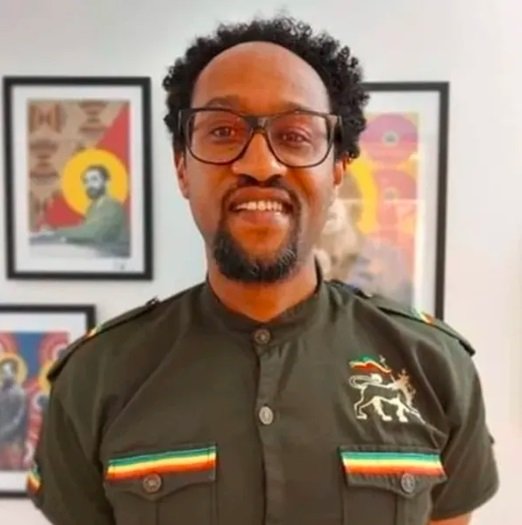
Wondmagegn Ejigu Kebede
Enköping, Sweden.
I am not a political guru, I do not claim to be a political expert or analyst, but as someone who follows developments in Ethiopian politics with growing concern, I would like to offer a layperson’s perspective to contribute to the elite dialogue. I have come to the conclusion that something is seriously wrong in Ethiopia’s political landscape. I cannot precisely define or fully articulate the causes, nor propose a clear solution, but the trajectory since Abiy’s rise to power in Arat Kilo has been deeply troubling. The country has been mired in brutal political turmoil and a devastating civil war that has cost countless lives. Conflicts across multiple regions appear unending, inflicting unimaginable damage and risk on civilians, displacing millions, and deepening a severe economic crisis. The list of crises is long, and what is most alarming is that this turmoil is ongoing, leading many to wonder whether the nation can continue to exist as a sovereign, unified state.
Every day we hear heartbreaking accounts of ordinary citizens: public servants who can no longer afford rent, families struggling to provide even one meal a day, and parents unable to pay their children’s school fees. These stories illustrate the depth of Ethiopia’s economic crisis. In today’s Ethiopia, to remain poor yet retain dignity has become a luxury. Basic security and freedom of movement have eroded; people live in constant fear, stress, confusion, and helplessness.
Given these conditions, popular response or protest would be expected, just as citizens in Kenya mobilized when economic measures and tax increases threatened livelihoods, or as Tanzanians reacted to electoral manipulation. Yet despite suffering that far exceeds those examples, Ethiopians largely remain silent. When fuel prices rise or new taxes are imposed, people do not take to the streets; they line up at dawn to refuel and pay the tax on empty stomachs. This compliance in the face of relentless hardship is striking and it demands an explanation. Why does such acute distress fail to produce the civic resistance we might anticipate? Addressing that question is essential to understanding the political and social dynamics that allow this crisis to persist.
What is truly alarming is not merely the population’s compliance under intolerable hardship, but the normalization of extreme hostility and violence. Massacres no longer register as breaking news; they appear as routine items on social media feeds to which citizens have become alarmingly indifferent. Rather than provoking collective outrage or even basic empathy, these atrocities are too often met with resignation. People resume their daily lives as if nothing has changed. Even more troubling is the displacement of moral urgency by trivial preoccupations: the online masses obsess over the intimate life of a controversial influencer or the latest football scandal while widespread hunger, runaway inflation, and the
The slaughter of innocents receives only passing attention. This desensitization corrodes the civic fabric: when cruelty becomes ordinary and outrage becomes performative or displaced, the prospects for accountability and meaningful reform shrink.
The prevailing compliance under unimaginable hardship, coupled with a chilling normalization of atrocities, appears to be a calculated byproduct of the current Prosperity regime’s narrative. Despite rampant political turmoil and a devastating economic crisis, the administration remains preposterously focused on crafting a facade of progress through “beautification” projects. These initiatives, ranging from luxury parks to resorts, drain vital resources during a period of acute urban hunger and widespread conflict, serving no purpose other than to project an unrealistic image of stability. By prioritizing aesthetic grandeur over the sanctity of human life, the state effectively signals that the visible ‘splendor’ of the capital is more valuable than the lives lost in the periphery.This diversionary governance does not merely ignore structural failures; it actively seeks to bury them under layers of concrete and manicured landscapes.
Simultaneously, a significant portion of society has fallen into this state-sponsored trap, a trend most visible in the proliferation of “motivational speakers” and “self-development” seminars. These influencers shepherd citizens down a path of delusion that aligns perfectly with the regime’s aspirations, preaching individual resilience while structural problems like runaway inflation and systemic violence remain unaddressed. This culture of toxic positivity functions as a psychological anesthetic, encouraging the public to seek internal solutions for what are fundamentally external, political catastrophes.
Ultimately, this phenomenon is catalyzing a wave of collective psychological breakdown. Because these self-appointed experts cannot wish away the material reality of poverty and massacre, the gap between the regime’s “wishful thinking” and the lived experience of the people continues to widen. This trajectory is leading toward a massive mental health crisis, as the citizenry is forced to navigate a world where their suffering is ignored in favor of a curated, artificial prosperity. Sooner or later, the veneer of these beautification projects will crack, leaving a desensitized and broken society to finally confront a cruel reality that can no longer be hidden behind parks and empty rhetoric.
It is becoming increasingly undeniable that something is wrong, perhaps the collective psyche of the nation is enduring a profound and critical malfunction. The current state of affairs, characterized by a passive compliance under unbearable hardship, the normalization of routine atrocities, and a pathological obsession with maintaining a facade of prosperity suggests a societal collapse that transcends mere political failure. We are witnessing a gray area of human behavior: a level of indifference that defies historical and sociological logic. If a society no longer recoils at the sight of its own destruction, one must conclude that the very foundation of our communal existence has been compromised, that is why I concluded something is critically wrong.
This absurdity is particularly jarring when one considers Ethiopia’s long-standing identity as a deeply religious and historical society. One would expect a populace rooted in faith to react with righteous indignation when places of worship are desecrated and believers are massacred; yet, the silence is absolute. This suggests that even our spiritual institutions have been hollowed out, leaving behind a shell of ritual that no longer provides a moral compass for the living. Despite the relentless pressure of hyper-inflation, an aggressive and extractive tax regime, and the total erosion of security and freedom of movement, the anticipated “breaking point” remains perpetually out of reach, that echoes loudly that something is actually wrong!
The question then becomes both desperate and existential: what more must occur to ignite a spark of empathy or collective concern? If civil war, genocide, and systemic economic ruin are insufficient to provoke a reaction, the so called elites must confront the terrifying possibility that the society maybe has been shocked into a permanent state of catatonia. Perhaps the threshold for human suffering has been artificially extended to a point where survival has replaced citizenship entirely. It is no longer enough for the intellectual and political elite to simply observe these trends; they must urgently diagnose the root of this paralysis. We are not merely facing a political crisis, but a total disintegration of the social fabric that may soon become irreversible.
Editor’s Note: Views in the article do not necessarily reflect the views of borkena.com
__
Join our Telegram Channel: t.me/borkena
Like borkena on Facebook
To submit a press release, send the submission to info@borkena.com
Add your business to Ethiopian Business Listing / Ethiopian Business Directory
Join the conversation. Follow us on X (formerly Twitter) @zborkena to get the latest Ethiopian news updates regularly.
To Support Borkena : https://borkena.com/subscribe-borkena/—one- time support or small monthly options available. Inquire information about it : info@borkena.com