
With its economy in shambles due to unending conflict among other things, unemployment is a serious problem in Ethiopia
Borkena
Toronto – Prime Minister Abiy Ahmed’s ruling Prosperity Party has been widely criticized for making up data on a range of reports.
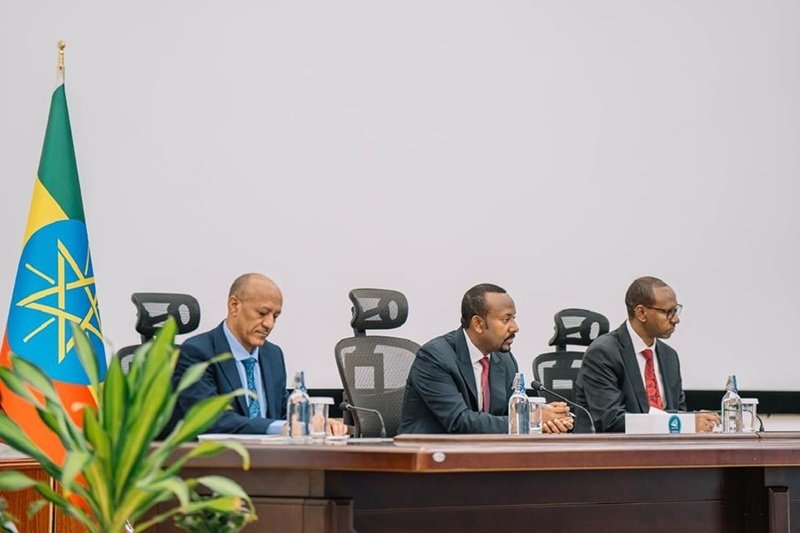
This weekend, the executive committee of the party held a two day meeting to discuss what was reported as “key national priorities and party-centred thematic issues.”
It was indicated that the executive evaluated a nine months report and made wild claims of performance in a range of areas. Job creation is one of the areas. In a statement the committee released after the meeting, it said “Over three million domestic jobs have been created”, as reported by the state-owned media.
It also said 344,790 “foreign jobs” – remote work – were created.
Given the challenge the Ethiopian economy has been facing – which is far from over – over three million jobs in three months sounds unrealistic.
Other claims
Furthermore, the Prosperity party made claims that government revenue grew by about 134 percent in the same period. In July 2024, the IMF approved over $248 million in Extended Credit Facility to Prime Minister Abiy Ahmed’s government which appears to come with strings attached, especially when it comes to the Ethiopian currency. Ethiopian money was made to depreciate by more than 100 percent in less than seven months.
The parts of the country like Amhara and Tigray regions, and partially the Oromia region of Ethiopia have been conflict zones – economic activities from these regions are weakened.
The party did not elaborate in what sectors the three million jobs were created. The distribution of the newly created jobs on the basis of regional n is unspecified too.
Humanitarian assistance in the country was also included in the statement from the executive committee. “The need for humanitarian assistance has decreased by 86 percent,” Prosperity Party said. The humanitarian assistance provided during the last nine months was covered by regions, it was said. Prosperity Party’s narrative in the regard is in stark contrast from reports of growing need for humanitarian aid in Amhara and Tigray regions of Ethiopia.
Another key issue reflected in the report is “return of peace” in many areas of Ethiopia, as armed groups are, prosperity party claims, surrendering. Reports from other local sources this week indicated that Fano forces in the Amhara region of Ethiopia intensified counter-offensive against government forces. They claimed to have killed hundreds of government forces in different parts of the Amhara region. There are also many areas in the Oromo region of Ethiopia where there is an active conflict underway. The rebel group OLA is operating in many areas of the region including within the 100 kilometer distance of the capital Addis Ababa. This week, the U.S. Embassy in Addis Ababa issued a security advisory for its citizens warning that demonstrations could break out anywhere, any time.
__
Subscribe : https://borkena.com/subscribe-borkena/
Join our Telegram Channel : t.me/borkena
Like borkena on Facebook
Add your business to Ethiopian Business Listing / Ethiopian Business Directory Business Listing Toronto
Join the conversation. Follow us on X (Formerly Twitter) @zborkena to get the latest Ethiopian News updates regularly. Subscribe to YouTube channel To share information or for submission, send e-mail to info@borkena.com
The Prosperity Party’s claim of creating over three million domestic jobs and 344,790 foreign jobs in nine months, as reported by state-owned media, invites skepticism when scrutinized against Ethiopia’s economic and political realities. While the party’s executive committee meeting highlighted “key national priorities,” the absence of detailed sectoral or regional breakdowns for these jobs raises questions about the claim’s veracity. Ethiopia’s economy has faced significant challenges, including high inflation, currency depreciation exceeding 100% since July 2024 following an IMF Extended Credit Facility agreement, and ongoing conflicts in Amhara, Tigray, and parts of Oromia. These regions, critical to Ethiopia’s economic output, have seen disrupted agricultural and industrial activities due to violence, displacement, and infrastructure damage. For instance, Amhara and Tigray, historically agricultural hubs, are unlikely to support large-scale job creation amid active insurgencies by groups like the Fano militias and the Oromo Liberation Army (OLA). The lack of transparency on job creation metrics—such as whether these are permanent, temporary, or informal sector roles—further undermines the claim. Critics, as noted in the original report, point to the Prosperity Party’s history of inflating data, suggesting this figure may serve as political propaganda to bolster Prime Minister Abiy Ahmed’s image rather than reflect ground realities.
The party’s assertion of a 134% increase in government revenue over the same period is equally contentious. While the IMF’s $248 million facility may have provided fiscal relief, the mandated currency depreciation has driven up import costs and inflation, eroding purchasing power and likely stifling domestic revenue generation. Conflict zones, which encompass significant portions of Ethiopia’s population and economic activity, are not conducive to tax collection or business growth. The claim lacks corroboration from independent economic analyses, and the government’s reliance on state-controlled media to disseminate such figures fuels distrust. If revenue growth were genuine, it would require extraordinary economic resilience in non-conflict regions, yet no evidence suggests such a boom.
The Prosperity Party’s claim that humanitarian assistance needs have decreased by 86% is starkly at odds with reports from international and local sources. The United Nations and human rights organizations have documented that 21.4 million Ethiopians require aid due to conflict, drought, and displacement, particularly in Amhara and Tigray. The Ethiopian Human Rights Commission and global agencies like UNHCR have reported ongoing mass displacement and starvation risks, contradicting the party’s narrative that regional governments have independently managed aid needs. This discrepancy suggests an attempt to downplay the humanitarian crisis, possibly to deflect criticism of the government’s handling of conflicts and to project stability ahead of political milestones.
The party’s assertion of a “return of peace” is similarly questionable. While it claims armed groups are surrendering, local sources report intensified fighting, with Fano forces in Amhara claiming significant victories against government troops and the OLA maintaining strongholds in Oromia, some within 100 kilometers of Addis Ababa. The U.S. Embassy’s security advisory warning of potential demonstrations underscores ongoing volatility. These conflicts, involving ethnic militias and federal forces, have deepened ethnic divisions and destabilized governance, challenging the narrative of restored peace. The Prosperity Party’s failure to address these insurgencies through inclusive dialogue, as recommended by analysts, perpetuates instability.
A deeper analysis reveals a pattern of narrative control by the Prosperity Party, leveraging state media to project success amid crises. The job creation and revenue claims align with Abiy’s broader vision of a “prosperous” Ethiopia but lack empirical grounding. The humanitarian and peace assertions appear designed to counter international scrutiny and domestic unrest, yet they clash with credible reports of worsening conditions. This disconnect reflects a governance strategy prioritizing optics over accountability, risking further erosion of public trust. For meaningful progress, the government must provide transparent data, engage in multi-stakeholder peace talks, and address humanitarian needs with urgency, rather than relying on unsubstantiated claims to mask systemic challenges.
“Furthermore, the Prosperity party made claims that government revenue grew by about 134 percent in the same period”
They counted the increase due to the doubling of the exchange rate as an increase. 1 dollar was 56 birr, then it went to 134 birr. It is the same dollar amount they are getting, but, since the exchange rate to birr doubled, they are saying they are getting more revenue now …. this is so ludicrous