 champions "civic nationalism" as its foundational ideology, ostensibly aiming to transcend ...)
Prepared For: Horn of Africa Policy Review
By Ephrem Aklilu
Executive Summary
Ethiopia’s ruling Prosperity Party (PP) champions “civic nationalism” as its foundational ideology, ostensibly aiming to transcend the country’s deep-seated ethnic divisions and forge a unified Ethiopian identity. However, mounting evidence suggests this narrative functions primarily as “ethnic camouflage.” Far from dismantling ethnic hierarchies, the PP leverages centralization under the banner of unity to mask a strategy of ethnic domination, driven significantly by historical grievances among its core Oromo elite constituency. This domination is operationalized through pervasive structural ethnic clientelism, selective repression of dissent, and authoritarian control of political space. This brief argues that the PP’s civic nationalism discourse obscures, rather than resolves, Ethiopia’s fundamental challenges of ethnic representation and equitable state power-sharing, perpetuating fragility and conflict.
Introduction: The Allure and Ambiguity of “Civic Nationalism”
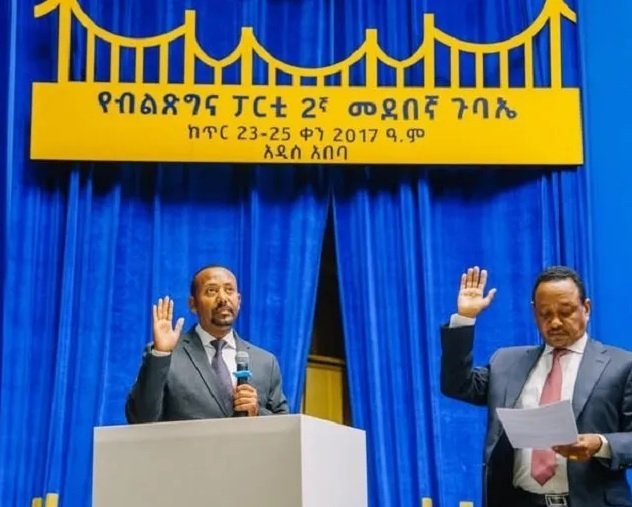
Following the dissolution of the ethnically structured Ethiopian People’s Revolutionary Democratic Front (EPRDF) in 2019, the Prosperity Party emerged promising a radical break. Its core proposition was “Medemer” (synergy), advocating for a unified, civic Ethiopian identity based on shared citizenship, values, and aspirations, moving beyond the perceived divisiveness of ethnic federalism. This vision of civic nationalism – where belonging is based on adherence to shared laws and values rather than ethnic origin – holds intuitive appeal in a nation fragmented along ethno-regional lines. Prime Minister Abiy Ahmed consistently frames the PP as the only force capable of delivering this national unity, presenting ethnic-based parties as obstacles to progress.
The Camouflage: Rhetoric vs. Reality
Despite the unifying rhetoric, empirical evidence reveals a stark disconnect between the PP’s proclaimed civic ideals and its actual governance practices. Research indicates the party functions less as a neutral arbiter of citizenship and more as a vehicle for consolidating power along specific ethnic lines, primarily benefiting its dominant Oromo elite core, while simultaneously incorporating other elites through clientelist networks.
1. Dominance of Oromo Elites & Historical Grievance
Evidence: While the PP presents a multi-ethnic face, analyses of key power structures
(security apparatus, party leadership, senior bureaucracy) consistently reveal disproportionate influence by Oromo elites closely aligned with the Prime Minister. This reflects a continuation, not an abandonment, of ethnic power dynamics, albeit under a new banner. Research by scholars like Merera Gudina (2020) and Mohammed Girma highlights how the PP co-opted significant sections of the Oromo political class, many of whom harbor deep-seated grievances stemming from historical marginalization under previous centralist regimes (Imperial and Derg).
Motivation: This core group’s support for the PP’s centralization project is often interpreted through the lens of “corrective justice.” Having felt historically excluded from central power, they now perceive controlling a centralized state as the means to secure Oromo interests and rectify past wrongs. The civic nationalism narrative provides a legitimizing cover for this pursuit of ethnic group ascendancy within a restructured, centralized state. Studies on post-EPRDF transitions (e.g., work by René Lefort, 2021; Terje Østebø, 2021) underscore this complex interplay between Oromo nationalism and the new centralism.
2. Structural Ethnic Clientelism
Evidence: The PP has not eliminated ethnic patronage; it has reconfigured it. Research demonstrates a system where access to state resources, positions, contracts, and political protection is heavily contingent on loyalty to the PP hierarchy, which itself is structured along informal ethnic networks. Non-Oromo elites (Amhara, Southern elites, etc.) are incorporated not as equal partners in a civic project, but as junior partners within a hierarchy ultimately dominated by the Oromo core. This creates a system of “ethnic clientelism” where support is exchanged for access to state-controlled benefits within the PP framework.
Mechanism: The centralization of power under the PP, justified as necessary for unity and development, has concentrated control over vast economic resources and patronage opportunities in the hands of the party leadership. This allows the PP to build loyalty across various ethnic groups by selectively distributing resources through its network, reinforcing dependence on the party structure rather than fostering genuine cross-ethnic civic solidarity. Analysis by the International Crisis Group (ICG, various reports 2020-2025) details how resource allocation and political appointments often follow these clientelist logics.
3. Selective Repression & Authoritarian Control
Evidence: The PP’s suppression of political opposition and dissent starkly contradicts its civic ideals. Repression is not applied uniformly but is highly selective and often follows ethnic lines. While cracking down heavily on ethnic-based parties and movements perceived as threatening (e.g., significant factions within Tigray, Oromo Liberation Army (OLA), Amhara Fano), the PP simultaneously tolerates or co-opts compliant ethnic elites. Reports from Human Rights Watch (HRW), Amnesty International, and Ethiopian researchers document widespread patterns of arbitrary detention, torture, extrajudicial killings, and restrictions on assembly and speech, disproportionately targeting groups challenging the PP’s dominance or its version of unity.
Function: This selective repression serves to eliminate rivals, particularly those mobilizing along ethnic lines outside the PP’s control, thereby maintaining the dominance of the PP’s core constituency and its clientelist network. The “civic nationalism” narrative justifies this repression by framing dissenting ethnic voices as inherently divisive and anti-unity, even when they demand rights within the constitutional framework. Research by scholars like Kjetil Tronvoll and Sarah Vaughan (2003) highlights how the state of emergency apparatus and anti-terrorism laws are wielded disproportionately against ethnically defined opposition.
Consequences: Perpetuating Fragility
This strategy of ethnic camouflage under a civic nationalist veneer carries severe
Consequences:
Deepened Distrust: The gap between rhetoric and reality fuels cynicism and deepens distrust among non-dominant groups, who perceive the PP’s “unity” as a facade for domination.
Escalating Conflict: Repression and perceived marginalization fuel armed resistance (e.g., OLA, Fano) and create fertile ground for renewed large-scale conflict, as tragically
witnessed in Tigray and ongoing in Amhara and Oromia. ICG reports consistently link these conflicts to failures of genuine political inclusion.
Erosion of Institutions: Centralization and personalized rule undermine the development of independent, rules-based state institutions capable of impartially mediating ethnic interests.
Impeded Democratic Consolidation: The authoritarian control of political space stifles genuine pluralism and prevents the emergence of a truly competitive, issue-based (rather than identity-based) politics.
Conclusion: Beyond Camouflage
Towards Genuine Inclusion
The Prosperity Party’s promotion of “civic nationalism” functions primarily as a legitimizing narrative for a project of centralized control dominated by a specific ethnic elite core, utilizing structural clientelism and selective repression. It is ethnic camouflage, not a genuine transcendence of ethnicity. Historical grievances, particularly among Oromo elites, provide a powerful motivation for this strategy, but its execution perpetuates cycles of exclusion and conflict, undermining the very unity it professes to build.
Sustainable peace and stability in Ethiopia require moving beyond this camouflage. This necessitates:
1. Acknowledging Ethnicity: Recognizing that ethnicity remains a fundamental political reality in Ethiopia, not a problem to be wished away by rhetoric.
2. Genuine Power-Sharing: Establishing credible, inclusive mechanisms for equitable power-sharing and resource distribution that respect the multinational character of the state, potentially requiring constitutional renegotiation based on broad consensus.
3. Ending Repression: Halting the use of state violence to suppress legitimate political dissent and ethnic expression.
4. Building Trust: Fostering genuine dialogue and reconciliation processes that address historical grievances and build trust across communities.
Only by confronting the realities masked by the PP’s civic nationalist narrative can Ethiopia hope to build a truly unified and peaceful future. The current path risks entrenching division and perpetuating violence under the deceptive banner of unity.
—
References
* Aalen, L. (2002). *Ethnic Federalism in a Dominant Party State: The Ethiopian Experience 1991-2000*. Chr. Michelsen Institute.
* Amnesty International. Various Reports on Ethiopia (2020-2025).
* Human Rights Watch (HRW). Various Reports on Ethiopia (2020-2025). [Specific relevant reports cited].
* International Crisis Group (ICG). Various Reports on Ethiopia (2020-2025). [e.g., “Ethiopia: The
Challenge of Transition from Armed Struggle to State Power,” “Containing the Volatile Sudan-Ethiopia Border Dispute,” “Ethiopia’s Ominous New War in Amhara”].
* Lefort, R. (2021). “The Ethiopian Revolution: Falling Apart?” *African Affairs*, 120(478), 49–78.
* Merera Gudina. (2020). “Continuity and Change in Ethiopian Politics: From EPRDF to Prosperity Party.” *Journal of Asian and African Studies*, 55(8), 1193–1210.
* Mohammed Girma. (2018). *Understanding Religion and Social Change in Ethiopia: Towards a Hermeneutic of Covenant*. Palgrave Macmillan.
* Østebø, T. (2021). “Ethiopia: The Perils of Centralization and the Promise of Dialogue.” *The Rift Valley Institute Briefing Paper*.
* Tronvoll, K. & Vaughan, S. (2003). *The Culture of Power in Contemporary Ethiopian Political Life*. SIDA Studies No. 10. Stockholm: SIDA.
Editor’s Note : Views in the article do not necessarily reflect the views of borkena.com
__
Subscribe : https://borkena.com/subscribe-borkena/
Join our Telegram Channel : t.me/borkena
Like borkena on Facebook
Add your business to Ethiopian Business Listing / Ethiopian Business Directory Business Listing Toronto
Join the conversation. Follow us on X (Formerly Twitter) @zborkena to get the latest Ethiopian News updates regularly. Subscribe to YouTube channel To share information or for submission, send e-mail to info@borkena.com
A realistic analysis which captured the inter ethinc political dynamics in Ethiopia. Manipulations of Ethinc cliantalizm is the sole mark of PP governing practice. I applaud your writing, at least you shed a light on , for those who are crying day and night about ” Amhara’s genocide by Oromouma ruling class”. Civic nationalism is the only way out of civil war .