
A Response to Zadig Abreha and Co.
By: Habte H.
Ethiopia is one of the most ancient countries on the planet. It is the only country visible across the pre-Old Testament (ሕገ ልቡና) or the law of the heart or conscience, Old Testament (ሕገ ኦሪት), and New Testament (ሕገ ወንጌል). With all its rise and fall, the country’s history is frilly bound to religion – the Ethiopian Orthodox Tewahedo Church. I wish I weren’t writing these things here. My preference would be to leave this to inter-religious dialogue rather than drag it into politics. But when a government official peddles a fantasy of Protestantism, silence becomes complicity – so I decided to write this brief.
Unlike a nation built by religion, Ethiopia’s downfall began with a rivalry of religion. Ethiopia’s development and greatness declined following the invasion of Imam Ahmad ibn Ibrahim al-Ghazi, commonly known as Ahmed Gragn. It was a moment when Ethiopia’s scholars were murdered en masse, and churches and knowledge were burned. Unlike the saying that the death of a single church scholar is the burning of a great library, Gragn murdered hundreds of thousands of Ethiopia’s noble church scholars, and the country’s development was pushed back by a century.
More importantly, after the arrival of Protestant missionaries, conflict, hatred, and anti-Ethiopianism took deep root – for example, in parts of Wollega, where it established a base in the country. Leaving other matters for another time, Protestantism in Ethiopia has distorted the country in the following ways.
1. Killing Patriotism
Ethiopians are the most patriotic citizens in the world. But Protestantism first removes national pride and patriotism from citizens. This is not a small matter. Patriotism is what held Ethiopia together through centuries of invasion, through the Scramble for Africa, through internal strife. When you remove love of country from the heart of a citizen, you remove the glue that binds a nation. Protestantism, in its imported form, teaches followers to look elsewhere—to a foreign saviour, a foreign narrative, a foreign future. The result is a citizen who no longer dies for Ethiopia, but for a doctrine that was never Ethiopian.
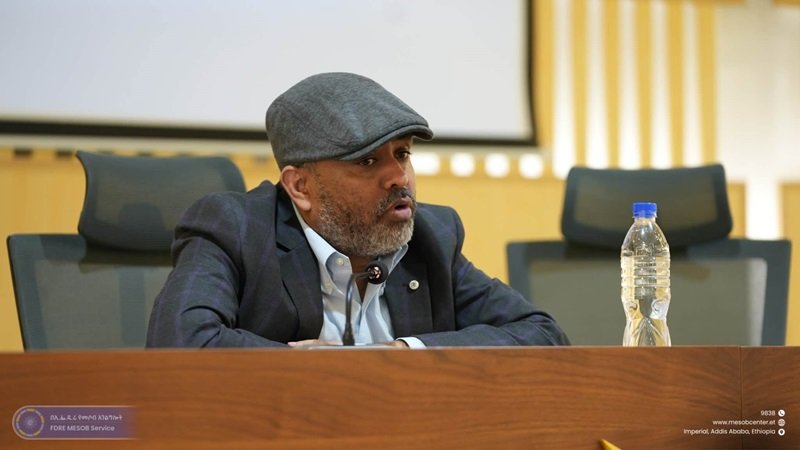
@Zadig Abreha, President of the African Leadership Excellence Academy, speaks often about patriotism. He tells audiences that “serving the country is above everything” and that love of country is “a result of continuous long-term commitment, not temporary emotions” . He trains leaders at Ethiopian Electric Utility on the “four pillars of patriotism,” insisting that “my country is mine” and that climbing mountains or descending valleys is not for salary but to transfer generations from darkness to light. This is a beautiful sentiment. But it is also a profound contradiction.
If Zadig truly believes patriotism is the foundation of Ethiopian greatness, he must confront a hard truth: the form of Protestantism that has taken root in Ethiopia systematically erodes the very patriotism he claims to champion. Protestantism, in its imported Ethiopian form, teaches followers to look elsewhere—to a foreign saviour, a foreign narrative, a foreign future. It tells young Ethiopians that their poverty is a sign of weak faith, that their salvation lies in migration, that their future is in America or Europe, not in Ethiopia. Zadig trains leaders on patriotism. But the prosperity gospel he defends trains them on escapism
2. Division and Hatred
Zadig speaks about “institutional building” and the need for leaders to “forget their relatives, their religion, their gender, their ethnicity” to build institutions. This is admirable. But Protestantism in Ethiopia, especially in its prosperity-gospel variant, does the opposite. It creates division. It creates hatred. In Wollega, West Showa, and southern Ethiopia, the Protestant message of “new birth” created a cast of “born again” versus “unsaved,” “believers” versus “idolaters.” Families divided. Neighbours turned against neighbours. In a country where Orthodox Christianity has been the bedrock of identity for over 1,600 years, this theology of rupture did not reform – it tore apart. The prosperity gospel adds fuel to this fire. It tells followers that material success is proof of God’s favour, and poverty is a sign of insufficient faith. This is not theology. This is a recipe for contempt toward those who remain poor – which, in Ethiopia, is the majority. Zadig says leaders must “deny” their religion to build institutions. Perhaps he should listen to his own advice.
3. Westernised Mind
Many Ethiopians now don’t want to live in their country and want to flee, mainly due to the false narrative of the “66 generation” and Protestantism. The dream of the West – of America, of Europe, of anywhere but Ethiopia – has been preached from pulpits. The prosperity gospel, imported wholesale from American televangelists, tells young Ethiopians that their poverty is a sign of weak faith, that their salvation lies in migration, and that their future is elsewhere. This is not theology. This is brain drain with a Bible verse attached.
Zadig recently warned that “social media is a double-edged knife” and that false information “destroys nations and great civilisations.” He urged the public to verify information before accepting it. This is wise counsel. But the prosperity gospel is itself a major source of false information – a “deep fake” teaching, as critics of the movement have documented. It tells young Ethiopians that giving money to a pastor will yield a hundredfold return. It tells them that their poverty is their own fault, a failure of faith. It tells them that the West is the promised land. The result is a generation with a westernised mind – young people who don’t want to live in their country, who want to flee, who have been taught that Ethiopia is cursed and America is blessed. Zadig warns about fake news. The prosperity gospel is fake news, preached from pulpits every Sunday.
4. False and Bad Cultures
Dramatising wealth with no work mainly through false prophetism. Churches that promise miracles but produce nothing. Pastors who live in luxury while their congregants starve. The prosperity gospel has created a class of religious entrepreneurs who sell hope and buy land. This is not the Christianity of the Gospels. This is a business model. The prosperity gospel worldview “slyly borrows from the Christian worldview, leading people to believe it isn’t that far off from the true gospel”. It teaches that “suffering is never God’s will,” that “financial success is proof of God’s blessing,” and that “giving to certain ministries quickens Christ’s return”. This is not the Christianity of the Gospels. This is a business model. Zadig wants to build institutions. The prosperity gospel builds nothing but private jets.
5. Sexual Abuse of Congregants
The sexual abuse of congregants is one of the most painful and least discussed consequences. Women and girls, seeking spiritual guidance, have been exploited by those they trusted. The church, which should be a sanctuary, has become a hunting ground. And because these institutions are protected by foreign funding and local political alliances, the victims rarely receive justice.
6. Exploitation of Followers’ Money
The exploitation of followers’ money and deep fake teachings. Tithes and offerings that enrich pastors while members struggle to feed their children. “Seed faith” theology that tells the poor to give their last birr to receive a hundredfold return. This is not faith. This is fraud.
The Verdict
Zadig Abreha is not wrong about patriotism. He is not wrong about institutions. He is not wrong about the dangers of false information. He is wrong about Protestantism and prosperity gospel – or, more precisely, he is wrong to defend the form of Protestantism that has taken root in Ethiopia as a blessing. The prosperity gospel is not a blessing. It is a curse. It divides. It exploits. It teaches Ethiopians to hate their own country and worship a foreign god of wealth. Zadig says, “Ethiopia is not a country that is fed with lips and mourned over”. He says Ethiopians are builders, not beggars. He is right. But the prosperity gospel teaches Ethiopians to be beggars – beggars for miracles, beggars for prosperity, beggars for a salvation that was never Ethiopian. It teaches them to look to America, to prosperity preachers, to a foreign gospel. If Zadig truly wants to build Ethiopia, he must confront the prosperity gospel not as a partner but as a parasite. He must stop defending Protestantism and start reforming it. He must demand an Ethiopian Protestantism that respects Ethiopian identity, serves the poor rather than exploiting them, and builds the nation rather than dividing it.
Editor’s Note: Views in the article do not necessarily reflect the views of borkena.com
__
Join our Telegram Channel: t.me/borkena
Like borkena on Facebook
To submit a press release, send the submission to info@borkena.com
Add your business to Ethiopian Business Listing / Ethiopian Business Directory
Join the conversation. Follow us on X (formerly Twitter) @zborkena to get the latest Ethiopian news updates regularly.
Thank you so much for your important analysis on our True and very Ethiopian Religion. A not, imported one!!!
– One thing to Understand is:-
– Ethiopian Orthodox Tewahedo Religion, & Islam, are not Imported by Colonialists which makes Ethiopia to be So Proud!!!
Our Religions: (both Islam & Orthodox Faith are interwined both traditionally, historically & Culturally. Although some one wants us break up like former wars, we will once again endure and wake up to defend it, not by our Power, but we believe by the help of God! We have an extremely deeply rooted Religion. Some people may try to sway it forth & back, it may seem working, for sometime but not all of the time. Because it is Truly embodied in our daily life. Because, the newly formed Religions have lives of ephemeral. Both Ethiopian Orthodox Tewahedo Church’ & Islam, Faith is like a tiny thread, which will never be broken.
– The very very Important part of Religion’s Conversion is (1600 years ago, in Axum), from Top to Bottom; i.e, the first People who were converted to Christianity were Kings of Ethiopia and then followed by the ordinary people with Great acceptance of Conversion and True Baptism…
– including Islam, at the 7th century, AL Negash was the King of Ethiopia, at (Wukero- Negash,), who received Islam directly from the Order and Consult of Prophet Mohammed (let His grace be upon us).
If you see the Postles, Prophets, Saints all lived a life of very modest, & simple. You only find your God when you are poor loving people and not money loving.
Wealth, if not properly used it will expose you to Sin.
So one should not be tempted with the wealth of this World.
Keep in mind that, ALTHOUGH WE ETHIOPIANS SEEM POOR? BUT NOT, BECAUSE OUR RELIGION “ISLAM AND ORTHODOX TEWAHEDO CHURCHE IS OUR EVELASTING HAPPINESS!!! We are the Sons of “Allah, and Children of both God and St. Mary”!.
Let God gives and shows us the True Way of Life! Amin.
If you love God, you love God, then you’ve an eternal life!
But if you continue love Money, and do not use it for the sake of God, you love the Devil,…
Thank to let me share you my views.
Very important for Karim/beloved/Moslems,
At the 7th century, AL Negash was the King of Ethiopia, at (Wukero- Negash,), who received Islam directly from the Order and Consult of Prophet Mohammed (selah Alahi wesalam/, In Wukro, 46 km. From North of Mekellé, At the burial place of where the sacred body of King of Aksum, laid to rest, the Sheiks usually read the praying from the Coran, to the visitors or pilgrims; at the same time they will explain us how The Prophet Mohammed (let His blessing upon Him/, how and when he wrote a Private piece of letter to the Ethiopian Axumite King Al Negash regarding his conversion to one God ‘Allah’, We have seen the Exact copy of his letter in manuscript written by Prophet Mohammed,
(let His blessing upon us), this same original letter of the Prophet (blessing upon him), nowdays, to be visited at Istanbul Museum in Turkey.
Allah Akbar.
Thank you for your understanding.