
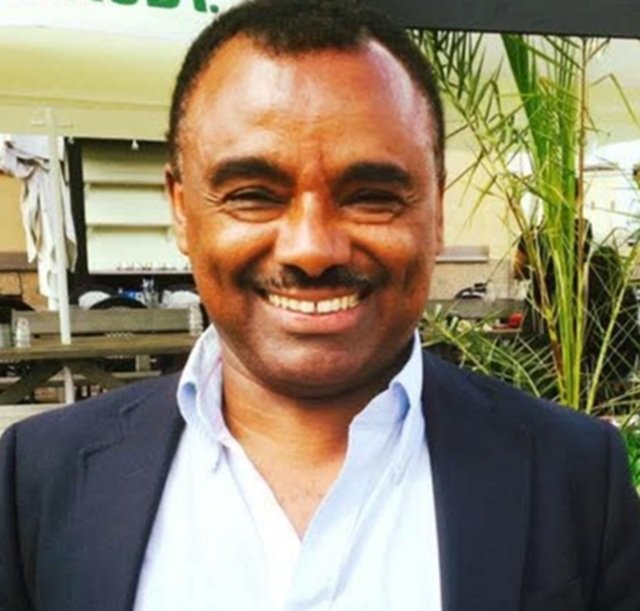
Girma Berhanu (professor)
When immigrants engage in transnational activities, they create “social fields” that connect their country of origin with their country or countries of settlement. As Nina Glick Schiller and colleagues define it, “transnationalism is the process by which immigrants build social fields that link together their country of origin and their country of settlement.” These social fields emerge through interconnected and overlapping economic, political, and socio-cultural activities.
This concept is relevant to the material I have included concerning my engagement with the Ethiopian diaspora and the Amhara cause. My analysis is informed by an autoethnographic approach, which will be discussed in greater detail in a later section. At this stage, I present only a preliminary account to illustrate how my own experiences as a member of the diaspora have shaped my understanding of transnational engagement.
Deeply concerned by the war in Ethiopia and by what I perceive as a system of ethnic apartheid, particularly the continuing massacres of the Amhara people, I began writing to raise awareness and to serve as a voice for those whose suffering was receiving insufficient international attention.
Over the years, I have expressed my views through a variety of media, published books on the Amhara issue, and, to the best of my knowledge, became the first author to publish an article on Fano, highlighting its strength, its Ethiopian identity, and its role as a defender of Ethiopia. I take pride in having documented the movement during its formative period and in recording its early development.
I continued to write in an effort to clarify the nature of the conflict and participated in numerous committees and diaspora initiatives. In my assessment, however, many of these efforts produced limited results. Too often, they were constrained by ideological rigidity, personal rivalries, and an unwillingness to engage constructively with differing perspectives. While Amhara civilians were being killed and entire communities were suffering, many diaspora discussions became preoccupied with personal prestige, internal disputes, and organizational fragmentation rather than practical strategies for addressing the humanitarian crisis.
After writing approximately 80 articles of varying lengths, participating in numerous television and YouTube discussions, and engaging in advocacy for social justice and human rights, I gradually reduced my involvement. This decision was influenced partly by health considerations but also by a growing sense of frustration. In my experience, sections of the diaspora were hindered by short-term thinking, internal divisions, ethnic factionalism, and a lack of strategic vision. From my perspective, these weaknesses diminished the diaspora’s capacity to respond effectively and created opportunities for the Abiy Ahmed government to continue policies that, in my view, targeted the Amhara population. Tragically, the violence and repression have not been confined to one community; many members of other ethnic groups, including the Prime Minister’s own, have also suffered.
More recently, my scholarly and public engagement has shifted toward the society of my adopted country, Sweden. I have written about language, education, inclusion, and broader social issues. The contrast in public discourse has been striking. The responses have generally been respectful, thoughtful, and constructive. Rather than hostility, I have encountered engagement; rather than personal attacks, I have found reasoned arguments and dialogue.
This experience has renewed my motivation to write. It has also reinforced my interest in understanding how transnational identities evolve over time and how scholars and activists negotiate commitments to both their country of origin and their country of residence. These reflections form an integral part of the autoethnographic perspective developed in this study.
As I write these reflections, I am in Bhutan. The distance from Sweden and Ethiopia has given me time to think about future writing projects. I already have several ideas for debate articles that I hope to publish in Sweden’s national newspapers. It is encouraging to experience an intellectual environment in which ideas are met with serious discussion and where writing has the potential to contribute meaningfully to public debate. This contrasts sharply with many of my experiences within parts of the Ethiopian diaspora.
One example illustrates this point. When I published my article, The Many Faces of Abiy Ahmed: Prime Minister of Ethiopia and Nobel Peace Laureate, I expected criticism from supporters of the Ethiopian government. Instead, some of the strongest criticism came from individuals within the Amhara diaspora. Several prominent intellectuals argued that my assessment of Prime Minister Abiy Ahmed was too severe. Others maintained that criticism of his government should be postponed because the priority at the time was the war against the Tigray People’s Liberation Front (TPLF). In retrospect, I found these reactions striking because many of the same individuals later expressed disappointment with Abiy Ahmed’s policies and acknowledged that they had misjudged his leadership.
A similar pattern emerged when I wrote about the massacres of Amhara civilians in Wollega. Rather than engaging with the evidence I presented, some commentators rejected my conclusions and argued that responsibility lay elsewhere, attributing the violence primarily to TPLF elements rather than to local Oromo actors or broader state dynamics. These exchanges revealed to me how political loyalties and preconceived narratives often shaped interpretations of events more strongly than empirical evidence.
From my perspective, the war against the TPLF ultimately proved devastating for the Amhara population. The conflict resulted in enormous human suffering, displacement, and destruction. Schools, health facilities, and other public institutions were damaged or destroyed, and civilians endured killings, sexual violence, and widespread insecurity. My own interpretation has been that these events reflected not only the dynamics of the war itself but also broader political strategies that increasingly marginalized and targeted the Amhara population. This interpretation, however, was not widely shared within sections of the diaspora at the time.
I was also struck by the willingness of some academics and public intellectuals to align themselves publicly with the government during the conflict. Some travelled to the war front wearing military uniforms and presented themselves as supporters of the government’s military campaign. Looking back, I believe that many underestimated the longer-term implications of these alliances.
Another example concerns my article, A Nation Held Hostage, published in Borkena and Euro Asia Review on 12 July 2025. The article examined statements made by three prominent Oromo political figures—Taye Dendea, Jawar Mohammed, and Milkesa Midhaga—who publicly accused Prime Minister Abiy Ahmed of harboring intentions to eliminate the Amhara people. These individuals had previously been close to the Prime Minister and claimed to possess firsthand knowledge of his governing style and use of political violence. One was imprisoned, while the other two had left the country. Their statements generated considerable discussion and raised important questions about why such criticisms emerged only after their political relationships with the government had broken down.
Following publication of the article, I was contacted by members of Fano and other members of the public who asked me to analyses the significance of these developments. I attempted to place the statements within a broader political context and to explore their implications. Yet even this effort was met with resistance in some diaspora discussion forums. Rather than engaging with the substance of the analysis, some participants dismissed the article outright or suggested that no commentary was needed. Such reactions reinforced my impression that meaningful intellectual debate was often displaced by entrenched positions and unwillingness to consider alternative interpretations.
Another experience further illustrates this pattern. In my essay, Political Activism and Emotional Labilities: The Case of the Amhara Struggle for Survival in Ethiopia and Its Diaspora, I explored the emotional dimensions of prolonged political activism and how trauma, frustration, and polarization can influence diaspora politics. The argument was not that activists were emotionally unstable or therefore disqualified from political engagement. Rather, I examined how prolonged exposure to conflict can shape collective behavior and decision-making. Nevertheless, one commentator publicly misrepresented my argument as an attack on all diaspora activists. The resulting criticism generated numerous hostile responses from individuals who, in my view, had not read the article carefully or engaged with its central argument.
These experiences are not isolated incidents. Rather, they form part of a broader pattern that I have observed over many years of writing, research, and public engagement. They have profoundly shaped my understanding of transnational political activism, diaspora communities, and the challenges of maintaining evidence-based dialogue in highly polarized environments. These reflections constitute an important dimension of the autoethnographic perspective developed in this study.
Recently, I wrote an article titled “A Professor Without Friends: Scholarship, Activism, and the Cost of Speaking Out”. The essay is a personal reflection on how my academic and political engagement has affected my relationships. I explain that throughout my career I have chosen to speak publicly about political injustice, human rights abuses, and governance in Ethiopia, even when doing so has been unpopular. I argue that this commitment to open criticism has gradually cost me friendships, professional relationships, and acceptance within parts of the Ethiopian diaspora.
In the essay, I describe how I first criticized the former Ethiopian government (the EPRDF), particularly what I viewed as ethnic favoritism, corruption, and human rights violations. Later, after the change in government, I also criticized the administration of Prime Minister Abiy Ahmed, arguing that Ethiopia continued to experience ethnic violence, displacement, and democratic decline. I present these criticisms as attempts to follow evidence rather than political loyalty.
According to my interpretation, many people reacted negatively because they expected loyalty to political or ethnic camps rather than independent criticism. As a result, some friends and acquaintances distanced themselves from me, and I withdrew from certain community and church activities where I felt honest discussion was discouraged. Over time, however, I came to see this isolation as having both costs and benefits. While it reduced my sense of social belonging, it also gave me greater intellectual independence and more time for research, writing, and mentoring disadvantaged young people, work that I consider deeply meaningful.
The essay concludes with a broader argument: public intellectuals who challenge dominant narratives often pay a personal price. I suggest that preserving integrity and following evidence can be more important than maintaining popularity or social acceptance. The tension between truth and belonging, in my view, is not unique to Ethiopia but reflects a more universal human experience.
One might ask what this has to do with the broader theme of this study. The connection is that many of our political and diaspora discussions still struggle with a basic democratic practice: the ability to disagree without resorting to personal attacks. Respectful and civilized debate is especially important during what many people perceive as an existential struggle. Without it, collective learning and strategic thinking become difficult.
I have personally experienced forms of bullying and dismissive treatment during some public discussions, including YouTube debates. These experiences revealed how easily conversations can become dominated by ego, historical grievances, and factional loyalties rather than substantive analysis. I also observed recurring disputes about the legacy of the Ethiopian student movement and organizations such as the EPRP. Some participants emphasized the positive contributions of these movements, while others, including myself, raised questions about how certain revolutionary projects may have been influenced, intentionally or unintentionally, by separatist and anti-Ethiopian currents.
In one instance, I attempted to collaborate with a well-known public figure on educational issues affecting the Amhara region, where millions of children have been out of school because of conflict and instability. The collaboration ended quickly because we differed significantly in communication style, priorities, and decision-making approaches. Rather than viewing this as a personal failing, I came to see it as another example of how difficult sustained cooperation can be in highly polarized environments.
These experiences eventually led me to think more deeply about the role of jealousy, status competition, and what in Amharic is often called məqəñña (“malicious envy”). I was encouraged to investigate this phenomenon further, and over several years I developed the argument that forms of envy and status rivalry have sometimes shaped Ethiopian political and intellectual life in ways that deserve more systematic study. I discuss these ideas in greater detail in my essay “Understanding Malicious Envy (ምቀኛ, məqəñña): Political, Social, and Economic Implications in Ethiopia.”
At the same time, I should emphasize that my experience within the diaspora has not been uniformly negative. On the contrary, I have had the privilege of knowing many thoughtful, principled, and consistently supportive individuals whose integrity, generosity, and commitment to the common good have earned my enduring respect. Among those for whom I have particular appreciation are Major Dawit Wolde Giorgis, Prince Dr. Asfawossen Asrate Kassa, and Dr. Wondimu Makonnen, as well as many others whose friendship, encouragement, and example have enriched my journey.
One of the most troubling patterns I have observed within sections of the Amhara diaspora concerns the nature of public debate itself. A considerable proportion of online media has become dominated not by substantive discussion of ideas but by personal attacks against individuals who express dissenting opinions. Rather than engaging with evidence or competing interpretations, some platforms devote extensive time to criticizing particular personalities. In some cases, programs have repeatedly targeted the same individuals over many months, turning political discussion into a form of personal confrontation. Such practices weaken public discourse and divert attention from the urgent humanitarian and political challenges facing the Amhara people. From my perspective, this atmosphere of mutual hostility has inadvertently benefited those in power by encouraging Amharas to attack one another rather than concentrating on the structural causes of the crisis.
A similar pattern has emerged in academic initiatives. There are currently two journals devoted to Amhara studies. The Journal of Amhara Studies (JAS), established several years ago, was created to provide an independent scholarly platform for research on Amhara history, culture, society, language, politics, and development. More recently, another journal with a very similar title was established. At an early stage, representatives from our editorial board approached the organizers in the hope of avoiding unnecessary duplication and public confusion. Instead of exploring collaboration between two complementary scholarly initiatives, discussions focused primarily on whether one journal should simply be absorbed into the other. From my perspective, this represented a missed opportunity for cooperation.
At one point, a respected professor attempted to facilitate dialogue between the two initiatives. Initially, I welcomed the proposal. However, it became clear that differences extended beyond academic matters and reflected political alignments within the broader Amhara movement. My own position has consistently been that a scholarly journal should remain independent of political factions. Its primary purpose should be to advance reliable scientific knowledge about the history, culture, economy, language, and social conditions of the Amhara people, subjects that, in my view, have frequently been misrepresented or neglected in both Ethiopian and international scholarship. Academic work should seek evidence rather than factional advantage.
My experiences have also highlighted the influence of international actors in shaping narratives about Ethiopia. For example, I have publicly disagreed with interpretations advanced by some foreign scholars whose work, in my opinion, presents a partial understanding of Ethiopia’s political history and territorial disputes. Rather than engaging these disagreements through sustained scholarly dialogue, debates often became personalized and polarized. These experiences reinforced my belief that disagreements over Ethiopia should be addressed through rigorous scholarship rather than ideological commitment.
Looking back, many of my own initiatives eventually reached a dead end. This included efforts to promote international legal accountability for atrocities committed during the conflict, as well as projects aimed at protecting civilians from drone attacks and documenting human rights violations. Although considerable work was undertaken by dedicated individuals, progress was frequently slowed by organizational fragmentation, limited transparency, interpersonal conflict, and competing political loyalties. These human factors repeatedly emerged as major obstacles to effective collective action.
Another incident further illustrates the broader cultural challenges I have observed. When news spread that an Ethiopian-born politician had achieved a significant electoral victory in the United States, I expected many Ethiopians to celebrate this accomplishment regardless of political or personal differences. Instead, much of the discussion quickly shifted toward debates about the politician’s personal identity, religious beliefs, ethnicity, and sexual orientation. Rather than recognizing the broader significance of an Ethiopian immigrant reaching such a prominent political position, many commentators focused on characteristics unrelated to public service.
One reflection on social media particularly resonated with me. It argued that Ethiopians too often undermine one another’s achievements, celebrate negative news more readily than positive developments, and carry political, ethnic, and religious conflicts into diaspora communities rather than leaving them behind. Although expressed informally, I believe this observation captures an important aspect of our political culture. ´As a practicing Ethiopian Orthodox Christian, I have often reflected on the contrast between these public exchanges and the ethical teachings of Christianity. The story in the Gospel of John, in which Jesus tells those preparing to stone a woman accused of adultery, “Let the one who is without sin cast the first stone,” serves as a powerful reminder of humility, compassion, and self-examination. Whether or not one approaches this passage from a religious perspective, it illustrates the importance of judging others with restraint and recognizing one’s own limitations before condemning others´ (Dr . Abebe Haregewoin is, FB post June 1 2026).
These experiences have strengthened my conviction that evidence-based dialogue, tolerance, and intellectual humility remain underdeveloped within significant parts of the Ethiopian diaspora. Too often, disagreement becomes personalized rather than analytical. Tribal loyalties, status competition, and what I have elsewhere described as məqəñña (malicious envy) continue to influence public discourse in ways that undermine collective action.
This, in my view, represents one of the greatest challenges facing the Amhara struggle today. A movement confronting existential threats cannot afford to devote its energies to internal hostility, factionalism, and personal rivalries. Instead of collectively responding to misinformation, international misunderstanding, and the humanitarian crisis affecting Amharas, considerable energy is spent attacking fellow Amharas. Such dynamics weaken both intellectual life and political advocacy.
Despite these frustrations, I remain committed to contributing through scholarship, public writing, and evidence-based analysis. My goal is not to speak for any political faction but to contribute to a more informed understanding of Ethiopia and to give voice to communities whose experiences have often been overlooked. The reflections presented here are not intended simply as personal grievances. Rather, they constitute part of an autoethnographic account of how intellectual engagement, diaspora politics, and social behavior intersect in contexts of prolonged conflict and national crisis. If these experiences can contribute to a more reflective and constructive culture of dialogue, then they will have served a worthwhile purpose.
To be continued….
Professor Girma Berhanu teaches at the Department of Education and Special Education, Gothenburg University, Sweden. He can be reached at girma.berhanu@ped.gu.se
References
Schiller, Nina Glick; Basch, Linda; Blanc-Szanton, Cristina (1992). “Transnationalism: A New Analytic Framework for Understanding Migration”. Annals of the New York Academy of Sciences. 645 (1 Towards a Tra): 1–24. Bibcode:1992NYASA.645….1S. doi:10.1111/j.1749-6632.1992.tb33484.x. ISSN 0077-8923. PMID 1497251. S2CID 13856191.
https://muckrack.com/girma-berhanu/articles.
Editor’s Note: Views in the article do not necessarily reflect the views of borkena.com
__
Join our Telegram Channel: t.me/borkena
Like borkena on Facebook
To submit a press release, send the submission to info@borkena.com
Add your business to Ethiopian Business Listing / Ethiopian Business Directory
Join the conversation. Follow us on X (formerly Twitter) @zborkena to get the latest Ethiopian news updates regularly.
To Support Borkena : https://borkena.com/subscribe-borkena/—one- time support or small monthly options available. Inquire information about it : info@borkena.com
All the main paragraphs in your writing about your self . All the music tuned to Narcissism . What a tragedy !
Here is a self-assessment questionnaire based on the characteristics described in the article. It is framed neutrally for individuals to reflect on their own behaviors and tendencies within diaspora political discussions.
Based on Prof Berhanu’s article on Borkena. (AI used)
—
Self-Assessment Questionnaire: Diaspora Political Engagement & Discourse
Instructions: Please rate how often the following statements apply to your own behavior and experiences in diaspora political discussions, meetings, or online forums. Use the scale: 1 = Never, 2 = Rarely, 3 = Sometimes, 4 = Often, 5 = Always.
—
Section A: Engagement with Differing Views
1. I am open to changing my mind when presented with strong evidence that contradicts my initial position.
2. I actively seek out and consider perspectives that differ from my own on political issues.
3. I find it easy to engage constructively with someone who holds a completely opposing political view.
Section B: Focus of Discussion & Debate
4. In political discussions, I prioritize focusing on practical solutions and strategies over personal status or recognition.
5. I often find that my political discussions become centered on the personalities or character of individuals rather than the issues themselves.
6. I make a conscious effort to base my political arguments on empirical evidence and facts.
Section C: Handling Disagreement & Criticism
7. When someone criticizes a political figure or group I support, my first reaction is to consider the substance of their argument.
8. I can disagree with someone’s political analysis without resorting to personal attacks or insults.
9. I am comfortable criticizing members of my own political or ethnic community when I believe they are wrong.
Section D: Collaboration & Strategy
10. I believe that unity and collaboration within the diaspora are more important than individual or factional loyalties.
11. I am willing to set aside political differences to work on shared humanitarian or community goals.
12. I see other diaspora members primarily as potential allies, even if we disagree on some issues.
Section E: Emotional & Social Dynamics
13. I sometimes feel that envy or status competition influences the behavior of people in my political circles.
14. I am aware that my own political views might be shaped by personal or historical grievances.
15. I celebrate the achievements of other diaspora members, even if they belong to a different political camp.
Section F: Long-Term Perspective
16. I tend to think about the long-term strategic goals of my community, beyond immediate political victories.
17. I believe that internal conflicts and personal rivalries significantly weaken the diaspora’s political effectiveness.
18. I make an effort to avoid bringing political, ethnic, or religious conflicts from our country of origin into diaspora community life.