
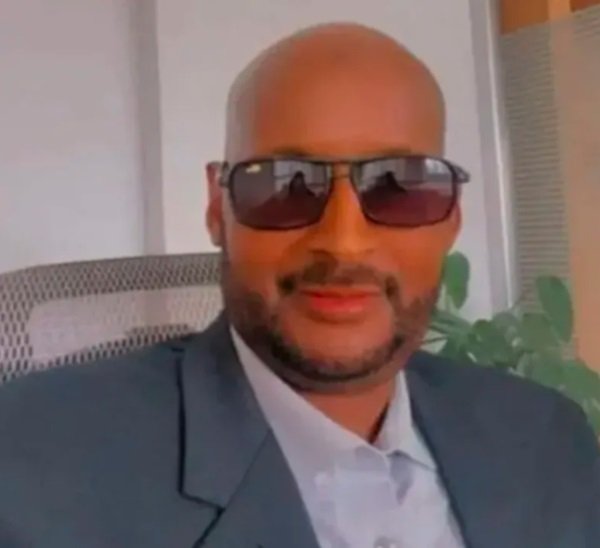
Mohamud A. Ahmed – Cagaweyne
Somali Region of Ethiopia
As I polish my book for its final touches today, I return to Chapter 16, a piece I have borrowed from for this writing. I know some may not welcome the borrowing of what they eagerly await in full. Yet the book is written for all, including the government, and it would be unfair to deny readers a glimpse into its message. Some may view these words as hostile rather than graceful, but my intent is otherwise. The spirit of this chapter is not to wound but to awaken, not to condemn but to counsel, for governance demands not only loyalty but also honesty. If the truth is sharp, it is sharpened only to heal rather than harm.
The history of nations reveals a recurring pattern: moments when private animosities slipped into the public domain and shaped decisions that scarred generations. At the core of such failures is not always a lack of intelligence or resources, but the poison of vendetta disguised as governance. It begins as a private quarrel, a leader’s personal wound or grievance, but once entwined with the machinery of state, it becomes a collective tragedy that damages institutions, undermines trust, and corrodes the delicate fabric of society.
Vendetta, in its essence, is the opposite of leadership. It is an indulgence of ego rather than an exercise of vision. It narrows the horizon of thought, shutting out the perspectives of others, and makes the leader deaf to counsel and blind to logic. It violates the moral order of governance by reducing public duty to the level of private satisfaction. When vendetta dictates decisions, governance ceases to be an art of service and becomes a theatre of personal retribution.
The Somali Region of Ethiopia has often been vulnerable to this poisoned chalice. The region’s modern political journey, marked by decades of marginalization, conflict, and fragile peace, has also been shaped by leaders who allowed personal grievances to influence their public roles. Opposition figures were too often seen not as alternative voices in a democratic space but as threats to personal power. Critics were treated as enemies to be silenced rather than citizens to be heard. Arrests, dismissals, and marginalization became tools not of governance but of vendetta.
The cost of such patterns is painfully visible. When vendetta drives policy, institutions weaken, and the government becomes preoccupied with managing rivals instead of solving the people’s problems. Hospitals lose their doctors, schools are stripped of qualified teachers, universities are drained of their best voices, and communities are left leaderless because those capable of service are targeted for reasons unrelated to merit or performance. The state becomes poorer not from lack of resources but from deliberate exclusion of talent under the shadow of personal animosity.
The danger of vendetta-driven politics is that it reopens wounds that history is struggling to heal. The Somali Region, long haunted by the memories of war, displacement, and suppression, does not need more divides. It needs reconciliation and a leadership capable of moving beyond old grievances. Yet vendetta thrives on keeping conflicts alive, ensuring that the past is never buried and the future never born. Each personal quarrel elevated to the level of governance becomes another scar in the political body of the region.
It is important to recognize that vendetta is not always loud or dramatic. Sometimes it appears quietly, in the form of excluding certain groups from positions of responsibility, in the form of denying services to areas associated with political rivals, or in the subtle use of administrative restructuring to weaken opponents rather than strengthen governance. In the Somali Region, where political engineering often overshadows service delivery, vendetta can hide behind policies presented as reform but designed as retribution.
Yet governance need not fall into this trap. To err is human, but to acknowledge error is a mark of dignity. Leadership does not lose legitimacy by admitting missteps. On the contrary, it gains moral authority. A leader who can look at an opponent and see not an enemy but a citizen, who can resist the temptation to retaliate and instead choose restraint, demonstrates that governance is larger than personal wounds. Such restraint is not a weakness. It is the strength that builds legitimacy and the wisdom that earns respect.
Being wrong unsettles the mind. It disturbs the inner peace of the leader and loosens the grip of certainty. But this disturbance is not a threat to authority; it is the beginning of wisdom. A leader who acknowledges the possibility of being wrong is better equipped to act justly than one who clings to infallibility. Humility, more than power, is the foundation of lasting governance. Without humility, authority easily slips into tyranny. With humility, leadership becomes grace.
The Somali Region today stands at a delicate threshold. On one side lies the temptation of vendetta-driven politics, where leaders continue to pursue personal grievances under the guise of governance. On the other side lies the possibility of a new political horizon, where inclusion, restraint, and magnanimity replace retaliation. The decision between these two paths will shape the region’s future. If vendetta is allowed to dictate governance, the region will continue to fracture, and its people will suffer the consequences of repeated instability. But if leaders embrace the discipline of restraint, they can build institutions capable of surviving beyond individual rulers and create a society where governance is remembered for service rather than punishment.
This moment is especially critical because the Somali Region has recently enjoyed a rare window in Ethiopian history. The federal government under Prime Minister Abiy Ahmed has offered an unprecedented degree of non-interference, both politically and economically, allowing the region to determine much of its own path. For the first time in decades, leaders cannot easily claim that every problem comes from central domination. If mistakes occur now, they are not imported but self-made. This reality places a heavier responsibility on regional leaders to govern wisely, to avoid vendetta, and to prioritize service over personal quarrels.
The region’s ongoing administrative restructuring illustrates both the promise and the peril of this moment. Expanding government services to remote communities is a legitimate duty of governance. But when restructuring appears selective, when it seems aimed at weakening rivals or rewarding allies, it risks becoming another instrument of vendetta rather than an exercise in service engineering. Leaders must remember that administrative reforms should be designed with comprehensive studies, wide consultations, and projections of their social impact. Without these safeguards, even reforms presented with goodwill can destabilize fragile balances and sow discord among communities.
The measure of governance with grace is not how many critics are silenced but how many citizens are heard without fear. It is not how long one holds office but how wisely one uses authority. The people of the Somali Region deserve leadership that resists the poison of vendetta and embraces the higher calling of fairness. They deserve to see prisons emptied of thinkers, schools filled with teachers, hospitals staffed with doctors, and communities led by their most capable sons and daughters without discrimination.
History will not honor the vengeful. It remembers not those who clung to power longest but those who exercised it with wisdom and restraint. The poisoned chalice of vendetta tempts many, but it destroys all who drink from it. Only the path of grace, humility, and magnanimity builds legacies that endure beyond an individual’s time in power.
Governance in the Somali Region today must make this choice. Will it continue to repeat the old cycle of vendetta and retaliation, or will it step into a new era of inclusive leadership? The answer will determine not only the stability of the region but also its contribution to the larger Ethiopian federation. For if the Somali Region demonstrates that it can govern with grace, resisting vendetta and choosing restraint, it will not only secure its own future but also provide a model for others in Ethiopia and beyond.
Final Reflection
My pen is not a weapon for vengeance nor a ladder for ambition. It is not sharpened by thirst for power nor bent toward those who sit in authority or those who aspire to replace them. It is guided only by conscience. I hold no desire to sit upon that sacred chair of power, a seat that has too often been abused. My pen exists for truth, for justice, and for the healing of a people whose destiny deserves better than vendetta. If it cuts, it cuts to awaken. If it wounds, it wounds only to heal.
Mohamud A. Ahmed – Cagaweyne is Columnist, Political and Security Analyst, and Researcher at Greenlight Advisors Group. He can be reached at : 251900644648
Editor’s Note : Views in the article do not necessarily reflect the views of borkena.com
Support Borkena : https://borkena.com/subscribe-borkena/
Join our Telegram Channel : t.me/borkena
Like borkena on Facebook
To submit Press Release, send submission to info@borkena.com
Add your business to Ethiopian Business Listing / Ethiopian Business Directory
Join the conversation. Follow us on X (Formerly Twitter) @zborkena to get the latest Ethiopian News updates regularly.
it seems a “ coded “ statement directed at the highest hierarchy of government . I hope it is not an internal clans’s political squabbling.
You see, the terms ‘Sunrise’ and ‘Sunset’ are both descriptions of the same ‘event’ in time, observed from opposite locations on the Earths surface, but as far as the Sun is concerned it is always ‘noon’; it never sets or rise or be selective in giving LIGHT.
The writers observation here is pointing to the facts that ‘governance’ which is guidance from a ‘higher vantage point’, should behave like the Sun (noon (to all below it) ); unlike what neighbors (clan, tribe…) selectively behave towards one another be (sunset or sunrise, worse take the light out altogether).
However, evolution says, ‘dream on’. ( “are we there yet’?)
Be well.
The world of ‘governance’ from the real one to the p r e t e n d e r s…
“China in 2025 is not what you think”
Link = youtube.com/watch?v=3O47_hIL7Bk
I observed some anti ‘China’ attitudes reflected here in the past, so those who might get agitated should leave the room before the show start, to avoid potential health threatening situations…
Be well.
Capitalist Market Economy vs Socialist Market Economy (China) vs Socialist Economy (USSR)
“How does China’s system really work? This famous Chinese professor explains”
Link = youtube.com/watch?v=rkVyYvWezI0
Be well.
Governance:
Kishore Mahbubani on “A Declining West, a Rising East: Achieving a New Global Balance”
Link = youtube.com/watch?v=0HsAtrd8bNE
Be well