
Editor’s note : Views in the article do not necessarily reflect the views of borkena.com
Remarks on the Amhara’s Fano and the Ethiopian government
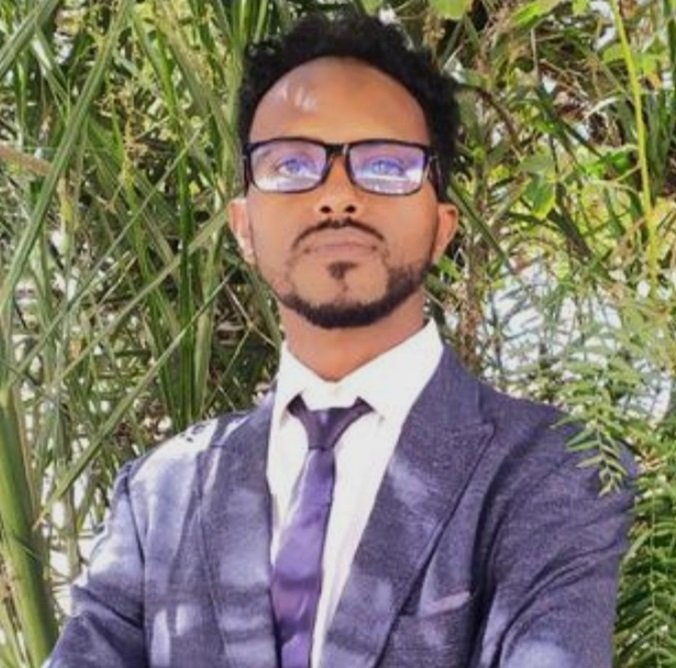
Yosief Abraham Z.
When the challenges from Fano –fighters in the Amhara region– have been mounting in its all forms, apparent and stealth actions of some known squares thus to tarnish the resistance has been mesmerizing.
From all coordinated smear campaigns, the attempts to elaborate the Amhara forces movement as ‘backed by the whims of religious affiliations’ is the most perilous, reprehensible to entertain and analyse.
Refraining from religious fanaticism: Unfolding recent Central Republic Africa experience
A country already fragile doesn’t need other fragmenting and sabotaging reasons for exacerbating the already flared conflicts in the Amhara region. Showering provocative sentiments if possible to divert the weaknesses in ensuring viable ways for curbing the political havocs are, indeed, more dangerous than any other causes of conflicts.
The Central African Republic (CAR) havoc that dragged the country into religiously embodied war from 2003 till 2013 was a ‘politicized religion.’ At the beginning, political issues on inclusivity and representation in the government were main demands of the opponents. However, the political contradictions started weaving religious sentiments and subsequently developed into nation-wide confrontation between the Muslim group Seleka and the mainly Christian and animist group anti-Balaka.
This had therefore dragged the Central African Republic into an inexpressible humanitarian and economic abyss; villages burnt down, hundreds thousands civilians displaced, gates for international mercenaries and exploitative entities remained open and has been, yet, a bad quagmire.
The current political enigma in the Amhara region has therefore need to be addressed from its causes of roots, not from perilous approaches that attempts to paint such movements as ‘religious’ and other times as a decentralised movement that aims at ‘paving ways to grasp the iron-fist of the political power thereby to perpetuate ethnic cleansing’ on others.
The North Ireland plagues: Time not to seed weeds
Instead of exploring the all-round causes and reasons that have been shaping the Amhara forces resistances, a few quarters from the renewal religious sects and Prosperity Party, have been heard labeling the waves by the Amhara as indicated to ‘politically veiled but naked religious movement’ is in fact perilous.
Historical chronicles have been full of such naively moved incidents and their aftermath grave repercussions. An ethno-nationalist conflict in Northern Ireland that lasted about 30 years from the late 1960s to 1998, is one of the bolded historical incidents.
At the start, the North Ireland havoc had its rootage on nationalistic provocations; dynamically, however, the narratives of ‘religion’ embodied ‘politics’ started framing the movement and deflecting media assault mounted. While the question was anchored on the future of ‘Ireland’s national status, the people’s stances on ‘remain within’ by the Ulster Protestants or ‘to be independent from’ the United Kingdom by the Catholics, plunged the country into three decades of intermittent clashes.
The religious elements which were tagged in the late times therefore played precarious roles in exacerbating the dangers of the national sentiments. Adhering to words the ‘Ulster Protestants’ instead of ‘the Unionists and Loyalists,’ and branding the ‘Irish nationalists and republicans’ as Catholics, only ushered seeds of relentless chaos and instabilities.
Biafra: from an insurgency to secession
Despite the lack of united coalescence on creating a guiding roadmap by the different sub-region organized Fano’s insurgent groups, the Central government nature of handling the situation is also fully actuated by the unprecedented efforts to exacerbate the rifts to the worst level.
And this reminds me of the solid provocations that led to the official declaration of the ‘Republic of Biafra.’ Though secessionist but a partially recognised state from Nigeria and existed only from 1967 until 1970, its causes had common grounds to what is happening in Amhara region.
After Nigeria’s independence in 1960, ethnic tensions and military coups culminated and led to the 1966 massacres of Igbo people and other ethnic groups living in northern Nigeria. Supported by external forces, the Nigerian government resorted –instead of assessing the root causes and remediate it– to massive military campaigns. The conflict soon changed its course of politics to religion centered ethno-nationalism.
Though the Nigerian government enabled curbing the secessionist wide schemes, the legacies are still evident. Knowing that the Movement for the ‘Actualization of the Sovereign State of Biafra/Biafra Independence Movement (BIM-MASSOB)’ joined the Unrepresented Nations and Peoples Organization (UNPO) on July 31, 2020 as part of its undeterred stamina tells one fact: politics interwoven to ethnicity and religious fanaticism is easy to launch than stopping it!
Conclusion:
Be it here or there, the Amhara’s Fano forces movement needs to be rectified by redefining other altruistic analyses to its causes and effects. The discord in Lebanon which was political in the 1970s has now been a sectarian one. The heart stabbing experiences of North Sudan, Yemen, Afghanistan and others, have also the narratives of politicised religious cynicism and its insurmountable costs.
And yes, the portraits of movements in the Amhara region are not at their gruesome level of ‘politicised’ religion-oriented games; but the inputs are now here and there veiled under different pretexts which demand meticulous calculations.
Indeed, who may deny that drops of water are what results in storming floods!
Yosief Abraham Z, is a former Executive Director of HorMid (Horn Africa and Middle East) Media and Art Center, and has now been freelancing to major media outlets with specific concerns on the Middle East, Horn Africa and the Gulf. He can be reached at Josiabraham29@gmail.com
Editor’s note : Views in the article do not necessarily reflect the views of borkena.com
__
To Publish an Article On borkena , please send submission to info@borkena.com for consideration.
Join our Telegram Channel : t.me/borkena
Like borkena on Facebook
Add your business to Borkena Business Listing/Business Directory Jobs
Join the conversation. Follow us on X (formerly Twitter ) @zborkena to get the latest Ethiopian news updates regularly. Ethiopia To share information or for submission, send e-mail to info@borkena.com