
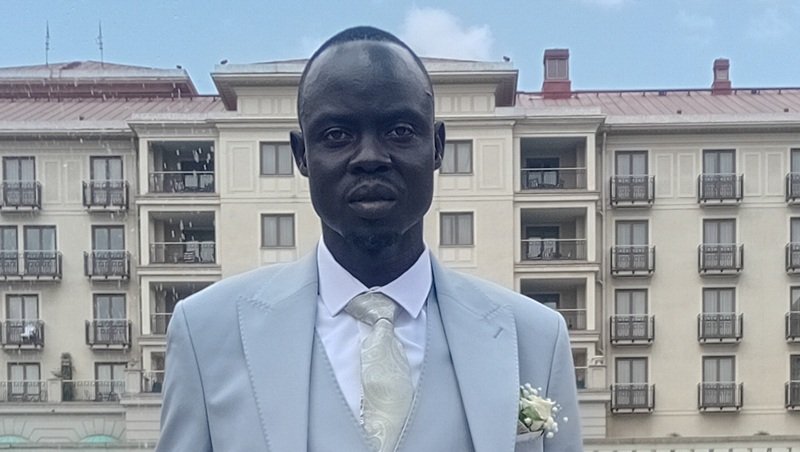
By Okello Miru
There has never been consistent peaceful coexistence in Gambella for a very long time, and there are many reasons for this. Scholars and observers commonly identify competition over natural resources, particularly land, as well as power political struggle among elites, as important drivers of conflict within the region. However, there are other factors that are often overlooked which, in my view, play a major role: international and national policies.
Gambella has experienced several forms of conflicts, such as cross border conflict, conflict between indigenous communities and highlanders, intra-ethnic conflict, and inter-ethnic. Of these, one of the most volatile has been the conflicts between Nuers and Anuaks communities. This will be the main focus of this reflection, although I will also touch briefly on tensions indigenous communities and highlanders.
History matters
The Anywaa and Nuers are sometimes described as traditional enemies. But history is more complicated than that. Testimonies from elders, together with historical accounts, suggest that colonial and state policies contributed to divisions and competition between communities. The broader history of the Ethiopia-Sudan border is also important in understanding the present situation.
The border between Ethiopia and Sudan was formally delimited in 1902. Historical research indicates that the border divided communities that moved across the region, including the Anywaa and Nuer. The people living along the frontier had little influence over the negotiations that ultimately defined the international boundary.
According to the historical account I have relied upon, particularly Robert Collin’s shadow in the grass, the expansion of Ethiopia administration in the frontier region involved the incorporation of Nuer communities into the Ethiopian state. One account in the 1930s describes Majid Abud, an agent of Emperor Haile Selassie, encountering Nuer who had crossed into Ethiopia seasonally. He sought to collect taxes from them and encouraged them to accept Ethiopian citizenship. The account further describes the elevation of Koryum Tut to Fitaurari after he had been given a gown and a shield by the Emperor and charged with the responsibility to mobilize other Nuer to accept Ethiopian rule. The history of the frontier involved state expansion, taxation, migration, access to land, and the movement of people across a border that did not necessarily correspond to the social realities of the communities living there.
The experience of refugees also became an important part of history. During successive conflicts in Sudan and South Sudan, large numbers of people from different tribes sought refuge in Gambella. Ome eventually returned home when conditions improved, while Nuers remained a part of the region’s changing demographic and political landscape. UNHCR documented the long history of Ethiopia and particularly Gambella, hosting refugees from South Sudan.
Why the cycle of violence must end
If lasting peace is to come to Gambella, the use of one community against another must end. No government should allow ethnic identity to become a tool for suppressing or eliminating another community. The principle is simple: the state has a responsibility to protect every citizen, regardless of ethnicity.
This is especially important because serious violence has continued into recent years. On 4 April 2024, armed Nuer forces from South Sudan, reportedly accompanied by some Nuers from Ethiopia, attacked four villages in Jor Woreda. A 2025 conflict analysis by the Rift Valley Institute reported that more than 100 Anywaa people were killed, hundreds hundred of cattle taken, and children were abducted.
These events have also been documented by organizations representing indigenous communities. A submission to the UN Universal Periodic Review describes the victims as more than 100 Anywaa people killed by the well-armed White army force crossing from South Sudan.
The attempts by some of the regional government officials to expose what had happened did not bear any fruits reinforcing what some Anywaa community members believe is a systematic pattern of ethnic displacement. The current activities of encouraging the Anywaa people of omininga neighborhood in Gambella town to go back after their houses have been destroyed and nine people killed in recent attack is an indicator of unwillingness to abandon any village anymore because if the intention is just land they would have settled, construct houses, plant mangos trees and go about their normal business but this is far from being the case. Once one village has been taken, the plan shifts on how to take over the next one. After the conclusion of national dialogue Reverend Pwoch Okwier, one of the diaspora who had come from Australia for the national dialogue held recently in Addis Ababa visited this area accompanied by peace ambassador Eyob Abebe and others. They prayed in this area which had been deserted following the death of nine Anywaa people. In the video posted on social media, one of the team members could be heard reciting that we would uproot hatred and plant peace and others would repeat after her. This is the same area in which Reverend Pwoch’s father, the well-respected Reverend Okwier Oletho of Assemblies of God was killed 23 years ago. Reverend Pwoch Okwier appeared in the Herald newspaper with a simple but powerful message: We cannot change what happened yesterday but we shape the future. Such effort needs government support to be fruitful.
These events demonstrate that Gambella’s conflict cannot be understood only as a local dispute over land. Cross border armed movements, political relationships, refugee movements, local grievances, and the weakness or absence of state protection all interact.
Refugees and the pressure on host communities
The presence of refugees presents another difficult dimension. Ethiopia has a long standing policy of welcoming refugees, and Gambella has carried a particularly heavy share of this responsibility. This humanitarian commitment should be respected because refugees are people who have fled war and insecurity, and they deserve protection. At the same time the needs of and concerns of host communities cannot be dismissed.
Local communities have repeatedly expressed concerns about pressure on land and resources, security, inadequate consultation, and the effects of refugees on the demographic and political balance of the region. These concerns deserve to be addressed through evidenced based policy rather than dismissed as hostility toward refugees and host communities.
UNHCR’s reporting confirms that Gambella has faced significant pressures associated with refugees hosting, while also emphasizing the need to support both refugees and host communities.
Allegedly, Gatluak Buom, leader of Gambella Liberation Front which collaborated with Oromo Liberation Front and carried out a major attack in Gambella town on 14 June 2022 recruited some of his militia from refugees’ camp.
It is therefore reasonable to ask whether refugee-hosting arrangements in areas with existing ethnic tensions should be designed differently by relocating within the Gambella region or other regions in Ethiopia. If relocation or redistribution is considered, however, it should be done voluntarily where appropriate, lawfully, safely, and in consultation with refugees, host communities, regional authorities, and humanitarian organizations.
The objective should be to prevent refugee settlements from becoming another source of conflict while protecting the rights and dignity of the people who have sought refuge.
Cross-border conflict requires a cross border response
Another major problem is the porous border between Ethiopia and South Sudan. People on both sides of the border have longstanding family, cultural, pastoral, and economic connections. But the same cross border networks can also facilitate armed incursions, cattle raiding, abductions, and the movement of fighters.
The April 2024 attack in Jor demonstrated the consequences of failing to adequately secure vulnerable border communities. The Rift Valley Institute’s analysis describes the attackers as Nuer militia from South Sudan, accompanied by some Nuer from Ethiopia, and reports that children were among those abducted.
Ethiopia and South Sudan therefore need stronger cooperation to protect communities along the border. Border security should not be understood simply as a military issue. It should include intelligence sharing, prevention of cattle raids, mechanism for recovering abducted children, community dialogue, and cooperation between local administrations of both sides. What value is citizenship if a citizen’s security cannot be guaranteed?
The danger of manipulating conflict between communities
There have also been incidents in which violence involving highlanders, government forces, and indigenous communities has threatened to trigger wider ethnic confrontation. For instance, the murder of women basketball assistant coach Mr. Alinga Opiti by the federal police in my opinion seem to have been done intentionally to arouse feelings of the youth to react so as to use the opportunity to carry out mass killings. He shot several times, fortunately he fell into the river to be discovered dead three days later. The gap helped cool down the feelings of the angry youth. Encouragement by elders and relatives of the deceased for the youth to stay calm so that anti peace elements could exploit the opportunity also contributed to managing the situation. Defense forces and regional security bodies have also played a significant role in containing the situations by taking action on the members of federal police as well as arresting those suspected to have bought machetes for mass killing.
What should be done?
If peace is genuinely the objective, I believe several measures deserve serious consideration
- Protect communities equally
The federal and regional governments must provide equal protection to all communities. Security forces should respond to threats based on the protection of civilians rather than ethnicity or political affiliation.
- Strengthened border Security
Ethiopia should work with South Sudan to establish effective mechanisms for preventing armed crossings, cattle raiding, abductions and attacks on civilian communities.
- Reconsider refugee-hosting arrangements where necessary
Consider relocation of some of these refugees to other parts of Ethiopia where there are no historical enmity. This way the local communities will not feel overwhelmed and also from the experience these Nuer communities rarely attack when they don’t outnumber the host communities.
Up to now, areas where Nuer have lived in Gambella as I have already pointed out are areas where they displaced Anuak communities. The federal government of Ethiopia and the UNHCR should try something new and innovative.
The government should try plan to relocate Nuer refugees within Gambella for instance, to Opuuo land and bring Opuuo to Anuakland where they will live peacefully since there is no historical grievances between the two communities and then encourage the Nuer communities to live, settled, plant trees, and welcome others to live with them peacefully until the area developed into town without killing and looting shops of others until eventually become big town.
- Stop using communities against one another
Political actors and the government must stop treating ethnic communities as instruments of political and military strategy. The state should build institutions that protect citizens rather than depend on ethnic balances of power.
- Give local communities a meaningful voice
People in Gambella should have a genuine role in decisions affecting land, refugee settlement, local administration, development, and security. Policies imposed without consultation are unlikely to produce sustainable peace.
- Build a culture of coexistence
Ultimately, government policy alone cannot create peace. Nuer, Anywaa, Mejang, Opo, Komo, highlanders, and other communities living in Gambella must be able to coexist without fear.
A different future for Gambella
Gambella cannot continue to be treated as a frontier, a security problem, or a place where competing political interests are managed through ethnic alliances. It is home to people who deserve the same security, dignity, development opportunities, and protection under the law as citizens elsewhere in Ethiopia.
The people of Gambella also have a responsibility. Communities should take law into their own hands. When crimes occur, they should provide information to the relevant authorities and demand justice through lawful institutions. Retaliatory attacks only create another generation of victims.at the same time, the government even has greater responsibilities: to ensure that communities can trust the state to protect them. Peace will not simply be because one community defeated another. It will come when no community believes that its survival depends on defeating another.
The conflict of the past should not determine the future
As we celebrate the Ethiopian New Year, my hope is that the coming year will bring Gambella closer to a time when Anywaa, Nuer, Opo, Komo, highlanders, refugees, and other residents can live together without fear-children may grow up knowing their neighbor as fellow human beings rather than enemies.
Peace should no longer be a distant aspiration for Gambella. It should become a shared commitment.
Happy Ethiopia New Year.
About the author
Okello Miru Ojulu is an economics teacher at Abobo High school in Gambella and a writer interested in the region’s social, political, and economic affairs. He previously worked with the Carter Center Ethiopia as the Abobo woreda coordinator for the Ethiopian Dracunculiasis Eradication Program. He has also published articles on large scale farming, refugees, and conflicts in Gambella. He holds qualifications in community development, Economics, and Business Administration. His main interests are peace building, governance, conflict resolution, and community relations.
Editor’s Note: Views in the article do not necessarily reflect the views of borkena.com
__
Join our Telegram Channel: t.me/borkena
Like borkena on Facebook
To submit a press release, send the submission to info@borkena.com
Add your business to Ethiopian Business Listing / Ethiopian Business Directory
Join the conversation. Follow us on X (formerly Twitter) @zborkena to get the latest Ethiopian news updates regularly.
Currently the Anuaks are the troublemakers in Gambela by killing Nuers and highlanders. Currently, I witness calls among Nuers to restrain from revenge and let the government restore order. But the government is busy elsewhere and as it consists mostly of highlanders it exploits the divide and rule policy for its own benefits. Why would they install an Anuak governor when the majority are Nuers? Why would the latest “democratic” elections hide the majority of votes?
…
Dinka’s are majority in South Sudan who try to wipe out the Nuers and they escape the violence to Gambela, where they become majority.
The well being of Anuaks depends on the peace and democracy of South Sudan and Ethiopia. Becoming a minority in Gambela is irreversable, armed struggle and provocations would lead to the next wave of revenges and massacres. The role of victim is currently not beneficial as the region and the world is full of other victims. Try to integrate and intermarry. Globalisation will soften the cultural differences.
Call for the Relocation of Refugees to Protect Host Communities
The continued presence of large numbers of South Sudanese refugees in Gambella has created serious security and humanitarian challenges for the host communities. There have been incidents in which innocent members of host communities have reportedly been killed or harmed.
The Ethiopian government must take these security concerns seriously. Protecting refugees is an important humanitarian responsibility, but protecting innocent Ethiopian citizens and host communities is equally important.
If refugee settlements in Gambella can no longer be maintained safely for both refugees and host communities, the Ethiopian government, together with relevant humanitarian organizations, should urgently assess the relocation of refugees to other suitable locations where adequate security, land, infrastructure, and humanitarian services can be provided.
Relocation should not be understood as hatred toward South Sudanese people or punishment of refugees. It should be a security and responsibility-sharing measure designed to prevent further loss of innocent lives and reduce pressure on Gambella’s host communities.
The government must also investigate every killing or violent incident individually and hold the perpetrators accountable, regardless of whether they are refugees, host-community members, or armed groups.
Gambella communities deserve peace and security, and refugees deserve protection. A sustainable solution must protect both.