
A Historic Bond of Solidarity and Imperial Friendship
From Mexico’s Historic Solidarity with Ethiopia to the Return of Emperor Haile Selassie I’s Descendants to Mexico City

By: Lij Nebyat A Demessie
The friendship between Mexico and Ethiopia stands as a remarkable testament to the power of international solidarity, principled diplomacy, and mutual respect between nations. Forged during one of the most challenging periods in Ethiopia’s modern history, this enduring relationship reflects a shared commitment to sovereignty, dignity, and the rejection of conquest.
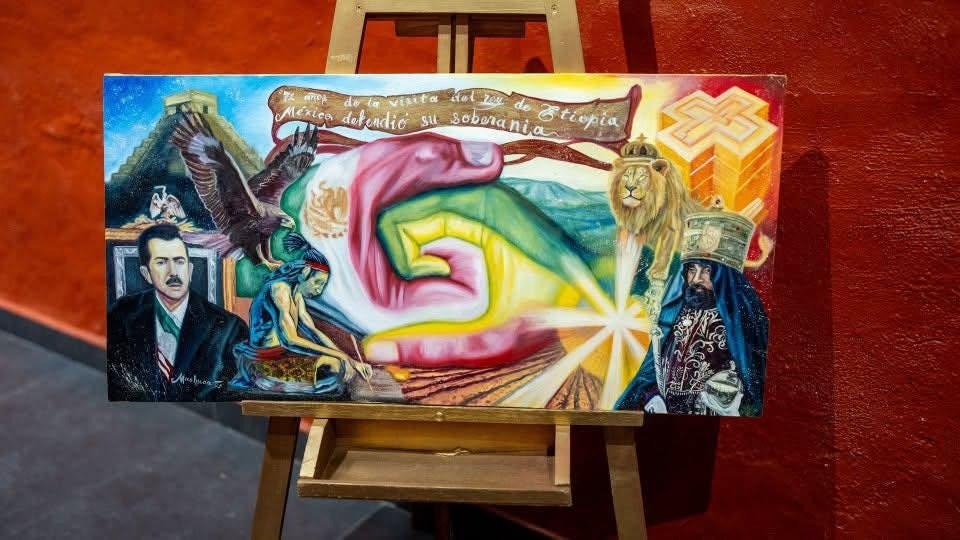
Following Fascist Italy’s invasion of Ethiopia in 1935, Mexico refused to recognize Italy’s claimed annexation, defending Ethiopian sovereignty before the international community at the League of Nations. Mexican diplomat Isidro Fabela, representing President Lázaro Cárdenas, emerged as an important voice opposing the legitimization of territorial conquest. At a time when Ethiopia’s independence was under threat, Mexico’s position represented a consequential act of diplomatic solidarity with a nation fighting to preserve its sovereignty.
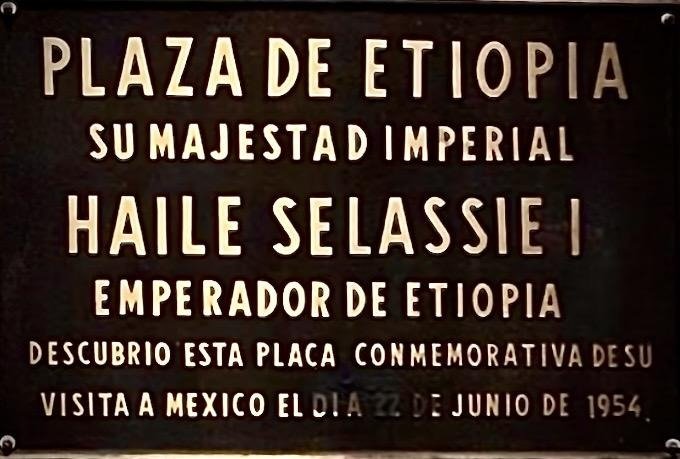
Nearly two decades later, Emperor Haile Selassie I visited Mexico from June 19–24, 1954, to express his gratitude for the country’s principled support. Received by Mexican President Adolfo Ruiz Cortines and accorded a formal welcome with military honors, the Emperor’s visit symbolized the deep appreciation of the Ethiopian Crown for Mexico’s steadfast position. His itinerary included diplomatic engagements and visits to prominent cultural, religious, and historical landmarks, including Chapultepec, the Basilica of Guadalupe, Teotihuacan, and the National Autonomous University of Mexico.
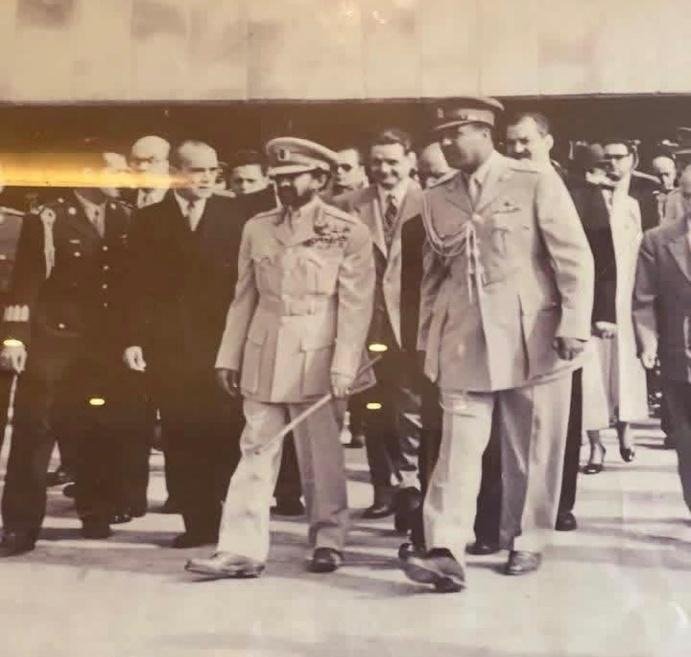
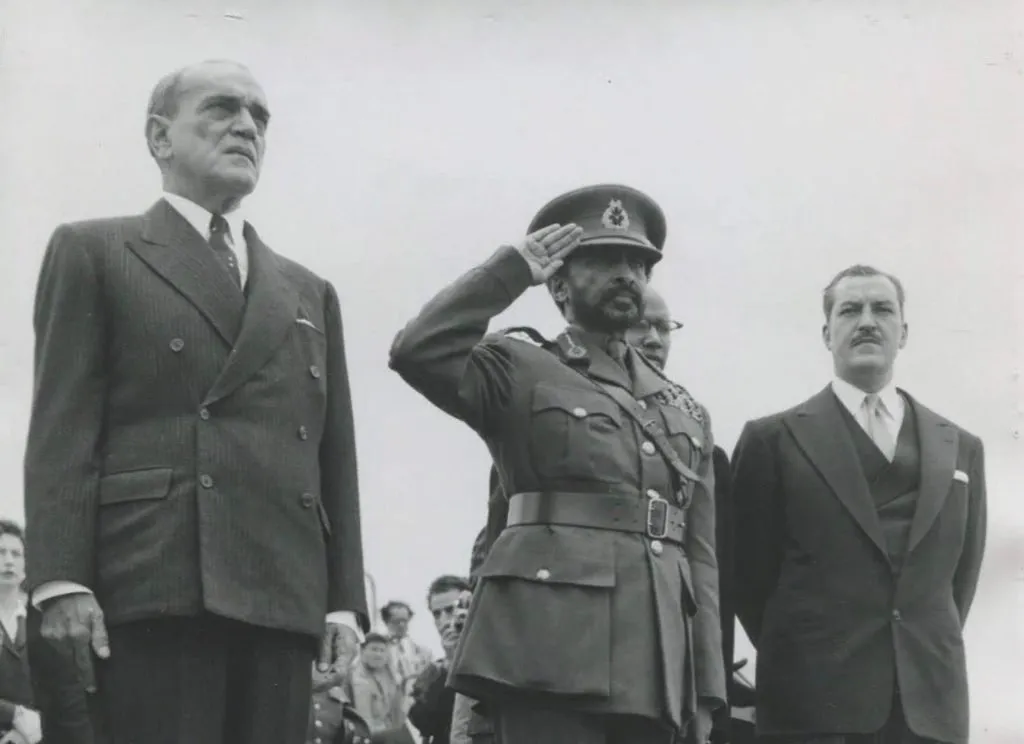
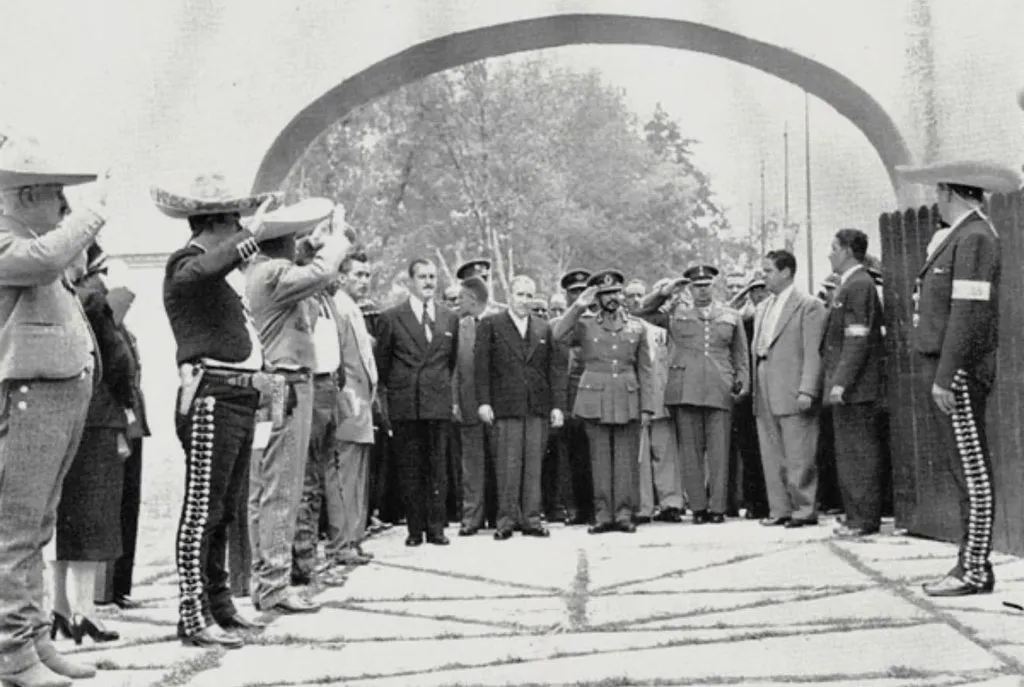

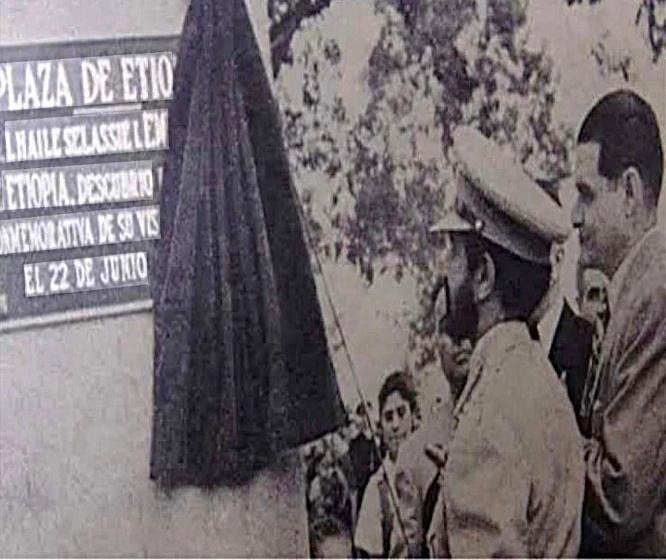
On June 22, 1954, Emperor Haile Selassie inaugurated Ethiopia Square (Glorieta de Etiopía) in Mexico City, commemorating Mexico’s defense of Ethiopian independence. Although subsequent urban redevelopment transformed the original traffic circle, its legacy remains through Metro Etiopía on Line 3, whose lion-head emblem evokes Ethiopia’s historic association with the Lion of Judah.
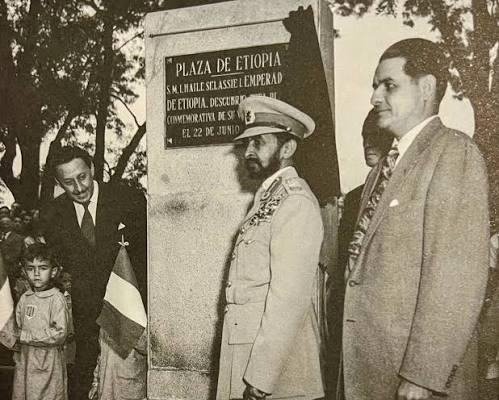
The gesture of friendship was reciprocated in 1958 with the establishment of Mexico Square in Addis Ababa. Together, these public landmarks embody a relationship extending beyond diplomatic protocol: a bond grounded in the defense of national sovereignty, reciprocal recognition, and solidarity across continents.

Olympic Glory and a Legacy Worth Commemorating
Beyond the establishment of official diplomatic relations in 1949, the historical connection between Ethiopia and Mexico also encompasses a remarkable chapter in international sport. At the 1968 Olympic Games in Mexico City, two Ethiopian distance-running legends, Abebe Bikila and Mamo Wolde, brought the legacy of Ethiopia’s athletic excellence to the same city where Emperor Haile Selassie had been received with honor fourteen years earlier. Both men had served in the Emperor’s Imperial Bodyguard, linking their sporting achievements to Ethiopia’s imperial history and national identity.
Abebe Bikila had already made history by winning the Olympic marathon in Rome in 1960, becoming the first African to win an Olympic gold medal. He successfully defended his marathon title at the 1964 Tokyo Olympics, establishing himself as one of the greatest distance runners of his generation. In Mexico City in 1968, however, an injury forced him to withdraw from the marathon before finishing.
His compatriot and fellow former Imperial Bodyguard, Mamo Wolde, carried Ethiopia’s hopes to victory. Wolde won the gold medal in the 1968 Olympic marathon, adding to the silver medal he had earned in the 10,000 meters earlier in the Games. His triumph continued Ethiopia’s extraordinary Olympic marathon tradition and established another enduring link between Ethiopian sporting achievement and Mexico city.


Years later, His Imperial Highness Prince Ermias Sahle-Selassie, President of the Crown Council of Ethiopia, visited Mexico City in continuation of the longstanding diplomatic relationship between the two countries. During that visit, Prince Ermias went to the Olympic marathon finishing line, reflecting on the significance of Ethiopia’s achievements at the 1968 Games and the historic bond between the Ethiopian people and Mexico.
For Prince Ermias, the legacy was also personal. He recalled vividly that, as a young boy in Addis Ababa, he would see Mamo Wolde watching football at the stadium. That memory offers a more intimate perspective on an athlete celebrated internationally: beyond his Olympic triumph, Wolde was a familiar presence in the sporting life of the Ethiopian capital. Prince Ermias’ recollection connects the grandeur of Olympic achievement with the everyday memories through which a nation’s heroes remain alive in the hearts of successive generations.
Reflecting on the relationship between Mexico and Ethiopia, the achievements of Bikila and Wolde, and the significance of the 1968 Olympics, Prince Ermias expressed the hope that future generations would erect a monument at the marathon finishing line in Mexico City to commemorate Ethiopia’s historic Olympic legacy. Such a monument would honor the extraordinary accomplishments of the two athletes, recognize their service in the Emperor’s Imperial Bodyguard, and preserve the memory of Ethiopia’s triumph on Mexican soil.
The proposed memorial would also carry a wider diplomatic meaning. Just as Ethiopia Square in Mexico City and Mexico Square in Addis Ababa commemorate the friendship between the two nations, a monument at the Olympic finishing line could recognize the role of sport in bringing peoples together. It would preserve a moment when Ethiopian excellence became part of Mexico City’s own history, while offering future generations a tangible reminder of the strong bond and connections between the two countries.
Renewing Diplomatic Ties: The Crown Council and the 2022 Commemoration
The relationship between Mexico and Ethiopia has been sustained not only through historic visits and public monuments, but also through continuing diplomatic and cultural engagement. An important chapter in this modern history took place in November 2022, when the Crown Council of Ethiopia’s delegation was invited by the Mexican Embassy in Addis Ababa to officially participate in a diplomatic event organized in collaboration with Dashen Bank.
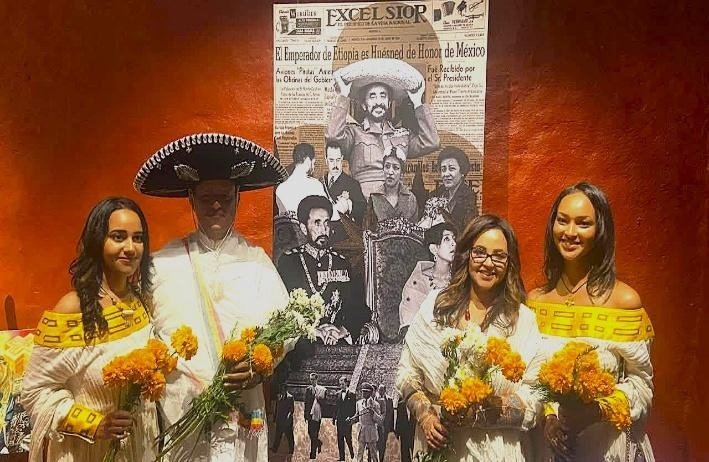
The event featured an exhibition documenting Emperor Haile Selassie’s historic 1954 visit to Mexico and the longstanding friendship between the two countries. It brought together senior Ethiopian government officials, members of the diplomatic corps, representatives of international organizations, financial-sector leaders, and members of the Mexican community in Ethiopia. The exhibition was inaugurated by senior representatives of Dashen Bank and the Ethiopian Ministry of Foreign Affairs alongside Mexico’s ambassador to Ethiopia.
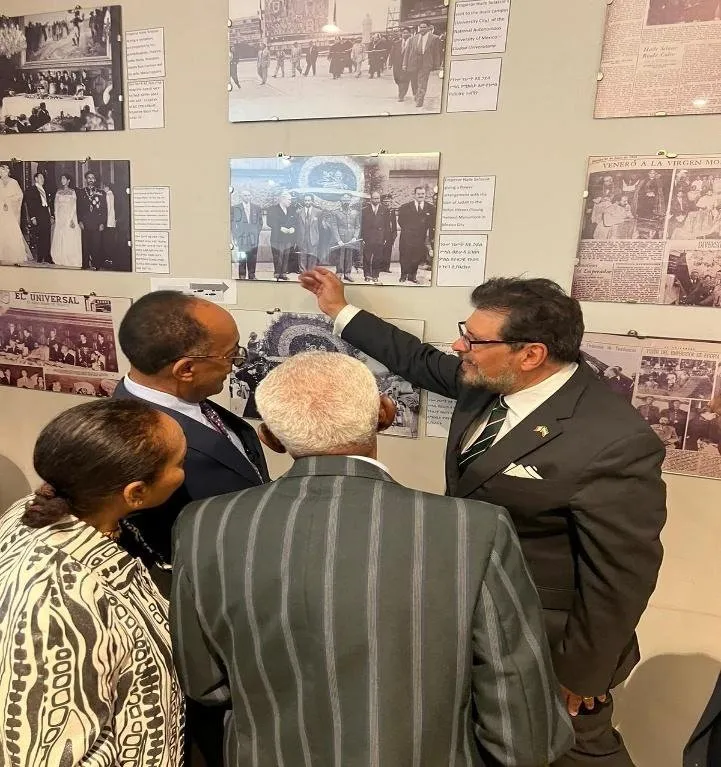
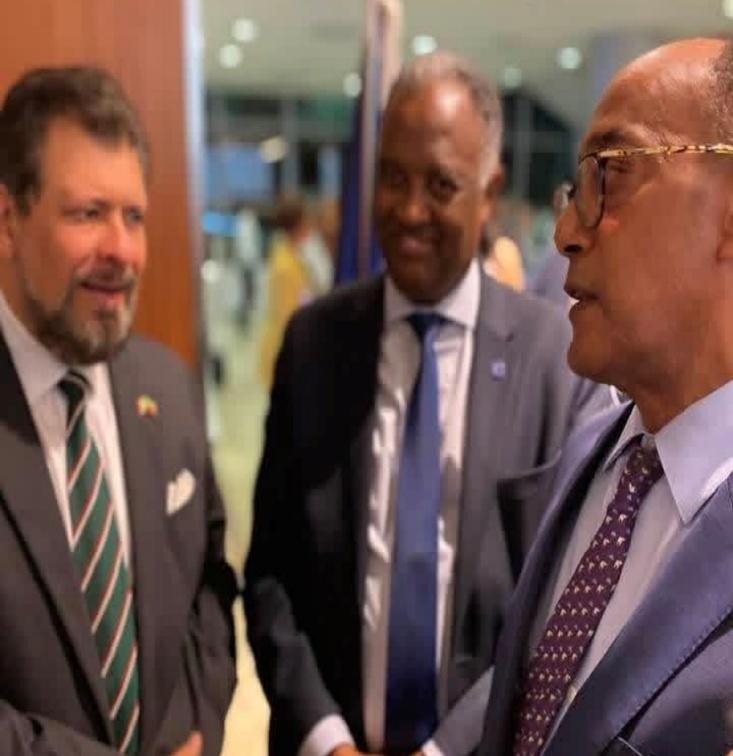
The commemoration underscored the importance of preserving diplomatic history and introducing it to younger generations. The historical photographs and documents provided a visual record of the Emperor’s state visit, including the inauguration of Ethiopia Square in Mexico City and the reciprocal establishment of Mexico Square in Addis Ababa. In this setting, the Crown Council’s participation reflected its continuing interest in safeguarding the historical legacy of the Solomonic Monarchy and fostering international understanding.
The November 2022 gathering was especially significant because it brought historical remembrance into the contemporary diplomatic sphere. It demonstrated that the friendship initiated through Mexico’s defense of Ethiopian sovereignty remains relevant to present-day relations, providing a foundation for cultural cooperation, public diplomacy, and stronger connections between the peoples of both nations.
The Mexican Embassy’s official account described the exhibition as commemorating 73 years of diplomatic relations, dating from the establishment of formal relations in 1949. The event, therefore, served as a bridge between the historic solidarity of the 1930s, Emperor Haile Selassie visit in 1954, the Olympic achievements of 1968, and ongoing diplomatic engagement.
Seen in this broader context, Prince Yisehak Fikre-Selassie and his family’s visit to Mexico this October represents a continuation of an established diplomatic and cultural legacy rather than an isolated royal occasion. Their program of historical visits, artistic exchange, and academic engagement builds upon the relationships maintained by the Crown Council and the diplomatic institutions of both countries. It also reinforces the importance of transmitting this history to younger generations through meaningful encounters with the places, people, and achievements that shaped it.
A Royal Family Returns to Honor History
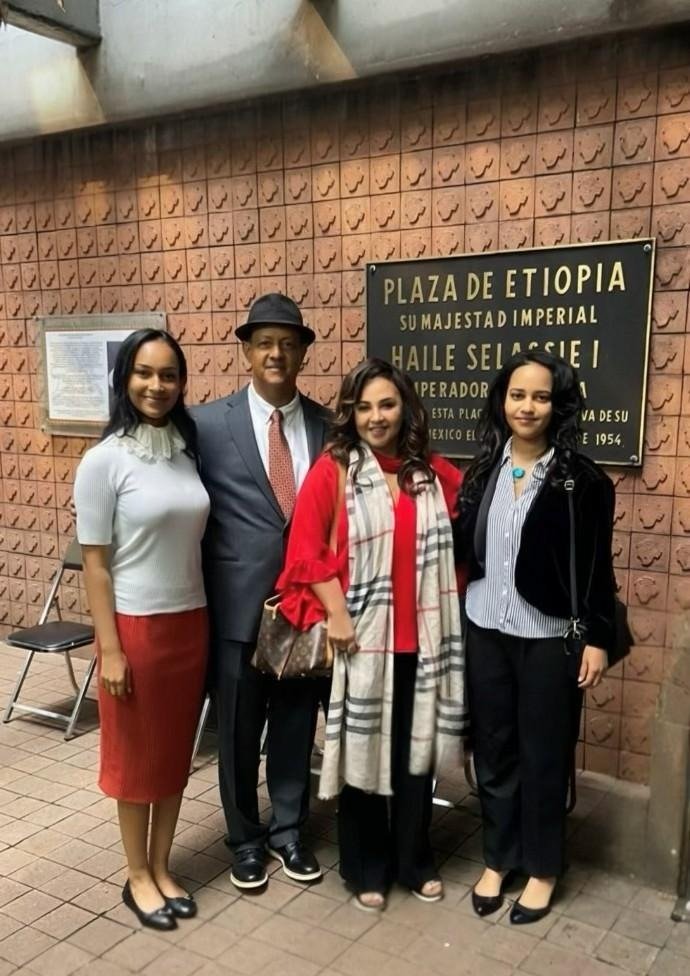
In October 2026, seventy-two years after Emperor Haile Selassie’s historic visit, his great-grandson, Prince Yisehak Fikre Selassie, returned to Mexico accompanied by his consort, Princess Asqual Teferi, and their daughters, Princess Gigi and Princess Lissie. Their visit to Metro Etiopía brought the Ethiopian imperial family back to a place deeply connected to the history of Mexican-Ethiopian friendship.
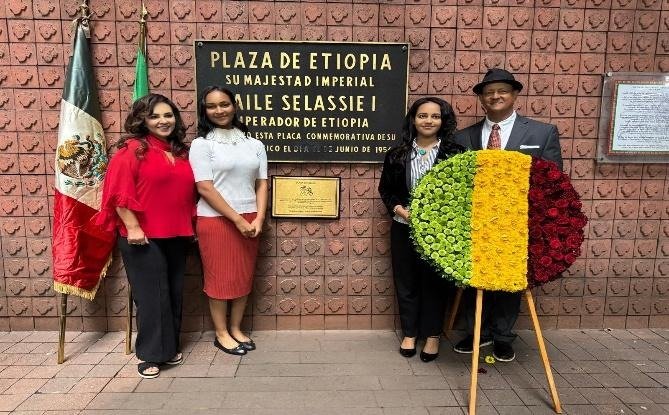
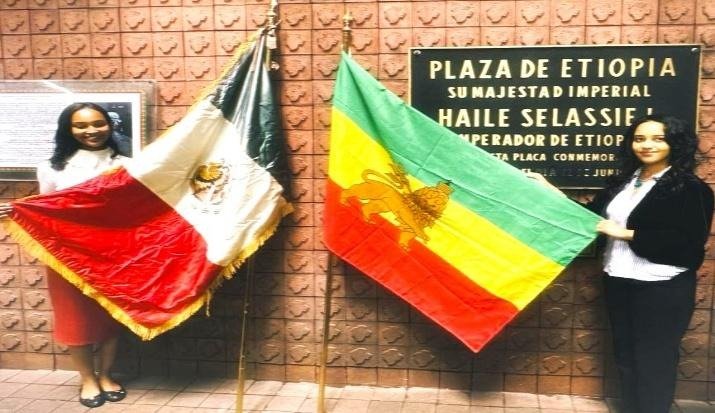
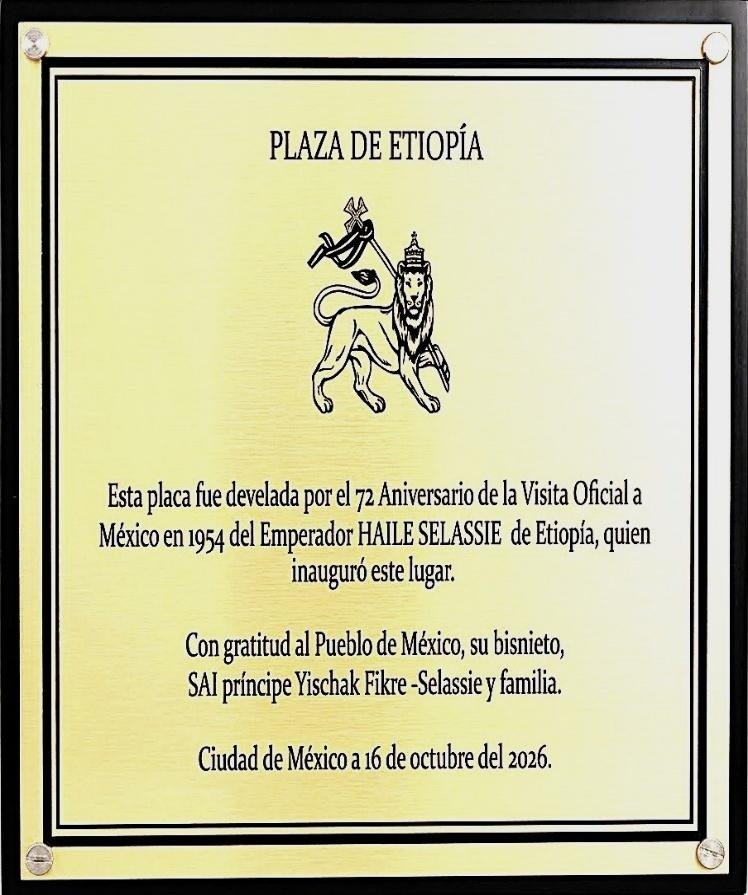
A particularly poignant feature of the commemoration is a plaque bearing Prince Yisehak and his family’s names, placed beneath the plaque honoring Emperor Haile Selassie’s 1954 visit. The arrangement creates a striking visual connection across generations: the Emperor’s historic expression of gratitude above, followed by the return of his descendants more than seven decades later. The two
commemorations together symbolize the continuity of a relationship initiated through Mexico’s defense of Ethiopian sovereignty and sustained through cultural exchange and historical remembrance.
The family’s return was not simply a tribute to the past. It also demonstrated how history can be carried forward through the arts, education, and the participation of the next generation. The visit’s cultural program, including Prince Yisehak’s art exhibition and academic engagement, offered Mexican audiences an opportunity to encounter Ethiopia’s artistic traditions, spiritual heritage, and historical legacy through the perspective of a contemporary Ethiopian royal descendant.
Prince Yisehak Fikre Selassie: Art, Faith, and Heritage
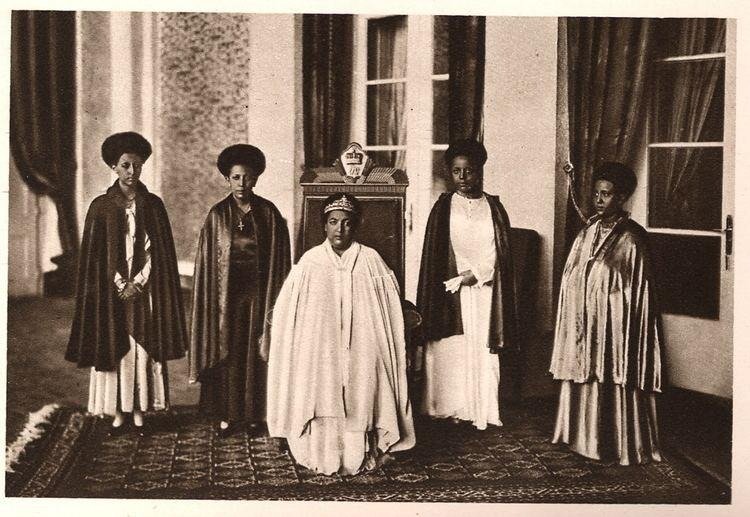
Prince Yisehak Fikre Selassie is an accomplished artist whose work brings together Christian spirituality, traditional Ethiopian religious art, and contemporary visual expression. His artistic vision was shaped from an early age by his grandmother, Princess Welete-Israel Seyoum, whose devotion to faith found expression in her religious paintings. Her example helped inspire his own lifelong engagement with art as a means of spiritual reflection and cultural preservation.
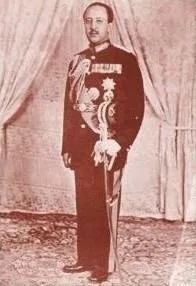

Prince Yisehak earned a Bachelor of Arts in Illustration from the Rhode Island School of Design and subsequently pursued further art studies in Rome, Italy. His paintings explore biblical narratives, religious symbolism, and the human experiences of displacement, suffering, resilience, and hope. Drawing on Ethiopia’s rich tradition of sacred painting, he combines historical influences with a contemporary sensibility, seeking to express dimensions of spiritual life that extend beyond the visible world.
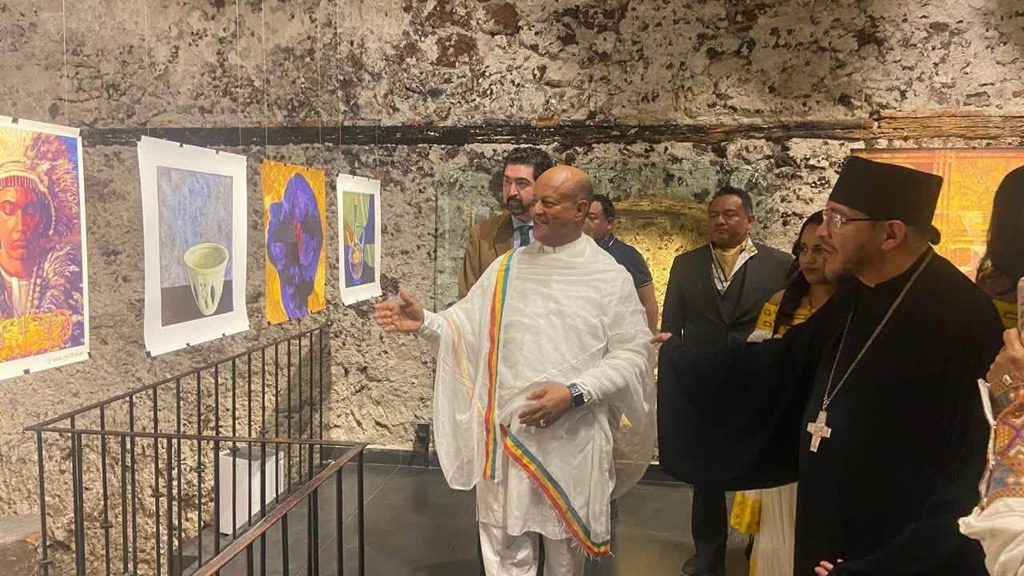
His portfolio includes Image and Likeness, Fruit of the Spirit, Golgotha, and Ascension. Through these works, Prince Yisehak presents faith not merely as a subject of artistic representation, but as a lens through which to examine human struggle, spiritual transformation, and the enduring search for meaning.
His artwork has been exhibited in Paris, New York, California, Japan, and other international venues, bringing Ethiopian artistic and spiritual traditions to diverse audiences. His exhibition in Mexico City extended this international presence, using art as a bridge between Ethiopian heritage and Mexican culture.
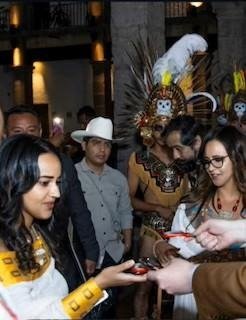
The exhibition’s inauguration, marked by Princess Gigi cutting the ceremonial red ribbon, added a meaningful family dimension to the occasion. Her participation underscored the transmission of artistic and cultural heritage across generations, while the exhibition itself demonstrated how creative expression can serve as a form of cultural diplomacy—fostering understanding between peoples whose histories and traditions may differ, yet whose appreciation of faith, beauty, and human dignity can unite them.
Princess Lissie Fikreselassie: Royal Heritage, Academic Achievement, and Cultural Representation
Princess Lissie Fikreselassie, also known as Lissan “Lissie” Sellasie, embodies a distinctive combination of academic achievement, cultural representation, and Ethiopian royal heritage. An Ethiopian-American and descendant of Emperor Haile Selassie I, she represents a younger generation engaging with its heritage through education, international participation, and philanthropic interests.
One of the memorable moments of the family’s Mexican program was Princess Lissie’s visit to Teotihuacan, the ancient Mesoamerican city whose monumental architecture preserves the legacy of one of the most influential civilizations of pre-Columbian Mexico. During the visit, she climbed to the top of the Temple of the Feathered Serpent, also known as the Temple of Quetzalcoatl, located within La Ciudadela, or the Citadel, at the archaeological site with her father. The temple is one of Teotihuacan’s most distinctive monuments, celebrated for its sculptural representations of feathered serpents and its profound religious and political significance in the ancient city.
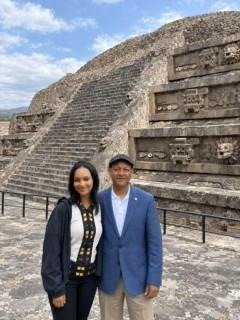
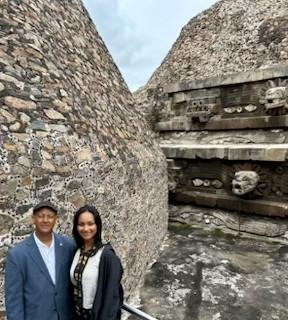
The visit carried a particularly meaningful historical resonance because Emperor Haile Selassie had also visited Teotihuacan during his 1954 journey to Mexico. Princess Lissie’s encounter with the ancient site thus created another connection between the Emperor’s historic visit and the return of his descendants. Against the backdrop of Mexico’s pre-Hispanic civilization, the moment brought together two distinct historical legacies: Ethiopia’s enduring imperial tradition and Mexico’s extraordinary archaeological heritage.
Lissie’s accomplishments also extend to the international cultural sphere. In 2023, she became the first Ethiopian to participate in ** Le Bal des Débutantes **, one of Paris’s most exclusive international social events, where she helped lead the Royal and Noble Debutantes. Featured prominently in publications covering the occasion, she drew attention for her striking beauty and elegance, described as angelic in Les Debutantes. Her participation brought visibility to Ethiopian heritage within an international setting traditionally associated with aristocratic and distinguished families.


Beyond her public appearances, Princess Lissie has demonstrated an interest in philanthropy, particularly initiatives supporting girls’ education and self-empowerment. Her achievements reflect a contemporary expression of Ethiopian royal heritage, uniting cultural pride, personal accomplishment, and social responsibility.
The family’s broader Mexican program also included visits to the Basilica of Guadalupe and the National Museum of Anthropology and History, further connecting their journey with Mexico’s religious, historical, and cultural inheritance. Prince Yisehak’s keynote address on Ethiopian culture, art, and architecture at the University of the Cloister of Sor Juana, accompanied by an exhibition of his paintings, added an academic dimension to the visit. Together, these engagements advanced a meaningful exchange between Ethiopian and Mexican audiences, demonstrating how art, scholarship, and shared historical interest can strengthen international understanding.
The Crown Council and the Living Legacy of Ethiopia’s Monarchy
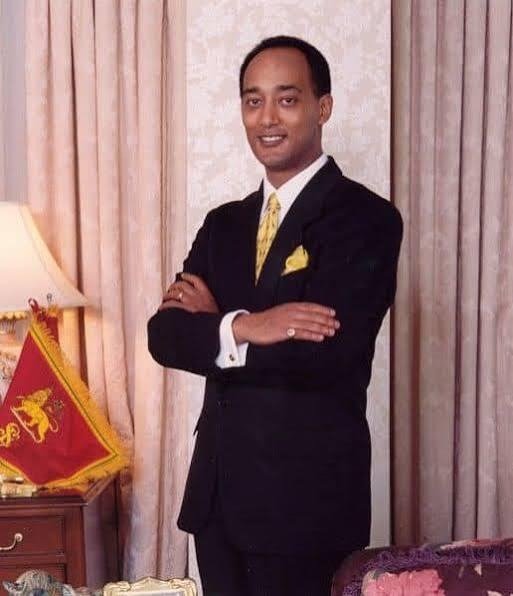
The commemoration also draws attention to the contemporary role of the Crown Council of Ethiopia, led by His Imperial Highness Prince Ermias Sahle-Selassie, its President. Serving as the official representative body of Ethiopia’s Solomonic Monarchy, the Crown Council works to preserve the nation’s imperial heritage while promoting historical awareness, cultural understanding, and humanitarian and educational initiatives.

The Solomonic tradition occupies a central place in Ethiopia’s historical consciousness, encompassing centuries of statehood, religious tradition, cultural achievement, and diplomatic engagement. Its significance extends beyond Ethiopia’s borders, resonating with communities of African descent worldwide for whom Emperor Haile Selassie I and Ethiopia hold profound historical and cultural meaning.
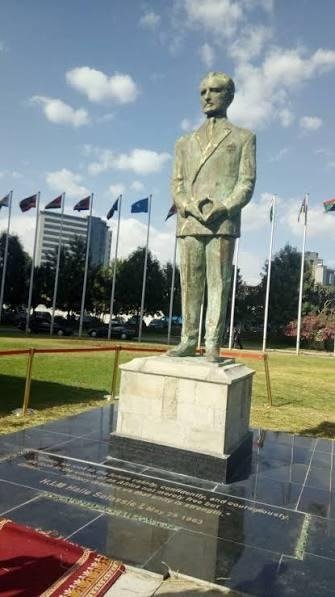
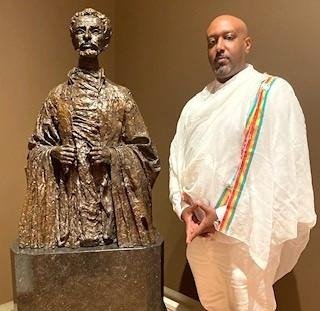
Through international engagement and heritage initiatives, the Crown Council helps connect this legacy with contemporary audiences and future generations. The return of Prince Yisehak and his family to Mexico as we also look forward to commemorating the 96th Anniversary of Emperor Haile Selassie and Empress Menen’s Coronation this November 2, 2026, illustrates how the history of Ethiopia’s monarchy can serve as a foundation for cultural diplomacy—preserving historical memory while creating opportunities for new relationships, artistic collaboration, and mutual understanding.
The family’s visit also demonstrates that the legacy of Emperor Haile Selassie is not confined to monuments, archival records, or historical commemorations. It remains present through the descendants who carry forward his heritage, the cultural institutions that preserve his memory, and the international relationships shaped by his historic engagements.
A Friendship Across Generations
From Mexico’s refusal to recognize Italy’s conquest of Ethiopia to the reciprocal naming of public spaces in Mexico City and Addis Ababa, the story of Mexico and Ethiopia offers a compelling example of how principled solidarity can transcend generations. Emperor Haile Selassie’s 1954 visit gave lasting expression to his appreciation for Mexico’s defense of Ethiopian sovereignty. The return of his descendants in 2026 has renewed that connection through commemoration, art, education, and cultural exchange.
The plaques at Metro Etiopía, Prince Yisehak’s artistic contributions, Princess Gigi’s participation in the exhibition inauguration, and Princess Lissie’s encounter with Mexico’s ancient heritage each represent different expressions of a shared commitment to remembrance and international understanding. Together, they demonstrate that the relationship between Mexico and Ethiopia is not simply a chapter in diplomatic history, but a living bond sustained by people, institutions, and successive generations.
Ultimately, the historic friendship between the two nations affirms a powerful principle: solidarity offered in defense of a nation’s sovereignty can become a legacy that endures far beyond the moment in which it was first expressed. Through the return of Emperor Haile Selassie I’s descendants, that legacy continues to find new meaning—reaffirming a bond grounded in sovereignty, dignity, cultural exchange, and lasting friendship between the Mexican and Ethiopian peoples.
About the Author
Lij Nebyat (Neb) A Demessie is the author of this article and a descendant of King Sahle Selassie. He serves as Strategic Advisor and Head of Public Relations for the Crown Council of Ethiopia, under the presidency of His Imperial Highness Prince Ermias Sahle-Selassie. He is also the Founder and President of Selassie Stand Up, Inc., an organization dedicated to preserving the legacy of Emperor Haile Selassie I and advancing initiatives in historical commemoration, Ethiopian heritage, and cultural diplomacy. Lij Neb led advocacy efforts by working with the African Union garnering endorsement from the Government of Ethiopia as well to ensure a statue in honor of HIM Emperor Haile Selassie was placed within the African Union Headquarters in Addis Ababa, Ethiopia. Lij Neb also serves as the Patron, Founder & President of the Major Lemma Woldetsadik Memorial Foundation, which is dedicated to supporting Ethiopian Veterans and advancing the cause of Ethiopianism. For inquiries and correspondence: selassiestandup@gmail.com
Editor’s Note: Views in the article do not necessarily reflect the views of borkena.com
__
Join our Telegram Channel: t.me/borkena
Like borkena on Facebook
To submit a press release, send the submission to info@borkena.com
Add your business to Ethiopian Business Listing / Ethiopian Business Directory
Join the conversation. Follow us on X (formerly Twitter) @zborkena to get the latest Ethiopian news updates regularly.