
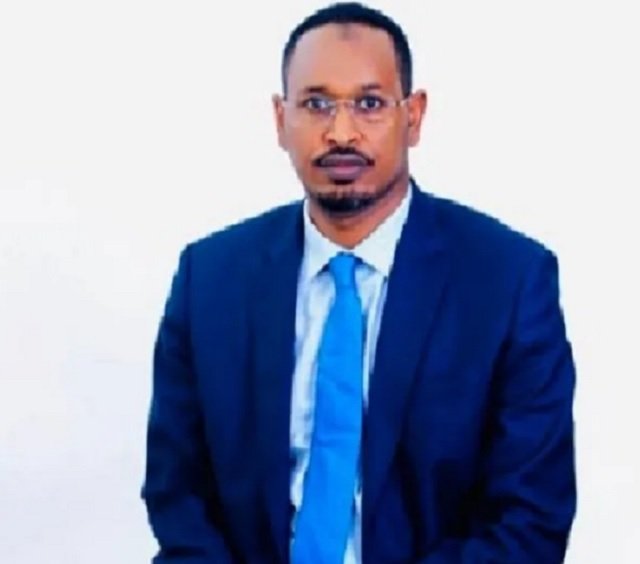
Abdirezak Sahane Elmi
Former Government Official
As someone who spent my youth in conflict-affected areas and later assumed senior leadership responsibilities in the midst of chaos and internal strife, I feel compelled to share valuable lessons from my lived experience with the broader communities in the Amhara region and Wollega, Oromia.
This message is not political in nature but rather a sincere and reflective attempt to offer insight—drawn from both my early years and my time in leadership within the Somali Region. These are lessons forged through hardship, tested during crisis, and grounded in the harsh realities of conflict-affected governance. I also draw relevant comparisons from the well-documented recent conflict in the Tigray region, which carries critical lessons for all Ethiopians.
Before I share the core of my experience, I want to emphasize a fundamental truth: Peace and stability are the bedrock of any meaningful development, particularly for nations and communities already grappling with poverty, underdevelopment, and institutional fragility.
In countries like ours, where millions live on the edge of economic survival, even the slightest disruption caused by conflict can bring life to a standstill. Daily income earners, farmers, small business owners, students, and ordinary families cannot afford the luxury of prolonged instability. A single week of violence can destroy infrastructure built over decades, displace thousands, and erase years of progress in education, healthcare, and economic growth.
Peace is not simply the absence of war—it is the presence of opportunity. It is the condition under which a young person can attend school without fear, a mother can take her child to a clinic, a trader can safely cross a regional border, and a farmer can plant and harvest without worrying about bullets or roadblocks.
Key Notes on Sustainable Peace: A Shared Responsibility
1. Sustainable Peace Requires Both Government and Community Involvement
Peace is not something a government can deliver alone. It must be built collaboratively, with active participation from communities at every level. While the government plays a central role in providing security, justice, and institutions, the people must contribute through trust-building, reconciliation, and upholding social harmony in daily life.
2. Top-Down Approaches Are Not Enough
Policies and peace agreements crafted in government offices or by political elites often fail when they are not rooted in the realities and needs of the people. Peace must be owned by communities, shaped by their values, and sustained through grassroots efforts , elders, youth, women, religious leaders, and civic actors all have vital roles to play.
3. The Root Causes of Conflict Are Often Elite-Driven
History shows that many internal conflicts are not caused by ordinary people, but by political elites who pursue power, wealth, or dominance at the expense of the broader population. These elites often manipulate identity, fear, and past grievances to advance narrow interests, while the general population suffers the consequences.
4. Our Country Is Experiencing the Same Pattern Today
Unfortunately, Ethiopia is facing similar challenges today. Many of the ongoing tensions and violence are not rooted in community-level hostility, but rather in elite rivalries and political calculations. Communities are often dragged into conflicts that do not serve their well-being or reflect their genuine interests.
5. Peace Must Be People-Centered
Sustainable peace depends on the collective wisdom, patience, and determination of the people. It grows when communities refuse to be used as tools of division and instead stand for coexistence, dialogue, and shared development. Local peace initiatives, inter-community mediation, and grassroots reconciliation must be encouraged and supported.
6. The Government’s Role Is to Enable, Not Dominate
The role of the state should be to create space for dialogue, protect the rights of all citizens, and hold those who incite violence accountable, regardless of their status or political affiliation. But without public ownership, even the best government policies will fall short.
7. Lasting Peace Is Built from the Bottom Up
Peace that lasts is built from the village, the neighborhood, and the town not just from the capital city. It is built when neighbors choose understanding over hatred, when religious leaders preach tolerance, when youth engage in peacebuilding, and when leaders listen more than they command.
Message of Experience Sharing
To the Amhara and Oromia Wollega People
Wherever I go about my experience sharing I start by telling of what I’ve seen with my own eyes in Somali region of Ethiopia , my lifetime as a child, a youth, an adult and even as a leader.
The Somali Region,a region that has been embroiled in one of the oldest conflicts since a century ago,witnessed its harshest period since 1994, after the onset of the armed struggle by ONLF (Ogaden National Liberation Front) against the federal government. What started out as a political fight for fairer rights and treatment for the Somali people, quickly became a horror show for its citizens.
At the peak of the conflict, ONLF was widely supported among the Somali people. Their fighters grew to tens of thousands. They confronted the Ethiopian National Defense Forces with full determination and, in some battles, even gained the upper hand. They were diplomatically active and received support from certain international actors, including direct military backing from some countries.
And yet, with all that effort, they were still unable to accomplish what they wanted. Why?
Because they were fighting a country with a population of over 80 million people, composed of 86 different ethnic groups and their war was never waged beyond the borders of the Somali Region. Actually, in certain zones of the Somali Region, the conflict did not have any significant impact.
Simply put: Fik was burning, Harar was building.
These two towns are fewer than 200 kilometers apart, but most of the people in Harar had no idea the suffering next door in Fik. At the time, ONLF claimed they would overthrow the Ethiopian government by force, but the outcome was tragically affected in Somali Region. Thousands died. Many were arrested. Tens of thousands fled to neighboring countries. The entire region was thrown into chaos for nearly three decades.
At the time youth in the Somali Region were mostly in ignorance people with very little access to formal education. Pregnant women were passing away for want of health care. Clean water was scarce. It was the people at the grassroots who ended up paying the price for the war.
The people of the Somali Region finally realised the truth: that violence was not the answer to their problems. Due to the political growth of the greater cordial community, today Somali Region is enjoying peace.
A Parallel Case: The Tigray Conflict:
Take, for example, the Tigray Region in 2018–2019. At the time, it was one of the most economically advanced regions in the country. People were competing in business and development. But due to the war mentality of some elites, the region descended into armed conflict against the federal government.
The TPLF (Tigray People’s Liberation Front), much like the ONLF in 1994, was the ruling party in the region when it declared war on the state. History repeated itself. Tigray went to war with Ethiopia. Hundreds of thousands died. Civilians were displaced. Development projects were destroyed. Roads, schools, and infrastructure were reduced to ruins.
Tigray burned, while Jigjiga and Fik in the Somali Region began a new chapter of development and peace. Harar continued its peaceful progress. Addis Ababa remained calm and focused on prosperity. The difference this time was the role of social media: the conflict played out in front of the world. But the pain remained concentrated in Tigray and its surrounding areas. Addis Ababa and much of Ethiopia carried on in peace.
TPLF had vowed to overthrow the federal government, but reality was different. They were fighting a nation of over 120 million people. The project failed. Eventually, the leadership accepted a peace deal. I believe it was the people of Tigray, tired of war, who pushed for peace.
A Message to the People of Amhara and Wollega Oromia
Now I speak to the people of Amhara and some areas of Wollega Oromia:
Learn from the lessons of history.
Today, Amhara is in conflict. The people are suffering. Infrastructure is being destroyed. Fear and terror dominate daily life not because of the will of the people, but because of the mistaken war mentality of a few elites.
Dear people of Amhara, please reflect.
You are the ones suffering most in this conflict.
Other Ethiopians are living in peace and stability. The Somali people know the cost of war. Most other regions do too. Tigray, after deep suffering, has chosen to implement the Pretoria Peace Agreement. They are learning from their painful past.
To the large community in Amhara: return to peace. Do not let more blood be shed.
And to my brothers and sisters in Wollega Oromia:
There is no justifiable reason to continue living in fire. Choose peace. Encourage your youth to negotiate with the government and find a peaceful resolution to the conflict.
Final Words
May Ethiopia enjoy lasting peace, stability, and prosperity.
The path forward is not paved with bulletsit is paved with wisdom, unity, and the courage to choose peace over destruction.
Editor’s Note : Views in the article do not necessarily reflect the views of borkena.com
__
Support Borkena : https://borkena.com/subscribe-borkena/
Join our Telegram Channel : t.me/borkena
Like borkena on Facebook
Add your business to Ethiopian Business Listing / Ethiopian Business Directory Business Listing Toronto
Join the conversation. Follow us on X (Formerly Twitter) @zborkena to get the latest Ethiopian News updates regularly. Subscribe to YouTube channel To share information or for submission, send e-mail to info@borkena.com
A confused diagnosis and solutions: conflict arises among any Nations, whenever freedom and justice are suppressed by oppressive government. Your writing excludes the totality of the current government oppressive administration roles. Your understanding the causes of conflicts in Nations are shortsighted. Know all is ignorance.
Historically speaking, the writer is right about one thing, while one community is suffering under conflict the rest of Ethiopians enjoy peace. Why one community fights with the government while everyone else doesn’t? We either fight the government together and change the system for better or we all stop fighting all together. This continuous conflict one community after other with only destruction on one community is insane.