
A Solemn Tribute to a Patriot, Poet, and Revolutionary Intellectual
Achamyeleh Debela, (PhD.)
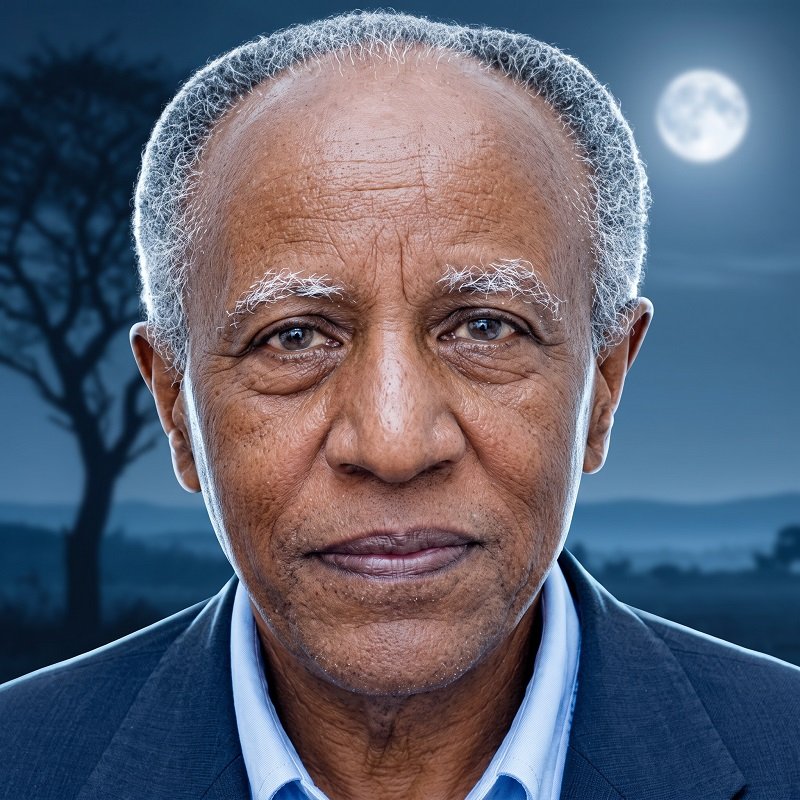
With the passing of Dr. Negede Gobeze in Brussels on November 13, 2026, at the age of 83, Ethiopia has lost one of the last great titans of its revolutionary generation—a legal scholar of formidable intellect, a poet of deep sensibility, and a patriot who fought throughout his life with sincerity, dignity, and an unyielding love of country.
To speak of Dr. Negede is to speak of modern Ethiopia’s most turbulent, idealistic, and defining chapters. Yet beyond the grand sweep of history and ideological struggle stood a deeply humane man: a thinker who carried the weight of his nation’s sorrows and aspirations across decades of exile, never once severing the spiritual umbilical cord that bound him to his homeland.
The Poet’s Heart and the Scholar’s Mind
Born on October 15, 1943, in the historic town of Dessie in north-central Ethiopia, Negede Gobeze was the third of nine children born into a family that valued learning and public service, guided by his father, Gobezie Taffete, a director in the Ministry of Education. Long before he became a theorist of social transformation, Negede was a vessel of art and verse. At the tender age of eleven, his precocious command of language was already evident when he composed and recited a poem to welcome Emperor Haile Selassie. By 1963, as a young economics student at Addis Ababa University College, his literary gifts earned him first prize in the university’s prestigious poetry competition.
That poetic soul never left him. Even in the fiercest winters of political struggle and European exile, Dr. Negede remained a custodian of Ethiopian culture—a man who could set aside heavy legal and political treatises to pluck the melancholic, nostalgic strings of the krar or breathe melody into a harmonica. It was this artistic humanity that grounded his politics; his revolutionary zeal was never born of cold abstraction, but of a poet’s empathy for the downtrodden.
When he traveled to France on a scholarship, ultimately earning a PhD in law from Aix-Marseille University, he married his creative spirit with rigorous jurisprudence. He could have chosen a life of quiet academic privilege and personal comfort. Instead, he chose the arduous path of conscience.
The Crucible of Conscience and Revolution
The 1960s awakened a generation of Ethiopian youth who refused to accept feudal stagnation as their country’s destiny. Rising as a premier voice in the Ethiopian Students’ Union in Europe (ESUE)—serving as its president first in France and later across the European continent—Dr. Negede became an architect of the Ethiopian student movement. In 1968, alongside fellow leftist intellectuals in Hamburg, he co-founded the All-Ethiopia Socialist Movement (Me’isone).
When the 1974 Revolution erupted, Dr. Negede answered the call of history, returning to serve in the Provisional Office for Mass Organisational Affairs (POMOA) between 1975 and 1977. It was an era of immense hope shadowed by gathering storms. History will long debate the complex choices of that revolutionary crucible, yet Dr. Negede’s guiding compass remained anchored in the empowerment of the masses. When the military Derg regime betrayed the revolution’s democratic promise and trampled upon civil liberties, Dr. Negede and his comrades broke with the junta—a principled stand that cost many their lives and forced him into a long, painful exile.
The Unbroken Voice in Exile
Exile breaks many revolutionaries, turning passion into bitterness. In Dr. Negede, it only deepened his resolve for dialogue, democratic reform, and national reconciliation. Across four decades in Europe, he became a tireless builder of civic bridges. Through founding and championing initiatives such as COSETH (1980), GRAPECA (1990), and the European-based Ethiopian forum Deldeye (“The Bridge”), he worked to unite fractured voices around the common good. Understanding that truth is the oxygen of democracy, he lent his unwavering support to independent media outlets, including Radio Selam and Keste Damena.
In his seminal work, Yidres le Ginbot ke Yekatit (A Message to May from February), Dr. Negede offered a piercing, honest reckoning with the 1970s revolution, bridging the lessons of the February 1974 popular uprising with the realities of subsequent generations. In the spirit and thematic core of that landmark reflection, his writing reminds us:
“February was not an accident of history, nor the private property of a few; it was the awakening of a people who demanded to be the authors of their own destiny. A revolution may be hijacked by the gun, and a generation may bleed for its ideals, but the quest for popular sovereignty, justice, and human dignity cannot be buried. What February began in hope, future generations must complete in wisdom and democracy.”
Throughout his essays and reflections on Ethiopian political culture, he consistently returned to the necessity of principle over opportunism:
“To love one’s country is not merely to praise its past, nor to bow to whoever holds the reins of power today; it is to stand stubbornly for the rights of its people when doing so carries the highest price.”
A Farewell to a Dignified Patriot
Dr. Negede Gobeze lived a life that mirrored the grand, tragic, and resilient arc of modern Ethiopia. He knew the heights of youthful idealism, the fires of revolutionary upheaval, and the quiet solitude of dying far from the soil of Dessie that first nurtured him. Yet through every triumph and trial, he carried himself with rare intellectual honesty, grace, and humility.
As the strings of his krar finally fall silent in Brussels, the melody of his lifelong devotion echoes back to the hills and valleys of Ethiopia. He fought not for personal glory, but for the dignity of the ordinary citizen.
May his memory endure as a bridge toward the peaceful, democratic, and just Ethiopia he dreamed of for eighty-three years, and may the soil of his legacy rest lightly upon his noble soul.
Editor’s Note: Views in the article do not necessarily reflect the views of borkena.com
__
Join our Telegram Channel: t.me/borkena
Like borkena on Facebook
To submit a press release, send the submission to info@borkena.com
Add your business to Ethiopian Business Listing / Ethiopian Business Directory
Join the conversation. Follow us on X (formerly Twitter) @zborkena to get the latest Ethiopian news updates regularly