
Billions of birr are being spent on corridor development projects, but vulnerable children and families are still struggling for food in Addis Ababa
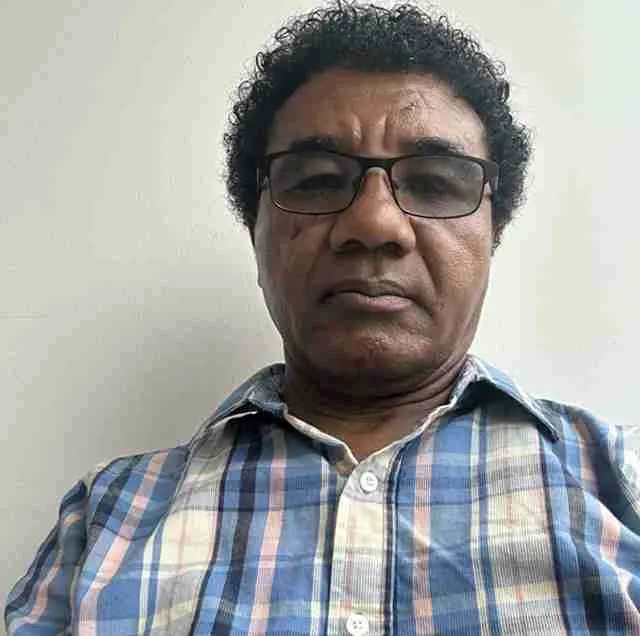
By Bekele H
Addis Ababa is changing rapidly. Roads are being widened, neighborhoods redesigned, buildings renovated, and billions of birr spent on corridor development projects. Officials present these projects as evidence that the capital is becoming cleaner, more modern, and more attractive. Bright lights, new sidewalks, fountains, bicycle lanes, and landscaped public spaces are displayed as symbols of progress.
But behind this beautiful public image, another Addis Ababa exists – one rarely shown on television. In many homes, parents struggle to provide even one adequate meal a day. Children go to school hungry, if they can attend at all.
Mothers reduce their own food so their children can eat. Elderly people quietly endure hunger because they do not want to burden their families. Many workers earn salaries that cannot keep pace with the rising cost of rent, food, transportation, and medicine.
This is hidden hunger: suffering that may not be visible from newly developed streets, but is painfully real inside many homes.
A Beautiful City With Hungry Residents
Development is necessary. No reasonable person opposes clean streets, safe roads, public parks, reliable transportation, or an attractive capital city. Addis Ababa deserves modern infrastructure, and its residents deserve to live in a well-planned and dignified environment.
The real question is not whether development should occur. The question is: What kind of development should come first, and who benefits from it? A city should not be judged only by the appearance of its main streets. It should also be judged by the condition of the people living behind those streets.
A city cannot truly call itself developed when families cannot buy bread, milk, vegetables, or medicine. Modern
sidewalks mean little to a child who goes to bed hungry. Decorative lights cannot replace food on a family’s table. A beautiful fountain cannot comfort a mother who has nothing to feed her children. Development loses its moral meaning when human survival becomes secondary.
When billions of birr are allocated to visible construction while vulnerable residents lack food, shelter, and basic healthcare, the government must explain its priorities. Public money belongs to the people. Citizens therefore have the right to ask how it is spent, who benefits, and whether the most urgent human needs are being addressed.
Hidden Hunger in Addis Ababa : Hunger Is Not Always Visible
When people hear the word hunger, they may imagine someone who has gone for days without eating. But hunger takes many forms. A person may eat every day and still suffer from malnutrition because the food lacks sufficient protein, vitamins, minerals, and other essential nutrients.
Some families survive mainly on bread, injera, pasta, or other inexpensive foods because they cannot regularly afford meat, eggs, milk, fruits, and vegetables. Their stomachs may not always be completely empty, but their bodies are not receiving adequate nutrition. Children are especially vulnerable because poor nutrition can affect growth, immunity, concentration, school performance, and long-term health.
Hidden hunger is dangerous precisely because it can remain unnoticed until a child becomes seriously weak or ill. A hungry child may appear tired, struggle to concentrate, frequently miss school, or become sick more often. These problems may be treated separately without confronting their underlying cause: poverty and inadequate nutrition.
The Human Cost of Rising Prices
For many Addis Ababa residents, the cost of living has become unbearable. Food prices place tremendous pressure on families. Rent consumes a large share of household income. Transportation expenses make it difficult for workers to reach their jobs. Medicine and medical care remain beyond the reach of many low-income residents.
Even employed people may struggle to survive. A salary that once supported a household may now cover only rent and a limited amount of food. When families must choose between paying rent, buying medicine, sending children to school, and purchasing food, poverty has become a daily emergency.
Urban redevelopment can deepen hardship when affected families lose homes, small businesses, customers, or community support systems. Compensation, when required, must be fair, transparent, timely, and sufficient to help
people rebuild their lives. Development should improve people’s lives – not push vulnerable residents deeper into poverty.
The success of a corridor project should be measured not only by kilometers completed, but by its effect on residents, small businesses, street vendors, elderly citizens, and low-income families.
Children Must Come Before Decoration
The first duty of any government is to protect human life and dignity. Feeding vulnerable children is not merely charity; it is a moral and public responsibility. Children do not choose to be born into poverty, and they should not be punished for economic conditions beyond their control.
Hidden Hunger in Addis Ababa Page 2Before spending enormous sums on decorative or nonessential projects, authorities should guarantee that children have access to nutritious food. Addis Ababa needs strong school meal programs that provide dependable, balanced meals. Schools can also help identify malnutrition and connect struggling families with health and social services.
The city needs emergency food assistance, maternal and child nutrition programs, affordable community kitchens, and targeted support for the poorest households. Local health centers should regularly screen children for malnutrition and provide timely treatment. Assistance must be based on need – not ethnicity, political loyalty, personal connections, or neighborhood status. Every child has equal value.
The government should publish clear information about development spending. Citizens deserve to know project budgets, the companies receiving contracts, the procedures used to award them, and the amount allocated to social protection. Transparency builds public confidence and reduces waste and corruption.
Development Must Be People-Centered
True development is not simply concrete, asphalt, glass, and electric lights. It is the improvement of human well-being. A truly developed Addis Ababa is one where children are properly nourished, families can afford safe housing, workers earn a living wage, patients can obtain medicine, and young people can find meaningful employment.
Infrastructure and social welfare do not have to be enemies. A responsible government can pursue both. Yet when resources are limited and people face life-threatening poverty, priorities must follow urgency. Food, clean water, healthcare, shelter, education, and human security must come before luxury and political display.
City leaders should listen directly to residents before approving large projects. Communities must be consulted about what they need most. Independent experts, civil society organizations, religious institutions, health professionals, teachers, and local associations should participate in planning and oversight.
Silence Is Also a Moral Choice
Residents, journalists, religious leaders, professionals, and Ethiopians in the diaspora must speak about hidden hunger. Silence allows suffering to remain invisible. This issue should not be reduced to political competition.
Hunger affects human beings regardless of ethnicity, religion, language, or political opinion.
Criticizing misplaced priorities does not mean opposing the development of Addis Ababa. It means demanding development that respects human dignity. The purpose of criticism should be correction, justice, and the protection of life – never hatred or violence.
A City’s Greatest Beauty Is Its People Addis Ababa can build modern roads and attractive public spaces, but these achievements remain morally incomplete while children suffer from hunger. Poverty cannot be hidden behind flowers, lights, and newly painted buildings. The measure of leadership is not how beautiful a city looks during an official tour. It is how safely and dignifiedly the poorest child lives.
Buildings can wait. Decorations can wait. Political celebrations can wait. A hungry child cannot wait. Human life must come first.
Editor’s Note: Views in the article do not necessarily reflect the views of borkena.com
__
Join our Telegram Channel: t.me/borkena
Like borkena on Facebook
To submit a press release, send the submission to info@borkena.com
Add your business to Ethiopian Business Listing / Ethiopian Business Directory
Join the conversation. Follow us on X (formerly Twitter) @zborkena to get the latest Ethiopian news updates regularly.
Thank you very much for this true and satisfactory article you wrote. For sure regarding your invaluable comment, the government’s response will be- ”there are 39 or so, feeding stations or centres, so that those who are hungry could go there and feed them selves “. This response is absurd for a city of more than 6-10 million inhabitants!! Is a joke! The government beside feeding the ordinary people it shoud have focused on not only unprofitable shiny &empty streets, one should create new jobs, by inventing new industries and factories and the people could work and generat money and can buy adequate food for themselves. Feeding centers are good for ‘Places like Mekodonia, Gergison near Entoto, and street children; not the ordinary Ethiopians! Of course, according to Mr. Bekele is telling us the hidden hunger of ordinary Ethiopians! The government, in this regard, should ease prices of eating basic foodstuffs so that people do not go empty stomachs!!!
I was born and raised in Addis Ababa, I am now almost in my seventies. My heart bleeds when I see Addis Ababa devoid of her ancient history, new empty streets… I always mention due to the corridor development, I completely ceased to go to Piassa, Arat Kilo,Sidst Kilo, Amst- Kilo, Aware, Shiro-meda,etc…why because there are no absolute restaurants, tea-rooms affordable and so why do I go to these empty areas? Also how do I go there? Maybe to Bole, if there is somebody to be accompanied to the Airport?
Ato Shimels Abdissa was right to tell us word by word “we will make Addis-Ababa, unfit for a living place”, (August,2009 Speech-Adebabay media), that’s why happening nowadays, due to their well-planned corridor project! In Ethiopia, today, eating “Eggs, Meat, Joghurt, Milk, Butter”, are a Rich man’s diet! Let alone Shiro which was the cheapest in the Past. Today one Kilo of meat costs around 1500 at Kebele butchery to 4000 birr at normal vendors! One egg costs around 25-30 birr, Milk and Yogurt are more than a hundred birr or more, a glass!! One can buy if he can afford- 100 kg of Teff costs around eighteen thousand birr, (18000 birr),etc….
I myself had already ceased to all these animal products! Except rarely at festival days like Eastern! It’s sad sad sad what’s going on in Ethiopia? Food staffs should have been the cheapest of all!!
Thank you Mr. BEKELE to be the voice of Voiceless People.
God bless you. Amen.