 after failing to provide updated acute food insecurity data that met the report’s technical standards.)
By Staff Writer
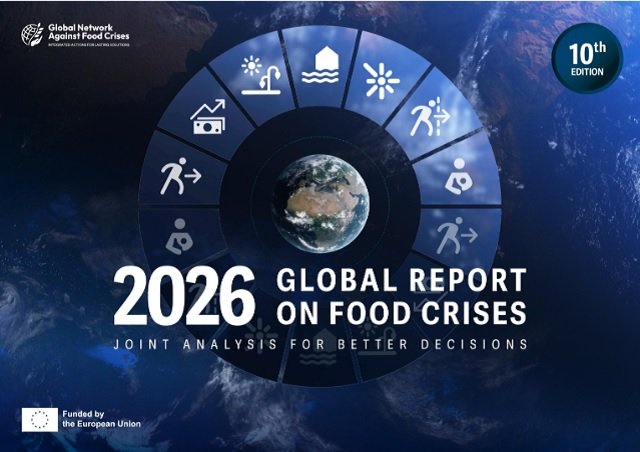
Nairobi, Kenya — Ethiopia has been excluded from the 2026 Global Report on Food Crises (GRFC) after failing to provide updated acute food insecurity data that met the report’s technical standards. The exclusion comes even as separate projections warn that Ethiopia will remain among the countries facing some of the world’s largest humanitarian needs through mid-2026.
The joint report by the Food and Agriculture Organization (FAO) and the World Food Programme (WFP) listed Ethiopia among 18 countries and territories where either no acute food insecurity data were available or existing data did not meet the GRFC’s requirements, including the need for consensus-based estimates.
Ethiopia was included in the 2025 report, which found that more than 27 million people faced severe food insecurity in 2024. However, no updated data for 2025 were available due to challenges in securing permissions for data collection, limited funding, and insufficient attention to food security monitoring systems.
The 2026 report also warns of a broader challenge in monitoring food security worldwide.
It states that fewer countries now have reliable food insecurity data compared with the past decade. The report emphasizes the need to protect and invest in systems that collect food and nutrition data so that decisions can be based on accurate and reliable information.
The report also notes that the number of people facing severe food insecurity globally declined in 2025, but this does not necessarily reflect improved conditions.
Instead, the decline was partly linked to fewer countries being included in the analysis because of missing data, including Ethiopia.
Although Ethiopia was not included in the global assessment, another report from the Famine Early Warning Systems Network (FEWS NET) indicates that the country will remain among the five countries with the highest number of people requiring urgent food assistance by July 2026.
The report estimates that between 15 million and 15.9 million people, representing 10 to 15 percent of the population, will face severe or emergency levels of food insecurity. This accounts for more than 10 percent of global food assistance needs. The report says that while humanitarian food assistance needs may decline slightly compared with last year, Ethiopia’s situation remains vulnerable due to possible drought, conflict-related access challenges, and funding shortages.
The report also warns that Ethiopia could face additional climate-related challenges as El Niño conditions are expected to influence rainfall patterns in East Africa and the Horn of Africa later this year.
Although the March-to-May rainy season was generally favorable, rainfall in southeastern Ethiopia was only 45 percent of the average. Previous El Niño events with similar conditions resulted in reduced harvests of crops such as maize and sorghum, particularly in eastern Amhara, Tigray, and northeastern Oromia.
If El Niño conditions persist, they could disrupt the important June-to-September rains, which are critical for crop production.
This could reduce harvests and worsen food insecurity. Similar warnings were issued by the IGAD Climate Prediction and Applications Centre, which forecasts below-average rainfall in many parts of Ethiopia during the main rainy season, increasing the risk of another climate-related crisis while the country continues to face humanitarian challenges.
Humanitarian efforts in Ethiopia are under significant pressure due to severe funding shortages. In June, UNICEF warned that conflict, displacement, climate-related challenges, and economic difficulties are worsening conditions for vulnerable populations. The agency said its 2026 humanitarian appeal remains only 19 percent funded.
In a recent report covering March and April 2026, the United Nations said insecurity in several parts of Ethiopia is disrupting livelihoods and restricting access to humanitarian assistance.
This is creating additional challenges for aid operations, despite the widespread and growing humanitarian needs across the country.
__
Join our Telegram Channel: t.me/borkena
Like borkena on Facebook
Join the conversation. Follow us on X (formerly Twitter) @zborkena to get the latest Ethiopian news updates regularly. Subscribe to the YouTube channel. To share information or for submission, email info@borkena.com