
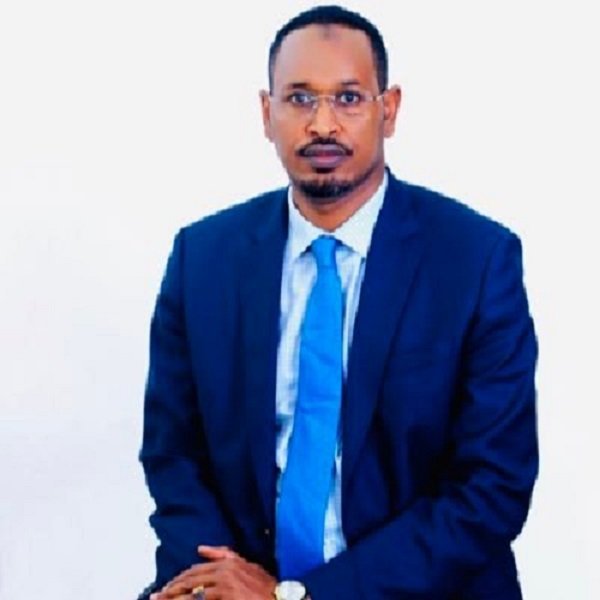
By Abdirezak Sahane Elmi
Former government official and author
Introduction: Dispelling a Dangerous Myth
If Ethiopia is to emerge as the united, fair and stable state that it can be, it must first abandon one of the most damaging political fictions that still persists in 2025: the lie that the country’s foundation squarely lies on the three rival enclaves of Amhara, Tigray and Oromia.
This story is factually incorrect and morally repugnant. It belittles the identity, dignity and political rights of more than 80 nations and nationalities. This is an exclusionist language that should not be used in a multiethnic federal republic like Ethiopia.
I. The Historical Error of Selective Power
For most of modern Ethiopian history, political power belonged to elites from Amhara and Tigray. This hegemony was maintained by the centralisation of imperial power, military rule and cultural uniformation. The legacy the ethnic federal constitution of 1995 sought to reverse survives on the mindset of power it bred accordingly.
Although the federal system established at the time was far from perfect and largely existed on paper, it brought about significant changes. Some regions began to exercise limited autonomy, conducting government work in their own languages and practicing their religions and cultures with a degree of political independence. Nonetheless, it was a substantial improvement over previous regimes, which had completely denied the existence and rights of nations and nationalities.
In a new development during the EPRDF era, a different narrative emerged—the so-called “three-region backbone politics.” This time, Oromia was included, not out of genuine recognition, but because it had become impossible to continue excluding it. The Oromo people had begun to awaken and assert their rights after centuries of marginalization. Recognizing this shift, Abyssinian elites modified their narrative once again, disguising continued dominance with the appearance of broader inclusion. But we are not ready to accept this narrative either.
We must also acknowledge the reformist efforts of Prime Minister Dr. Abiy Ahmed, who has attempted to break from that historic pattern of exclusion and build a country truly owned by all its nations and peoples.
Yet, the misconception of a three-region political “backbone” still persists in some elite circles. It implies that the rest, Somali, Afar, Sidama, Gambella, Benishangul, and others, are mere spectators in a process controlled by a few dominant actors. This narrative is an affront to our federal constitution and to the dignity of our diverse nation.
II. Current Government’s Positive Changes
To be fair, the federal government, led by Prime Minister Abiy Ahmed, has made some progress toward inclusion:
• Investments in infrastructure would be made in previously excluded areas.
• Referendum recognition of new regional states (e.g. Sidama and South West Ethiopia).
• Federal institutions with officials from previously excluded (i.e. non-Alawite) regions.
- Initiatives to de-concentrate movements of construction Projects.
- We are requesting Prime Minister Dr. Abiy Ahmed and his leadership to reform institutions such as the parliament and the security sector, ensuring fair and equitable representation. In particular, regions must be more accurately represented in parliament based on their population size and landmass. Furthermore, the government must correct the mistakes of previous regimes, which transferred the rightful parliamentary representation of some regions to others.
Those are good first steps. But the question is how to turn such gestures into real institutions of equity.
We need to actively do so as strong defenders of government to make this strategic work continue as it is what our country Ethiopia needs today.
III. Exposing Elitist Thinking: A Case Study
The persistence of elitist thinking was clearly demonstrated during a recent interview on Reyot Media. Prominent politician Lidetu Ayalew said:
“When we were preparing this event, we mostly gave consideration to ensure the presence of the three large regions—Amhara, Tigray, and Oromia. After we assured that representation, then we looked south, to Afar and Somali. We tried our best.”
This is not a slip of the tongue—it is a window into a worldview that treats the Somali and Afar, Siddama people, and other southern nations, as political afterthoughts.
Ask yourself: is Tigray, a region with less population and territory than Somali, more important in today’s Ethiopia? Is this acceptable in 2025, in a constitutional federation built on equality?
Lidetu’s words are not only politically arrogant—they are deeply offensive to the spirit of modern Ethiopia. They reflect a nostalgia for the old Ethiopia, where a few dictated the fate of the many.
IV. Phony Unity: The Divide Between The Elites
Lidetu and his friends say they stand for ‘national unity” but there is nothing truthful or sustainable in that bloc. They are more like a rat and a cat at the same dinner table who can’t figure out why they were smiling at each other for a moment but are fundamentally at odds.
They don’t trust one another. They are not bound together by common vision, they are bound together by fear, fear of being sidelined in a new Ethiopia where others—Somali, Afar, Sidama, Benishangul, Gaamo, Silte, Hadiya waleyta and others demand their seat in the table.
Their project is doomed. Not because we disagree with it, but because it’s founded on exclusion, nostalgia and contradiction. It is a relic of a bygone era.
V.) RECOMMENDATIONS For Building a Just and Stable Ethiopia.
To create sustainable peace and a just federation, the government and society must demonstrate courageous and inclusive leadership.”
1. Embed political inclusion With that, I recommend you help institutionalize political inclusion.
• No national platform should be a monopoly of some national group; it should rather reflect the entire diversity of Ethiopia.
• Representation has to be real and proportional, not symbolic.
• Local elders, women, youth and professionals from all the regions should participate in policy making.
2. Advance Economic Equity
• Initiate Investment targeted programs in these regions Somali, Afar, Benishangul, Gambella, etc..
Fill in the banking, credit, jobs and infrastructure gaps in life all in this country.
• Support agribusiness, livestock trade and cooperatives for financial self-reliance.
3. Empower and Implement Federalism
• Federalism is not the problem, is the solution.
• Let each region manage itself in its dignity and power.
• Strengthen autonomy on health, education, development, cultur and religion.
4. Means of Civilizing Armed Movements
• Provide credible, Independent forums of dialogue with all political parties, political elites, and intellectuals..
• Amnesty and reintegration programs for fighters who accept peace.
• Resist the call for militarized responses and instead pursue reconciliation.
5. defend civil liberties and democratic space
• Ensure the rights of journalists, activists and opposition groups in peaceful and constitutional ways.
• Encourage freedom of expression, assembly, and political competition.
• Making Room for Public Accountability.
VI. Affirming Ethiopia’s True Backbone: Its People
Ethiopia’s strength lies not in three regions, but in the unity of over 80 proud peoples. From Jigjiga to Bahir Dar, from Mekelle to Gambella, every citizen must feel ownership of the country’s future.
We are not asking for privilege, we are demanding equality. We are not opposing unity, we are exposing false versions of it. And we are not enemies of the state , we are defenders of its democratic promise.
Let Lidetu and others know: their narrative is not just outdated, it is rejected. The Ethiopia of tomorrow will be inclusive, federal, and just, or it will not be at peace.
To Conclude :
while the road ahead may be difficult, the direction is clear. The myth of a so-called “three-region backbone” must be laid to rest once and for all. We must stand for a shared Ethiopia, a nation that treats all its children with equal respect and dignity. Encouraging signs are emerging: federal investment is beginning to reach long-neglected areas, marginalized regions are slowly being included in policy planning, and initial peace talks with insurgent groups have begun. But much more is needed. We must institutionalize inclusive governance, directly challenge elitist thinking, pursue deeper economic transformation, advance bold peacebuilding efforts, and protect civic freedoms without compromise.
We, the sons and daughters of Somali, Afar, Sidama, Gambella, Gurage, Silte, Gaamo, Hadiya, Waleyta, and all the peoples across this federation, will not remain political spectators. We will be co-authors of this republic.
Let the old myths die.
Let the true Ethiopia live.
Editor’s Note : Views in the article do not necessarily reflect the views of borkena.com
__
Subscribe : https://borkena.com/subscribe-borkena/
Join our Telegram Channel : t.me/borkena
Like borkena on Facebook
Add your business to Ethiopian Business Listing / Ethiopian Business Directory Business Listing Toronto
Join the conversation. Follow us on X (Formerly Twitter) @zborkena to get the latest Ethiopian News updates regularly. Subscribe to YouTube channel To share information or for submission, send e-mail to info@borkena.com
Whenever I see this description of a subject, there is this question that always comes to my mind.
‘Former government official’, then what happened? How and why did the friendship derail? It has been an inevitable question that pops up.
Btw, the author seems to intentionally decide not to mention Amharas, Oromos and Tigres by name more than once. These three ethnic groups make up more than 60% of the entire population of the country. So what happened brother?
” These three ethnic groups make up more than 60% of the entire population of the country.” No, it is ore than 70%. Look at the statistics.
Which statistics? Please post it here so we can use it as a reference. I was being conservative in my estimate.
Thanks a lot.
Somalis still don’t understand Ethiopia even after all these years. Maybe that’s why their country is always in disarray.
In actuality, the Somali region of Ethiopia should change its name back to Hararghe. I trust Hararis more than I trust Somalis. Not to say that Somalis are bad people, which they are not, but they are known for being loyal to whoever is the most violent. They are divided by tribes and religious sects when really they speak just one language. Somalis will always choose Saudi Arabia over Abyssinia.
#Mecca
#Medina
#Hajj
Amhara doesn’t believe in Ethnic federalism, because of Ethnic federalism is designed to empower marginalized groups but has inadvertently institutionalized ethnic competition. For Ethiopia to achieve “equal citizenship”, it must address implementation flaws—balancing regional autonomy with national cohesion and protecting minority rights within ethnically defined states . Ethiopia regions can’t be some of the superior citizen ownership for other regions.