
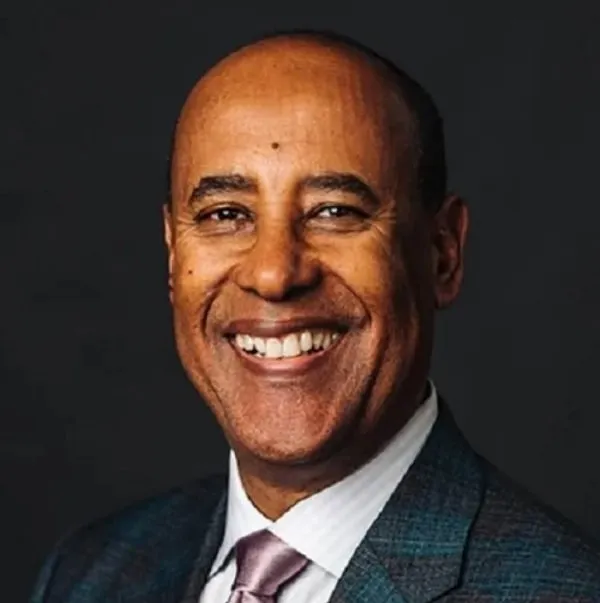
White House Senior Advisor to the President Massad Boulos recently traveled to Addis Ababa to reaffirm U.S.–Ethiopia ties, highlight trade and investment opportunities, and emphasize Ethiopia’s responsibility to anchor peace and regional stability. His visit reflected optimism about commercial projects that could advance shared prosperity, including the proposed $10 billion airport in Debre Zeit — promoted as one of Africa’s largest.
But that hopeful message was quickly overshadowed by grim realities. Just days after Boulos’s departure, the Abiy Ahmed government carried out another drone strike on civilians. According to the BBC, on September 27 a health station in the Amhara region was hit, killing four people — including a pregnant woman — and injuring more than ten. The juxtaposition is stark: while Washington talks of investment, Addis Ababa wages war against its own people.
Ethiopia should be a natural U.S. partner: a nation of 135 million with one of Africa’s youngest populations, vast hydroelectric resources like the Grand Ethiopian Renaissance Dam (GERD), and a two-thousand-year tradition of independence. Yet that potential is being squandered under a regime that has turned conflict into a governing tool.
The U.S. State Department’s 2025 Investment Climate Report, published in September, delivers a sobering assessment. It cites persistent structural failures — economic distortions, political instability, and security risks — as major impediments to doing business. The Abiy administration’s liberalization rhetoric, the report notes, has not translated into reform. Foreign investment has plummeted to just 2.7 percent of GDP in 2024, down from 7 percent in 2017. The reasons are clear: a low tax base, chronic foreign exchange shortages, weak property rights, corruption, and the absence of the rule of law.
The State Department also warns that Ethiopia’s investment climate has grown hostile to U.S. and other foreign businesses. Internal conflicts in the Amhara and Oromia regions, travel restrictions, and frequent expropriation of assets — often by corrupt officials or armed groups — have become common. The Abiy government, it says, offers “insufficient protection of property rights,” pointing to the so-called “corridor development” projects in which tens of thousands of residents and business owners were forcibly evicted and their properties demolished with little warning or compensation — even foreign-owned enterprises.
Because land is state-owned, investors lease rather than own property, allowing the government to revoke leases at will. Authorities have also imposed retroactive taxes and arbitrary assessments without due process, a form of indirect expropriation that has driven many firms from the market. Foreign companies report that soldiers have arrived at their premises to enforce evictions “at gunpoint.” No serious investor can operate under those conditions.
Ethnic-based conflicts further compound the crisis. The State Department notes that Ethiopia’s ethno-federal system — which links political power to ethnic identity — has deepened grievances and resource competition. The Abiy government has been at war with Amhara regional forces since May 2023, using heavy artillery and combat drones. Fighting continues in Oromia region and flashes again in Tigray. The United States continues to advise Americans to “reconsider travel” due to unrest, crime, and risk of expropriation.
The human cost is immense. Seventy-three percent of Ethiopians now live in multidimensional poverty, with another 18 percent on the brink. More than twenty-one million people require emergency aid, and 4.7 million are displaced. Conflict has shuttered over 5,000 schools — 4,000 in Amhara alone — leaving nine million children out of class. Press freedom has collapsed as journalists, activists, and opposition figures face harassment and detention.
International institutions echo Washington’s concerns. The IMF warns of “deep structural risks” stemming from currency distortions and fragile external financing. The World Bank cites “serious macroeconomic imbalances, few jobs, and widespread poverty,” and has classified Ethiopia’s debt as unsustainable. Even China, long unfazed by political risk, has scaled back its projects and credit lines. As one U.N. analyst told Reuters this summer, “investors are no longer willing to bet on a system that cannot guarantee basic security or contracts.”
According to DNE Africa and other regional sources, fighting between government forces and the Amhara Fano militia has intensified in recent weeks. Violence persists across Oromia, Gambela, Afar, and the Somali regions, while child malnutrition and urban homelessness are soaring. Inflation has eroded the middle class and forced many families into destitution.
The State Department, U.N. human rights chief, and World Bank have all called for accountability and restoration of the rule of law. Without it, Ethiopia risks sliding deeper into civil war, imperiling the Horn of Africa — a region vital to U.S. maritime security, counter-terrorism, and supply-chain resilience. At the Atlantic Council’s Africa Energy Forum in September, State Department official Jonathan Pratt underscored that Africa “is at the center of the global energy and minerals conversation.” Ethiopia’s geography and resources matter immensely — but potential alone cannot substitute for stability and governance.
If Washington hopes to strengthen ties with Ethiopia, it must do so responsibly. Engagement should be conditioned on tangible reforms: ending extrajudicial violence, protecting property and investor rights, restoring the rule of law, and committing to industrial development that processes Ethiopia’s own resources — potash, lithium, tantalum, cobalt — into value-added goods for global markets. Only such partnerships create jobs and resilience for Ethiopians while serving U.S. strategic interests.
There is a successful precedent. American companies helped found Ethiopian Airlines, now Africa’s largest and most stable carrier, through technology transfer and training. That model — institution-building over extraction — should guide U.S. policy again. But it requires peace and accountability. Congressional oversight and clear safeguards are essential to ensure that U.S. investments benefit the Ethiopian people, not entrench corruption.
Ethiopia stands at a crossroads — and so does America’s policy toward it. Washington must decide whether to tie its engagement to reform and rule of law, or risk being remembered as yet another power that enabled authoritarianism for short-term gain. The stakes are too high — for Ethiopia, for Africa, and for the United States — to get this wrong.
Editor’s Note : Views in the article do not necessarily reflect the views of borkena.com
__
Support Borkena : https://borkena.com/subscribe-borkena/
Join our Telegram Channel : t.me/borkena
Like borkena on Facebook
To submit Press Release, send submission to info@borkena.com
Add your business to Ethiopian Business Listing / Ethiopian Business Directory
Join the conversation. Follow us on X (Formerly Twitter) @zborkena to get the latest Ethiopian News updates regularly.
1). I trust Abiy/Aliko Dangoté/IMF/WFP→NOT Mesfin Tegenu & State Department:
(i). Ethiopia was in 59% GDP debt [2017/2018]: [ youtu.be/upKEL9wQvrY?t=1198 ]
(ii). Here is Abiy in 2017 EC:→Nothing short of a miracle [ youtu.be/r-oPVbKTRpM ];
(iii). Aliko: “Africans are Proud of You… Investment…” [ youtu.be/QAAWPrulVIE ];
(iv). IMF Impressed [8.1% GDP Growth]: [ youtu.be/SJBVcbtzS3A?t=1 ];
(v). WFP [10% GDP Growth & Poverty Alleviation]: [ youtu.be/MFHaKycK4P0?t=27 ]
2). Ethiopian Diaspora [ED] & Its Crocodile Tears for Ethiopia: Over 70% of ED were the beneficiaries of former self-appointed regimes. Most are also Amaras. They are the same ones who chose to watch ≈200K citizens starve than air-drop 100g [10¢] bread and made Ethiopia “The World’s Poster Child of Poverty & Famine.” How CRUEL of them!
3). Domestic Terrorism [DT] | Domestic Terrorists [DTs] | Drone Strikes [DS]: Abiy’s Party is the first ever elected under on-site scrutiny by AU/UN/EU/US/etc. Insurrection to topple elected governments is DT. Aiding & Abetting DT is DT, too! DTs & Abettors are Legitimate DS Targets! DS minimizes army casualties, collateral damage, etc.
4). War Crimes [WC] & Crimes against Humanity [CAH]: Using civilians as Human Shields [HS] is WC & CAH. The Amara Fanno [Misnomer], in addition to using civilians as HS, uses churches/monasteries/schools/clinics as training centers, operation bases, etc.
5). Amara Activism | Dr. Asrat Woldeyes | TPLF-EPLF-‘Fanno’ Trio: Fanno [Misnomer] sided with Amaras’ Worst Enemies [TPLF & EPLF (Egypt’s Proxies)]. In 1991, TPLF & EPLF invaded-and-occupied Ethiopia. They portrayed Amaras as Evil Oppressors and triggered Amara Genocide. In 2020, TPLF committed Amara Genocide [massacred ≥600 Amaras at May-Kadra]! Amara Rights Activists like Dr. Asrat would turn in their graves!
6). Ethio-US Relations: Ethiopia doesn’t need US for the Debre-Zeit Airport. For those in Self-Induced Amnesia, it was Mr. Crump who said: “Egypt should bomb GERD.”
During the COVID Pandemic & TPLF’s War on Ethiopia, the US sided with TPLF and revoked loans/aid, imposed sanctions/embargo, etc. Worse yet, the American General in Djibouti said ≈ “We are ready to strike Ethiopia…” All this, despite TPLF’s Savagery:
i). TPLF massacred hundreds of Ethiopia’s Northern Command soldiers in their sleep;
ii). TPLF committed Amara Genocide at May-Kadra [≥600 Amaras massacred in just a day];
iii). TPLF declared war on Ethiopia/looted banks/destroyed property/etc. on its way to Addis.
One more thing: Compare this Addis Ababa [Africa’s Heart Beat] with the Addis Ababa of Your Era→ have a good look: youtu.be/ZGhNbMPvK3w?t=1
Thank you for the link. What a transformation! Addis/Finfinne is not only the capital of one nation but that of Africa as a whole. It should show itself to the standard of such high profile status. It’s about time!!!