
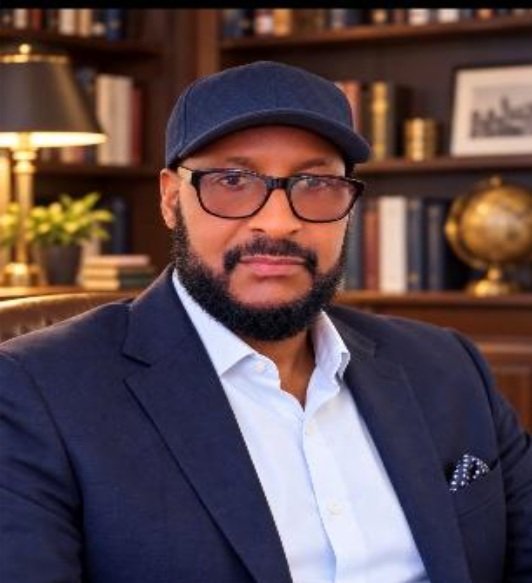
By Mohamud A. Ahmed – Cagaweyne
Writing this open letter carried a weight I could not treat casually. Every sentence forced me to confront the memory of a region that has already paid too dearly for political violence – and the possibility that personal ambition could reopen wounds our people struggled for years to close. This is a sensitive subject, and I know that some will resist what follows because truth, especially an inconvenient truth, rarely satisfies every political camp. It disturbs comfortable narratives, disappoints allies, and refuses to become the private property of either government or opposition. Yet there are moments when silence ceases to be prudence and becomes a failure of moral responsibility. This is one of those moments.
I write neither as an instrument of those in power nor as an enemy of those who oppose them. I write as a citizen who loves the Somali people, remembers the darkness through which they have passed, and cannot remain silent while political ambition threatens to gamble with the tranquility they have painfully recovered. If these words unsettle some readers, that discomfort is regrettable but unavoidable. A truth worth telling cannot be softened until it offends no one; once stripped of every inconvenient edge, it ceases to be true and becomes public relations.
The Somali Region is not a perfect society. Its government is not beyond criticism, its institutions are not beyond reform, and its citizens are not without legitimate grievances. Political exclusion, unemployment, unequal development, weak accountability and dissatisfaction with public administration cannot be dismissed merely because the guns have largely fallen silent. Peace does not absolve a government of its failures, nor does stability extinguish the public’s right to demand better leadership.
The peace and tranquility of the past eight years are too precious to be wagered in any contest for political power
This relative calm did not arrive cheaply. It rests upon the ruins of an era in which fear entered homes without permission, families were separated by imprisonment and displacement, communities learned to speak in whispers, and citizens carried private grief beneath the official vocabulary of politics. Beneath today’s ordinary routines lies an archive of unmarked sorrow: parents who buried children, children who grew up without parents, prisoners who returned to families they scarcely recognized, and displaced people who came home carrying memories that no peace agreement could erase.
The present generation may debate the quality of today’s peace, but it must never forget the cruelty of the disorder that preceded it. What now appears unremarkable – the ability to travel, trade, study, worship, gather and sleep without expecting catastrophe – was once beyond the reach of countless families. We must be careful not to treat as insignificant the very things for which earlier generations prayed.
The Moral Limit of Political Ambition
That history imposes a moral obligation upon everyone who exercises authority or seeks to acquire it. Political power may be contested. Government policies may be opposed. Administrations may be replaced. But the safety of the population must remain beyond the reach of political gambling.
Those who genuinely love the Somali people must prove that love through the methods they choose. Anyone can invoke justice, liberation, dignity, marginalization and historical grievance. These are powerful words, but noble vocabulary cannot redeem ignoble conduct. A political movement must be judged not only by the justice of the cause it proclaims, but also by the human consequences of the instruments it employs.
Let us therefore speak without ambiguity: seeking political power through violence is not courage, liberation or revolutionary virtue. It is an admission that persuasion has failed – or was never sincerely attempted. The leader who reaches for the gun because he cannot secure public confidence is not asking the people for a mandate. He is demanding their submission.
Such a person does not regard citizens as authors of their political future. He sees them as territory to be captured, emotions to be manipulated, bodies to be mobilized and casualties to be explained after the damage has been done. He may speak in the name of the people, but his methods expose his contempt for their judgment. If he trusted them, he would persuade them. If he respected them, he would not place their lives beneath his ambition.
A weapon may seize a government building, but it cannot confer legitimacy. It may produce obedience, but obedience is not consent
When violence succeeds in capturing power, it carries its founding logic into government: authority acquired through coercion is almost always preserved through coercion.
Those who romanticize violent struggle should examine its consequences more honestly. There is nothing revolutionary about returning families to displacement. There is nothing heroic about closing schools, emptying markets, disrupting pastoral routes or transforming frustrated young people into instruments of ambitions they did not design. No liberation is achieved by manufacturing another generation of widows, orphans and exiles.
The people who summon violence are rarely the first to suffer from it. Political entrepreneurs deliver speeches; ordinary families deliver their children to the grave. Leaders make calculations from protected rooms; villagers, traders, pastoralists and civil servants absorb the consequences. The architects of confrontation call the resulting misery a necessary sacrifice, but the sacrifice is almost always demanded from someone else.
This is the oldest fraud in violent politics: leaders promise dignity while distributing death, invoke the people while denying them choice, and describe destruction as the unfortunate price of a future in which they expect to govern.
No presidency, party office, revolutionary title or claim of historical entitlement is worth the life of an innocent citizen. Anyone prepared to destroy the region in order to govern it has already demonstrated that he is unworthy of governing it. One cannot credibly claim to love a people whose safety one is willing to exchange for power.
Peace Must Not Become a Mask for Injustice
This argument, however, must not be manipulated into a defense of complacency or authoritarianism. Stability cannot become a ceremonial word used to conceal injustice. Governments often invoke peace when what they actually seek is silence. They portray scrutiny as sabotage, opposition as treason and dissent as a threat to public order. Such conduct does not protect peace; it empties peace of meaning and allows resentment to accumulate beneath the surface.
The regional government therefore carries an obligation greater than merely preventing armed disorder. It must make peaceful politics credible. Citizens must be able to criticize public officials without intimidation, organize without persecution, contest ideas without being branded enemies, and seek political change without discovering that every lawful avenue has been closed in advance.
A government cannot insist that its opponents follow a peaceful road while systematically obstructing that road. Nor can it praise elections while denying meaningful competition, celebrate dialogue while refusing to listen, or demand public trust while treating accountability as an act of hostility. If peaceful political participation is to defeat the appeal of violence, it must be more than a slogan. It must be visible, accessible and capable of producing change.
Public tranquility becomes durable only when supported by justice, accountable institutions, equitable opportunity and confidence in the law. The absence of gunfire is the minimum definition of peace, not its highest expression. Genuine peace exists when citizens believe that institutions can hear their grievances, correct abuses and permit leadership to change without the social order collapsing.
Neither government nor opposition may use the failures of the other to excuse its own assault upon the public
Governmental failure, however serious, does not grant anyone a license to endanger the population. Political exclusion may explain anger, but it cannot sanctify atrocities. An unfair process may justify organized resistance, public protest, legal challenge, and sustained civic pressure; it does not justify converting civilians into collateral damage. Injustice committed by the state does not become justice when reproduced by those seeking to replace it.
If political space is narrow, it must be widened through disciplined organization, civic action, negotiation, public argument and moral persistence. If institutions are unjust, their defects must be documented and confronted. If leaders have failed, their failures must be exposed with evidence and answered with a more credible program. If the population remains unconvinced, the duty of a political movement is to persuade – not to punish the people for withholding their support.
Power pursued peacefully requires patience because it treats citizens as thinking human beings. Violence offers the illusion of speed because it treats them as obstacles to be conquered. The difference is not merely strategic; it is moral. One approach recognizes the sovereignty of the people. The other seeks to confiscate it.
Refuse the Old Script
The Somali Region must therefore reject the dangerous proposition that every grievance is a command to confrontation. Grievances can be authentic and still be exploited. Political actors often take a genuine public wound and place it in the service of a private ambition. Clan loyalty, historical trauma, unemployment, exclusion and frustration are converted into recruitment tools, while the human cost is concealed behind heroic language.
We have witnessed this performance before. It begins with the vocabulary of humiliation. The population is divided between patriots and traitors. Moderation is denounced as cowardice, dialogue as surrender and restraint as collaboration. Violence is then introduced as the only honorable path remaining. By the time society recognizes that it has been manipulated, political ambition has already become communal tragedy.
This time, the Somali people must refuse the script
Peace is not the personal achievement or property of the administration of the day. No government should monopolize it as a partisan credential. Neither does it belong to an opposition party, armed movement, clan constituency, or self-appointed political savior. It belongs to the mother who wants her children to return safely from school, the merchant who opens his shop each morning, the pastoralist moving with his livestock, the civil servant supporting a family, the graduate searching for opportunity, and the child who deserves to inherit possibilities rather than trauma.
These citizens are not supporting characters in someone else’s struggle for authority. They are the rightful owners of the political order. Anyone who seeks to govern them must earn their confidence without endangering their lives.
The region now needs a binding moral covenant. The government must not use peace to suffocate reform. Opposition forces must not use grievance to legitimize violence. Communities must not permit their pain to become ammunition for ambitious men. Elders, intellectuals, religious scholars, business leaders and civic organizations must refuse to romanticize confrontation or provide moral shelter to those who would reopen the road to catastrophe.
Religious and traditional leaders carry a particularly solemn responsibility. Neutrality between peace and bloodshed is not wisdom. Silence in the presence of reckless incitement is not impartiality. Those whose words influence communities must speak before funerals make speech useless. They must deny political violence the moral vocabulary through which it disguises itself as duty.
There will always be political disagreement, and there should be. A society without disagreement is not necessarily peaceful; it may simply be afraid. But disagreement must occur within a shared commitment to preserve human life and the social order upon which every political possibility depends.
The Test of Leadership
The most important test of leadership is not the ability to mobilize anger. Anger is abundant, combustible, and easily exploited. Leadership is the rarer ability to convert grievance into reform, competition into accountability and frustration into peaceful political action. It requires enough courage to confront injustice and enough wisdom not to destroy society while doing so.
Those presently in authority must remember that peace without justice eventually becomes brittle. Those seeking authority must understand that justice pursued through indiscriminate violence becomes another form of injustice. The region does not have to choose between repression and chaos. It must reject both.
History will judge harshly anyone who trades eight years of tranquility for an uncertain opportunity to acquire power. Future generations will not be impressed by slogans offered in defense of avoidable suffering. They will ask who protected the region when restraint was difficult, who widened political space when power encouraged arrogance, and who refused to burn the common house merely because he had not been given its largest room.
No throne is worth a graveyard, and no victory can be called liberation when the people it claims to save are left mourning among the ruins
Let every person seeking authority hear this clearly: pursue office, but pursue it peacefully. Challenge the government, but do not destroy the public in order to replace it. Demand reform without apology, but do not summon forces that will outlive your ability to control them.
Power is temporary. Peace is civilizational. Governments come and go, political parties rise and decline, and the names that dominate today’s debates eventually fade. But when a society loses its peace, the damage passes from parents to children as memory, fear, and inherited grievance.
The Somali Region has already paid for this lesson in blood. It must never be forced to purchase it again.
May Allah protect the Somali people, preserve the tranquility of the region, guide those entrusted with authority, strengthen those who pursue justice through peaceful means, and restrain every ambition that would rather govern over ruins than earn the confidence of a people living in peace.
About the Author
Mohamud A. Ahmed – Cagaweyne is a Columnist, Political and Security Analyst, Researcher and Greenlight Advisors Group. He lives in the Somali Region of Ethiopia and could be reached at +251 900 644 648 or +254 759 717 898( WhatsApp)
Editor’s Note: Views in the article do not necessarily reflect the views of borkena.com
__
Join our Telegram Channel: t.me/borkena
Like borkena on Facebook
To submit a press release, send the submission to info@borkena.com
Add your business to Ethiopian Business Listing / Ethiopian Business Directory
Join the conversation. Follow us on X (formerly Twitter) @zborkena to get the latest Ethiopian news updates regularly.
‘Let us therefore speak without ambiguity:…”
Finally, clarity of mind! ( passé ambiguity! )
Though this time, the focus is one region, and I completely agree with what is said… but reflecting back to the majority of your previous articles (I read) were more or less about the nation state, and the general themes were basically ‘do not disturb the calm’ and as you describe it in here, that attitude was springing from a place of calm in Somali region where you reside, while else where in Ethiopia the last 8 years were nothing but calm, hellish for millions, in fact worse than the previous several decades combined (including the red-terror era where thousands & thousands were affected )… in many regions of the state… Yet, you reminding us to gloss over it all.
I welcome this clarity of mind, and encourage you to reread all your previous articles with the same clarity as this.
Progress in one area (one group of people) gives hope to those elsewhere who dream of it tirelessly.
Be well.
‘Whistle Blower REVEALS Truth About West’s War Obsession | Kolja Spöri
Neutrality Studies
Link = youtube.com/watch?v=lA3Pw1q7ZLk
ዓይናችን ይገለጥ!!!
=========
የአገራችን በጦርነት መታመስ ምንጩ ፤ የውጪው ዓለም አቦላት (አሜሪካና አውሮፓ) ናቸው።
Be well.