
1.) Contextualizing the Translator’s Role
The critique presumes that translators and media hosts must function as historians, verifying every claim in the source text before dissemination. This expectation misunderstands the primary responsibility of translation, which is to render a text faithfully into another language, preserving its tone, structure, and cultural resonance. Translators are not authors; they are mediators. Holding them legally or morally accountable for the veracity of the original author’s claims risks conflating authorship with transmission.
2.) Literary vs. Historical Genres
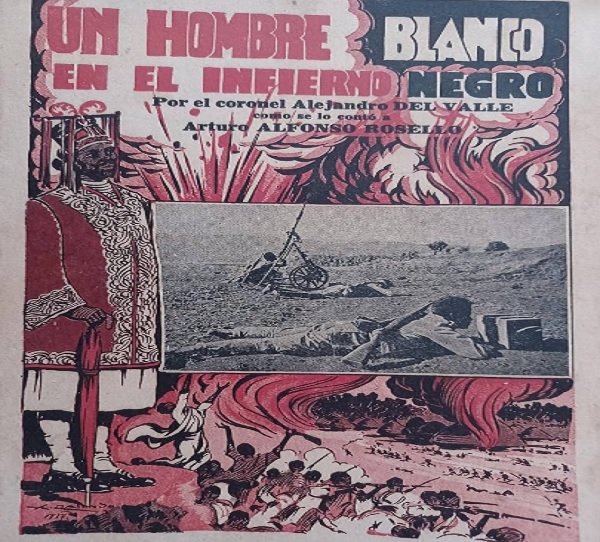
Alejandro del Valle’s Un hombre blanco en el infierno negro is not a legal chronicle or diplomatic archive but an adventure narrative. Its sensationalism reflects the conventions of serialized war memoirs and colonial adventure literature of the 1930s. Translating such a text into Amharic (Key Anbessa) does not transform it into a historical document; it remains a literary artifact. Criticism should therefore target the genre’s exaggerations rather than the translator’s fidelity.
3.) Audience Agency and Critical Literacy
The critique assumes that readers passively absorb sensational claims without discernment. In reality, Ethiopian audiences — especially those familiar with the country’s legal and religious traditions — are capable of recognizing exaggeration. The translator’s role is to make the text accessible, not to censor or rewrite it. To demand removal or heavy contextualization risks infantilizing audiences and undermining their ability to engage critically with literature.
4.) Historical Verification: Whose Responsibility?
– Historians, archivists, and scholars are tasked with verifying claims against legal codes, chronicles, and anthropological evidence. |
– Translators and media hosts, by contrast, are tasked with cultural transmission.
– To impose historical verification duties on translators risks creating a chilling effect, discouraging the translation of controversial or politically charged works. This would impoverish cultural exchange and limit access to diverse narratives.
5.) Ethical Balance
While it is valid to highlight the implausibility of the wax‑burning execution claim, the critique overreaches by assigning moral and legal responsibility to the translator. A more balanced approach would:
– Recognize the translator’s fidelity to the source text.
– Encourage supplementary scholarly commentary (prefaces, footnotes, afterwords) to contextualize sensational claims.
– Preserve the literary work as a historical artifact of Cuban adventure writing, while clarifying its limits as a historical source.
6.) Conclusion
The article rightly identifies the danger of sensationalized narratives distorting cultural memory. However, its call to hold translators and media hosts legally responsible is misplaced. Translation is not authorship, and media hosting is not historical certification. The appropriate remedy is contextualization through scholarship, not censorship or punitive accountability. Public trust is best served when readers are given both the translated text and the Critical tools to evaluate it — not when translators are burdened with responsibilities that properly belong to historians.
Editor’s Note : Views in the article do not necessarily reflect the views of borkena.com
__
Support Borkena : https://borkena.com/subscribe-borkena/
Join our Telegram Channel : t.me/borkena
Like borkena on Facebook
Borkena Ethiopian News Youtube Channel
To submit Press Release, send submission to info@borkena.com
Add your business to Ethiopian Business Listing / Ethiopian Business Directory
Join the conversation. Follow us on X (Formerly Twitter) @zborkena to get the latest Ethiopian News updates regularly.