
By Naod Hailu
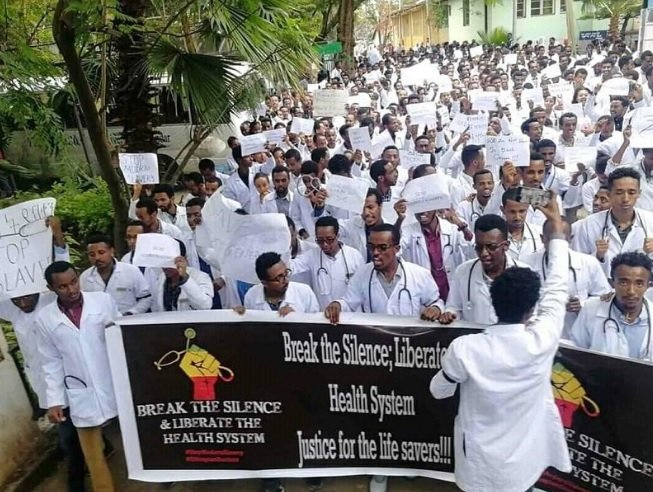
Abiy’s regime has been working scrupulously to fizzle out health workers’ demands for better wages. Arrests, intimidation, spreading fear, firing workers, and organizing meetings that offer vague promises have been the primary tools used by the regime to weaken the demands. These are aimed at creating a chilling effect not only to deter other health workers from joining the strike, but also to thwart the movement from spreading to other sectors, especially education. If not carefully managed, these actions could disrupt the current momentum in the long run. The regime is adept at instilling fear, causing workers to refrain from exercising their rights.
Therefore, it is essential to diversify the methods that complement the strikes to counter the regime’s repressive response and compel it to offer tangible concessions. One such effective method is the sit-in, which, when strategically combined with strikes, can achieve these goals.
It has been almost three weeks since the strikes began, yet there are workers who have not joined for various reasons. A major reason could be the sensitive nature of the healthcare profession, which makes it nearly impossible to completely halt work. Those health workers still on duty can protest by organizing sit-ins in hospitals, around health bureau buildings, the Ministry of Health, other key public institutions, and in public areas. It is equally commendable for striking workers to use this tactic strategically.
Sit-ins can serve as a catalyst for building cross-sectoral alliances, especially as it invites solidarity from the education sector, which faces similar grievances. Sit-ins could be a powerful rallying point for them. Over time, workers from other sectors and the general public would be likely to join in, as many will see their own grievances reflected in this struggle. This form of protest, which involves physical presence, has high visibility and can attract strong support from international media, human rights organizations, and advocacy groups which make it harder for the regime to maintain a lukewarm or dismissive stance.
The regime may not hesitate to use violence to disrupt this form of protest, but health workers should not back down. Such repression is ultimately risky for the regime, as it increases the likelihood of its action backfiring. This would not only enhance the visibility of the suffering but also strengthen the legitimacy of the movement. As one of the prominent scholars of civil resistance, Gene Sharp, described it, this dynamic is known as “political jiu-jitsu.” The more a regime uses coercion against peaceful protesters, the more it exposes its own repressive nature, ultimately undermining its legitimacy.
Another complementary method is the use of wearable items such as T-shirts, badges, ribbons, and armbands to maintain the movement’s visibility. Distributing these items to the public would allow them to express their solidarity. While producing such materials can be costly, a GoFundMe campaign could help cover the financial burden.
Furthermore, art is a powerful tool to elevate the current momentum. Artistic tactic humanizes the struggle, amplifies its message, and connects emotionally with the public. Health workers with talents in painting, poetry, acting, music, and other creative forms should consider organizing street shows and events in their respective hospitals, and share these through social media. Inviting artists to participate would make the movement even more inspiring, although some may vacillate due to fear of repercussions. Nevertheless, this form of protest can vividly convey the tragic realities health workers face, drawing attention from local and international media, as well as human rights advocates.
Equally important, those health workers who are on full strike could consider treating patients voluntarily. This demonstrates their commitment to ethical duties and helps counter the regime’s narrative that they are self-centered. It would further cement public support and strengthen their image.
Will the Demand for Better Wages Shift into a Demand for Democratic Change?
When a repressive regime responds to legitimate demands with violence and fear instead of recognizing their credibility, workers are led to conclude that their grievances cannot be addressed under the current system. As a result, what begins as a demand for better wages and conditions may quickly evolve into a broader call for democratic change. This has been the case in many states where authoritarian norms have intensified as it was seen in Sudan in 2018 to 2019 movement, for example. The current health workers’ movement is no exception as it has the potential to catalyze political mobilization if the regime continues its campaign of intimidation, arrests, and refusal to make concessions.
Editor’s Note : Views in the article do not necessarily reflect the views of borkena.com
__
Subscribe : https://borkena.com/subscribe-borkena/
Join our Telegram Channel : t.me/borkena
Like borkena on Facebook
Add your business to Ethiopian Business Listing / Ethiopian Business Directory Business Listing Toronto
Join the conversation. Follow us on X (Formerly Twitter) @zborkena to get the latest Ethiopian News updates regularly. Subscribe to YouTube channel To share information or for submission, send e-mail to info@borkena.com