
Anonymous
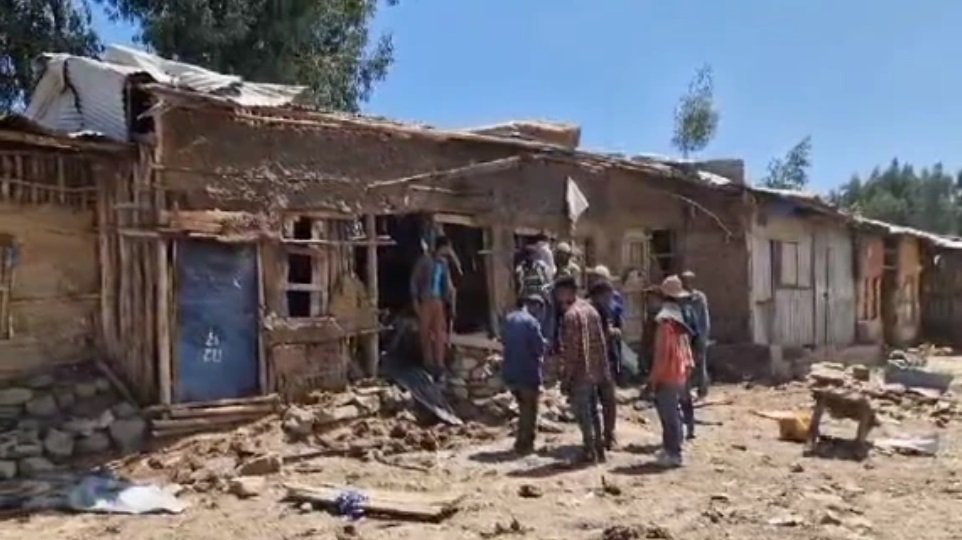
It has been over a year and a half since the devastating war between Fano (Amhara Survival Resistance Fighters) and the Ethiopian National Defense Force (ENDF) began. This article does not intend to delve into the political intricacies of the widely discussed conflict in the Amhara region. Instead, it aims to shed light on the often-overlooked suffering endured by the region’s most vulnerable residents.
Internal Displacement
Internal displacement has been increasing over time in the Amhara region. Internally displaced people originate both from within the region and from other regions, particularly neighboring Oromia. The primary causes of this displacement include ethnic-based unrest and starvation following severe droughts.
Towns and cities, including the region’s capital, Bahir Dar, are overcrowded with displaced persons and local laborers. Among them, teenagers and adults are desperately searching for jobs, while children and the elderly wander from village to village and door to door, begging for help. These individuals often share their heart-wrenching stories of what they have endured. However, their pleas frequently go unanswered because local residents, who are themselves repeatedly approached by various beggars, can only afford to assist a limited number of people each day.
Visitors to the region are confronted with the tragic sight of children, who should be in school, begging for food on the streets. This heartbreaking reality remains largely untold, as everything in the region is tightly intertwined with the blood-soaked politics of the area. What I am sharing here is just the tip of the iceberg, based on what I have personally witnessed. If the authorities were to read this account of the hardships faced by the less privileged residents of the region, they might accuse me of defaming the legitimate government rather than acknowledging my whistleblowing on the hidden, overwhelming crisis caused by war.
We are all aware of this situation but remain silent out of fear. While we may have avoided confrontation by ignoring the facts we witness daily, we must recognize that we are prisoners of our own conscience. Who will liberate our souls from this oppressive prison?
In December 2024, I was walking across the old bridge of the Abay (Blue Nile) River towards the center of the city, along the reconstructed road under the Corridor Development (ኮሪደር ልማት) Project. I noticed several youths and emaciated adults working on the roadside reconstruction.
As I approached the ancient Saint George’s Cathedral Church, I saw several women and children sitting beneath the palm trees. The women were making tea for their starving children. I observed the children eating crumbs of bread with tea. Their clothes were dusty, their faces gaunt, and their eyes sunken with dehydration. The sight left me heartbroken, and I reluctantly left them behind as I entered Saint George’s Cathedral.
Inside the church walls, people were engaged in prayer, meditation, and spiritual activities. Among them, I noticed a woman crying continuously for over an hour. I didn’t attempt to console her, as I myself was overwhelmed with grief and distraction. Fear, anxiety, and despair have become a part of our daily lives since the war began in this region. Churches are now the only institutions that listen to our voices and offer us solace from the pain and mental trauma we endure.
Unemployment
Unemployment has surged to an unmanageable level in the Amhara region. Most young college and university graduates are jobless and, as a result, are struggling to find either permanent or contract jobs. Every day, long lines of job seekers can be seen in front of notice boards, hoping to find vacant positions. However, job opportunities in the region have been alarmingly decreasing over time.
In December alone, 1,500 candidates applied for just 40 temporary vacant positions at a private business startup. During the same month, thousands of graduates from all corners of the region traveled to the region’s capital to apply for a vacancy announced by the Immigration and Citizenship Service (ICS). The ratio of vacant positions to applicants is estimated to surpass 1:200, as the registration process lasted 15 consecutive days, with long lines of applicants each day.
Unfortunately, many job seekers traveled from distant provinces and had to spend 3 to 5 days waiting in line for their turn. They incurred a minimum daily expense of 250 and 300 Ethiopian Birr for bed rentals and for food and other expenses respectively. This is what I personally witnessed and also learned from interviews with others.
Since the war began, transportation fees have increased disproportionately compared to passengers’ income in the region because the region’s fuel market has been fully taken over by the contraband system. For example, the price of benzine is 500 birr per liter. Many job seekers returned to their homes with feelings of depression and regret, as they were not informed when they would be called for employment tests after enduring so much hassle just to register. I still fail to understand why people already struggling with poverty have to spend so much money just for the registration process.
Months-Long Cut-Off of Civil Servants’ Salaries and Skyrocketing Prices of Goods
Following the region’s descent into a devastating war—characterized by conflict and law enforcement actions by regime actors and their allies—residents are facing unprecedented, intentional catastrophes. With the government’s administrative power limited to major cities, residents outside these areas are exposed to starvation. The government has frequently withheld civil servants’ salaries in retaliation for FANO’s advances in these regions.
Government and military officials have accused civil servants of providing strategic and technical support to FANO forces. As a result, civil servants, including teachers, have gone unpaid for approximately 3 to 4 months, varying from zone to zone. Many are now forced to work as daily laborers, adding strain to an already burdened labor force. The children and elderly dependents of these public servants are in dire jeopardy, struggling with hunger and neglect.
This is not just about others; I am one of them. I have not received my salary since September 2024. I have spent countless hours searching for temporary jobs, but due to the collapse of economic activity in the region, I have been unsuccessful. I do not know how I will survive this state-sponsored famine.
To make matters worse, the irresponsible floating of the currency and the extreme devaluation of the Ethiopian Birr, combined with the ever-increasing demand and limited supply of goods in the war-torn Amhara region, have caused an uncontrollable surge in the prices of goods and services. For instance, the monthly rent for a single room now costs 3,000 birr, and the prices of food crops, spices, and merchandise continue to rise daily. As a result, people are overwhelmed with despair, confusion, and hopelessness.
Abduction and Arbitrary Attacks
Abduction
Abduction has become a common practice in the Amhara region. Although it occurred occasionally over the past seven years, it has been exacerbated since the war began, as the region’s law and order has descended into unprecedented anarchy and turmoil.
Three anonymous (known to the public but not exposed due to fear) clique groups are involved in abducting innocent individuals. The abductors kidnap residents within the region, often for ransom or political purposes, aiming to intimidate the population and blame the FANO forces. As the majority of the residents in the Amhara region grapple with hunger and the tragedies of war, merchants and investors have also fled to Addis Ababa out of fear of abduction.
Arbitrary Attacks
Arbitrary attacks are now being carried out en masse against civilians by Ethiopian National Defense Forces (ENDF), allied with Amhara anti-riot paramilitary forces and militias. Young men and women walking and conversing in groups are subjected to harassment, insults and attacks.
Each unit of the ENDF, especially the commando regiment always patrol in towns and cities, views the Amhara youth with suspicion. They seem to be looking for any excuse to execute or beat them, often accusing them of supporting FANO forces.
I am unable to fully describe the scale of arbitrary attacks in the Amhara region, the devastation they have caused and the lasting trauma inflicted on survivors. These acts are truly heinous-beyond what anyone could imagine-committed against human beings by their own government authorities and military forces. Mutilation, evisceration of internal organs after killings, burning of human corpses, and the rape of infants are among the atrocities perpetrated against the Amhara people.
CONCLUSION
The Amhara people have faced a wide range of catastrophic challenges and devastation over the last seven years, especially since the endless bloody war began. We call on all Ethiopians, Amharas in the diaspora, international communities, and local, regional, and international mainstream media to show solidarity and speak out for the neglected Amhara people before the devastation becomes irreversible.
Editor’s Note : Views in the article do not necessarily reflect the views of borkena.com
__
Subscribe: https://borkena.com/subscribe-borkena/
Join our Telegram Channel : t.me/borkena
Like borkena on Facebook
Add your business to Ethiopian Business Listing / Ethiopian Business Directory
Join the conversation. Follow us on X (Formerly Twitter) @zborkena to get the latest Ethiopian News updates regularly. Subscribe to YouTube channel To share information or for submission, send e-mail to info@borkena.com