
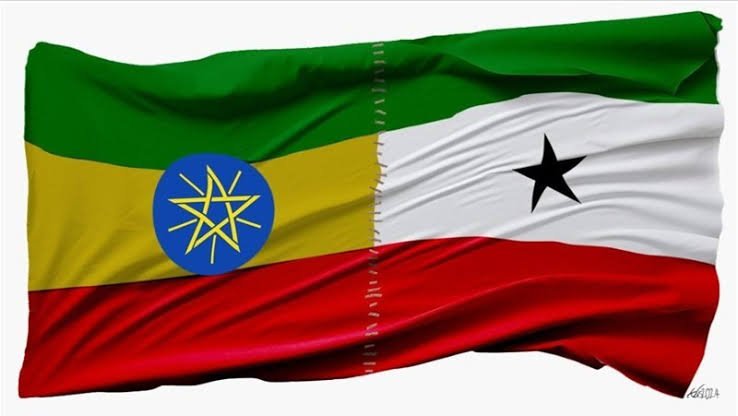

Ethiopia is not an ordinary neighbor to Somaliland. It is a country with which Somaliland has developed a deep and longstanding relationship based on geography, history, trade, security, and strong people-to-people ties. For generations, the two peoples have lived alongside one another, traded with one another, and shared common interests in the stability and prosperity of the Horn of Africa.
For this reason, Ethiopia has always occupied a unique position in relation to Somaliland’s political aspirations.
Yet, despite this historic relationship, Ethiopia has remained cautious and hesitant on the question of Somaliland’s international recognition. While Ethiopia had a unique opportunity to take a leading role, other countries have now moved ahead. This raises an important question: Why should Ethiopia continue to wait when the strategic circumstances of the region are changing so rapidly?
The issue has become even more significant following Israel’s decision to recognize Somaliland. Whether one agrees with the political implications of that development or not, it demonstrates that the international environment surrounding Somaliland is changing.
Ethiopia therefore faces a historic choice.
The Meles Zenawi Position
There is a particularly important historical reference that should not be forgotten.
Former Ethiopian Prime Minister Meles Zenawi was reportedly asked by former Somaliland President Mohamed Ibrahim Egal about Ethiopia’s position regarding Somaliland’s recognition. The response attributed to Meles was essentially:
“We will not be the first country to recognize Somaliland, but we will be the second.”
Whether viewed as a diplomatic statement or a strategic calculation, this position reflected an important understanding of Somaliland’s political reality.
At that time, Ethiopia may have been concerned about the regional consequences of being the first country to recognize Somaliland. It may have preferred to allow another country to take the initial step before following.
But today the circumstances are different.
If another country has already taken the first step, Ethiopia should seriously reconsider whether the time has come to fulfill the strategic logic behind the position attributed to Meles Zenawi.
The question is now before Prime Minister Abiy Ahmed.
Will Ethiopia continue to wait, or will it take the opportunity to become a leading actor in shaping the future of the Horn of Africa?
Ethiopia’s relationship with Somaliland should not be viewed only through the narrow lens of Somali politics. It should be viewed through the broader strategic interests of Ethiopia itself.
Ethiopia is one of Africa’s largest countries by population and one of the most influential states in the Horn of Africa. At the same time, it is a landlocked country whose economic development depends heavily on reliable access to international maritime trade.
This is where Somaliland’s strategic importance becomes impossible to ignore.
The port of Berbera and its surrounding infrastructure offer Ethiopia an important alternative route to international markets. The development of the Berbera corridor has already created stronger economic connections between Ethiopia and Somaliland.
Consequently, stability between Ethiopia and Somaliland is not simply a diplomatic preference. It is directly connected to Ethiopia’s economic and strategic interests.
A stable, cooperative, and internationally recognized Somaliland could provide Ethiopia with a reliable and mutually beneficial economic and maritime partner.
Somaliland, for its part, has every interest in maintaining strong relations with Ethiopia as a major neighboring country.
This is therefore not a relationship that should be weakened by hesitation. It is a relationship that should be strengthened through strategic cooperation.
The government in Villa Somalia must also recognize a fundamental political reality.
The people of Somaliland have developed a political identity and a national position that cannot simply be reversed through declarations from Mogadishu.
The political situation of today is fundamentally different from that of 1960.
Somaliland entered into union with Somalia in 1960 with the expectation of creating a political partnership. However, the experience that followed produced deep political, social, and historical grievances.
The events of 1988–1991 remain particularly important.
The destruction, loss of life, displacement, and suffering experienced by the people of Somaliland during that period created a historical memory that has profoundly influenced Somaliland’s political direction.
These events cannot simply be forgotten.
They cannot be removed from history through political speeches.
And they cannot be treated as if they never happened.
For many Somalilanders, the events of that period are not merely historical events recorded in books. They are part of the collective memory of families and communities.
Therefore, anyone seriously discussing the future relationship between Somaliland and Somalia must first understand this historical reality. And with respect for the sovereign political will and statehood of Somaliland.
The idea that Somaliland can simply be persuaded to return to the political arrangement that existed before 1991 ignores the political transformation that has taken place over more than three decades.
Since 1991, Somaliland has established its own political institutions, security structures, electoral processes, administrative systems, and economic relationships.
Most importantly, a generation has grown up knowing Somaliland as a separate political entity.
This is where Ethiopia has an especially important role.
Ethiopia has a relationship with Somaliland that many other countries do not possess. It has geographic proximity, longstanding commercial relations, security interests, and extensive people-to-people connections.
Ethiopia therefore has a natural strategic position from which to understand Somaliland.
If Ethiopia chooses to play a constructive role, it could contribute significantly to stability and economic integration throughout the Horn of Africa.
Recognition of Somaliland would not necessarily mean hostility toward Somalia. On the contrary, a stable and clearly defined political relationship between Somaliland, Somalia, and Ethiopia could create greater opportunities for regional cooperation.
The Horn of Africa does not need more uncertainty.
It needs clear political realities, economic cooperation, secure trade corridors, and stable relationships between neighboring states.
Ethiopia has the capacity to contribute to that objective.
A Message to Prime Minister Abiy Ahmed
Prime Minister Abiy Ahmed now faces a historic strategic decision.
Ethiopia can remain cautious and allow other countries to determine the direction of the Somaliland question.
Or Ethiopia can take a leadership role based on its own national interests and its historic relationship with Somaliland.
The question is not whether Somaliland is strategically important.
It clearly is.
The question is whether Ethiopia will recognize the opportunity before it.
If Ethiopia continues to wait indefinitely, it risks allowing other countries to occupy the diplomatic and strategic space that Ethiopia could have filled.
History often gives countries opportunities that appear only once.
The opportunity before Ethiopia today may be one of them.
Ethiopia must decide whether it will continue to watch history unfold, or whether it will take its rightful place in shaping the future of the Horn of Africa.
The people of Somaliland have already made their choice.
The question now is whether Ethiopia is prepared to make its own.
Engineer Abdi Ali Barkhad is Ethiopian, has also become known as a political analyst and writer on the Horn of Africa, particularly on Somaliland, Somalia, Ethiopia, regional geopolitics, diplomacy, and international relations. His author profile describes him as a senior consultant who has studied international diplomacy. He can be reached via email : tra50526@gmail.com
Editor’s Note: Views in the article do not necessarily reflect the views of borkena.com
__
Join our Telegram Channel: t.me/borkena
Like borkena on Facebook
To submit a press release, send the submission to info@borkena.com
Add your business to Ethiopian Business Listing / Ethiopian Business Directory
Join the conversation. Follow us on X (formerly Twitter) @zborkena to get the latest Ethiopian news updates regularly.