
By Petros Dejene (Toronto)
Professor Teshome Abebe’s recent essay, “Unlocking Prosperity: The Economic Imperative of Ethiopia–Eritrea Cooperation on Ports, Trade, and Political Alignment,” is one of the most persuasive economic arguments yet made for renewed collaboration between the two nations. His analysis is rooted in data, sound economic reasoning, and a deep understanding of how geography, trade, and interdependence shape prosperity. In a region where discourse is often polarized by history and emotion, Abebe’s essay stands out for its rational optimism.
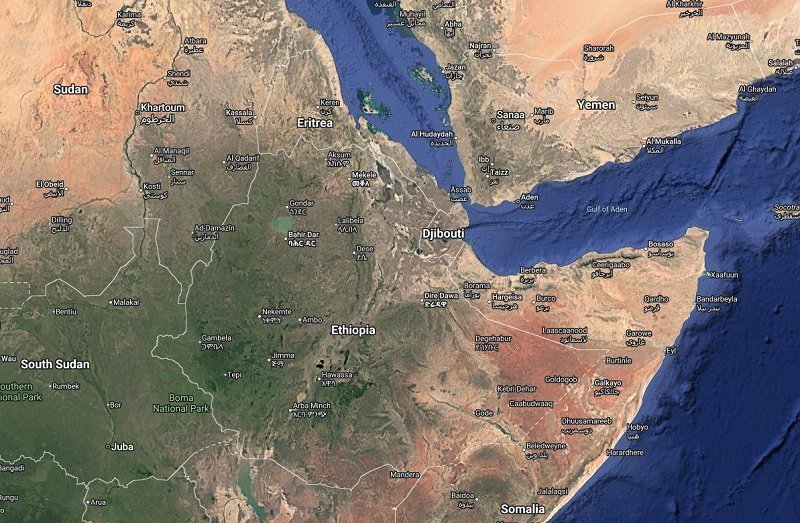
He reminds us that geography need not be destiny—that even landlocked nations can transform structural disadvantages into opportunities through strategic partnerships. His calculations are stark and compelling: Ethiopia pays up to $2 billion annually in port fees and inflated logistics costs, while Eritrea’s ports—Assab and Massawa—operate at a fraction of their potential capacity. These figures alone make the case that economic cooperation is not a luxury but a necessity. As Abebe correctly notes, mutual isolation has impoverished both countries, while cooperation could yield billions in trade gains, lower consumer prices, and create jobs across the Red Sea corridor.
This is an argument that deserves serious attention. Abebe grounds his optimism in examples from around the world—Paraguay’s riverine access through Brazil, Mali’s corridor through Senegal, and the shared infrastructure models of West Africa—all demonstrating that mutual benefit is possible when neighbors cooperate under transparent, rules-based frameworks. For Ethiopia and Eritrea, the logic is clear: economic interdependence could pave the way for stability, as it has in other regions.
But if the economic case is watertight, the political and institutional terrain remains treacherous. This is where Abebe’s otherwise excellent analysis requires a dose of realism. Economics, unfortunately, does not operate in a political vacuum—least of all in the Horn of Africa.
Eritrea’s current political order is defined by militarization, extreme centralization, and a deep-seated mistrust of integration. Its command economy and indefinite national service system are designed not for openness but for control. Expecting such a regime to embrace transparent port-sharing agreements or free movement of people may be optimistic. Similarly, Ethiopia—despite its economic dynamism—still struggles with fragmented governance, opaque decision-making, and internal conflicts that weaken its diplomatic leverage. Without addressing these structural realities, even the most elegant economic model risks remaining theoretical.
The real challenge, then, is not whether cooperation makes sense economically—it clearly does—but whether either state currently possesses the political will and institutional maturity to make it happen.
To translate economic logic into actionable policy, three prerequisites stand out.
First, Ethiopia must institutionalize its maritime and regional strategy.
Major strategic decisions—whether on ports, corridors, or peace—cannot continue to depend on transient political calculations. The government should convene an independent Maritime Futures Commission bringing together economists, diplomats, historians, and private-sector leaders to evaluate all port options (Djibouti, Berbera, Assab, Massawa, and Lamu) with transparency and accountability. National interest must be anchored in evidence, not secrecy.
Second, the path to cooperation must begin with dialogue beyond governments.
Abebe’s call for economic partnership could gain credibility if paired with what the Horn has long lacked: structured, multi-voiced consultation. Track-two diplomacy—bringing together Ethiopian and Eritrean scholars, business leaders, and diaspora professionals—can create a foundation of trust that current regimes have failed to build. When political change eventually comes, these civic networks will form the scaffolding for real integration.
Third, sequencing matters.
The goal should not be a sudden return to 2018’s euphoric declarations, but a phased roadmap:
- Confidence building through limited trade, humanitarian cooperation, and technical exchanges;
- Institutional frameworks for port management and customs harmonization;
- Gradual economic integration, anchored in legal treaties and regional oversight, to ensure durability beyond personalities or political cycles.
Ethiopia and Eritrea have already paid a heavy price for the absence of such sequencing. The 2018 peace accord briefly reopened borders, resumed flights, and reignited public optimism—but its collapse during the Tigray conflict exposed how fragile “peace without process” can be. Without mechanisms for verification, consultation, and parliamentary approval, goodwill dissolved into mistrust.
That lesson should not discourage cooperation—it should guide it.
Ultimately, Abebe’s essay is valuable not only for its economic insights but also for rekindling an urgent national conversation. Ethiopia’s landlocked status is not merely a logistical problem; it is a geopolitical and psychological one. And Eritrea’s isolation is not a sign of sovereignty—it is a symptom of insecurity. The two nations are destined by history, geography, and demography to coexist; the question is whether they will do so as partners in prosperity or as rivals trapped in suspicion.
The way forward is not confrontation but institutional evolution. The economics are already on Abebe’s side. What remains is the politics—and that requires leadership, transparency, and the courage to let evidence and dialogue guide destiny.
Ethiopia must lead that conversation, not by reviving old grievances, but by articulating a credible, inclusive, and forward-looking maritime vision that invites Eritreans—not just their government—into a shared horizon of opportunity.
As Professor Abebe reminds us, prosperity begins when doors open. But for those doors to stay open, trust, institutions, and accountability must first hold the hinges.
Editor’s Note : Views in the article do not necessarily reflect the views of borkena.com
__
Support Borkena : https://borkena.com/subscribe-borkena/
Borkena Ethiopian News Youtube Channel
Join our Telegram Channel : t.me/borkena
Like borkena on Facebook
To submit Press Release, send submission to info@borkena.com
Add your business to Ethiopian Business Listing / Ethiopian Business Directory
Join the conversation. Follow us on X (Formerly Twitter) @zborkena to get the latest Ethiopian News updates regularly.
Historical Background: Italy snatched Ethiopia’s Bahirè-Nègash during the First Italo-Ethiopian War [1895-1896]. Italy renamed it ‘Eritrea’ and occupied it till the end of WW-II [1945]. In 1945, Italy surrendered to Britain [Allied Powers] and also handed Eritrea over to Britain. Britain should have handed Eritrea back to Ethiopia as all the Allied Powers handed back most Axis-Occupied lands →like Alsace-Lorraine to France.
The Affar Red Sea Coast [South of Massawa to North of Djibouti]: It is Ethiopian Affars’ homeland since the dawn of time with Asèb & Sèmèrä as alternate capitals. It has never been part of Eritrea! In 1991, Eritrea annexed it when Egypt’s Proxy Secessionist Duo [ሻብያ/EPLF/Eritrea & ወያኔ/TPLF/Tigray] invaded-and-occupied Ethiopia.
Worse, EPLF concocted the ‘Eritrean Affars’ crap and Land-Locked Ethiopia. Although the 1990s TPLF-EPLF Treaties should all be Null-and-Void and despite all that travesty of justice, Ethiopia went the Extra Mile and pleaded with the EPLF for Red Sea Access: youtu.be/esedLTkujB0?t=338
Addis Ababa Flooded with EPLF/Eritrea’s Spies: The EPLF/ሻብያ used the 2018 Ethio-Eritrea reconciliation honeymoon as façade, opened the Ethio-Eritrea border, flooded Addis Ababa with ≥300,000 EPLF’s Spies [within weeks], AND closed Eritrea’s border. So, beware that these spies are EPLF Sleeper Cells ready to attack Ethiopia from inside.
My response to Dr. Teshome’s article is also posted below!
This was my response to Dr. Teshome’s article:
1). Lest We Forget: Eritrea has mostly been serving Ethiopia’s Enemies as proxy/spring board/breeding ground or accomplice combatant [ youtu.be/Yk-_YFJwDH4 ]. Egypt’s EPLF & ELF have also been poisoning Eritreans with anti-Ethiopia venom for ≥50 years.
2). Eritreans & “The Stockholm Syndrome”: Under Italian Occupiers [≈1896 to ≈1945], Eritreans were limited to Grade-4, denied dawn-to-dusk street access, etc. Yet, Eritreans adore them & demonize the Ethiopians who showered them with equality, education, etc.
3). Alsace-Lorraine [France] vs. Eritrea [Ethiopia]: Germany occupied France’s Alsace-Lorraine twice, but the Entente/Allied returned it to France twice [≈1918 & ≈1945]. Italy snatched Eritrea from Ethiopia [≈1896], but handed it over to Britain/Allied [≈1945]. So, doesn’t Ethiopia have the right to claim all of Eritrea let alone the Affar Red Sea Coast?
4). Affar Region [South of ‘Massawa’ to North of Djibouti (Red Sea Coast)]: This is the Ethiopian Affars’ homeland & should be returned. Eritrea annexed it in 1991/1993 when Egypt’s Proxy Secessionists [EPLF & TPLF] invaded-and-occupied Ethiopia in 1991.
5). Menelik-II’s 99-Year Djibouti Lease to France: France neither renewed its lease nor returned Djibouti to Ethiopia. I wonder why Ethiopia hasn’t reclaimed Djibouti either!
6). EPLF/Eritrea & Peace: No sooner had EPLF declared Eritrea’s ‘independence’ [1993] than it went to war with Sudan, Ethiopia, Djibouti, and even Yemen [the Hanish Islands].
7). Ethio-Eritrea Open Border Hazard: It’s a threat to Ethiopia’s National Security. When Abiy allowed it, EPLF flooded Addis with over 300K spies in weeks & closed Eritrea’s border. Ethiopia’s Enemies will also flood Ethiopia with spies/saboteurs/weapons via Eritrea.
8). Business with EPLF/Eritrea [Ethiopia Got Screwed Over-and-Over]:
i). 1991-1998: Eritrea shot to one of the world’s top coffee, gold, etc. exporters overnight. EPLF looted or bought Ethiopia’s exports [in Birr, in black market] and exported it itself.
ii). 1998: EPLF launched another war on Ethiopia, confiscated Ethiopia’s imports/exports at Massawa & Aseb. Ethio Maritime & Ethio Insurance went bankrupt compensating!
iii). Ethiopian Airlines [EA]: (a). Eritrea refused to pay EA over 10 million USD it owed; (b). Eritrea froze EA’s account & confiscated property worth millions [alleging EA must compensate Eritreans for lost luggage] →No Eritrean brought EA Baggage Claim Tag/Slip.
9). Ante-Abiy Ethiopia: Debt/GDP Ratio at 59% [ youtu.be/upKEL9wQvrY?t=1198 ]. TPLF left nothing even to pay government employee salaries. Abiy kept Ethiopia afloat with 1 billion USD from UAE’s Prince MBZ [ youtu.be/Pg3WuF1eXww?t=5 ]. Thanks!
10). Post-Pandemic GDP [Despite COVID, USA’s Pro-TPLF Embargo/Sanctions, etc.]:
i). ↑8.1% [Months Ago] →Beat WB/IMF Expectations: youtu.be/SJBVcbtzS3A?t=25
ii). ↑10% [Months Ago] →UN-WFP Impressed: youtu.be/MFHaKycK4P0?t=34
Thank you for taking the time to share your thoughts and for laying out those detailed points. Many of the issues you listed — from Eritrea’s wartime conduct to questions about the Afar coast and past trade disputes — are indeed part of a long and complicated history that deserves careful study. None of it should be forgotten.
But the intention behind my commentary, and Professor Teshome Abebe’s essay as well, isn’t to overlook those wounds. It’s to ask how Ethiopia can move forward in a way that protects its interests without being trapped by the past. Resentment alone doesn’t build security or prosperity — institutions, informed strategy, and regional cooperation do.
We can’t rewrite 1991 or 1998, but we can choose how we deal with their legacy today. The question, then, is this: if we try to undo historical mistakes without regard to current realities, do we not risk locking both nations into another generation of mistrust and conflict?
Isaias has been in power since 1993. What actually has he done for the misery-stricken nation? Fear, meddling in the affairs of his neighbors, conscription of the youth year-in-year-out for yet another war, economic stagnation, etc. He is 79 years old. What’s all this war done for him or for the people he says are his subjects? Little or nothing. Now he is busy training Fano and Shenee to follow in his destructive life–and get these to destroy their regions.
A brilliant piece by Petros Dejene! When scholars truly open their minds and exchange ideas, progress and understanding emerge. My own piece is now supplemented by a compelling analysis that bridges the gap between economic optimism and political necessity. The conversation has only begun, and it must continue.
One fact these commentators overlook is the fact that Ethiopia is a country on the verge of disintegration. It has only a short time to exist as a country. The emerging scenario after disintegration will be the current regions becoming countries and realigning themselves in the region. Tigray is already ahead and a de facto state with its own self rule.
Please replace, “One fact these commentators overlook is the fact that Ethiopia is a country on the verge of disintegration” with “One fact these commentators overlook is the fact that Eritrea is a country on the verge of disintegration.” Thanks. D.T.
I am not sure of the level you eat at Abiy Ahmed`s food hierarachy but would like to remind you that Eritrea is a stable regional power together with Tigray. Abiy Ahmed`s war and port rhetroric are all blaff and mainly aimed at deceiving the Amhara population and stop their insurgency. It is an empty threat and he knows that Eritrean forces can knock out him out of the palace. The young Amhara generation has said said no more deceptions and Abiy Ahmed can not secure their support.
Just answering the question “How do Ethiopia & Eritrea move forward?”:
1). Right the Wrongs committed against Ethiopia! Let’s start with “Caesar’s to Caesar!” The Affar Red Sea Coast [ARSC] has never been part of Bähirè-Nègäsh/‘Eritrea’! Hence, Isayas/EPLF/ሻብያ must AT LEAST return the ARSC to Ethiopia! ONLY afterwards that Ethiopia should engage in any other bilateral relations case-by-case. Fair enough?
2). The “Aseb belongs to Eritrea” Crap: This disingenuously indexes Eritrea’s History to 1991/1993 and rigs decisions in Eritrea’s favor. That’s a non-starter since nobody represented Ethiopia at the Bähirè-Nègäsh/‘Eritrea’ Secession Ratification Table! EPLF & TPLF did that! Both are Egypt’s Proxy Anti-Ethiopia Thugs who co-bled Ethiopia!
3). The Crocodile Tears of Ethiopian Diaspora ‘Intellectuals’ [EDI] for Ethiopians: Most EDI are beneficiaries of former self-appointed tyrant regimes & their descendants. They were the same ones who turned Ethiopia in to “The World’s Poster Child of Poverty & Famine” and fled to the West →for better life & education! So, no Ethiopian should have faith in most of these Petty Opportunists who shed their crocodile tears for Ethiopia!
4). Ethiopia for Ethiopians: Decisions that affect Ethiopia’s present & future generations should ONLY be made by the Ethiopians in Ethiopia! Ethiopia has enough Ethiopians in Ethiopia to solve Ethiopia’s present & future problems. Anyone who has Ethiopia’s welfare at heart can go back to Ethiopia & join the Problem Solvers. No crocodile tears!