
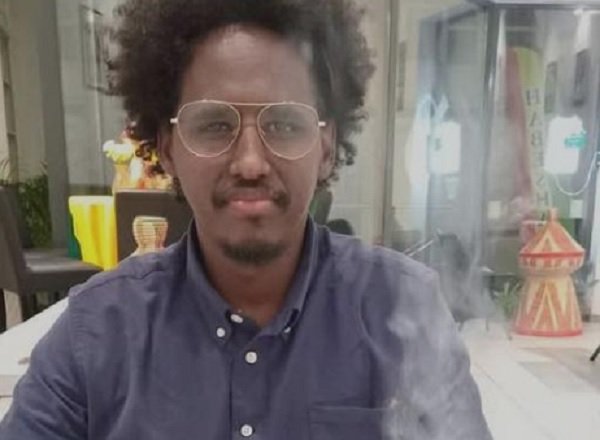
Girmay Weldedawit
Abdirezak’s article, When “Unity” Masks Exclusion: Why Oromo Elites Should Rethink the Anti-Abiy Convergence, deserves a response because it is written by someone who once held political appointments at high levels and remains affiliated with Abiy’s government. The piece is full of cooked sources, and when it uses credible references, it misinterprets them to fit a political agenda. Superfluous as it is- much like the PhD dissertation of his boss, Abiy Ahmed Ali- the article reveals a reality many political commentators and citizens have noted since Abiy came to power: the Oromia Prosperity Party intends to dismantle the Abyssinian structure and build a “New Ethiopia” on the ruins. Offering a lengthy response, however, would be giving respect to such mockery. This is a cooked work, and my reply will remain brief.
The sole aim of the article is to defend his government’s agenda of securing an Oromo-dominated Ethiopia. To do this he goes as far as cooking fictional interviews and opinion pieces. The interviews he cites—Ethiopian Insight, June 29, 2025 with Andargachew Gashaw and The Reporter Ethiopia, July 20, 2025 with retired General Mamo Abate—are nowhere to be found. Nor is the alleged Addis Standard (July 7, 2025) opinion piece by Fetlework Gebregziabher on federalism and Oromo dominance. That is why, unlike some of his other references, he carefully avoided providing links. Unable to rely on real speeches or texts to support his case, he had to invent quotes.
What he failed to realize is that even his own inventions collapsed against him. Take for instance the words he puts in the mouth of his fictional Fetlework Gebregziabher: “True federalism is impossible under Oromo dominance. Ethiopia’s unity depends on reducing Oromo leverage in national politics.” Though seemingly provocative, no such testimony exists—except from Oromo politicians themselves, like Milkesa who once worked for Abiy, openly admitting that domination is the aim and it is to be asserted over the ruins of the Northerners. The truth is unity will only be possible if there is no domination by any group, including Oromos. The same response applies to the speeches of his other characters, former diplomat Andargachew Gashaw and retired general Mamo Abate. I only hope I am not giving him a tip on how to invent sharper lines that may serve his agenda better next time.
However, there are important things to consider. He gave seemingly Amhara and Tigrayan names to his characters. More importantly, he preferred the name Ftelework Gebregzabher because there is a real political figure by that name in the TPLF, and it would make people think it is her. Besides, he chose the coded word “Tigrayan” because he knows his party has made sure that people associate that word with traitors, criminals, and the corrupt.
The piece, of course, is a piece of shit in terms of strict academic standards and misinterprets the credible sources it cites. Giving it line-by-line attention would be granting respect it does not deserve. I will instead highlight one interpretation that is representative of the Aramba ena Qobos in the paper. Abdirezak’s reading of “Abiy’s Mirror: Affective Polarization and the Vicious Cycle of Dictatorship in Ethiopia” twists its meaning to serve his agenda. In “Abiy’s Mirror”, he claims the Oromo call for convergence deepens exclusion, yet the original article clearly shows that polarization under Abiy is used to maintain dictatorship and never blames the Oromo initiative.
The sole purpose of such treacherous writing is to appear knowledgeable, like Abiy and his cronies, while deceiving people—especially those he calls “Cushitic”—into believing that the current convergence, particularly the news of the establishment of the “Tigray and Amhara Forum” in Mekelle, is a scheme to restore Northern dominance. Yet the paper reveals one undeniable truth about Abiy’s doctrine, quoting the article: The wiser course is to align with these Cushitic partners, open structured dialogue with the current Abiy-led government, submit concerns, and reshape policies where mistakes have been made, while preserving the historic power shift that broke Abyssinian monopoly.
X-@GWeldedawit
Facebook, https://www.facebook.com/girmay.weldedawit
girmayweldedawit@yahoo.com
Editor’s Note : Views in the article do not necessarily reflect the views of borkena.com
Support Borkena : https://borkena.com/subscribe-borkena/
Join our Telegram Channel : t.me/borkena
Like borkena on Facebook
To submit Press Release, send submission to info@borkena.com
Add your business to Ethiopian Business Listing / Ethiopian Business Directory
Join the conversation. Follow us on X (Formerly Twitter) @zborkena to get the latest Ethiopian News updates regularly.
I have read that other article and it is actually better than this article that is supposed to be critical of it. The words at the end of the article was good “It is time to be clear: the future of Ethiopia’s balance of power will not be decided in the salons of Addis Ababa’s northern elite, nor in recycled pacts of exclusion. It lies in the confidence, unity, and cooperation of the south and east.
The Oromo, Somali, Afar, Sidama, and other Cushitic nations must hold firm together. They must not abandon their shared front for fragile deals that only strengthen old dominance.
Those Oromo elites who are seeking northern validation must stop, reflect, and return to reality. The task is not to restore yesterday’s Ethiopia, but to secure the tomorrow of an Ethiopia that belongs to all its peoples.
History will not forgive a generation that squandered a power shift by running back into the arms of those who excluded them.”