
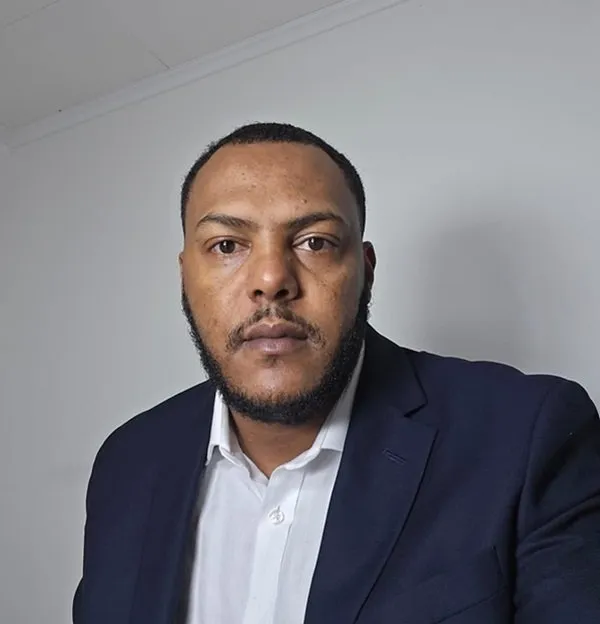
By Tingirtu Tekle
I have read with considerable interest, and not a little bemusement, Ato Jawar Mohammed’s latest epistle concerning the question of whether Somalis are marginalized under the current dispensation in Addis Ababa.
Let me state at the outset that Ato Jawar’s analysis, while couched in the familiar language of detached empiricism, suffers from a fundamental methodological flaw that has come to define much of the political literature emanating from his quarter: the art of selective amnesia and convenient scapegoating.
When one undertakes to examine the question of marginalization in contemporary Ethiopia, one cannot, in good conscience, elide the most glaring example of state-sanctioned persecution currently unfolding in the country. That is the systematic, unabashed, and genocidal war being waged against the Amhara people.
Ato Jawar asks rhetorically whether Somalis are more marginalized today than under previous regimes. He then proceeds to provide a rather generous audit of the Prosperity Party’s performance in the Somali region — reduced federal interference, improved representation, cessation of abuses in Jail Ogaden. One may or may not concur with his empirical assessment. But what is striking is what he omits.
While he correctly notes that the federal army’s heavy presence has shrunk in the Somali region because it is preoccupied elsewhere, he fails to tell his reader where that elsewhere is. That elsewhere is precisely Amhara and Tigray. The relative peace and autonomy he celebrates in Jigjiga is purchased, in large measure, by the deployment of the entire coercive apparatus of the state to Gondar, Gojjam, Shoa, Wollo and Welkait. To present Somali stability as an achievement of Abiy’s magnanimity without acknowledging that it is subsidized by Amhara blood is, to put it mildly, intellectually dishonest.
And then comes the most revealing, and indeed the most malicious, sleight of hand. In attempting to absolve Oromo nationalism, and by extension his own political constituency, of any expansionist intent, Ato Jawar resorts to a trope so old that it has become tedious.
He writes: “Abiy himself does not come from the Oromo nationalist camp. His nationalist orientation is rooted more in Ethiopianism, as historically espoused by Amhara elites.”
This is the crux of the matter, and this is where the analysis collapses into pure deflection. This attempt to have it both ways, to wield state power while claiming the moral innocence of an opposition force, is precisely what defines the current discourse.
Let us be unequivocal: Abiy Ahmed is not a confused disciple of Amhara-centric state nationalism. He is, in both his political socialization and his ideological articulation, a product of Oromo ethno-nationalism and its deep-seated historical resentment narrative. His expansionist rhetoric does not derive from Amhara’s map; it derives from a revanchist reading of Oromo history.
The empirical evidence is in his own words. Speaking recently on OBN, the regime’s own mouthpiece, Abiy invoked the Oromo maxim “Lafee teenyaa lafee teenyaa” — “Our land is our ancestor’s bone.” This is not the language of civic Ethiopianism. This is the language of primordial, ancestral territoriality. It is the conceptual foundation for geographic revisionism. One cannot claim that one’s land is defined by the bones of one’s ancestors, wherever those bones may be buried, and then pretend to have no territorial ambitions beyond one’s borders.
The logical extension of this doctrine was made explicit when Abiy, only weeks ago, publicly lectured the nation on the existence of Oromo lineage names in Barentu, Eritrea, thereby laying a thinly veiled claim to Eritrean sovereign territory. Which Amhara elite, pray tell, instructed him to do so? Which textbook of “Amhara Ethiopianism” contains a chapter on Barentu? This is not Ethiopianism; this is Oromo irredentism in its purest, most unvarnished form.
This brings us back to the Moyale question, which Ato Jawar attempts to compartmentalize as a mere clan skirmish. The skirmish in Moyale cannot be divorced from the broader political ecosystem that produces it. The very political class that today instigates conflict in Moyale is the same one whose political literature and public mobilization claim Addis Ababa as Finfinne, Dire Dawa as Dirre Dhawa, Harar as Adare, Jigjiga as a contested frontier, the entirety of Benishangul-Gumuz, Wollo Amhara, vast tracts of Afar, numerous kebeles in the Somali region, and even lands in Djibouti, Awdal and Berbera in Somaliland, and parts of Somalia proper.
Name me a single Amhara political formation, armed or unarmed, that claims territory in four sovereign countries. You cannot. Yet this maximalist cartography is now official doctrine, broadcast daily on state media. This is not an aberration; this is the political DNA of the ruling clique — a project of geographic revisionism that is sowing a seed of destruction for the Oromo people themselves, who will ultimately bear the cost of the wars it engenders, and for the entire country. It poses a great and imminent threat to the entire Horn of Africa.
It is in this context that Jawar’s arithmetic about the Prosperity Party’s executive committee — ten Oromos, eight Amharas — becomes almost farcical. Anyone with a passing familiarity with how power functions in contemporary Ethiopia knows that the Prosperity Party is not a Leninist party governed by democratic centralism. It is a personal enterprise, an Abiy Ahmed enterprise.
The real locus of power does not lie in the executive committee. The people who make decisions in this country are not the party’s formal organs. It lies in a narrow, informal network of Oromo generals, security chiefs, and political operatives who constitute the praetorian guard of the regime. The eight Amharas that Ato Jawar so generously counts as evidence of inclusion are not representatives of the Amhara people. They are not politicians chosen by the Amhara. They have no constituency in Gojjam, Gondar, or Shewa. Their sole political function is that of collaborators and enforcers — to recruit Amhara youth into the ENDF to fight a genocidal war against their own kin in Amhara and against Tigrayans.
To present these individuals as evidence of Amhara representation is an insult to the intelligence of the Ethiopian public. Their role is not representation; it is pacification and the provision of cannon fodder.
If we are to have an honest conversation about marginalization in Ethiopia, we must abandon this hierarchy of victimhood and this economy of blame where one group’s relative improvement is celebrated while another group’s existential agony is explained away as a historical debt they owe.
The Somali people deserve genuine federalism, accurate representation, and a permanent end to securitized governance. So do the Amhara. One does not have to be sacrificed at the altar of the other, nor does one require the demonization of the other to be validated.
This selective moral accounting, and this attempt to launder an Oromo-centric irredentist project by pasting an Amhara label on it, will not withstand even the most cursory examination of facts.
The writer can be reached at : tingirtsocy@gmail.com
Editor’s Note: Views in the article do not necessarily reflect the views of borkena.com
__
Join our Telegram Channel: t.me/borkena
Like borkena on Facebook
To submit a press release, send the submission to info@borkena.com
Add your business to Ethiopian Business Listing / Ethiopian Business Directory
Join the conversation. Follow us on X (formerly Twitter) @zborkena to get the latest Ethiopian news updates regularly.