
Girma Berhanu (Professor)
Introduction
As recently reported, several prominent Oromo politicians have come forward to denounce the Prime Minister of Ethiopia, accusing him of harboring intentions to annihilate the Amhara people. These three individuals were previously in close contact with the Prime Minister and claim to possess firsthand knowledge of his tendencies and his use of violence against those who oppose him. One of these Oromo politicians, Taye Dendea, is currently imprisoned, while the other two have fled the country: Milkesa Midhaga and Jawar Mohammed
That a politician like Jawar Mohammed, known for an extremist career in demonizing Amharas, should now worry that the Prime Minister may take things too far against them is a telling sign of just how serious the situation is.
Inevitably, the bombshell revelation from these three Oromo politicians has caused considerable national unease and raised not a few unsettling questions—chief among them: why do they speak out now?
At the very least, their warning of the Prime Minister’s intentions towards the Amhara population of Ethiopia warrants international scrutiny and awareness. However, we cannot help but listen to these warnings with a sense of confusion. It is all the more troubling because of the coordinated nature of their revelations, which focus exclusively on the anti-Amhara tendencies of the Prime Minister while effectively exonerating everyone else, including themselves. Perhaps we are witnessing an attempt to reinvent themselves as moderates, or even nation-saviors, and of course, potential new leaders emerging from the ruins of Abiy’s carnival regime. Indeed, fringe politicians rarely make it to the top, so a level of window-dressing is required if they are to enjoy the heights of power.
In all truth, their past positions and activities raise necessary questions. What could possibly explain this change of heart, from defending a virulent anti-Amhara ideology and encouraging the government –at both central and regional levels– to putting this ideology? Are we expected to believe that they have thought better of persecuting Amharas and now wish to redeem themselves for the sake of Ethiopia? Is this transformation driven by genuine moral awakening, a strategic political recalibration, or an effort to rehabilitate their own legacies after years of complicity?
Such contradictions demand scrutiny, not in order to discredit the value of the current disclosures, but to understand the full context—and to guard ourselves against selective memory and opportunistic reinvention.
It is also striking that, despite the magnitude of these revelations—comparable in tone and gravity to the documentation of atrocities by infamous figures in history—there is a notable absence of deep analytical commentary or comprehensive research on the matter. The brutality attributed to the current Prime Minister has been laid bare in near-graphic detail, yet the response from the academic, journalistic, and policy communities remains muted or cautious. One thoughtful reflection I did come across is the essay by Taye N. Milkesa (dated July 2, 2025)[1]in which he insightfully notes that for years, Ethiopians were left in the dark about who was behind the numerous killings and massacres that have plagued the country over the past seven years. This vacuum led to widespread speculation, rumor, and conspiracy. Thanks to former ministers such as Mr. Taye Dendea, Dr. Milkesa Midhaga[2], Dr. Gedu Andargachew, influential Oromo politician Jawar Mohammed, and opposition leader Lidetu Ayalew, we now have a clearer picture. These individuals have directly implicated the man currently occupying the Office of the Prime Minister through what they describe as a process of state capture. Drawing on personal conversations, insider knowledge, and direct evidence, they have laid out the methods, motives, and operational details behind atrocities committed in places like Burayu, Shashamene, Arsi, Wellega, and beyond. Yet a crucial question remains: How did one man manage to wreak such havoc in such a short time? Readers may offer different theories, but the author of that essay posits three core strategies that underpin what he describes as the rise of a “charming genocider of the 21st century.”1) Abiy Ahmed Ali’s first strategy was setting up a hidden killer squad. 2) He carefully identified the persons and people to be killed and massacred 3) He always distances himself from killings and disasters, and acts innocent.
Analysis
Since the bold and unexpected appearance of Taye Dendea in Ethiopia, a wave of accusations and vivid depictions of atrocities has spread across social media, particularly among Amharic-language outlets run by Oromo activists and media figures. The realization that Abiy, once championed as a liberator and symbol of Oromo empowerment, has revealed himself to be, in essence, a psychopath devoid of genuine allies or loyalties, has been a sobering revelation. For most who had initially invested hope in his leadership, this awakening is both painful and instructive. One can only hope that those still captivated by his charm and polished rhetoric will, in time, come to see through the illusion as well.
This development is most welcome, especially in a time when over 500 members of parliament kneel with outstretched hands, not in service to the people they were supposed to represent, but in submission to Abiy’s decrees and ignorant lectures. It stands in stark contrast to the startling silence of the legislative body, which has abdicated its moral and constitutional responsibility. Taye’s brave action from inside the lion’s den lends further credibility to widely known abuses and opens the possibility for a united front among formerly opposing groups against a common adversary: the regime. This is a vital step toward ending dictatorship and restoring peace.
This has also triggered a noticeable shift in the tone and framing of the Oromo ethnic movement, marking what may be a broader rethinking of its direction and underlying assumptions. Their recent discourse now emphasizes Ethiopian unity, sovereignty, and the principles of shared citizenship. There is a growing acknowledgment that the Amhara and Oromo peoples have coexisted peacefully for centuries, and that the Oromo themselves are a richly diverse community, religiously, culturally, and historically intertwined with other Ethiopians. Increasingly, it is also being recognized that Abiy has fueled ethnic polarization by orchestrating violence against both groups, while cynically shifting blame to deepen the divide. This is also a welcome development, a step forward towards nation-building.
This is, in fact, what principled Ethiopians of all backgrounds have been saying for decades: to the TPLF when they designed this divisive concept of ethnic federalism, to the OLF who supported and launched it at large, and more recently to activists who aligned with Oromo-led power structures. The logical next step must be the dismantling of ethnic-based politics, a serious constitutional reform, and a civic education effort, especially among Oromo and Tigray youth who grew up immersed in this venomous narrative. It is time to replace entitlement with justice, to let go of separatist visions of an independent Oromo or Tigray, ideas planted for generations through politicized narratives that served specific agendas, not truth. We must now be honest: the stories that fueled division were never rooted in shared well-being. The message should be simple and unambiguous: we either “swim together or sink together”, and that we have an almost indomitable common enemy called poverty. And so, to those now returning to the path of unity: welcome back. This was the first level, and it is a most welcome shift to forge united action.
However, there is a second layer that deserves closer attention. While this recent wave of exposure regarding ethnic agendas may, on the surface, appear to serve the public interest, it also risks aligning, perhaps unintentionally, with Abiy’s well-worn strategy of divide and rule. It may, in effect, redirect public frustration away from the core of power. This raises important questions: Why has this surge of Oromo-led media critique intensified at this particular moment, and why does it appear so coordinated? Why are the loudest voices largely drawn from known activists and former ODP members, saving prominent evil figures from blame, and certain uncomfortable truths remain conspicuously absent? Why is the critique of Abiy’s divisive tactics often framed as a problem predominantly about the Oromo community, when in reality, the suffering under ethnic federalism has disproportionately impacted the Amhara? Why this selective lens, and why now?
There are several unresolved concerns:
- Selective Accountability: Not one of these voices has acknowledged the complicity of other Oromo figures within the regime. The focus remains narrowly on Abiy, while others who held power alongside him remain conspicuously untouched by criticism.
- Silence on Political Collaboration: Despite clear evidence of involvement, no Oromo political figure is directly named or held accountable for enabling Abiy’s policies. Instead, there’s an emerging pattern of subtle rehabilitation, particularly of figures like Lemma Megersa, raising the question: is this a strategic effort to salvage reputations by isolating blame to one “untouchable” individual while bringing forward new Oromo leadership, not by merit, but by ethnicity? Such narratives resemble plea bargains within a joint criminal enterprise, designed not for truth, but for the distortion of justice.
- Evasion of Responsibility: These critics fail to reflect on their own roles in shaping or supporting the very policies they now denounce. Abiy did not personally torch businesses in Shashemene, burn down Ataye, hang corpses upside down, or ethnically cleanse thousands of Amhara and displace millions from Oromo regions. These atrocities required grassroots participation, political endorsement, and active organizing by the very critics and activists who now claim the moral high ground. In many cases, these acts were not only tolerated but applauded by members of their elite class. To omit this is not merely selective memory; it is a calculated rewriting of history, aimed at avoiding accountability and evading the reckoning that should come before a court of law.
- Instrumental Outrage: Their selective emphasis on Abiy’s anti-Amhara actions, absent a broader reckoning with ethnic politics or acknowledgement of their own anti-Amhara positions, appears less about reconciliation and more about repositioning. At times, it feels calculated to provoke, or to sow confusion when coercive persuasion failed, rather than to heal.
- Ideological Ambiguity: Perhaps most telling is the silence around their current ideological stance. Do they still believe that the Amhara “colonized” the Oromo? Do they continue to support the vision of an Oromized Ethiopia, with all other groups demoted to narrow ethno-regions? Do they still hold the dream of an independent Oromia or Tigray? Without clarity on these questions, their newfound criticism risks being tactical rather than transformative.
This rhetorical and strategic pattern is uncomfortably reminiscent of the propaganda that fueled the Quero-led agitation against peaceful Amhara civilians living in Oromia, an incitement that resulted in thousands of deaths and millions displaced, many of whom still languish in internal refugee camps. The trauma persists. The violence is abated but still continues in some places.
And now to the role of the media. No media outlet has raised these fundamental questions. Just as no one ever pressed Meles Zenawi to explain how he could claim to stick to his Front, to “liberate Tigray” while ruling Ethiopia with authoritarian control, no one is asking today’s outspoken defectors to account for their past roles or current ideological commitments. Why?
Truth and reconciliation demand more than a change of tone or the convenient condemnation of a single individual. They demand moral clarity, full accountability, and the courage to confront uncomfortable questions, especially when former insiders seek to reinvent themselves as whistleblowers without reckoning with their once thrilled complicity. The commandability of their initial action is undeniable in shining a light on a dictator’s true nature. However, the concerted campaign focusing solely on one person, while exonerating all others, including themselves, who were active accomplices, raises deeply troubling questions about their motives. Are they attempting to reinvent themselves as new leaders on the graves of their old friend, strategically distancing themselves from a sinking ship without fully confronting their past complicity? This nuanced interplay between brave exposure and potential self-serving revisionism deserves careful scrutiny.
A plea bargain that redirects blame onto an untouchable figure within a joint criminal enterprise, or onto the conveniently deceased, does not advance justice; it distorts it. Framed as “third-party culpability,” such maneuvers serve one purpose: evading accountability under the guise of legality.
This is a familiar tactic in authoritarian regimes. Stalin’s show trials often blamed purged officials, many already dead, to preserve the illusion of justice while protecting those truly in power. Similarly, post-conflict systems have been known to place guilt on ghosts, enabling survivors of elite networks to escape consequences.
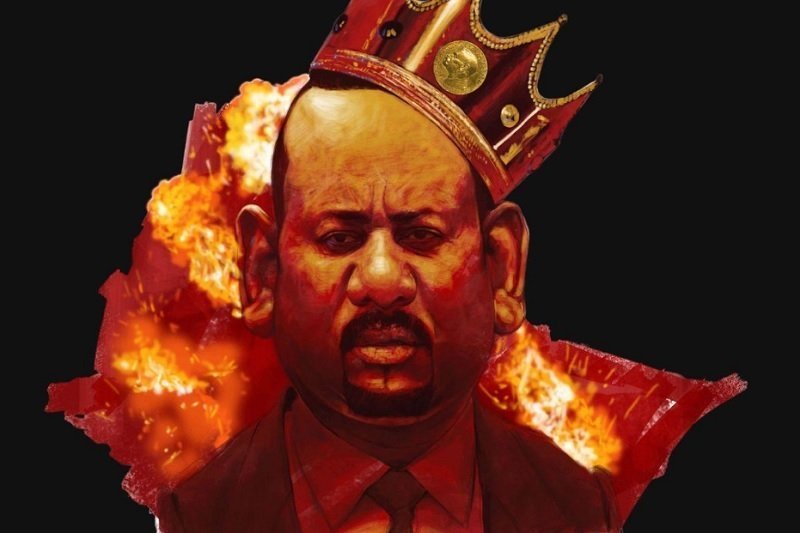
More dangerous, however, is when parliaments themselves submit to a pathological leader, passing decrees that normalize torture, mass displacement, or even genocide. When legislative bodies become extensions of a disordered mind, institutions become termite hills and hollow out from within. The child may point out the obvious: The king is naked. But the deeper reality is: The king is crazy. Clinical psychopathy, as assessed by the Hare Checklist, includes traits like superficial charm, manipulativeness and pathological lies, lack of empathy, and grandiosity (megalomania). These are not merely moral flaws; they are red flags for destructive, unaccountable leadership.
History is full of such figures, charismatic demagogues whose early appeal masked a brutal pathology: whether a Hitler and a Stalin, or indeed an Idi Amin and a Pol Pot. By the time the public recognized the danger, the damage was irreversible.
Perhaps a fitting way to close this reflection is with the final—and somewhat puzzling—comments made by Taye N. Milkesa in his recent piece. He observes that, despite or because of the unusual and coordinated nature of the disclosures regarding the Prime Minister’s horrific actions and authoritarian tendencies, a profound shift is underway. Most Ethiopians, particularly those from the communities he (the PM)has targeted for destruction—Amhara, Tigray, and Oromo (ATO), as noted by Dr. Milkesa and others—are now acutely aware of his intentions and plans. What’s more, people from across these historically divided groups are beginning to unite, slowly galvanizing support against the man who has ruled through division and manipulation. This brings us to the most pressing and delicate question: who will take over power after Abiy? The Prime Minister has skillfully pitted various groups against one another, fueling chaos and mistrust. He then uses this very instability as justification for his continued grip on power, warning that his removal would lead to national collapse. But Ethiopians are no strangers to adversity. They possess a deep well of collective wisdom and a long history of rebuilding in the face of devastation. From imperial overreach to military dictatorship to ethnic federalist autocracy, the nation has weathered—and survived—many storms. Abiy will not be the exception. Just as Ethiopians endured and outlasted the Derg, the TPLF regime, and countless other oppressive chapters, they will also survive Abiy Ahmed.
The path forward, however, cannot rely on mere resilience alone. It must involve serious dialogue, inclusive negotiation, and a clear vision for transitional governance. As opposition forces begin to coalesce with greater unity and resolve, they must prepare not only to remove a dictator from 4 Kilo, the seat of power he captured by surprise—but also to lay the groundwork for a genuinely democratic and representative future.
Professor Girma teaches at Gothenburg University Department of Education and Special Education
References
1https://borkena.com/2025/07/02/ethiopia-abiy-ahmed-alis-art-of-acting-innocent-while-he-murders-and-assacres-his-opponents/
2 It is also important to note that Dr. Milkesa Midhaga, one of the key figures now shedding light on the regime’s atrocities, previously wrote a vigorous defense of Oromummaa—the very ideological framework closely associated with the current administration. In his commentary titled “The Rise of Abiy and the State of Misinformation Against ‘Oromummaa’” (published on May 24, 2023, in Addis Standard), Dr. Milkesa dismissed widespread criticisms of Oromummaa as baseless misinformation. Link to article
Editor’s Note : Views in the article do not necessarily reflect the views of borkena.com
__
Support Borkena : https://borkena.com/subscribe-borkena/
Join our Telegram Channel : t.me/borkena
Like borkena on Facebook
Add your business to Ethiopian Business Listing / Ethiopian Business Directory Business Listing Toronto
Join the conversation. Follow us on X (Formerly Twitter) @zborkena to get the latest Ethiopian News updates regularly. Subscribe to YouTube channel To share information or for submission, send e-mail to info@borkena.com
[1] https://borkena.com/2025/07/02/ethiopia-abiy-ahmed-alis-art-of-acting-innocent-while-he-murders-and-assacres-his-opponents/
[2] It is also important to note that Dr. Milkesa Midhaga, one of the key figures now shedding light on the regime’s atrocities, previously wrote a vigorous defense of Oromummaa—the very ideological framework closely associated with the current administration. In his commentary titled “The Rise of Abiy and the State of Misinformation Against ‘Oromummaa’” (published on May 24, 2023, in Addis Standard), Dr. Milkesa dismissed widespread criticisms of Oromummaa as baseless misinformation.
Our deep concern ,should be directed on these high level OPDO cadres and Jawar Mohammed,what were they roles in the periods at time of working with Abey Ahmed . In your article you highlighted and framed very important questions which are : “Selective accountability ;silence on political collaboration,;Evasions of responsibility ;Instrumental outrage ;Ideological ambiguity.” Finally, the portrait of Abey Ahmed you posted as supper “Satan of Ethiopia “ does not correspond with yours critical analysis. In general ,all Ethiopian politicians have a high magnitude to violence when they assume political power.