
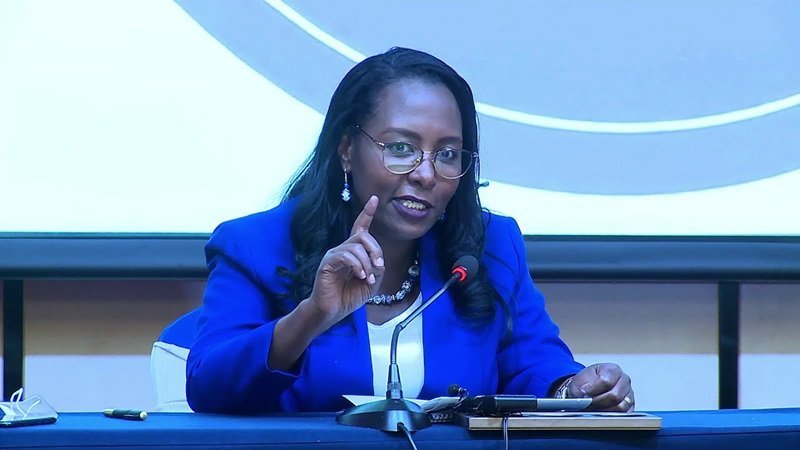
Gedion Yilma
Introduction
Ethiopia is grappling with a chronic housing deficit of over 2 million units, growing by 300,000 units annually. This crisis intersects with increasing demands from the workforce—particularly civil servants—for better salaries to meet essential needs such as food, clothing, and shelter. In response to rising pressure and the looming threat of public sector strikes, the Addis Ababa City Government, in partnership with the Commercial Bank of Ethiopia (CBE), recently proposed a housing scheme aimed at civil servants.
The proposed program envisions a housing unit costing Birr 4 million, financed by:
- A loan of Birr 3 million (75%),
- A down payment of Birr 1 million (25%) by the civil servant,
- A loan interest rate of 14% per annum,
- And a loan term of 20 years.
This article critically assesses the feasibility and inclusivity of this proposal, explores its economic implications, and suggests viable alternatives, drawing from housing affordability models, urban development frameworks, and international benchmarks.
1. Feasibility Analysis: Income Requirements
To evaluate this proposal, we need to determine the monthly installment (EMI) for the Birr 3 million loan over 20 years at 14% annual interest.
Loan Calculation:
Using the standard EMI formula:
EMI=P⋅r⋅(1+r)n(1+r)n−1EMI = \frac{P \cdot r \cdot (1+r)^n}{(1+r)^n – 1}
Where:
- P=3,000,000P = 3,000,000
- r=14%÷12=0.01167r = 14\% \div 12 = 0.01167
- n=20×12=240n = 20 \times 12 = 240
EMI ≈ Birr 38,852 per month
Required Monthly Income
Assuming a debt-to-income ratio (DTI) of 30–35% (commonly used for affordability benchmarks), the minimum gross salary should be:
Minimum Monthly Salary=38,852/0.35≈Birr 111,000
This clearly exceeds the average monthly salary of most civil servants in Ethiopia, which ranges between Birr 5,000 to 15,000. Even for mid-level professionals, this is several times their income.
2. Inclusivity and Coverage
Assuming optimistically that a civil servant earns Birr 20,000 monthly, the monthly payment would consume nearly 195% of their salary—a practical impossibility.
Estimated Inclusivity Rate
Let us assume:
- Only civil servants earning above Birr 100,000 can afford this,
- Such civil servants make up less than 2% of the public workforce.
Conclusion: Less than 2% of civil servants are likely eligible. The rest are effectively excluded, making this proposal far from equitable or scalable.
3. Conceptual Frameworks for Analysis
A. Housing Affordability Theory
According to UN-Habitat and the World Bank, housing is considered affordable if it costs no more than 30–35% of a household’s income. This proposal violates that principle substantially.
B. Basic Needs Framework
This theory posits that any development intervention must ensure access to essential services: food, housing, health, education. If access to housing imposes a crippling financial burden, it violates the premise of addressing basic needs.
C. Political Economy of Housing
Public sector housing must consider redistributive justice, ensuring access across income brackets, not just the elite few. Otherwise, it risks worsening inequality.
4. Benchmarking Examples
Rwanda’s Affordable Housing Program
Rwanda uses cross-subsidization where higher-end homes support the cost of low-income units. They work with foreign donors and DFIs to lower interest rates and extend loan terms.
Singapore’s HDB Model
Singapore’s success lies in a massive public housing program with:
- State-provided land,
- Long-term low-interest loans,
- Tiered pricing models based on income levels.
Morocco’s FOGARIM Scheme
Offers guaranteed housing finance to informal workers and low-income earners through public-private partnerships.
5. Broader Implications: Strike Demands and Salary Pressures
By floating an unrealistic housing proposal, the government may unintentionally validate the workforce’s claim that current salaries are inadequate. Especially for health workers, whose demands for better pay are directly tied to the rising cost of living.
- A Birr 38,000 monthly housing payment illustrates the disconnect between income levels and cost of living.
- Proposals like this may inflame strikes rather than mitigate them, unless redesigned.
6. Recommendations: Toward a More Inclusive Model
A. Tiered Housing Schemes
Develop multiple housing tiers (low, middle, high income) with subsidized units for lower earners.
B. State-Subsidized Mortgage Rates
Government can provide interest rate buy-downs, reducing effective rates to 5–7%.
C. Incremental Housing Models
Allow civil servants to build homes incrementally, reducing upfront capital burdens.
D. Cooperative Housing Models
Encourage housing cooperatives among civil servants pooling savings and resources.
E. Broader Geographic Expansion
Replicate affordable models in other cities (e.g., Hawassa, Dire Dawa, Bahir Dar) using local construction inputs and regional wage benchmarking.
In conclusion, the Addis Ababa Administration, by implication the Abiy Administration, housing proposal, while commendable in intent, lacks the economic realism and inclusivity needed to effectively address Ethiopia’s housing crisis. With an entry point requiring monthly incomes above Birr 111,000, the program is out of reach for over 98% of civil servants. Without major adjustments, this plan risks being seen as political window-dressing rather than a transformative housing solution.
To truly tackle the housing deficit and relieve salary pressure, Ethiopia must embrace inclusive, multi-tiered housing policies, support from development banks, and innovative delivery models tailored to its economic realities.
Editor’s Note : Views in the article do not necessarily reflect the views of borkena.com
__
Subscribe : https://borkena.com/subscribe-borkena/
Join our Telegram Channel : t.me/borkena
Like borkena on Facebook
Add your business to Ethiopian Business Listing / Ethiopian Business Directory Business Listing Toronto
Join the conversation. Follow us on X (Formerly Twitter) @zborkena to get the latest Ethiopian News updates regularly. Subscribe to YouTube channel To share information or for submission, send e-mail to info@borkena.com
A very informative and educational analysis. Great job!