
By Mengistu Musie (Dr.)
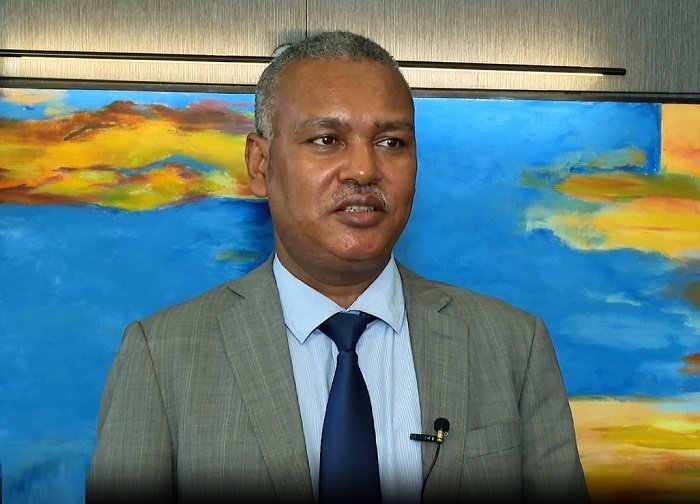
Let me begin by directing several important questions to Legesse Tulu, an official serving in the administration of Abiy Ahmed. These questions are not raised for the sake of political rhetoric, but rather to seek clarity about crucial moments in Ethiopia’s recent political history—moments whose consequences continue to shape the country’s present condition and future direction.
The issues under discussion are neither distant nor obscure chapters of the past. They are events that occurred during the current generation’s lifetime and remain deeply embedded in the collective memory of many Ethiopians. Decisions taken during those transitional years fundamentally altered the structure of the Ethiopian state, its constitutional framework, and the relationship between its nations and nationalities.
Understanding those decisions is essential for any meaningful discussion about Ethiopia’s political evolution, including debates over federalism, national unity, and the principle of self-determination. In particular, it is important to examine how key political choices were made, by whom, and under what circumstances they were implemented.
Therefore, the questions addressed to Legesse Tulu serve as an entry point into a broader reflection on Ethiopia’s modern political trajectory. By revisiting these pivotal moments with honesty and historical awareness, it may be possible to better understand the foundations of the current system and the challenges that continue to confront the Ethiopian state and society.
The first question is straightforward but profound: Who allowed and arranged Eritrea’s secession from Ethiopia? This is not a distant or ancient episode of history. It took place only about three decades ago, within the living memory of millions of Ethiopians who witnessed the dramatic transformation of the state and the region.
In 1993, Eritrea formally became an independent state following a referendum organized under the supervision of the United Nations, after the fall of the military regime of Mengistu Haile Mariam in 1991. At that time, the new transitional government in Ethiopia was dominated by the coalition known as the Ethiopian People’s Revolutionary Democratic Front (EPRDF), whose most powerful component was the Tigray People’s Liberation Front (TPLF). The Eritrean side was led by the Eritrean People’s Liberation Front (EPLF), under the leadership of Isaias Afwerki.
The decision that paved the way for Eritrea’s independence was made during the transitional period following the collapse of the Derg regime. The new authorities in Addis Ababa recognized Eritrea’s right to hold a referendum on independence. In 1993, a referendum in Eritrea and Ethiopia overwhelmingly favored independence. Because the question presented to voters in the so-called Eritrean referendum on secession was framed as a choice between “freedom” and “slavery.” Such wording shaped the political atmosphere in which the vote was held, with assistance from Meles Zenawi. Following the referendum, Eritrea was internationally recognized as a sovereign and independent state. However, the key issue that continues to provoke debate among many Ethiopians is not merely the outcome of the referendum in Eritrea itself, but the process through which the decision was accepted on behalf of Ethiopia. Critics argue that the separation of a territory that had been part of Ethiopia for decades should have involved a broader national consultation or a referendum among all Ethiopian citizens. Instead, the decision was handled primarily by the transitional leadership of the EPRDF government.
Meles Zenawi, Sebehat Nega, and the leadership of the TPLF actively lobbied international organizations and member states to welcome and recognize the creation of a new nation—Eritrea. This was a highly unusual phenomenon in modern political history: a head of state and the leadership of a ruling organization facilitating and supporting the birth of a new sovereign country out of what had previously been part of their own state.
In addition, the Oromo Liberation Front (OLF), which participated in the Transitional Government of Ethiopia at the time, also supported the process that led to Eritrea’s secession. Therefore, individuals such as Legesse Tulu were not merely observers of the process. His organization was directly involved in the transitional political structure that endorsed and supported the eventual secession of Eritrea.
This raises an important historical and political question: Was the Ethiopian people as a whole consulted about the loss of Eritrea, or was the decision effectively made by the leadership of the transitional government? For many Ethiopians, the absence of a nationwide debate or referendum remains a point of contention and historical grievance.
Therefore, the question directed to Legesse Tulu—and to officials who defend the current political order—is not simply about revisiting the past for its own sake. It is about accountability and historical clarity. If today’s political leaders emphasize constitutional rights, federal arrangements, and the principle of self-determination, then it is legitimate to ask how those principles were first applied in one of the most consequential decisions in modern Ethiopian history.
Understanding who authorized, negotiated, and legitimized the secession of Eritrea, and under what political circumstances, is essential for any honest discussion about Ethiopia’s constitutional order, its federal structure, and the ongoing debates surrounding self-determination and national unity.
Second, who inserted the constitutional provision that grants “nations, nationalities, and peoples” in Ethiopia the right to self-determination up to and including secession? This clause later became Article 39 of the Constitution of the Federal Democratic Republic of Ethiopia. The question is not merely technical or legal; it is fundamentally political and historical. It raises the issue of who designed and institutionalized this principle within Ethiopia’s political system and why such a far-reaching provision was adopted in the first place.
The modern Ethiopian constitution was drafted in the early 1990s following the collapse of the military regime of Mengistu Haile Mariam and the coming to power of the Ethiopian People’s Revolutionary Democratic Front (EPRDF), a coalition dominated by the Tigray People’s Liberation Front (TPLF) under the leadership of Meles Zenawi. During the transitional period that followed the fall of the Derg in 1991, the new ruling coalition convened political conferences and transitional assemblies to redesign the structure of the Ethiopian state. It was in this context that the concept of “nations, nationalities, and peoples” as the primary units of political organization became central to the new constitutional order.
The ideological foundation for this arrangement did not emerge overnight. Rather, it grew out of the political doctrines of several armed movements that fought against the Derg regime. Among these organizations were the Oromo Liberation Front (OLF) and the Tigray People’s Liberation Front, both of which developed political programs that emphasized the right of ethnic or national groups to self-determination. In their political manifestos and organizational documents, these groups often invoked the principle of self-determination as articulated in Marxist–Leninist theories of nationality and national liberation. Within this ideological framework, the Ethiopian state was frequently portrayed as a historical empire composed of multiple national groups whose political rights had been suppressed.
Consequently, when the transitional government began drafting a new constitutional framework, the principle of self-determination became one of its core pillars. The result was Article 39 of the 1995 Constitution, which explicitly states that every “nation, nationality, and people” in Ethiopia has the right to self-determination, including the right to secession. This provision is unique among modern constitutions. While many democratic constitutions recognize cultural autonomy, linguistic rights, or forms of federal self-government, very few explicitly codify a constitutional right for constituent groups to secede from the state.
The architects of this provision argued that it would serve as a guarantee against domination by any single ethnic or political group. In theory, the right to secession was presented as a safety valve: if a national group felt oppressed within the federation, it would possess a legal mechanism to pursue independence. Supporters claimed that such recognition would encourage voluntary unity rather than forced integration, thereby stabilizing the multinational state.
However, critics have long questioned both the motivations behind the clause and its practical implications. Some observers argue that the institutionalization of ethnic self-determination was designed primarily by the leadership of the Tigray People’s Liberation Front as a strategic tool during the transitional period. According to this perspective, the new ruling elite sought to reorganize the Ethiopian state into ethnically defined federal units to restructure power relations after decades of centralized rule.
This approach gave rise to what is often called “ethnic federalism,” a system in which administrative regions are largely defined along linguistic and ethnic lines. Ethiopia’s federal structure now consists of regional states whose identities correspond to major ethnic groups. While the system was intended to empower previously marginalized communities, it has also generated intense political debate about national identity, state cohesion, and the future of the Ethiopian federation.
Within this broader debate, some political organizations have rejected the principle of ethnic self-determination as the organizing foundation of the state. The Ethiopian People’s Revolutionary Party (EPRP) historically promoted a different political vision centered on a unified national framework rather than ethnically defined sovereignty. For this reason, supporters of EPRP often argue that their organization did not adopt secession as a political objective and instead advocated a democratic system based on citizenship rather than ethnicity.
The contrast between these ideological positions has contributed to longstanding political tensions. Organizations whose programs emphasize ethnic nationalism—such as the Oromo Liberation Front and the Tigray People’s Liberation Front—have historically supported the principle of self-determination as a fundamental right. By contrast, groups that emphasize pan-Ethiopian nationalism or civic political identity have frequently criticized Article 39 as a constitutional provision that risks weakening the Ethiopian state’s cohesion.
These debates remain highly relevant today. Figures associated with the current political establishment, including officials within the administration of Abiy Ahmed, continue to operate within the constitutional framework created during the political transition of the early 1990s. Although Ethiopia has experienced significant political turbulence since the adoption of the 1995 constitution, the fundamental structure of the state—including Article 39—remains unchanged. This article, which grants “nations, nationalities, and peoples” the right to self-determination, including secession, continues to shape the foundations of Ethiopia’s federal system and remains one of the most debated provisions in the country’s constitutional order.
More than three decades after the fall of the Derg regime, Ethiopia’s political landscape still reflects the institutional design introduced during the era of Meles Zenawi and the ruling coalition that established ethnic federalism. Despite leadership changes and shifting political alliances, the constitutional principles that defined the federal arrangement have not fundamentally been altered. As a result, debates over national unity, federalism, and self-determination remain central to Ethiopian political discourse. Scholars, political leaders, and citizens continue to question whether the existing system strengthens democratic governance and national cohesion or instead deepens divisions by organizing politics primarily along ethnic lines.
Critics argue that the persistence of Article 39 reflects a broader continuity in political thinking between past and present leadership. From this perspective, both the political framework developed under Meles Zenawi and the current administration under Abiy Ahmed operate within the same structural assumptions about Ethiopia’s multinational composition. Some observers interpret this as a vision of the state in which ethnic groups retain ultimate sovereignty through the constitutional possibility of secession. Supporters of this system contend that such recognition protects the rights of diverse communities and prevents domination by a centralized authority. Opponents, however, argue that embedding the possibility of secession within the constitution risks weakening national unity and creating a perpetual sense of political fragmentation.
Consequently, the debate surrounding Article 39 is not merely a legal question but a deeper disagreement about the nature and future of the Ethiopian state. It reflects competing visions: one that emphasizes ethnic self-determination as the foundation of political legitimacy, and another that advocates a stronger, more unified national framework based on shared citizenship rather than ethnically defined sovereignty.
Ultimately, the question of who inserted Article 39 into the Ethiopian constitution cannot be separated from the broader historical transformation that followed the fall of the Derg regime. The clause emerged from the ideological commitments and political negotiations of the armed movements that came to power during that period. Whether viewed as a safeguard for national rights or as a structural vulnerability within the state, Article 39 remains one of the most distinctive—and controversial—features of Ethiopia’s constitutional order.
The EPRP Stand
In discussing the history of the Ethiopian People’s Revolutionary Party (EPRP), a so-called learned official such as Legesse Tulu should at least know what the acronym stands for and the role the organization played in Ethiopia’s turbulent political history. If not, he may find it useful to learn from the brief summary presented in this article.
The EPRP emerged in the 1970s as one of the earliest modern political organizations advocating a national political program that emphasized a unified Ethiopian state and a broad revolutionary transformation of society. From its inception, the organization positioned itself in opposition not only to the military regime of Mengistu Haile Mariam but also to political movements that organized primarily along ethnic lines.
One of the early confrontations occurred in the Assimba mountains of Tigray, where the EPRP established one of its first armed bases. In that region, it encountered the growing influence of the Tigray People’s Liberation Front (TPLF). According to accounts from the period, tensions quickly developed between the two organizations over political orientation and strategy. The TPLF, along with the Eritrean People’s Liberation Front (EPLF), reportedly attempted to pressure the EPRP to adopt or support their political position regarding Eritrea’s right to secession.
The EPRP leadership rejected this position, maintaining its commitment to the territorial unity of Ethiopia. As disagreements intensified, relations deteriorated into armed confrontation. The EPRP was eventually attacked and forced to abandon its Assimba base.
After leaving Tigray, the organization moved westward and established a new base in the Gondar region. Yet the conflict did not end there. Forces associated with both the TPLF and EPLF pursued the EPRP and engaged it again in the Wolqait area, ultimately forcing the organization to withdraw once more.
The final phase of these confrontations occurred in the regions of Gojjam and Gondar. During the final years of the military regime, the TPLF and EPLF advanced southward toward Addis Ababa with increasing military strength. In the process of consolidating control and removing potential rivals, they also confronted the remaining EPRP forces. The organization, already weakened by years of struggle and internal challenges, was unable to withstand the combined pressure of these advancing forces.
These developments coincided with the broader military collapse of the Derg regime in 1991, after which the coalition dominated by the TPLF—known as the Ethiopian People’s Revolutionary Democratic Front (EPRDF)—assumed power in Addis Ababa. Around the same time, Eritrea moved toward independence under the EPLF’s leadership.
For critics of the ethnic federal system that later emerged, these historical episodes are often interpreted as part of a larger political struggle over the future structure of the Ethiopian state. They argue that organizations such as the EPRP consistently opposed political projects centered on ethnic fragmentation and instead advocated for a unified national framework.
From this perspective, the history of the EPRP is presented as one of continuous resistance against what its supporters viewed as ethnically driven political agendas. Throughout the periods dominated first by the EPRDF and later by governments that emerged from its political lineage, the EPRP and its supporters have portrayed their struggle as a defense of Ethiopian unity and national cohesion.
The author can be reached at : Mmusie2@gmail.com
Editor’s Note : Views in the article do not necessarily reflect the views of borkena.com
__
Support Borkena : https://borkena.com/subscribe-borkena/
Join our Telegram Channel : t.me/borkena
Like borkena on Facebook
Add your business to Ethiopian Business Listing / Ethiopian Business Directory Business Listing Toronto
Join the conversation. Follow us on X (Formerly Twitter) @zborkena to get the latest Ethiopian News updates regularly. Subscribe to YouTube channel To share information or for submission, send e-mail to info@borkena.com
This is a well written and very interesting article by Obbo Mengistu Musie (Dr.). I thought it was very obvious that for intents and purposes Eritrea led by the EPLF had already seceded by 1989. Its recognition was a matter of formality by then. I was in Southern California on a business trip at that time visiting a factory there when one day I heard the leader of the EPLF Al-Toweel Isu on a local PBS radio making a speech at a gathering here in the USA. I found him to be very eloquent in his presentation. He was straight forward in telling the world to be ready for what was a foot, not to be surprised by what his people were ready to proclaim. That was when more than 90% of Eritrea was firmly under the administration of the EPLF and the blood thirsty Mengistu was busy killing the cream puff of the crop among the military generals. Even all the opposition groups were telling the Ethiopian people that it was too late and to let the Eritreans go their way. What the TPLF did was hammering the last nail on the coffin and fulfill its servile duties as the beast of burden of the EPLF. It brought its own horde of beasts of burden like the OLF and EPDM along for the ride.
Also on the hindsight, this article by the dear countryman has brought back memories of the past. I remember reading military communiqués on Ethiopian Students Union periodicals how Ethiopian opposition groups except the EDU conducted joint military operation with the EPLF forces in Tigray and annihilated Ethiopia’s militia forces in the later half of the 1970’s. It showed the prowess of Al-Toweel Isu and his group as clever tacticians and strategists. Even after gaining independence Al-Toweel has not lost his luster in that department. TPDM, G7, OLF, ONLF SPLF and now possibly Shene and the rebels in the Amhara region were/are his latest trophies since 1993. Before all of these smart maneuvers during the 1st half of the 1970’s there was a raging debate on whether the Eritrean issue was a colonial question or not. ELF and EPLF claimed it was absolutely a colonial case where Ethiopia with all its ravaging scabies and jigger fleas had colonized Eritrea which left the rest of the world bewildered even the commies in the Kremlin and Beijing not agreeing. Mao trained Isu and his friends just to get rid of the pro West Emperor.
I rest my case for now.
Please keep writing brother! Blessings to you and your family.
You are funny you know that right? Im sure you know because you make me laugh with your pointless paper you are writing. Even EPRP cannot come with original name but you think you are z best one. It is better for you to join FANO if you want to change something
First, let me come clean: Although Abiy doesn’t need it, I support him ≈80%. I will take it up a notch if he renames Nigat Lake →Lake Ethiopia; Adey Abeba Stadium →Ethiopia Stadium; AND if he erects Ethiopia’s Statue [like the Statue of Liberty] at the Mesqel Square-Bolé Road junction!
Now down to ‘business’: I still have unanswered questions about the ‘EPRP’ despite 6 years in Derg’s various jails as Child Prisoner [No charges! No sentence!]. That’s also despite 90% of the prisoners in those jails being EPRP’s killer squads, members, etc.
1). Shouldn’t the ‘EPRP’ be held as equally responsible as Meison/Derg/TPLF/EPLF/etc. for the massacre/detention/torture [≈1975 – ≈1980] of a generation of Ethiopians? Shouldn’t they ALL BE BANNED from Ethiopian Soil for crimes against Ethiopia & Ethiopians?
2). Hasn’t the ‘EPRP’ been serving as the mouthpiece & ጉዳይ አስፈፃሚ of the Egypt–funded/armed anti-Ethiopia Secessionist Dogs [EPLF/ELF, TPLF, OLF-IFLO, etc.]? Didn’t those Proxy Dogs join/infiltrate the ‘EPRP’ & use Ethiopians to destroy Ethiopia?
3). Do you remember the EPRP’s Pro-Eritrea rally of the late 1970s where Derg/Meison massacred ≥300 students at 6-Kilo? They were gunned down holding slogans like “የኤርትራ ጥያቄ በሰላማዊ መንገድ ይፈታ!” Do you also remember that their families had to pay 500 Birr ‘for wasted bullets’ to collect their children’s corpses from Menelik-II Hospital?
4). When the Derg finally transferred me to Alem-Bekagn/Kerchellé [without sentence!], I met EPLF’s [ሻብያ’s] Addis Ababa Bureau Chief [Engr. T-Y Y] & his associates [brought in with 5-year sentence each]. His hatred for the ‘EPRP’ was nauseating!
So, one day I asked him: Didn’t the Derg gun down over 300 Ethiopian students at a Pro-Eritrea rally organized by the ‘EPRP’? Didn’t they die holding slogans like “የኤርትራ ጥያቄ በሰላማዊ መንገድ ይፈታ!”? He cut me short & said: ≈ “Eritreans were notified not to participate in the rally! No Eritrean died! Blame the EPRP!”
Dear Sir/Madam,
Thank you for sharing your riveting story about your time in the bloodthirsty Mengistu’s prison. Thousands did not survive the ordeal but you did. I know two other countrymen who survived the torture and killing gauntlet. One of was so traumatized he never wanted to talk about it in detail until he passed away a few years ago. You should thank The Almighty Our Creator for you coming out alive. I hope you will tell us more about the specter that decimated a generation.
In regards to those who played parts in the bloodshed, it will be very hard and even impossible4 for them to admit their roles or mistakes. For them it was always the other guys. That makes the tragedy even sadder.
Keep chugging along Dear Sir/Madam. Blessings to you and your family!!!
Dr. Mengistu, thank you for your factual elaboration on current Ethiopian politics and the usual accusation directed at the EPRP regarding the Eritrean issue. The EPRP, as a progressive party, was raising important historical questions during the popular revolution of the 1970s land to the tiller, equality for women, and a democratic resolution of the Eritrean question.
Unfortunately, that revolution was stolen by the leadership of the wicked Derg military junta, and later by the ethnic apartheid politics of the TPLF-led EPRDF regime. Therefore, it is not surprising that Dr. Tull would accuse the EPRP, even though he himself is a member of the ruling Prosperity Party, which historically emerged from OPDO—one of the sister parties within the TPLF-dominated EPRDF structure.
The so-called Eritrean referendum was facilitated by TPLF leader Meles Zenawi with the misleading “Freedom or Slavery” option. It ultimately resulted in the separation of Eritrea and the untold human rights violations committed by the dictatorial regime of Isaias Afwerki. Eritrea has had no elections since 1991, leaving its citizens in a nightmare existence. The country has become one of the largest refugee-sending nations in Africa, with many Eritreans drowning in the Mediterranean Sea while trying to escape repression.
Ironically, Eritrean refugees are more numerous in Ethiopia—Africa’s second-most populous country—than Ethiopian refugees are in Eritrea, one of the smallest nations on the continent.
We hope that the current EPRP, now led by progressive young people, will learn from the past. The earlier EPRP leadership contributed to unnecessary divisions and urban guerrilla warfare that cost the lives of hundreds of thousands of Ethiopians.
Let us give voice to the Ethiopian people, who have been denied free and fair elections for many years. Perhaps they will have another opportunity to vote for the right party and the right leaders who can address Ethiopia’s historical crises, inequality, ethnic division, and ongoing human rights violations.
Degone Moretew
Chaplain and Community Conflict Mediation Advocate
Dr. Mengistu, thank you for your factual elaboration on current Ethiopian politics and the usual accusation directed at the EPRP regarding the Eritrean issue. The EPRP, as a progressive party, was raising important historical questions during the popular revolution of the 1970s land to the tiller, equality for women, and a democratic resolution of the Eritrean question.
Unfortunately, that revolution was stolen by the leadership of the wicked Derg military junta, and later by the ethnic apartheid politics of the TPLF-led EPRDF regime. Therefore, it is not surprising that Dr. Tull would accuse the EPRP, even though he himself is a member of the ruling Prosperity Party, which historically emerged from OPDO—one of the sister parties within the TPLF-dominated EPRDF structure.
The so-called Eritrean referendum was facilitated by TPLF leader Meles Zenawi with the misleading “Freedom or Slavery” option. It ultimately resulted in the separation of Eritrea and the untold human rights violations committed by the dictatorial regime of Isaias Afwerki. Eritrea has had no elections since 1991, leaving its citizens in a nightmare existence. The country has become one of the largest refugee-sending nations in Africa, with many Eritreans drowning in the Mediterranean Sea while trying to escape repression.
Ironically, Eritrean refugees are more numerous in Ethiopia—Africa’s second-most populous country—than Ethiopian refugees are in Eritrea, one of the smallest nations on the continent.
We hope that the current EPRP, now led by progressive young people, will learn from the past. The earlier EPRP leadership contributed to unnecessary divisions and urban guerrilla warfare that cost the lives of hundreds of thousands of Ethiopians.
Let us give voice to the Ethiopian people, who have been denied free and fair elections for many years. Perhaps they will have another opportunity to vote for the right party and the right leaders who can address Ethiopia’s historical crises, inequality, ethnic division, and ongoing human rights violations.
Eddie Mekasha
Chaplain and Community Conflict Mediation Advocate