
Editor’s Note: Views in the article do not necessarily reflect the views of borkena.com
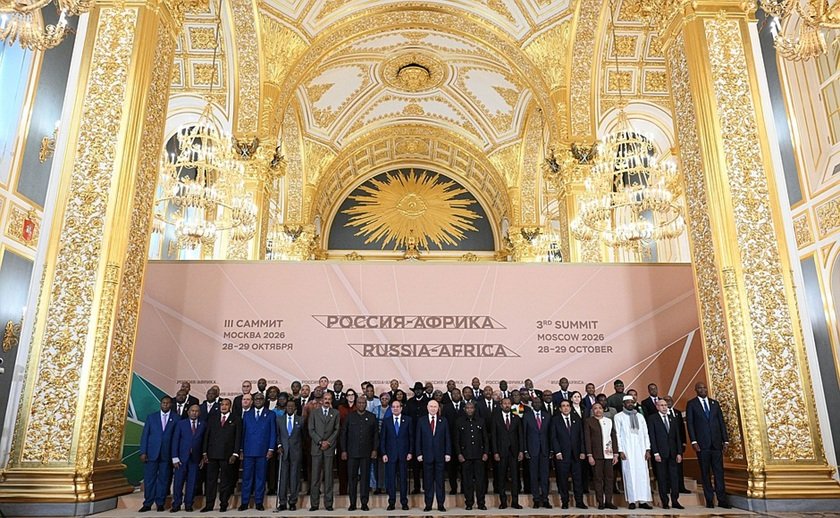
Sudan’s military leader Abdel Fattah al-Burhan went to Moscow this week with a proposal for Russian President Vladimir Putin. He suggested establishing a Russian free economic zone on Sudan’s Red Sea coast, where Moscow could store wheat and fuel. He also offered investment opportunities in gold and copper deposits and proposed Russian involvement in extending Sudan’s railway network towards Chad.
The proposals came during talks on Friday, after the Third Russia-Africa Summit in Moscow had ended. No agreement on the economic zone was announced, but the meeting raises questions about Moscow’s growing involvement in the Horn of Africa. Ethiopia should be asking whether it can count on Russia’s support in its disputes with Sudan and Eritrea.
Burhan has repeatedly accused Ethiopia of supporting the Rapid Support Forces (RSF), the paramilitary group fighting Sudan’s army. Yet he is seeking closer ties with Moscow at the same time that Russia is strengthening its military relationship with Ethiopia. Moscow is also developing its relationship with Eritrea, whose tensions with Ethiopia have raised fears of another war.
That puts Moscow in an awkward position: it is strengthening ties with Ethiopia while also courting two neighbouring governments whose relations with Addis Ababa are increasingly strained.Whether Moscow can reconcile those interests while pursuing its own ambitions in the region is another matter.
Prime Minister Abiy Ahmed announced on Wednesday that Ethiopia had received 12 Russian Su-35 fighter jets ahead of schedule, with four S-400 air-defence batteries to follow. However, Russian arms exporter Rosoboronexport told Reuters news agency that the initial delivery consisted of two aircraft. The full number delivered therefore remains unclear. Abiy thanked Putin for accelerating the delivery, describing the acquisition as part of Ethiopia’s efforts to strengthen its defences and deter aggression. Eritrea’s reaction was immediate. Information Minister Yemane Gebremeskel criticised the purchase, arguing that the aircraft would strengthen what he described as Ethiopia’s capacity for a pre-emptive war of aggression.
The response comes amid a serious deterioration in relations between the two neighbours. Earlier this month, Ethiopia closed its embassy in Asmara and expelled Eritrean diplomats, prompting Eritrea to sever diplomatic ties. Addis Ababa has accused Eritrean forces of entering Tigray and supporting armed opponents of the federal government. Asmara denies the accusations and has accused Ethiopia of preparing for war.
It is against this background that Russia has offered to facilitate negotiations. Foreign Minister Sergei Lavrov said Moscow would be willing to host talks if both governments were interested. Neither has publicly confirmed accepting the proposal, and there is no verified account of direct negotiations between Abiy and Eritrean President Isaias Afwerki during the summit.
Meanwhile, Putin met Afwerki on Friday to discuss expanding Russian-Eritrean cooperation, including in energy, mining, infrastructure and agriculture. There is nothing unusual about Moscow maintaining relations with governments that disagree with one another. Nor does selling weapons to Ethiopia automatically prevent Russia from helping the two countries negotiate. But it complicates Moscow’s position. Ethiopia regards the aircraft as an important addition to its defences. Eritrea has publicly challenged the purpose of the purchase. Russia is offering to facilitate dialogue while supplying sophisticated military equipment to one of the countries involved.
This does not necessarily make Moscow an unsuitable mediator. It does mean that Ethiopia should distinguish between Russia’s willingness to sell its weapons and Russia’s willingness to support its position in a dispute with Eritrea.
Sudan adds another dimension. Burhan is seeking international support as his country remains at war. Russia has already demonstrated its willingness to defend what it describes as Sudanese sovereignty in international forums In November 2024, Moscow vetoed a United Nations Security Council resolution aimed at protecting civilians and improving humanitarian access in Sudan. Russia argued that provisions of the resolution threatened Sudan’s sovereignty. All 14 other Security Council members voted in favour. For Burhan, Russia is an important diplomatic relationship. For Ethiopia, Moscow’s growing ties with Sudan’s military leadership raise more difficult questions.
Relations between Addis Ababa and the Sudanese military have deteriorated amid repeated accusations that Ethiopia is supporting the RSF. But Burhan’s accusations should not be accepted simply because he speaks on behalf of Sudan’s military-led authorities. He commands the Sudanese Armed Forces (SAF), which is itself a party to the war. Its claims require independent scrutiny.
That does not mean the accusations are necessarily unfounded. In February, Reuters published an investigation reporting evidence of an RSF training camp in western Ethiopia, drawing on interviews, documents and satellite imagery. The findings raise serious questions about Ethiopia’s role in Sudan’s war, although they do not establish every allegation made by the SAF.
Moscow may see opportunities in Sudan’s ports and mineral resources while also benefiting from closer military relations with Addis Ababa. Those interests are not necessarily incompatible. But Ethiopia should not assume that Russia’s relationship with Burhan will remain limited to the commercial proposals made this week. The same consideration applies to Eritrea. Russia has reasons to maintain relations with Afwerki, regardless of its military cooperation with Ethiopia.
For Addis Ababa, the issue is not whether Russia should be talking to its neighbours. Ethiopia itself has every reason to maintain relationships with Moscow, Beijing, Washington and other international partners. The issue is what Ethiopia expects those relationships to deliver. Advanced weapons may strengthen Ethiopia’s military capabilities, but they do not resolve its disagreements with Eritrea or guarantee Russian diplomatic support over access to the Red Sea.
Abiy’s government needs to assess whether its military relationship with Moscow strengthens its negotiating position without contributing to a further escalation of regional tensions. It also needs to judge Russia’s diplomatic proposals by what Moscow is prepared and able to do, rather than by the warmth of relations between the two presidents.
The meetings in Moscow revealed how differently the three governments approach Russia. Abiy wants military and technological cooperation. Burhan is seeking support and investment opportunities in a country devastated by war. Afwerki wants to strengthen Eritrea’s own relationship with Moscow at a time of growing hostility towards Ethiopia.
Putin has reasons to maintain good relations with all three. None should assume that Russia will take its side when their interests collide.
For Ethiopia, the danger is mistaking a military supplier for an ally whose interests will necessarily coincide with its own. Moscow’s meetings this week offered no such assurance.
Paula Slier is an international journalist and war correspondent who has reported from more than 25 conflict zones. She writes and speaks about modern conflict, information warfare and the struggle to establish what is true.
Editor’s Note: Views in the article do not necessarily reflect the views of borkena.com
__
Join our Telegram Channel: t.me/borkena
Like borkena on Facebook
To submit a press release, send the submission to info@borkena.com
Add your business to Ethiopian Business Listing / Ethiopian Business Directory
Join the conversation. Follow us on X (formerly Twitter) @zborkena to get the latest Ethiopian news updates regularly.