
“The campaign to end the Amhara genocide transcends the pursuit of visibility; it is fundamentally a call for accountability and justice”
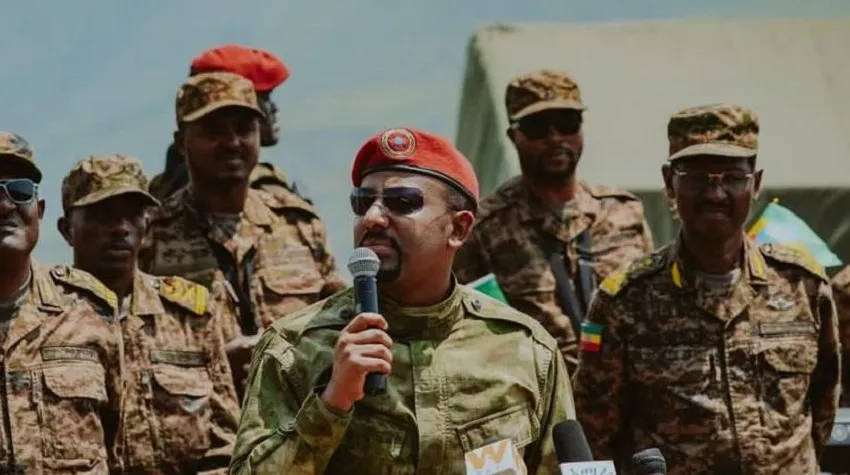
By Amanuel Agajjie Wasihun
Since mid-2023, the Ethiopian government led by Prime Minister Abiy Ahmed has undertaken a harsh military campaign against the Amhara population, under the stated aim of “restoring order.” In practice, the Ethiopian National Defense Force (ENDF) has targeted civilians in regions including Gojjam, Wollo, Shewa, and Gonder, deploying drones and heavy artillery. Educational institutions, agricultural land, and places of worship have been destroyed, while credible reports cite widespread extrajudicial killings, torture, and sexual violence. Thousands of Amhara civilians—journalists, community leaders, and ordinary citizens alike—have been arbitrarily detained, with many disappearing without explanation.
The resulting humanitarian and societal impact is severe. Over 4.5 million students have been out of school for more than two years, and medical facilities have been attacked. Local markets have collapsed, tourism has halted, and regional economies have stagnated. What began as a purported “law enforcement” operation has escalated into a systematic attack on the social and economic foundations of the Amhara people.
To obscure these violations, the government has implemented internet shutdowns, curfews, and prohibitions on public gatherings. In Addis Ababa, ethnic profiling and mass arrests are widespread; mere Amhara identity is treated as presumed guilt. The initial framing of restoring order has devolved into collective punishment and the criminalization of an entire ethnic group.
With independent media silenced, responsibility shifts to the global Amhara diaspora to document and oppose this campaign. Digital advocacy efforts must now progress beyond raising awareness, evolving into coordinated, strategic, and effective action.
Outlined below are several key strategies, derived from global best practices and personal experience within digital media and advocacy:
Pillar I: Constructing and Safeguarding the Foundations of Truth
The initial strategic imperative is to secure an unimpeachable record of the crisis. Genocides are invariably seeded with falsehoods, and denial marks the terminal phase. Disrupting this trajectory necessitates institutionalizing evidence with rigor.
1. Establish the Amhara Evidence Archive:
A centralized and secure digital repository—housing verified testimonies, photos, videos, satellite imagery, and field documentation—is urgently required. This “Amhara Evidence Archive” would function as the definitive reference for journalists, diplomats, and legal professionals, ensuring the integrity and consistency of information pertaining to atrocities. This initiative will require dedicated seed funding and a commitment to professional forensic data management.
2. Formalize Partnerships with Human Rights Organizations:
Collaboration with established entities such as Amnesty International, Human Rights Watch, and Genocide Watch is essential. These partnerships elevate community-driven documentation to internationally recognized standards, underpinning efforts toward justice, advocacy, and accountability.
3. Develop a Diaspora Digital Defense Task Force:
Protecting the evidentiary record from distortion is equally vital. A professionally organized, volunteer-based task force should be established, employing open-source investigation and digital forensic methodologies. This group would address disinformation, monitor digital harassment, and critically examine the government’s justification of targeting “Fano extremists.” While authorities claim to be combating extremist or armed elements, in practice these operations have overwhelmingly impacted Amhara civilians, as Fano’s identity and support base are deeply interwoven with the broader Amhara community. The task force would work to verify civilian harm and ensure that evidence of these abuses remains credible and accessible.
4. Engage Journalistic and Academic Networks:
Preserving the historical record demands more than advocacy. Collaboration with reputable investigative journalists, universities, and research institutions will facilitate the translation of verified evidence into impactful documentaries, authoritative opinion pieces, and scholarly reports that resonate with policymakers.
Pillar II: Leveraging Digital Networks for Diplomatic Influence
Social media visibility provides a foundation, yet the next phase involves converting digital connectivity into substantive diplomatic and political leverage.
5. Organize Rapid-Response Diaspora Mobilization:
The global Amhara diaspora must operate as an agile, decentralized command system, prepared for swift and coordinated action. Utilizing Amhara-owned media platforms—including digital outlets, blogs, online television, and radio—and secure communication tools such as Telegram, Signal, and WhatsApp, the diaspora can orchestrate synchronized protests, media outreach, and collective correspondence with legislators within 24–48 hours of significant developments, ensuring timely and unified responses.
6. Initiate Focused Policy Advocacy Campaigns:
Effective advocacy requires the delivery of concise, evidence-based policy briefs to legislators and diplomats in the UK, US, Canada, and EU. These briefs must directly link the Amhara crisis to genocide prevention and human rights obligations, making them salient to international policymakers.
7. Implement Paid and Targeted Digital Media Campaigns:
When organic reach is limited by social media algorithms, precision-targeted advertising on platforms such as X, LinkedIn, and Meta becomes indispensable. This strategy ensures that credible information reaches key audiences—foreign policy officials, journalists, analysts—circumventing traditional digital barriers. Success in this area will depend on dedicated fundraising efforts within the diaspora.
8. Convert Digital Advocacy into Diplomatic Engagement:
The overarching objective is to secure protection for civilians and accountability. By leveraging online momentum and coordinated action, the movement must pursue specific, incremental policy victories, including:
- The establishment of an independent UN investigative mechanism.
- The implementation of targeted human rights sanctions against commanders and officials implicated in mass atrocities.
- Formal calls by Western governments for an immediate cessation of drone strikes and a humanitarian ceasefire.
- The establishment of secure humanitarian corridors and logistical support for internally displaced Amhara civilians affected by the conflict and ongoing regional blockades. Aid delivery should prioritize access to food, medical care, and shelter through trusted community-based organizations operating within the region.
Pillar III: Safeguarding Credibility, Security, and Advocacy
Advocacy is inherently fraught with risk; the entire campaign must remain vigilant against both physical and digital threats, as well as narrative distortion.
9. Establish a Unified Messaging and Communications Framework:
Maintaining narrative discipline is essential. All advocacy efforts should center civilian protection, justice, and accountability—intentionally avoiding military or partisan language. The messaging must consistently demonstrate that the targets are ordinary civilians, not combatants, thereby neutralizing the government’s efforts to politicize the victims.
10. Ensure the Digital and Physical Security of Activists and Their Families:
To protect lives, testimonies must be anonymized and securely encrypted. It is imperative that diaspora members receive training in digital encryption, anonymization, and secure communication, in order to shield families in Ethiopia from retaliation or invasive surveillance. This training should be a primary, funded task for the newly established Digital Defense Task Force.
A Strategic Moment of Opportunity
Despite substantial challenges, the present moment offers a distinct and unprecedented opportunity. Western governments are increasingly prioritizing genocide prevention. The Amhara diaspora possesses established pathways into these institutions—through parliamentary hearings, civic engagement, and diplomatic outreach. Digital innovation further enhances this momentum, enabling advocates to bypass traditional gatekeepers and reach broader audiences directly.
The campaign to end the Amhara genocide transcends the pursuit of visibility; it is fundamentally a call for accountability and justice. Fragmented efforts are no longer tenable. Strategic unity, professional advocacy, and the force of truth must now drive the collective response. The Amhara crisis stands as a profound test of global conscience and of whether truth can, indeed, prevail in an era marked by digital conflict and political denial.
Editor’s Note : Views in the article do not necessarily reflect the views of borkena.com
__
Support Borkena : https://borkena.com/subscribe-borkena/
Join our Telegram Channel : t.me/borkena
Like borkena on Facebook
To submit Press Release, send submission to info@borkena.com
Add your business to Ethiopian Business Listing / Ethiopian Business Directory
Join the conversation. Follow us on X (Formerly Twitter) @zborkena to get the latest Ethiopian News updates regularly.
1). In 1991, when TPLF & EPLF invaded-and-occupied Ethiopia, they portrayed Amaras as the source of all evil. That triggered Amara Genocide in parts of Ethiopia. In 2020, after massacring the Ethiopian Northern Command in their sleep, TPLF committed Amara Genocide at May-Kadra [massacred ≥600 Amaras in a day]. So, why does the ‘Fanno’ that claims “standing for Amaras’ rights” ally itself with these two Egypt’s Mercenaries?
2). Ethiopia & Democratic Election: At the request of over 100 opposition parties, the last Ethiopian Election was held under on-site scrutiny by AU/UN/EU/US. Election complaints could have been filed on-site. Abiy’s Party won! Abiy was elected PM.
3). Domestic Terrorism [DT] & Domestic Terrorists [DTs]: Armed uprising to topple an elected government is DT. Aiding & Abetting DT is DT, too. So, DTs and those Aiding & Abetting DT are legitimate Law Enforcement Targets! DTs deserve a Mortal Blow.
4). War Crimes [WC] & Crimes against Humanity [CAH]: Using civilians as Human Shields [HS] is WC & CAH. The Amara Fanno [Misnomer], in addition to using civilians as HS, turned churches/monasteries/schools/etc. to training centers, operation bases, etc.
5). Fanno [Misnomer] vs. Peace: The Amara Zone Administration [All Amaras elected by Amaras] sent Peace Envoy [Mothers/Elders/Priests/Imams/Teachers/etc.]. ‘Fanno’ gunned them down ALL without mercy! Oh, Fanno is famous for kidnapping & ransom.
6). Amara Zone & Education: ‘Fanno’ gunned down teacher(s) in front of students and killed student(s) in their schools. That’s why million of students are out of school.
7). Ethiopian Diaspora’s Crocodile Tears: Over 70% of Ethiopian Diaspora [mostly Amaras] were officials or beneficiaries of former self-appointed regimes. Some made Ethiopia “The World’s Poster Child of Poverty & Famine” while others turned Ethiopia in to “The World’s Killing Field of Children.” Save Ethiopians your crocodile tears, will ye!