
Surafel G.
Introduction: A Geographic and Economic Strangulation
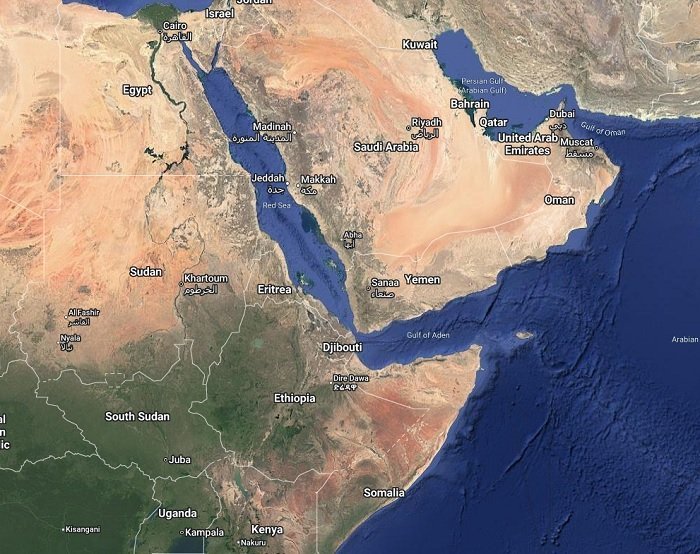
Ethiopia, an ancient empire and a cornerstone of African civilization, stands as a demographic and political giant in the Horn of Africa. Yet, it suffers from a critical and, arguably, artificial constraint: it is the most populous landlocked country in the world. This condition is not a preordained geographic fate but the direct result of a specific political event the 1993 secession of Eritrea. The prevailing international narrative often accepts this as a settled matter, a closed chapter. However, a compelling argument exists that Ethiopia’s denial of direct sea access is a lingering historical injustice, an illegitimate status born from a unique and flawed process that failed to account for the fundamental economic and security rights of the Ethiopian nation.
This article posits that the circumstances of Eritrea’s separation created an illegitimate outcome for Ethiopia. The core of the argument rests on two pillars: first, that the referendum for Eritrean independence was conducted under the auspices of a transitional government in Addis Ababa that lacked the full legitimacy to permanently cede such a vital national asset; and second, that international law and precedent provide frameworks for access and rights for landlocked nations that are being negligently ignored in Ethiopia’s case, effectively punishing it for adhering to a flawed peace process.
The Flawed Foundation: The 1993 Referendum and the Illegitimate Government
The conventional view is that Eritreans voted overwhelmingly for independence in a free and fair referendum, and thus, Ethiopia’s loss of its coastline was a legitimate democratic act. This view overlooks the profound fragility and contested legitimacy of the Ethiopian government that presided over this process.
In 1991, the brutal Derg regime was overthrown by the Ethiopian People’s Revolutionary Democratic Front (EPRDF), led by Meles Zenawi. The EPRDF established a transitional government. This government was not elected. It was a victorious rebel coalition tasked with steering the country toward democracy. It was weak, unrecognized internationally in a settled manner, and desperate for stability.
Crucially, the EPRDF’s rise to power was heavily dependent on the military support of the Eritrean People’s Liberation Front (EPLF). The EPLF fought alongside the EPRDF to topple the Derg, but its primary goal was always Eritrean independence. The EPRDF, indebted to the EPLF and facing a country in ruins, was in no position to negotiate. The agreement to hold a referendum was less a thoughtful act of statecraft and more a capitulation to a fait accompli and a condition for peace.
Therefore, an unelected, transitional, and vulnerable administration made the decision to relinquish over 1,000 km of coastline the economic lungs of the nation. It permanently landlocked a nation of over 50 million people (at the time) without a permanent constitution, without a national consensus, and without a mandate to redraw the map so catastrophically. Can such a decision, made under such duress and by a government with such questionable standing, be considered truly legitimate and binding for all future generations of Ethiopians? This is the central ethical question.
The Precedent of Vital Interests and Economic Rights
International history is replete with examples where the geographic and economic necessities of a nation have been recognized as paramount, even after secession or the redrawing of borders.
· The Case of Czechoslovakia: When Czechoslovakia peacefully split into the Czech Republic and Slovakia in 1993, the dissolution agreement meticulously addressed shared infrastructure, resources, and economic rights to ensure viability for both new states.
· The Law of the Sea (UNCLOS): The United Nations Convention on the Law of the Sea (UNCLOS), to which both Ethiopia and Eritrea are signatories, explicitly acknowledges the right of landlocked states to access the sea. Part X of UNCLOS states that landlocked and transit states should agree on terms for access through free trade zones, customs facilities, and the use of port infrastructure. While Eritrea is a sovereign state, the spirit of this international law highlights that landlocking a nation is not meant to be an economic death sentence; cooperation is obligatory.
Eritrea’s absolute refusal to grant Ethiopia predictable, dignified, and economically viable port access violates the spirit of these international norms. It has used Ethiopia’s landlocked status as a political and economic weapon, a tool of coercion. This is not a normal relationship between a coastal state and a landlocked neighbor; it is a form of perpetual punishment that stifles the entire Horn of Africa region.
The Historical Context: Ethiopia’s Maritime Legacy
To view Eritrea’s coast as always belonging to a separate entity is a historical error. For most of modern history, the Red Sea coast was an integral part of the Ethiopian state. Emperor Menelik II signed treaties with European powers demarcating Ethiopia’s boundaries to include the sea. The ports of Massawa and Assab were critical hubs for Ethiopian trade and customs revenue for centuries.
The Italian colonial occupation created the separate colony of Eritrea, but this was never accepted by successive Ethiopian governments. The federation of Eritrea with Ethiopia in 1952 and its later annexation were attempts to reverse this colonial fragmentation. The 1993 referendum, in a way, re-inscribed a colonial-era boundary, undoing the natural geographic and economic unity of the Ethiopian highlands and the Red Sea coast.
Conclusion: Toward a Just and Cooperative Future
Ethiopia’s landlocked status is not a natural geographic state but an unsustainable political anomaly. It is illegitimate because it was born from an illegitimate act by an illegitimate government—a transitional body that had no moral or legal right to permanently surrender a vital national interest without the consent of the people it was meant to be transitioning toward democracy.
This is not a call for the reversal of Eritrean independence or for irredentism. Eritrea’s statehood is a reality. However, this reality must be tempered by justice, historical context, and economic necessity. The current situation, where Ethiopia’s development is held hostage by the whims of its neighbor, is a recipe for perpetual instability.
The solution lies in moving beyond the flawed 1993 settlement. The international community, and both nations, must recognize that a new compact is needed. This would involve a legally binding, multilateral agreement that grants Ethiopia sovereign-like access to a port, including the development of a special economic zone, guaranteed customs and logistics rights, and secure road and rail corridors. This is not an affront to Eritrean sovereignty but an exercise in pragmatic regional integration a recognition that the legitimate economic and security needs of over 120 million people cannot be forever denied by a historical accident engineered by a transient and ill-equipped government. The anchor holding Ethiopia back is anachronistic; it is time to set sail toward a more just and prosperous future for all.
Editor’s Note : Views in the article do not necessarily reflect the views of borkena.com
Support Borkena : https://borkena.com/subscribe-borkena/
Join our Telegram Channel : t.me/borkena
Like borkena on Facebook
To submit Press Release, send submission to info@borkena.com
Add your business to Ethiopian Business Listing / Ethiopian Business Directory
Join the conversation. Follow us on X (Formerly Twitter) @zborkena to get the latest Ethiopian News updates regularly.
Your arguments are essential to delegmitize the 1993 referendum, which was under EPlF absolute control voting for mockery issues “slavery or independence ” . ELF a major Eriterians liberation front prior to EPLF formation didn’t participate in polling. The Great Afar Sultanate nation were not consulted to their territorial claims