
There are growing discussions and political arguments concerning the status of Addis Ababa and its relationship with the Oromia Regional State. Some proposals and political positions appear to support giving Addis Ababa a stronger connection with Oromia, while others have raised concerns that the city could eventually be treated as the capital of Oromia in addition to, or instead of, its historic role as the capital of Ethiopia.
This is a highly sensitive issue that deserves serious national discussion. Addis Ababa is not simply an ordinary city. It is the political, diplomatic, economic, and administrative center of Ethiopia and has become one of the most important cities in Africa. It is home to people from virtually every part of Ethiopia and has long represented the country’s diversity and national identity.
For this reason, any proposal that could fundamentally change the status of Addis Ababa should be approached with great caution. The question should not be viewed only through the interests of one regional state or one ethnic community. It should be considered from the perspective of Ethiopia as a whole.
Addis Ababa as the Capital of Ethiopia
Addis Ababa has played a central role in Ethiopia’s modern history for well over a century. It has developed into the country’s principal political and administrative center and has also acquired an international importance that goes far beyond Ethiopia’s borders.
The city hosts major Ethiopian government institutions, diplomatic missions, international organizations, and regional institutions. Most importantly, Addis Ababa is home to the headquarters of the African Union. For this reason, it is often described as one of the diplomatic capitals of Africa.
People from different ethnic, linguistic, religious, and regional backgrounds live and work in Addis Ababa. The city therefore has a character that is broader than that of any individual regional state.
This national character should be protected.
The Federal Democratic Republic of Ethiopia’s Constitution recognizes Addis Ababa as the capital of the Federal Government. At the same time, the Constitution recognizes the special interests of Oromia in Addis Ababa because the city is geographically surrounded by Oromia. These two principles need to be understood together: Addis Ababa has a national federal status, while Oromia has legitimate interests concerning the city that should be addressed through constitutional and legal mechanisms.
The solution, therefore, should not necessarily be to transform Addis Ababa into the capital of Oromia. Instead, the federal government, Addis Ababa administration, and Oromia Regional State should work together to establish a fair and constitutional arrangement that protects the interests of all parties.
The Risk of Political and Social Division
Ethiopia is a country of enormous ethnic, cultural, linguistic, and historical diversity. Maintaining national unity requires political institutions that give citizens a sense that the country belongs to everyone.
If Addis Ababa were perceived as being converted from a national capital into the capital of one regional state, many Ethiopians could feel that a city historically regarded as belonging to the entire country was being politically redefined.
Such a perception could increase political tensions rather than reduce them.
The issue should therefore not be presented as a conflict between Oromia and the rest of Ethiopia. Oromia has legitimate interests, just as other Ethiopian regions have legitimate interests. The central question is how those interests can be accommodated without weakening the national character of Addis Ababa.
A modern federal system should be capable of protecting both regional interests and national institutions. It should not be necessary to choose between the rights and interests of Oromia and the national status of Addis Ababa.
Addis Ababa Belongs to All Ethiopians
One of the most important characteristics of Addis Ababa is its diversity. People from Tigray, Amhara, Oromia, Somali, Afar, Sidama, Southern Ethiopia, Gambella, Benishangul-Gumuz, Harari, and other parts of the country have lived, worked, traded, studied, and built their lives in the city.
The city has consequently developed a national identity that cannot easily be reduced to one ethnic or regional identity.
This does not mean that the historical, cultural, or geographical relationship between Addis Ababa and Oromia should be ignored. On the contrary, those relationships should be recognized and addressed fairly. But recognizing Oromia’s legitimate interests does not necessarily require changing Addis Ababa’s national capital status.
The best approach would be to create a constitutional and administrative framework that guarantees Oromia appropriate rights and benefits while preserving Addis Ababa as the capital of Ethiopia.
The Responsibility of the Federal Government
The federal government has an important responsibility in managing this issue. Prime Minister Abiy Ahmed and the federal institutions should ensure that decisions concerning Addis Ababa are made through constitutional procedures, broad consultation, and consideration of the interests of all Ethiopian citizens.
The federal government should avoid policies that could be interpreted as favoring one ethnic or regional group over others.
Ethiopia has already experienced significant political, ethnic, and social tensions. At such a time, national leaders should seek policies that bring citizens together rather than policies that could deepen existing divisions.
The question of Addis Ababa therefore requires statesmanship, compromise, and a long-term national vision.
Ethiopia Needs Unity, Not Further Division
Ethiopia’s history is complex. Different political systems, governments, ethnic groups, and regional communities have contributed to the country’s development. No single community should be portrayed as having an exclusive ownership of Ethiopia.
Likewise, the political debate about Addis Ababa should not become an argument about which ethnic group has greater historical rights over the city.
The future of Ethiopia should be based on equal citizenship, constitutional government, mutual respect, and peaceful coexistence.
Addis Ababa can remain a place where the different peoples of Ethiopia meet. It can simultaneously maintain its federal capital status while developing stronger mechanisms to address the legitimate interests of Oromia and the residents of the city.
This would be a more constructive solution than turning the status of Addis Ababa into another source of political confrontation.
Addis Ababa City Council Should Be Elected
Addis Ababa is not only the capital of Ethiopia; it is a city where people from all regions and communities of the country live together. It is also an important diplomatic center for Africa. For this reason, the administration of Addis Ababa should reflect the diversity and democratic wishes of its residents.
The Addis Ababa City Council should be elected by the people, as it was before, through free, fair, and transparent elections. Residents should have the right to choose their representatives and hold them accountable for the city’s development, public services, infrastructure, housing, transportation, and other municipal affairs.
The best solution is to preserve Addis Ababa as the federal capital of Ethiopia while ensuring that its residents have a democratically elected city council. This would strengthen democracy, protect equal citizenship, and help prevent unnecessary political and ethnic divisions.
Summary
Addis Ababa is much more than the administrative capital of Ethiopia. It is a symbol of Ethiopia’s national identity and an important diplomatic center for Africa. Its role has developed over generations, and millions of Ethiopians identify the city with the country.
Therefore, any proposal to change its fundamental status must be carefully examined. The interests of Oromia should be respected and protected, but those interests should be balanced with the national status of Addis Ababa and the rights of all Ethiopians who live in the city.
The objective should not be to deny Oromia its legitimate interests. The objective should be to find a constitutional and peaceful arrangement that satisfies those interests without turning Addis Ababa into a source of further national division.
Ethiopia needs a capital that symbolizes unity rather than separation. Addis Ababa should continue to serve as a common national home for Ethiopians from every region and community and as an important diplomatic center for the African continent.
At this critical moment in Ethiopia’s history, political leaders should think beyond short-term political interests. They should protect national unity, respect constitutional principles, and ensure that Addis Ababa remains a city in which every Ethiopian can feel a sense of belonging.
The future of Ethiopia should be built on coexistence, equal citizenship, dialogue, and national unity not on political decisions that risk creating deeper divisions among its people.
Addis Ababa should remain a city for all Ethiopians, governed democratically by the people who live there.
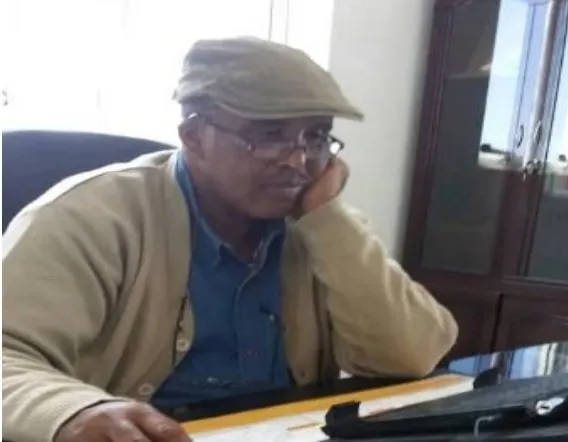
Engineer Abdi Ali Barkhad is Ethiopian, has also become known as a political analyst and writer on the Horn of Africa, particularly on Somaliland, Somalia, Ethiopia, regional geopolitics, diplomacy, and international relations. His author profile describes him as a senior consultant who has studied international diplomacy. He can be reached via email : tra50526@gmail.com
Editor’s Note: Views in the article do not necessarily reflect the views of borkena.com
__
Join our Telegram Channel: t.me/borkena
Like borkena on Facebook
To submit a press release, send the submission to info@borkena.com
Add your business to Ethiopian Business Listing / Ethiopian Business Directory
Join the conversation. Follow us on X (formerly Twitter) @zborkena to get the latest Ethiopian news updates regularly.
Since advent of “Woyanee Tigray ” an Ethnic peasant army overrun and replaced headed by central military government of Ethiopia and established” an ethinic enclaves ” throughout all regions . Addis ababa is the only city where Ethiopianism spirit sustained among all its citizens.
We are reaching to the final moment of the death of Ethiopianism at last .
Dear Eng. Abdi:-
Given that the Constitution states that Ethiopia has a federal government, can a regional capital and a federal capital co-exist meaningfully and peacefully ? Is there such a global experience in democratic federal USA, Germany and others ? How would they handle taxes, utilities, transport and communications, security, and the overall management of the city?
Are leaders of OPDO and the federal government sure they will not start fighting at some point ? If the Federal Government is not from OPDO but another ethnic group, how does one ever create a harmonious relationship between two ethnic leaderships of the same city? Will Addis Ababa have two names, two flags, two languages, two security systems and two city management systems in general ?
In addition, there is the ethnic issue where OROMOs are a minority, historical ownership of Berara is solidly supported by strong historical and archaeological evidence, the Constitution does not allow such adulteration and the other 82 ethnic groups cannot accept a role of serfs under OPDO or any other ethnic group in their own capital city.
Prof. Mesfin Araya and his colleagues need to think very carefully before ever making a decision that can be potentially explosive. Let us not rock the boat still more in the name of a commission that is ill-timed, poorly organized and dreadfully managed. I do not know what it takes to be a mental health professor, but I do know that professorship in other areas in respectable universities is achieved only after critical tests of scholarship, unblemshed service, creativity and logical performance. Prof. Mesfin should not let us down.