
By: Habte H.
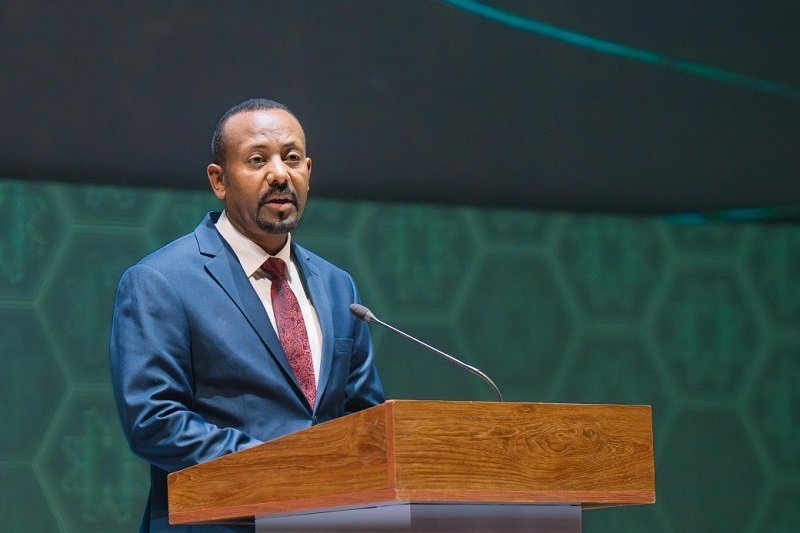
Abiy Ahmed frequently speaks about “working for the generation.” He presents himself as a leader building a new Ethiopia for the future — a visionary thinking beyond day-to-day politics. Yet an increasingly important question many Ethiopians now ask is this: Does he truly understand what this generation wants? There is an old Ethiopian saying: “ጽድቁ ቀርቶ በቅጡ በኮንነኝ” — meaning, “Forget leniency and judge me properly.” Perhaps this is the standard by which Abiy Ahmed’s leadership should now be assessed: not by rhetoric, symbolism, or carefully crafted narratives, but by the actual condition of the country, the direction of its institutions, and the lived realities of its people.
Because the evidence suggests something very different
Today’s — and even more tomorrow’s — Ethiopian generation does not aspire to glittering vanity projects, endless political theater, or slogans endlessly repeated through state-controlled media. It longs for peace, dignity, quality education, meaningful employment, technological progress, national stability, and freedom from fear and uncertainty. It seeks opportunity, not propaganda, competence, not spectacle. Above all, it wants a country where intelligence, creativity, and hard work matter more than political loyalty or performative obedience.
And tragically, Abiy Ahmed appears disconnected from these realities.
Many observers increasingly feel that Abiy governs not from strategic wisdom but from psychological impulses shaped by personal insecurity, emotional politics, and performative ambition. One cannot fully understand his leadership without understanding the contradictions of his own background. Raised in poverty and hardship, he often speaks emotionally about suffering and deprivation. There is nothing shameful about humble origins. In fact, many of the world’s greatest leaders emerged from poverty. But what matters is what a leader learns from hardship.
Some leaders emerge with humility, discipline, and clarity. Others emerge with deep resentment, insecurity, and a desire to prove themselves through grand displays of power. Critics argue that Abiy belongs increasingly to the latter category. Instead of building strong national systems, he appears obsessed with symbolic projects designed to project greatness rather than create it.
The generation he claims to serve does not eat from “corridor development.” Young graduates cannot build their future from cosmetic urban beautification while universities deteriorate, inflation destroys households, and conflict consumes the country. A nation does not become prosperous because leaders construct parks, fountains, or luxury compounds while institutions collapse underneath.
A genuinely strategic leader thinking about future generations would have invested aggressively not in war, vanity projects, or extravagant urban beautification while millions still struggle to secure daily bread, but in quality education, peace, democracy, freedom of thought, and national unity. Ethiopia should have emerged as Africa’s intellectual and innovation powerhouse by now. With its vast young population, deep civilizational history, and strategic geographic position, the country possesses all the foundations necessary to lead the continent in science, technology, engineering, agriculture, and transformative innovation.
Imagine if the billions spent on prestige projects, political wars, and military destruction had instead been directed toward world-class universities, digital infrastructure, research centers, agricultural modernization, irrigation systems, industrial parks that function, merit-based civil service reform, and technological innovation. That would have been leadership for generations. Instead, Ethiopia has witnessed brain drain, institutional decline, economic instability, and endless political polarization. The tragedy is not simply policy failure. The deeper tragedy is the absence of strategic thinking itself.
A genuinely visionary leader would have understood that Ethiopia’s greatest wealth is not military might, ethnic mobilization, political propaganda, or endless state spectacle. A nation’s true strength lies in its people – in educated minds, productive citizens, strong institutions, social trust, and the ability to think freely and innovate boldly. The future belongs not to countries that shout the loudest, but to those that cultivate human capital, stabilize their societies, attract investment, and build systems that outlive individual rulers.
Nations rise through institutions, discipline, and long-term strategic thinking – not through slogans, emotional speeches, or perpetual political mobilization. Every successful developmental state understood this fundamental truth. They invested in quality education, scientific advancement, manufacturing, agricultural transformation, technological capability, export competitiveness, and rule-based governance. They focused on creating productive societies rather than politically intoxicated ones. They understood that roads, parks, and luxury buildings alone do not create prosperity unless they are supported by knowledge, productivity, peace, and institutional competence.
Ethiopia once had a rare historic opportunity. When Abiy Ahmed first came to power, he inherited enormous goodwill both domestically and internationally. Ethiopians were exhausted by division and longed for reconciliation, reform, and national renewal. The international community saw Ethiopia as a potentially transformative African success story. He had the chance to consolidate peace internally, normalize relations with neighbors, strengthen regional trade, attract global investment, and position Ethiopia as a diplomatic, intellectual, and economic center for the Horn of Africa. But history is often shaped not only by opportunities seized, but by opportunities wasted.
Instead of national healing, the country descended deeper into polarization and conflict. Instead of institutional strengthening, political centralization intensified. Instead of democratic consolidation, fear and mistrust expanded. Millions were displaced. Ethnic tensions deepened. Investors lost confidence. Inflation crushed ordinary families. Universities weakened. The social fabric that once held Ethiopia together became increasingly fragile. And yet, the rhetoric about “working for future generations” continues. But what does this generation actually want?!!!
Today’s Ethiopian youth are more globally aware, technologically connected, and economically ambitious than any generation before them. They do not merely want survival; they want competitiveness. They want opportunity. They want functioning institutions. They want a country where talent matters more than political loyalty, where merit is rewarded, where education leads to employment, and where citizens can imagine a future without fear and uncertainty.
One of the most dangerous forms of leadership failure occurs when visibility begins to replace achievement. Modern authoritarian tendencies often mistake spectacle for development — confusing announcements with results, aesthetics with progress, and media narratives with reality. Abiy Ahmed increasingly appears trapped within this illusion. Large-scale beautification projects, symbolic constructions, and choreographed political performances are presented as evidence of transformation, while the structural foundations of national development continue to erode.
But history does not judge nations by fountains, corridors, slogans, or carefully managed political imagery. History judges nations by the strength of their institutions, the quality of their education systems, the productivity of their economies, the stability of their societies, and the dignity of their citizens.
A country where graduates cannot find jobs, where inflation destroys purchasing power, where conflict repeatedly erupts, and where citizens steadily lose confidence in the future cannot credibly claim to be building for generations.
Perhaps the deeper tragedy is that Abiy Ahmed may genuinely believe he is succeeding. Political isolation can become so severe that leaders begin mistaking controlled narratives for reality itself. Surrounded by praise, insulated from criticism, and disconnected from the daily struggles of ordinary citizens, rulers often lose the ability to recognize failure even as it unfolds before them. History, however, is rarely merciful toward illusion.
The Ethiopia future generations need will not be built through vanity projects, militarized politics, or emotional rhetoric. It will be built through peace, intellectual freedom, scientific advancement, quality education, agricultural transformation, institutional trust, democratic maturity, and long-term strategic vision. And despite everything, that remains the Ethiopia millions still hope for.
Editor’s Note : Views in the article do not necessarily reflect the views of borkena.com
__
Join our Telegram Channel : t.me/borkena
Like borkena on Facebook
To submit Press Release, send submission to info@borkena.com
Add your business to Ethiopian Business Listing / Ethiopian Business Directory
Join the conversation. Follow us on X (Formerly Twitter) @zborkenato get the latest Ethiopian News updates regularly.
To Support Borkena : https://borkena.com/subscribe-borkena/ – one time support or small monthly options available. Inquire information about it : info@borkena.com
Abiy’s Ethiopia: Abiy catapulted Ethiopia from “The World’s Poster Child of Poverty & Famine” to “The World’s Poster Child of Prosperity & Greenery!” in just ≤8 years!
The Hero vs. The Villain: Abiy refused to sell Ethiopia to Egypt & the West. That’s why Egypt’s Proxies & Ethiopia’s Enemies portray Abiy as “The Villain” than “The Hero”!
Such incessant smear campaign/slander/misinformation/disinformation spree won’t change the facts. So, I will save Borkena the screening time & save myself the bickering to show ALL an iota of Abiy’s accomplishment in the links of my previous responses:
1). https://borkena.com/2026/05/07/ethiopia-politics-the-unbridgeable-chasm-part-ii/
2). https://borkena.com/2026/05/14/ethiopia-under-siege-why-the-five-historic-pillars-of-the-nation-are-under-attack/
3). https://borkena.com/2026/05/14/hunger-in-addis-ababa-the-work-of-an-ethnic-apartheid-system/
4). https://borkena.com/2026/05/17/the-urgency-of-now-ethiopias-human-rights-crisis-requires-an-international-response/
i_mognu አይ ሞኙ
I thank the author for having written the real truth.
Aby Ahmed and his enablers work hard to pull down Ethiopia into pieces.
– It seems as if, they work hard deliberately to weaken Ethiopia. For example:
– they have already dismantled & weakened Addis-Ababa
– from Mexico Square onwards to Bole,Filweha,Arat,Amst,Sidst kilo, Aware, Entoto,etc…. demolished all cafés Restaurants,shops, for ordinary citizens unbearable and uncomfortable! There are no places where the ordinary peoples stopover; where to stay, and have food or water affordable to his/her/pockets!!! Normally, the ordinary people have already ceased to go to this areas unless they have to accompany some of their friends or family to the airport or to ask one of their relatives around the outskirts of Addis-Ababa.
This is true and crystal-clear that Mr. Shimels Abdissa already word by word told us in Afan Oromo that they will relentlessly work hard to make Addis-Ababa Unbearable and inconvenient to live!!! This is, sadly we see what’s happening today!!! Who is the next generation to profit from your illusionary fantasy vision of hope? This generation is already a dying generation, our children do not have access to jobs, and cannot even support their parents. In the past, & before you came to Power,eight years ago, the elderly were fed by their children, because, their children were able to to school and had jobs; nowdays, it’s the contrary; their children themselves are prone to your false progandas and they themselves are depending instead on the help of their dying poor parents. That’s why you say we feed the elderly!!! In Ethiopia, today you have already dried up the source of new jobs. Newly inaugurated students could not find a job. Absolutely no job!!!! No absolute Tourists because of security reasons! Hotels are transformed to Clinics and Hospitals!!! You should also stop your unfair, & fantasy reconciliation! Please be genuine to.love ,& reconciliation.
What you’re building is a shiny town, nobody is against it, is there somebody who went to the city to oppose you??
but without a single industry, factory, a genuine Education! Without a genuine of resettlement of the people,whom you broke apart completely their beautiful social life.
You’re deliberately prolonging war in Amhara and Tigray!!! You spend unnecessarily in billions of dollars to continue the war!!! What do you profit to put Ethiopia in such ugly swampy land of every kind of problems entangled and suffocated by labyrinth Ethnic ruling whirpool system. Try to learn from other country leaders including USA, Kenya, Tanzania ,Gahana working so hard for the benefit of their people and country!!! I am personally jealous of them! My appreciation to them!!!
May God the Almighty Whom we daily pray judge over you, Ethiopia and its People!!! Amen.
When did Shimelis say that? Put the link here.
Link August 9,2020 Shimels Abdisa/ Ethio Forum
#Ethio Forum.
In Amharic Shimels Abdisa campaign on Amharas and Tigray. In Afan Oromo in Amharic Translation.
አዲስ፤አበባን፤አላስፈላጊ፤ እናደርጋታለን፤ኢትዮጵያን፡እንድትመቸን፡አድርገን፡እንሰራታለን፤ብልጽግና፤ እንዲጠቅመን፡አድርገን፡መሥርተነዋል፤(ሽመልስ፡አብዲሳ) በ Feb.2020 በፊት፤በተደረገ ስብሰባ ላይ አቶ ሽመልስ አብዲሳ ተነጋገሩት ንግግር ፤ነው፤ August 9
#Ethio Forum
@adebabaymedia
Link for Mr. Dereje.