
Escalating military positioning and widespread surveillance force border communities to flee with little transport or access to essential supplies
By Staff Writer
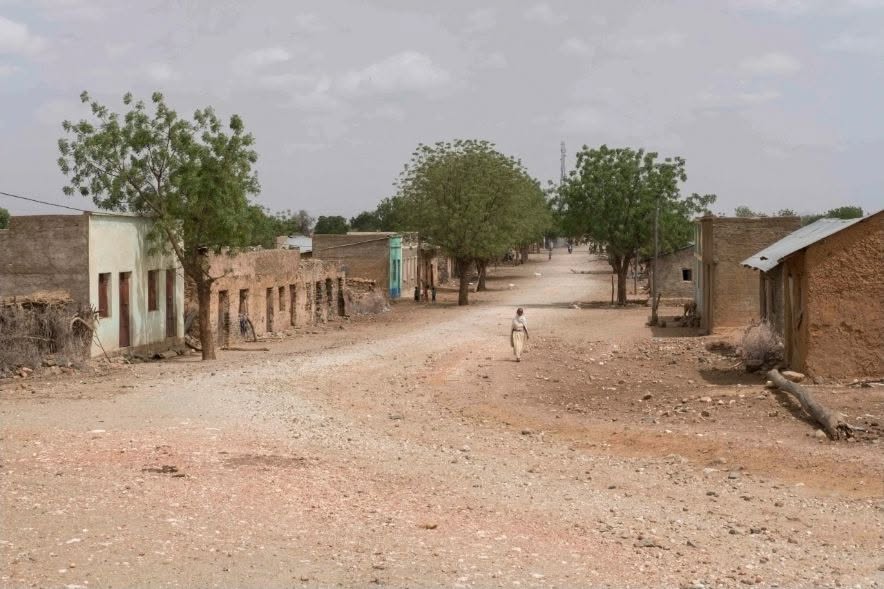
(Nairobi, Kenya) — Deutsche Welle (DW) reports that fears of renewed war along the Ethiopia–Eritrea border are driving fresh displacement across parts of Tigray, leaving residents struggling to secure transport and humanitarian aid in hard-to-reach areas.
Eyewitnesses in northwestern Tigray told DW that military activity has intensified in recent days. A resident of Adi Hageray, near Shire, speaking anonymously for safety reasons, said Ethiopian National Defense Forces and their allies are positioned near Badme alongside Tigray People’s Liberation Front (TPLF) and Eritrean forces just a few kilometers away. Although no direct exchange of fire has occurred beyond troop movements, the resident stated that military deployments show close proximity and that drone surveillance is widespread.
The Adi Hageray resident noted that many residents are fleeing to avoid heavy weapons fire if active combat begins. Two women from a desert community reportedly went into labor while walking, as many residents travel up to 60 kilometers toward Adi Hageray, Shiraro, and Shire.
The resident added that families leaving ahead of potential fighting cannot easily carry food. A lack of transport forces people to walk while carrying children, even when transporting small items like a four-kilogram tin of flour. Members of the same community who were displaced to Shire and other shelter sites during the 2020–2022 northern Ethiopia war now face displacement once again.
Aid and human rights groups report that hunger, rights abuses, and disrupted basic services remain urgent concerns in conflict-affected areas of Tigray. The UN Refugee Agency (UNHCR) and the UN Office for the Coordination of Humanitarian Affairs (UNOCHA) observed that while relative stability holds in areas under federal government control, residents continue to flee border areas that risk becoming active conflict zones.
Tesfalem Berhe, founder and executive director of Priority for Human Rights Ethiopia, told DW that border conditions require urgent attention. Although fighting in Tigray has eased in some respects, he highlighted severe pressure on residents in Badme, Rama, and Irob near the Eritrean border, where government services are absent, armed pressure persists, and humanitarian aid has not arrived.
Tesfalem added that shortages of government services and fuel continue to compound the effects of earlier drought and security instability on local communities.
__
Join our Telegram Channel : t.me/borkena
Like borkena on Facebook
Join the conversation. Follow us on X (Formerly Twitter) @zborkena to get the latest Ethiopian News updates regularly. Subscribe to YouTube channel To share information or for submission, send e-mail to info@borkena.com
To Support Borkena : https://borkena.com/subscribe-borkena/ – one time support or small monthly options available. Inquire information about it : info@borkena.com