
Cairo and Khartoum pursue financial reparations over the Grand Ethiopian Renaissance Dam, while Addis Ababa highlights regional energy sharing and flow regulation
By Staff Writer
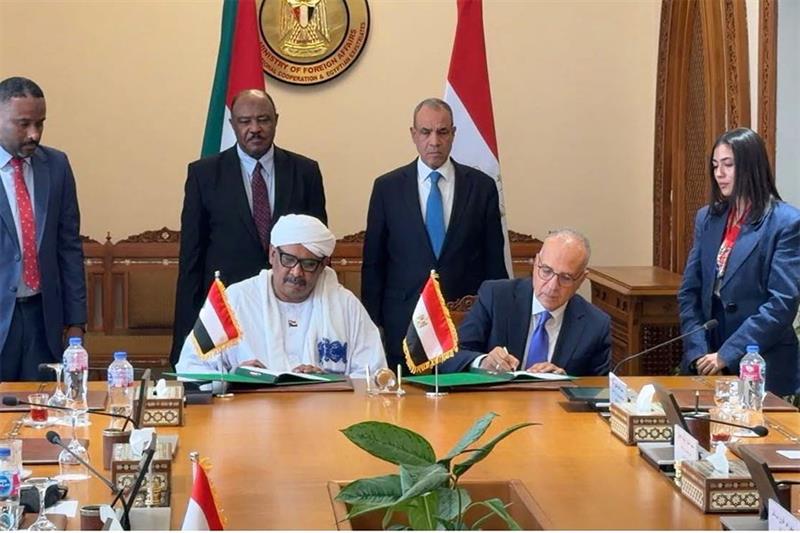
(Nairobi, Kenya) — Cairo and Khartoum have formed a joint bilateral panel to assess the physical, social, and environmental impacts of the Grand Ethiopian Renaissance Dam (GERD), establishing a legal and technical framework to seek formal financial reparations from Addis Ababa.
According to a Deutsche Welle report, Egyptian and Sudanese foreign and irrigation ministers finalized the decision during high-level talks in Cairo. Officials from Egypt’s Ministry of Water Resources and Irrigation stated that the joint body will document both direct and indirect impacts of the mega-dam’s construction and operation. Both downstream nations reiterated their opposition to unilateral developments on the Blue Nile, maintaining that uncoordinated management presents ongoing threats to downstream water security.
While the Prime Minister’s Office in Addis Ababa and the Ministry of Water and Energy have not issued an immediate response to the Cairo announcement, Ethiopian officials have consistently rejected allegations of unilateral harm. Ethiopian Minister of Water and Energy Habtamu Itefa previously underscored that Ethiopia approaches the Nile from a framework of equitable utilization and regional development, criticizing downstream efforts to frame the river primarily through a national security lens.
Hydrological experts in Addis Ababa have also pushed back against the downstream effort to seek reparations. Dr. Belete Birhanu, a water resources engineer at Addis Ababa University, told Deutsche Welle that the GERD’s operations have resulted in no demonstrable operational faults or physical harm that would warrant financial damages. He highlighted that regulated water flows provided by the dam deliver tangible benefits to downstream countries, including flood mitigation and standardized seasonal flows.
The GERD, which holds an installed capacity of 5,150 megawatts, was officially inaugurated in September 2025. The facility currently expands cross-border electricity sales across East Africa, supplying power to regional neighbors including Djibouti, Sudan, Kenya, and Tanzania.
The announcement of the damage-assessment panel escalates regional friction during ongoing security disputes and mutual accusations regarding external support for opposition movements in the Horn of Africa.
__
Join our Telegram Channel : t.me/borkena
Like borkena on Facebook
Join the conversation. Follow us on X (Formerly Twitter) @zborkena to get the latest Ethiopian News updates regularly. Subscribe to YouTube channel To share information or for submission, send e-mail to info@borkena.com
To Support Borkena : https://borkena.com/subscribe-borkena/ – one time support or small monthly options available. Inquire information about it : info@borkena.com