
Editor’s Note: Views in the article do not necessarily reflect the views of borkena.com
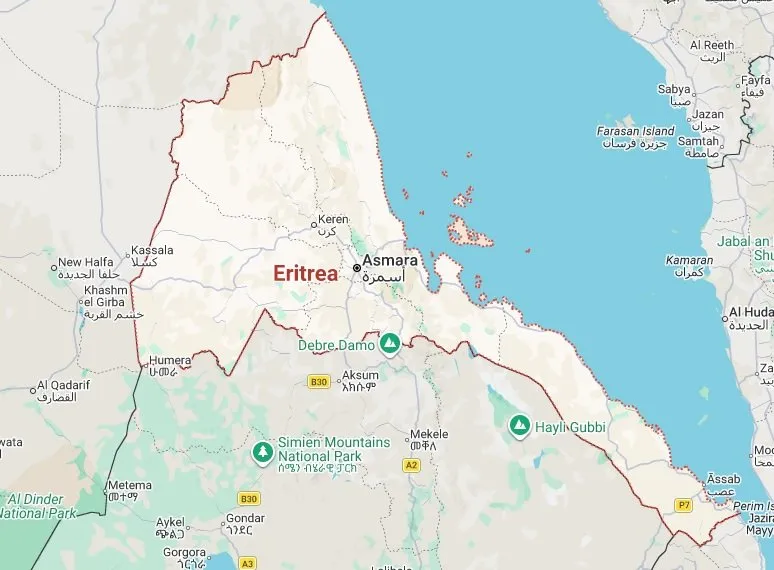
This article examines the long-term political history of the territory constituting modern-day Eritrea, tracing its administrative transformations from antiquity through twentieth-century state formation. It systematically analyzes the pre-Ottoman, Ottoman, Egyptian, and Italian eras of coastal and highland governance, highlighting the structural interplay between maritime trade hubs and the inland Abyssinian state. Furthermore, it outlines the core historical, demographic, and legal arguments historically utilized by the Ethiopian state to assert sovereign claims over the region (Mereb Mellash) prior to and following European colonial demarcation.
1. Introduction
The Horn of Africa’s Red Sea littoral has long functioned as a critical geopolitical nexus, linking the African interior with Mediterranean, South Asian, and Middle Eastern trade networks. The territory encompassing modern Eritrea presents a complex historical landscape characterized by distinct geographical zones- ”the central highland plateau (Kebessa), the western lowlands, and the eastern Red Sea coastal strip.
Understanding the contemporary historiography of the region requires evaluating two intertwined trajectories: the evolving systems of local and imperial governance operating along the Red Sea coast prior to and during foreign interventions, and the deep-seated political, cultural, and administrative ties that historically linked the highland plateau to the Abyssinian (Ethiopian) imperial state.
2. Chronological Framework of Regional Governance
The administrative evolution of Eritrea spans several distinct historical epochs:
- 1st Century – 8th Century: Aksumite Empire (Direct Imperial Port at Adulis)
- 11th Century – 1540s: Dahlak Sultanate & Local Chieftaincies (Coast and Islands)
- 14th Century – 1550s: Bahr Negash & Na’ib System (Highland-Coastal Nexus)
- 1557 – 1865: Ottoman Empire (Habesh Eyalet: Massawa and Littoral)
- 1865 – 1885: Khedivate of Egypt (Coast and Western Lowlands)
- 1882/1889 – 1941: Italian Colonial Era (Proclaimed Colonia Eritrea in 1890)
- 1941 – 1952: British Military Administration (BMA)
- 1952 – 1962: Federation with the Empire of Ethiopia
- 1962 – 1991: Unification with Ethiopia & War of Independence
- 1993: Formal International Recognition of Sovereignty
2.1 Classical Antiquity: The Aksumite Heartland (1st – 8th Century CE)
During the classical period, northern Tigray and the Eritrean highlands (Seraye, Akele Guzai, Hamasen) constituted the nuclear territorial base of the Kingdom of Aksum.
- Direct Imperial Integration: The port of Adulis (near modern Zula) operated under direct Aksumite administration. Governed by imperial viceroys, Adulis functioned as the primary maritime clearinghouse for luxury goods, agricultural produce, and minerals moving between the Mediterranean world, the Red Sea basin, and the Indian subcontinent.
- Maritime Decline: Following Arab naval expansion in the late 7th century and the destruction or abandonment of Adulis around 702 – 710 CE, Aksum lost its maritime hegemony, prompting a gradual political and economic reorientation toward the southern interior.
2.2 The Post-Aksumite Maritime Era: The Dahlak Sultanate (11th – 16th Century)
As imperial control over the coast receded, maritime commercial power reorganized around the Dahlak Archipelago.
- Independent Sultanate: By the 11th century, an autonomous Islamic polity – the Sultanate of Dahlak- emerged, establishing control over the islands as well as the mainland ports of Massawa and Arkiko.
- Pragmatic Dual Orientation: The Sultans maintained extensive diplomatic and trade links across the Red Sea with Yemen and Mamluk Egypt, while concurrently establishing a tributary framework with the Christian highland monarchs of Abyssinia. This arrangement ensured unhindered caravan transit carrying salt, luxury fabrics, and agricultural goods between the coast and the interior.
2.3 Late Medieval Governance: The Bahr Negash and the Na’ib System (14th – 16th Century)
Following the restoration of the Solomonic Dynasty in 1270, the Ethiopian crown reasserted administrative and fiscal rights over the northern marches.
- The Office of the Bahr Negash: The Emperor appointed a senior provincial governor titled the Bahr Negash (“Ruler of the Sea”), headquartered at Debarwa in the highlands. The Bahr Negash exercised executive authority over the Mereb Mellash (“beyond the Mareb River”) and asserted ultimate sovereignty over coastal customs stations.
- The Na’ib Administrative Apparatus: Local governance among the lowland pastoralist populations (Tigre, Afar, Saho) remained vested in hereditary lineage leaders, most notably the Na’ib (deputy) of the Belaw clan centered at Arkiko. The Na’ib served as an institutional buffer, mediating among highland imperial authorities, coastal merchant communities, and foreign maritime powers.
3. Early Modern and Colonial Foreign Interventions
3.1 The Ottoman Era (Habesh Eyalet, 1557 – 1865)
In 1557, Ottoman naval forces under Özdemir Pasha occupied Massawa and Arkiko, formally incorporating the coastal strip into the Habesh Eyalet.
Under the administrative hierarchy of the Habesh Eyalet, central executive authority flowed from the Ottoman Sublime Porte in Istanbul to the appointed Governor (Pasha of Massawa). Local executive administration was delegated to the hereditary Na’ib of Arkiko, who managed revenue collection, trade security, and policing across the littoral.
- Spatial Footprint: Ottoman military presence remained predominantly confined to the littoral. Inland incursions into the highland plateau were consistently repelled by local highland forces and imperial armies.
- Indirect Governance: To maintain revenue streams without maintaining large garrisons, the Sublime Porte institutionalized the local Na’ib of Arkiko as an official Ottoman representative, paying the Na’ib a stipend to secure the hinterland trade corridors.
3.2 The Khedivate of Egypt (1865 – 1885)
In 1865, Ottoman sovereignty over Massawa and its surroundings was transferred to the Khedivate of Egypt under Khedive Isma’il Pasha, initiating an expansionist drive into the interior.
- Inland Military Campaigns: Egyptian forces occupied Keren and pushed toward the highland plateau, resulting in direct military confrontation with the Ethiopian Empire under Emperor Yohannes IV:
- Battle of Gundet (1875): Ethiopian forces destroyed the advancing Egyptian expeditionary column.
- Battle of Gura (1876): A second, decisive Ethiopian victory halted Egyptian territorial ambitions in the Horn.
- The 1884 Hewett (Adwa) Treaty: Following the Mahdist Uprising in Sudan, Britain negotiated an agreement between Egypt and Ethiopia. In exchange for Ethiopian assistance in evacuating trapped Egyptian garrisons, the treaty restored administrative control of Bogos (Keren) to Ethiopia and guaranteed free transit of goods through Massawa.
3.3 Italian Colonial Rule and Border Demarcation (1882–1941)
Italian presence in the region originated in 1869 when explorer Giuseppe Sapeto purchased the Bay of Assab from local Afar sultans on behalf of the Rubattino Shipping Company to establish a commercial coaling depot. On July 5, 1882, the Italian state formally bought out Rubattino’s holdings and annexed Assab as its first sovereign territory in East Africa. Following the Egyptian withdrawal in 1885, Italian troops occupied Massawa with tacit British support, using both ports as launching pads for inland expansion…
- Battle of Dogali (1887): Ethiopian forces under Ras Alula Engida ambushed and annihilated an advancing Italian military detachment, temporarily checking Italian inland penetration.
- Treaty of Wuchale (1889): Following the death of Emperor Yohannes IV at the Battle of Gallabat, Menelik II assumed the imperial throne. To secure arms and international recognition, Menelik signed the Treaty of Wuchale, which recognized Italian control over parts of the northern highlands.
- Proclamation of Colonia Eritrea (1890): On January 1, 1890, King Umberto I formally proclaimed the creation of the colony of Eritrea (derived from Mare Erythraeum), unifying the coastal lowlands, western plains, and northern highlands into a singular political entity for the first time.
- Battle of Adwa (1896) and Border Consolidation: Disputes arising from Article XVII of the Wuchale Treaty culminated in the Battle of Adwa, where Menelik II decisively defeated the Italian army. Lacking the logistical capacity to sustain an offensive to flush Italian forces out of the coastal colony, Ethiopia accepted the Mareb-Belesa-Muna line as the international boundary.
4. Modern Political Transitions (1941 – 1993)
The mid-twentieth century brought a series of critical international status transitions:
- 1941 – 1952: British Military Administration (Post-WWII United Nations mandate following Italian defeat).
- 1952: Adoption of UN Resolution 390(A), federating an autonomous Eritrean unit under the Ethiopian Crown.
- 1962: Imperial abrogation of the federation and annexation of Eritrea as Ethiopia’s 14th province.
- 1961 – 1991: 30-year armed liberation struggle led by the ELF and EPLF.
- 1993: UN-monitored referendum resulting in formal international recognition of Eritrean state sovereignty.
- British Military Administration (1941 – 1952): Following the defeat of Italian forces during World War II, the United Nations placed Eritrea under temporary British administration while its political future was debated.
- UN Resolution 390(A) (1952): The UN General Assembly adopted a compromise resolution federating an autonomous Eritrean state under the sovereignty of the Ethiopian Crown.
- Dissolution and Conflict (1962- 1991): In 1962, Emperor Haile Selassie unilaterally dissolved the Eritrean parliament and annexed the territory as Ethiopia’s 14th province. This action catalyzed a 30-year armed independence struggle led initially by the Eritrean Liberation Front (ELF) and subsequently by the Eritrean People’s Liberation Front (EPLF).
- Referendum and Independence (1993): EPLF forces took control of Asmara in May 1991. In April 1993, an internationally monitored referendum resulted in a 99.8% vote in favor of independence, leading to formal international recognition.
5. Historiographical Analysis of Ethiopia’s Sovereign Claims
The historical claim that Eritrea – specifically the highland Mereb Mellash region – constituted an integral part of the Ethiopian state prior to 1890 rests on four primary historiographical pillars:
5.1 Civilizational and Aksumite Continuity
Ethiopian nationalist historiography posits the Aksumite Empire as the common civilizational cradle for both northern Ethiopia and highland Eritrea. Because the political, urban, and religious core of Aksum spanned both sides of the modern border – with major political sites in Tigray and vital port structures in Eritrea – the region is viewed historically as an indivisible cultural unit.
5.2 Administrative Jurisprudence of Mereb Mellash
From the Solomonic restoration in 1270 through the late nineteenth century, Ethiopian administrative records classify the highland plateau north of the Mareb River (Seraye, Akele Guzai, and Hamasen) as an integral imperial province. The appointment of the Bahr Negash by the Negusa Nagast (King of Kings) is cited as evidence of continuous administrative oversight, royal land grants (gult), and taxation systems linking the territory directly to the central state.
5.3 Ethno-Linguistic and Ecclesiastical Interconnection
The Biher-Tigrinya population of the Eritrean highlands shares a common language (Tigrinya), script (Ge’ez), customary legal systems (da’erot, higgi), and religious heritage (Ethiopian Orthodox Tewahedo Church) with the Tigrayan population directly south of the Mareb River. Historically, the dioceses of the highland plateau fell under the jurisdiction of Abuna-appointed ecclesiastical authorities, reinforcing structural integration with the Ethiopian church-state paradigm.
5.4 Geopolitical Access and Colonial Severance
The Ethiopian state historically viewed access to the Red Sea as an essential geopolitical and economic necessity. From the perspective of late nineteenth- and twentieth-century Ethiopian statecraft, the establishment of Colonia Eritrea by Italy in 1890 did not represent the creation of a historically legitimate distinct nation-state, but rather an imperialist partition of ancient Abyssinian territory that severed the inland state from its historical maritime outlets.
6. Conclusion
The political history of Eritrea illustrates a long-standing tension between indigenous highland statecraft, maritime trade networks, and successive foreign interventions. While the coastal lowlands experienced varied administrative arrangements under the Dahlak Sultans, Ottoman Pashas, and Egyptian Khedives, the Ethiopian state consistently maintained that its sovereign territorial domain organically included the Red Sea coast – a doctrine inherited from the Aksumite maritime tradition and sustained through the medieval Bahr Negash administration. From the perspective of Abyssinian statecraft, successive occupations by Ottoman, Egyptian, and Italian forces represented imperialist encroachments rather than the lawful extinguishable of Ethiopia’s historic rights.
Consequently, Ethiopian state jurisprudence has historically treated access to the Red Sea not as a diplomatic concession or economic privilege, but as an inherent, residual right of an ancient maritime civilization whose vital outlets were artificially severed by colonial partition. Ultimately, while the establishment of Colonia Eritrea in 1890 and the 1993 referendum institutionalized modern international borders, the historical narrative of continuous Abyssinian claims over the coast remains a foundational element in the political geography and strategic posture of the Ethiopian state.
References & Further Reading
- Bardi, A. (2000). From Ancient Aksum to Modern Eritrea. Red Sea Press.
- Erlich, H. (1982). Ethiopia and the Challenge of Independence. Lynne Rienner Publishers.
- Longrigg, S. H. (1945). A Short History of Eritrea. Clarendon Press.
- Pankhurst, R. (1997). The Ethiopian Borderlands: Essays in Regional History from Ancient Times to the End of the 18th Century. Red Sea Press.
- Rubenson, S. (1976). The Survival of Ethiopian Independence. Heinemann.
- Trevaskis, G. K. N. (1960). Eritrea: A Colony in Transition, 1941- 52. Oxford University Press.
Editor’s Note: Views in the article do not necessarily reflect the views of borkena.com
__
Join our Telegram Channel: t.me/borkena
Like borkena on Facebook
To submit a press release, send the submission to info@borkena.com
Add your business to Ethiopian Business Listing / Ethiopian Business Directory
Join the conversation. Follow us on X (formerly Twitter) @zborkena to get the latest Ethiopian news updates regularly.