
The guns are firing again because the peace that ended the last war was never allowed to become a political settlement. The question now is whether victory on either side would solve what the last victory could not
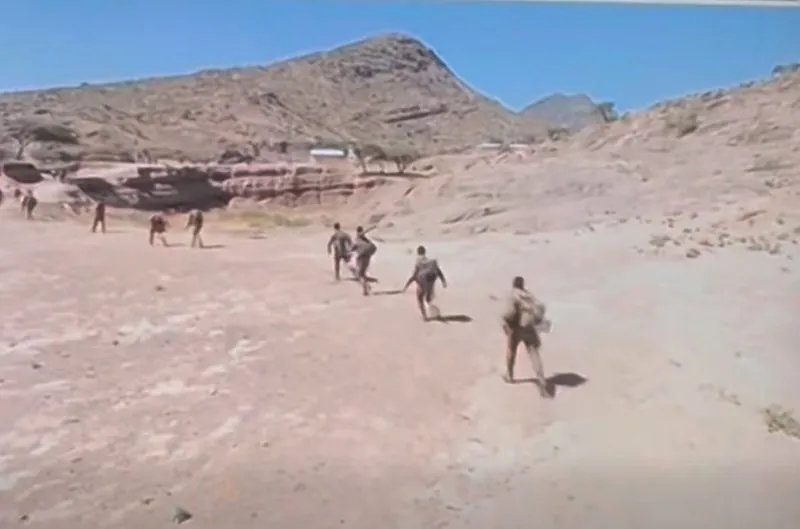
By Habte H.
For a few years, Ethiopia lived with a dangerous misunderstanding. The war in Tigray had ended, and it was tempting to believe that peace had arrived. Roads reopened. Officials met. Reconstruction replaced battle in official speeches. Yet families remained displaced, territory remained contested, and former enemies still feared one another. Communities continued to ask who would answer for what had happened to them.
The African Union was involved as a broker of the Pretoria agreement – and has been talking ever since. It urged the parties to implement it and resolve remaining disputes through dialogue. It urged, and urged, and urged. But as the agreement frayed, those appeals became a substitute for action. Statements cannot return a displaced family to its home. Communiqués cannot keep former enemies at the table. The AU cannot impose peace on Ethiopia – but it must explain what it did when the peace it helped broker was visibly coming apart. Its credibility depends on more than convening talks and issuing statements after the guns have fired. And what has that credibility produced? Expecting the AU to settle Ethiopia’s unfinished peace is not optimistic. It is a delusion.
Now the fighting has returned, and so has the familiar argument: Who brewed this war? Prime Minister Abiy Ahmed? The Tigray People’s Liberation Front (TPLF)? Its new allies? Neighbouring states? Each answer carries a political claim that deserves scrutiny. The deeper story, however, is of a country whose leaders left urgent political questions unresolved until the armed force once again appeared to offer an answer.
The peace that was left unfinished
Abiy Ahmed and his party had every tool to finish Pretoria. They controlled the institutions, the resources, and diplomacy. Instead, ego and weak leadership left the peace unfinished – and mistrust grew by design, not accident. Abiy cannot hide behind the excuse of being “just one participant.” He is Prime Minister. He gives the orders. When grievances fester for years and the state’s only answer is the gun, that is not strength – it is weakness dressed in uniform.
They mistook control of the state for consent to govern. They can win battles and still lose the nation. That is the strategic stupidity of force as a substitute for settlement. The bloodshed continues because their pride continues. The peace remains unfinished – written in blood, never in truth. Still weak. Still proud. Still dangerous.
Air power can change the war. It cannot settle the country
The government has the advantages of a state: an army, resources, diplomatic recognition, and air power. Opposition forces may offset these through coordinated pressure, local knowledge, and alliances that make a single-front campaign impossible. But military capacity is easily confused with political strength. Aircraft can strike positions. They cannot persuade a frightened family to return home. Armed groups can take a town. They cannot establish a fair arrangement for those who live there. Ethiopia’s previous wars should have ended the belief that capturing territory produces legitimacy — yet that belief persists, fed by ego, sustained by weak leadership, and paid for in blood.
Foreign interests add danger. Eritrea’s relations have deteriorated; Sudan’s war makes the Horn vulnerable to escalation. Outside powers will calculate their own interests. None will live with the consequences as directly as Ethiopians will. The same discipline applies to Abiy’s intentions. Criticizing his conduct is legitimate. Claims about a secret religious dynasty require evidence, not repetition. Ethiopia has enough real grievances. Its future should not turn religious identity into a weapon. Three scenarios follow. Each deserves to be read not as prophecy, but as a warning.
- If the federal government wins
One possible outcome is that federal forces defeat the current offensive. The government would call that a restoration of order. Some citizens, exhausted by instability, might welcome the immediate halt to fighting. But what would have changed? If disputed territory remained disputed, if displaced families still could not return, if communities continued to distrust the state, and if defeated fighters saw no political route back into national life, the apparent victory could be temporary. Armed resistance might disperse rather than disappear. Ethiopia would pay for a military result without receiving peace in return. That possibility should worry the government as much as its opponents. A leader who survives every confrontation but leaves each underlying dispute intact is presiding over an accumulation of future wars.
- If the opposition wins
A defeat for Abiy is also possible. An alliance pressing the government from several directions could create a political crisis that conventional military strength alone cannot resolve. But bringing down a government and governing a country are profoundly different tasks. The day after an opposition victory would be more important than the day of victory itself. Who would command the security forces? How would civilians associated with the PP be protected? Who would administer contested areas? Would coalition members accept a genuinely shared transition if it denied them the territory or power they expected?
Without credible answers agreed in advance, victory could become the opening chapter of another conflict. A coalition of former adversaries may hold together under fire and split when power comes within reach. Yet if these doubts are addressed – honestly, publicly, and before the fighting ends — they could open a new chapter. A new Ethiopia, stronger and more legitimate, is not impossible. It requires answers, not just anger. It requires a settlement, not just a victory. The danger is not an argument for preserving the current government at any cost. It is an argument that anyone claiming to offer a new Ethiopia must describe the political settlement they intend to build, not merely the leader they intend to remove.
- If nobody wins, sooner?
The third outcome is prolonged war. It is the least dramatic in a headline and the most destructive in daily life. Front lines could move back and forth while the economy weakens, schools close, health services fail, and more families leave their homes. Local conflicts could become entangled with regional rivalries. Each fresh atrocity could make compromise feel like betrayal to the people who suffered it.
This outcome would not necessarily arrive through one decision to dismantle Ethiopia. It could arrive through repeated failures to prevent the next escalation: another offensive, another reprisal, another missed chance to negotiate. A state can remain on the map while the ordinary conditions that make it a country steadily erode.
The harder choice
The ideal outcome – and the only one that might truly end this war – is victory for the opposition alliance: the defeat of Abiy’s government, followed by a well-planned, broadly agreed post-victory Ethiopia. Only this can bring healing. Anything less will not. A military victory without a political settlement, or a change of leader without a change of system, will simply pause the war – and Ethiopians will spend the coming decade living the same bloodshed under different names.
The immediate task is to stop attacks, protect civilians, and allow humanitarian aid to reach those in need. The political task is harder: reopen a credible process on the questions Pretoria left unresolved, with enforceable commitments and participation beyond armed leaders. Displaced people must have a voice in return decisions. Residents of contested areas must be heard. Women and civil society cannot again be spectators while armed men negotiate for them.
Who brewed this new northern war? The government bears heavy responsibility for letting an unfinished peace rot when it had the greatest power to act. The TPLF and its allies bear responsibility for choosing escalation. But the best and only outlet for a better Ethiopia is the end of Abiy’s government — followed by a well-planned, broadly agreed post-victory Ethiopia. Anything less will not bring healing. It will pause, regroup, and return.
That is a harder ambition than victory. It is also the only one that might end the war.
Editor’s Note: Views in the article do not necessarily reflect the views of borkena.com
__
Join our Telegram Channel: t.me/borkena
Like borkena on Facebook
To submit a press release, send the submission to info@borkena.com
Add your business to Ethiopian Business Listing / Ethiopian Business Directory
Join the conversation. Follow us on X (formerly Twitter) @zborkena to get the latest Ethiopian news updates regularly.