
Turkey has developed an increasingly significant political, economic, military, and diplomatic role in Somalia. While international cooperation and foreign assistance can contribute positively to Somalia’s stability and development, Turkey’s growing involvement in Somalia’s internal political affairs has raised serious concerns among many Somalis. The central concern is whether Turkey is acting as a neutral partner of the Somali people or becoming closely aligned with the interests of the current interim federal administration.
A foreign government should not become deeply involved in Somalia’s internal political disputes by taking sides with one political administration against other Somali political forces, federal member states, communities, or regions. Somalia’s political crisis is fundamentally a Somali problem that requires dialogue, compromise, constitutional governance, and an inclusive national reconciliation process.
The current federal administration in Mogadishu represents one part of Somalia’s political structure. It should therefore not be treated as though it alone represents the interests, aspirations, and political positions of the entire Somali nation.
Somalia is a federal country with federal member states, political parties, traditional leaders, civil society, business communities, and millions of citizens whose views differ significantly from those of the central government. When an external power provides extensive political, military, and diplomatic support to the central administration while disagreements with federal states remain unresolved, that support can unintentionally or intentionally strengthen one side of an internal political confrontation.
Turkey should recognize that Somalia cannot achieve lasting stability through military cooperation or support for one administration alone. Stability requires political legitimacy, constitutional consensus, federal cooperation, and genuine national reconciliation.
Somalia has suffered from more than three decades of political instability, armed conflict, institutional weakness, and mistrust between different political actors. The country therefore needs partners who encourage dialogue rather than deepen political confrontation.
Turkey has the capacity to play a constructive role because it has established strong relationships with Somalia. However, that influence should be used to encourage negotiations among Somali stakeholders rather than to strengthen one political camp.
If Turkey wishes to be regarded as a true friend of the Somali people, its policy should be based on respect for Somalia’s sovereignty, federal constitutional arrangements, political pluralism, and the right of Somali stakeholders to resolve their disagreements peacefully.
Somalia’s federal member states are an essential component of the country’s political system. Their constitutional and political concerns cannot simply be dismissed because the federal government in Mogadishu disagrees with them.
A sustainable Somali state requires cooperation between Mogadishu and the federal member states. Political disagreements should be addressed through constitutional mechanisms and negotiation not through military pressure, foreign alliances, or the mobilization of external resources.
Foreign governments should therefore avoid policies that could be interpreted as supporting Mogadishu against federal member states. Such policies risk increasing mistrust and creating further political fragmentation.
Turkey has made substantial investments in Somalia and has developed important diplomatic, humanitarian, economic, and security relationships with the country. Because of this influence, Turkey has a responsibility to act carefully.
A genuine strategic partnership should benefit the Somali people as a whole, rather than primarily strengthening a particular administration whose political legitimacy and policies are contested by significant Somali constituencies.
Turkey should make it clear that its cooperation with Somalia is with the Somali nation and its institutions not with one political leader, one administration, or one temporary political arrangement.
The Somali people should not have to choose between their national interests and the interests of a foreign partner.
Turkey can make a much more constructive contribution by encouraging:
- Inclusive national dialogue involving the federal government, federal member states, political parties, traditional leaders, civil society, and other relevant Somali stakeholders.
- Respect for the federal constitution and the agreed division of powers between the federal government and member states.
- Political neutrality in disputes between Somali political actors.
- Peaceful resolution of internal conflicts rather than militarization of political disagreements.
- National reconciliation as the foundation for long-term stability.
- Economic and development cooperation that benefits ordinary Somali citizens across the country.
- Respect for Somali sovereignty, including the right of Somalis themselves to determine their political future.
Bottom line
Turkey can either become part of the solution or, if its policies are perceived as taking sides, become part of Somalia’s political problem.
Somalia does not need foreign powers to choose winners and losers in its internal political disputes. It needs partners who encourage Somalis to sit together, negotiate, respect one another, and build institutions that represent the entire nation.
Supporting one administration at the expense of other political stakeholders risks deepening divisions that Somalia has struggled with for decades. The interests of the Somali nation must come before the interests of any temporary administration.
Turkey should therefore reconsider any policy that is perceived as unconditional support for the current federal administration and instead adopt a balanced approach that recognizes the diversity of Somalia’s political landscape.
Somalia belongs to the Somali people. Its political future must ultimately be determined through Somali dialogue, Somali institutions, and Somali consensus not through the influence of any foreign power.
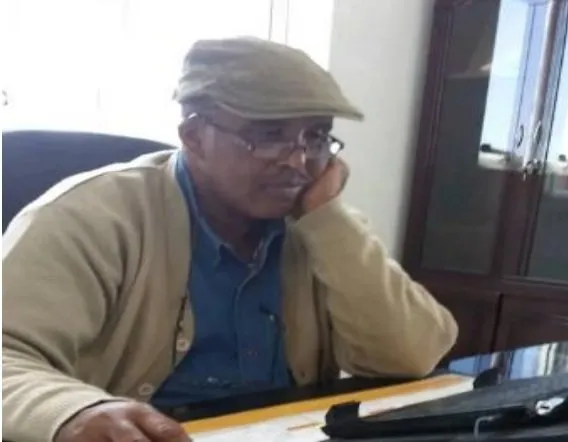
Engineer Abdi Ali Barkhad is Ethiopian, has also become known as a political analyst and writer on the Horn of Africa, particularly on Somaliland, Somalia, Ethiopia, regional geopolitics, diplomacy, and international relations. His author profile describes him as a senior consultant who has studied international diplomacy. He can be reached via email : tra50526@gmail.com
Editor’s Note: Views in the article do not necessarily reflect the views of borkena.com
__
Join our Telegram Channel: t.me/borkena
Like borkena on Facebook
To submit a press release, send the submission to info@borkena.com
Add your business to Ethiopian Business Listing / Ethiopian Business Directory
Join the conversation. Follow us on X (formerly Twitter) @zborkena to get the latest Ethiopian news updates regularly.