
By Addissu Admas
Let me state my premise here by reiterating what I said in my previous piece on this platform: the war against Eritrea is not inevitable, and every effort should be made to resolve the issue of the Red Sea Access (from here forward RSA) for Ethiopia peacefully. What I would like to point out here is Eritrea’s moral obligation to be amenable to or seek proactively a reasonable accommodation that would benefit both countries. In other words, Eritrea is not morally justified to go to war to simply maintain the status quo, even if she is maybe legally entitled to do so.
We are witnessing today what we have always hoped never to experience again in our lifetime, i.e. another war with or in Eritrea. Unfortunately, the saber rattling is getting louder and louder, and the preparation for war continues unabated on both sides. While reason counsels restraint and caution, the Ethiopian government appears determined to find any excuse to start the war. PM Abiy, FM Berhanu and their cohorts appear to be pounding the drums of war so loud to the point where they have turned deaf to the voice of reason, and blind to the reality on the ground. With but little qualification, we can say that Ethiopia is more than ever in a state of civil war. There are guerilla wars in Amhara and Oromia, tensions in Tigray, Afar, Somali regions and constant little conflicts in all the rest of the country. Yet, the prime minister and the field marshal have calculated that they can win a war against Eritrea! Can the Ethiopian Defense Force (EDF) manage all these conflicts and tensions while conducting a full-scale war against Eritrea? Or is the prime minister so naïve as to believe that all the warring parties will cease to fight until he achieves the “greater goal” of wresting Assab from Eritrea? Or better yet, does he think that they will join him in such an endeavor? In truth, aren’t they all maybe waiting for the EDF to get bogged down in Eritrea so they can attack it from the rear? One thing seems likely, that if the EDF goes to war against Eritrea, all Ethiopia’s opposition armed parties may join forces to end the current regime. It is therefore not only the right thing to do to resolve the issue of RSA peacefully, but it is also the most politically and economically expedient alternative.
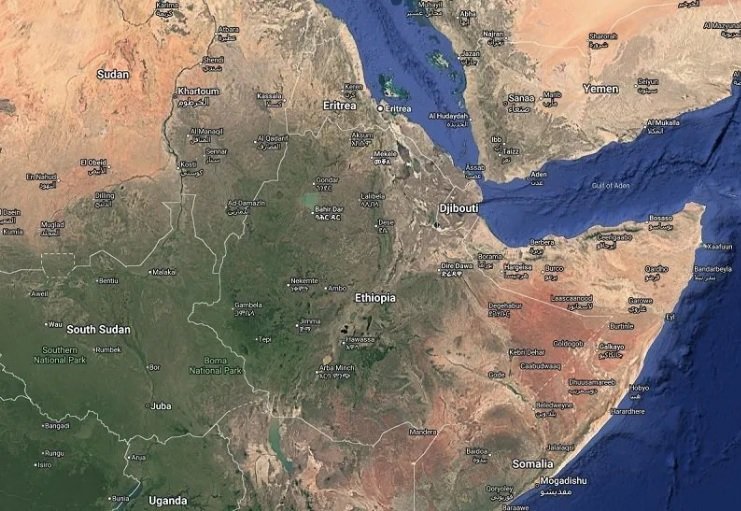
Eritrea is in possession of the entire Red Sea coastline not by historical happenstance, but because of colonial greed and machinations. Let us be honest: if the Italians had never ventured in that part of the world, there would have never existed today a nation called Eritrea. A name, I must add, invented by Italian colonialists and signifying red (sea) in ancient Greek. Eritrea, whose core was the administrative region of Bahr Negash, would have either been simply an extension of Tigray or a region with very close affinity with her. Like Gojjam and Gondar. The explanation of the precise terms of their co-existence and relationship, I leave in the hands of capable historians. What gave Eritreans today a sense of separate nationhood is their colonial past and their shared experience under it. There is no question that Eritrea’s present territory owes its configuration to the Italians. It reflects, as it were, the Italian colonial objectives. Present day Eritreans are simply inheritors of a nation constructed by the Italian colonial adventure.
When the British colonial power wrested Eritrea from the Italians, its intention may well have been to claim her for Britain. Even though the Brits had presented themselves as her temporary administrators (British Military Administration, or simply BMA) until a suitable settlement was devised. When their presence ended in 1952, Eritrea being declared an autonomous federated province under the sovereignty of Ethiopia would have most likely guaranteed enduring peace for the region, if the article of confederation had not been rescinded in 1962. Not only was this rescinding the single most consequential mistake of Atse Haile Selassie I, but also the very source of most of the instability that Ethiopia has experienced since.
Whether a proper legal process has taken place or not for Eritrea to become a separate nation, it is sufficient and by itself a legitimizing condition that her native peoples have overwhelmingly opted to be so. Thus, taking issue with whether Eritrea separated from Ethiopia in accordance with proper legal procedure cannot be taken as an excuse to invalidate Eritrea’s legitimate nationhood. Besides, since the Ethiopian Constitution did not come into full effect until August of 1995, what other legal basis can Ethiopia have to challenge the separate nationhood of Eritrea? Thus, the debate whether Eritrea separated legitimately or not from Ethiopia needs to be put aside, and we must rather focus on the more germane question whether Ethiopia has gotten a fair deal in their separation. My contention here is that she did not, even though there was more than one occasion to rectify the injustice committed against Ethiopia.
It was a serious negligence, not to say a dereliction of duty on the part of the government of Meles Zenawi to have simply acquiesced to an informal arrangement with Isayas Afewerki’s government regarding Ethiopia’s use of the port of Assab, or in general with her RSA. It is very hard to believe that the late Ato Meles Zenawi, a man known for his exceptional political acumen and his close familiarity with Isayas Afewerki, could not have foreseen the possibility that all informal arrangement with Eritrea could have ended at this latter’s whim. Indeed, he bears with his party the responsibility for failing to secure Ethiopia an advantageous and durable deal concerning her RSA. Compare this with all the human and material resources wasted to liberate that sliver of dry land called Badme! In retrospect, it only shows where TPLF’s priority lay. It was more interested in maintaining its own power and advancing Tigray’s territorial expansion rather than building the Ethiopian nation.
Similarly, PM Abiy Ahmed has squandered his brief rapprochement with Isaias to strike a good deal for Ethiopia regarding her RSA. It remains unclear to this day why the two leaders became estranged after having fought together to destroy the TPLF. The core reasons why both Meles Zenawi and Abiy Ahmed turned against Isayas Afewerki have not been studied either. Many reasons have been proposed indeed, only a few seem plausible.
Isaias Afewerki, his entire political cadre, and the people of Eritrea are not so naïve as to think that the question of Ethiopia’s RSA has been settled with their independence in 1993. If such remains their belief today, then they have been misled by Ethiopia’s previous regime. For Ethiopians, deprivation to RSA has always been a sore point that was always awaiting the right kind of government to resolve it. I am not sure if the present government is the one. I contend that it would not be the one if it continues to follow the path of war. Because war with Eritrea does not mean solution, but the very possibility of the dissolution of Ethiopia as we know her.
As I stated at the beginning, Eritrea may claim to have the right to simply refuse to give Ethiopia RSA. End of story. But she would not only be doing it at the risk of being forever resented by the Ethiopian people, but with the real possibility of being permanently at war with Ethiopia. Above and beyond these reasons, Eritreans understand the injustice and immorality of colonial partitions. They are in fact inheritors of colonial plunder. It is their moral obligation to arrive at a reasonable settlement with Ethiopia on the question of RSA without plunging the whole region into war.
The most reasonable thing to do for Eritrea is to propose to solve the issue by inviting third party African nations to mediate for her with Ethiopia instead of being busy mobilizing her never truly demobilized, tired and ill-treated army. In other words, Eritrea must pre-emptively offer to solve the issue rather than reactively enter a catastrophic war with Ethiopia. This is indeed her moral obligation. The reason is straightforward: As the beneficiary of an injustice, to be exact colonial loot, it behooves her to propose to find an equitable solution that will benefit both her and her neighbor. If she insists on maintaining the status quo, she would be as guilty as her former colonial masters and will continue to be resented by all Ethiopians, and will never enjoy secure peace.
Editor’s Note : Views in the article do not necessarily reflect the views of borkena.com
__
Support Borkena : https://borkena.com/subscribe-borkena/
Join our Telegram Channel : t.me/borkena
Like borkena on Facebook
Borkena Ethiopian News Youtube Channel
To submit Press Release, send submission to info@borkena.com
Add your business to Ethiopian Business Listing / Ethiopian Business Directory
Join the conversation. Follow us on X (Formerly Twitter) @zborkena to get the latest Ethiopian News updates regularly.