
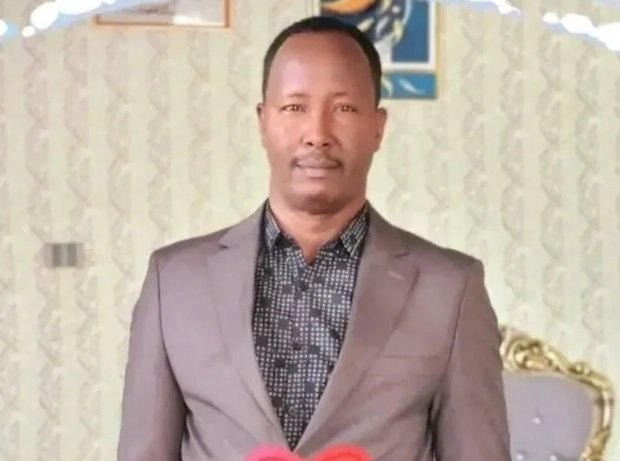
By: Mohammed Hassen Mohamed (Xareed)
A Turning Point Disguised as a Simple Refusal
When General Abdel Fattah al-Burhan declined the latest truce proposal in Sudan’s devastating conflict, many observers saw another missed opportunity for peace. Yet beneath the surface lies a far more complex decision—one rooted in political survival, military calculus, regional balancing, and the hidden infrastructures of Sudan’s international relations. Burhan’s rejection was not a spontaneous act of stubbornness, nor was it simply a refusal to negotiate. It was a strategic statement crafted to preserve power, protect institutional legitimacy, and resist external pressures that he perceives as threats to Sudan’s sovereignty. His refusal marked a defining moment in the war, revealing the deeper motives and fears shaping Sudan’s future.
The Legitimacy Question: Why Burhan Refused to Share the Stage
No factor influenced Burhan’s decision more than the question of legitimacy. Since the conflict erupted, the Sudanese Armed Forces under his leadership have positioned themselves as the sole guardians of the state. The moment Burhan accepts a ceasefire jointly with the Rapid Support Forces, he risks elevating the RSF into a co-equal authority. Such an equivalence threatens the SAF’s historic dominance, which has stood at the heart of Sudanese politics for decades.
A truce would have required shared responsibility for the future of the state, shared negotiating platforms, and shared international recognition. Burhan views all of these outcomes as unacceptable. To him, the RSF is not a political force but a rebellion. Any agreement that places them at the negotiation table as equal partners would undermine the SAF’s institutional heritage and distort Sudan’s long-standing civil-military hierarchy. This fear of “imposed parity” lies at the center of his rejection.
The Battlefield Reality: Why Timing Made the Truce Unpalatable
Wars are not only fought with weapons; they are fought through timing. Burhan’s refusal becomes clearer when read through the lens of military strategy. The SAF has been attempting to regain strategic territory, strengthen its supply lines, and stabilize its command structure. Accepting a truce during a moment of tactical insecurity would have frozen the frontlines in favor of the RSF, which had gained advantages in certain urban and peripheral areas.
For the SAF, a ceasefire would have provided the RSF with time to regroup, rearm, negotiate new foreign support, and consolidate territorial control. To Burhan, halting the war prematurely is equivalent to ceding the battlefield not by defeat but by diplomatic entrapment. In his view, military momentum must be regained before any serious negotiation can begin. The truce proposal arrived at a moment when the SAF felt the dynamics had not yet shifted in its favor—and thus the proposal was deemed strategically unacceptable.
The Regional Chessboard: Hidden Diplomatic Pressures and Competing Agendas
Sudan’s conflict is woven into a wider regional contest for influence over the Red Sea, Nile basin, and African-Arab security corridors. Burhan’s decision reflects his deep awareness of this geopolitical landscape. The truce was backed by international actors whose motives, in his eyes, extend beyond humanitarian concerns. Gulf states, African neighbors, Western governments, and strategic rivals have all sought to shape the outcome of Sudan’s war, each aligning with different factions.
Burhan perceives some proposals as tools for outside powers to impose a political formula that either strengthens their preferred actors or weakens Sudan’s long-term sovereignty. The fear of external manipulation is central to his rejection. Behind closed doors, Sudanese military leadership has repeatedly warned against “internationally engineered solutions” that could reshape Sudan in accordance with regional interests—particularly concerning control of ports, gold resources, military restructuring, and future political alliances.
By rejecting the truce, Burhan signaled resistance to what he views as foreign overreach. His message was clear: Sudan’s political negotiations must begin on Sudanese terms, not on frameworks designed in foreign capitals.
Internal Power Dynamics: The Burden of Leading a Fractured State
Within Sudan, no leader—military or civilian—governs without navigating layers of internal power. Burhan’s authority depends heavily on maintaining unified support within the SAF command, tribal networks, political elites, and administrative structures across the regions. Agreeing to a ceasefire too early could project weakness to his supporters, fueling doubts about his leadership and inspiring alternative power centers within the military hierarchy.
Sudan’s political arena has historically been a place where leaders fall not because of battlefield defeats but because of perceptions of hesitation, softness, or accommodation. Burhan is acutely aware of this pattern. His refusal thus becomes a method of protecting his internal standing, demonstrating strength at a moment when internal fracture would risk political collapse.
Fear of Fragmentation: The Long-term Threat Beneath the Ceasefire
At the heart of Burhan’s calculation lies a deeper anxiety: that Sudan could gradually slide toward fragmentation. Accepting a truce with lines of control frozen in place would grant the RSF de facto administrative authority over large swathes of territory. Once this occurs, external actors may formalize these areas through political mediation, thereby institutionalizing division. Burhan refuses to accept a political architecture that resembles Libya’s fractured landscape or South Sudan’s pre-independence territorial division.
To him, refusing the truce is a defense against the long-term partition of Sudan. The prospect of a divided Sudan—politically, militarily, and economically—is a red line he cannot afford to cross.
Defiance as Diplomacy: How Burhan Uses Rejection as Leverage
Burhan’s decision also carries a diplomatic message. Defying international pressure positions him as a leader unwilling to be dictated to, strengthening his bargaining power for future negotiations. In geopolitics, resistance can be a strategic bargaining chip. His rejection demonstrates that the SAF will not negotiate out of fear or desperation but will only engage when it controls the political tempo.
This calculated defiance increases the likelihood that future diplomatic efforts toward Sudan will offer terms more favorable to the SAF. It is a way of reshaping the negotiation environment before negotiations properly begin.
Conclusion: A Rejection Rooted in Power, Survival, and the Politics of National Destiny
General Abdel Fattah al-Burhan’s refusal of the truce proposal is far more than a refusal to stop fighting. It is a decision shaped by a convergence of factors—military timing, fears of imposed legitimacy, geopolitical maneuvering, internal political pressures, and concerns about Sudan’s territorial integrity. His rejection reflects not an absence of interest in peace but a strategic insistence on a peace that preserves SAF authority, protects state unity, and resists external manipulation.
In truth, Burhan’s action reveals the deep complexities underlying Sudan’s war. Peace will not emerge from proposals alone. It will require an understanding of these hidden dynamics: the fears of partition, the struggle over legitimacy, the competing foreign agendas, and the fragile internal balance within Sudan’s political and military institutions. Until these forces are addressed, Sudan’s conflict will continue to resist simple diplomatic solutions.
Burhan’s rejection, therefore, stands as a reminder that in Sudan—as in much of geopolitics—ceasefires are not merely about silence on the battlefield. They are about power, perception, survival, and the fight to define the country’s future. Only when these underlying realities are confronted will Sudan find a durable, sovereign, and lasting peace.
Mohamed Hassan Mohamed (Xareed), an MBA graduate of distinguished merit, is a seasoned academic and lecturer whose expertise spans scientific economic management, business information systems, human development, and a range of interdisciplinary domains. His intellectual contributions—marked by a fusion of advanced scholarly inquiry and strategic analysis—primarily explore the intricate dynamics of geo-economics competition and regional conflict across the Horn of Africa. He can be reached at: Xareedmo45@gmail.com
Editor’s Note : Views in the article do not necessarily reflect the views of borkena.com
__
Support Borkena : https://borkena.com/subscribe-borkena/
Join our Telegram Channel : t.me/borkena
Like borkena on Facebook
Borkena Ethiopian News Youtube Channel
To submit Press Release, send submission to info@borkena.com
Add your business to Ethiopian Business Listing / Ethiopian Business Directory
Join the conversation. Follow us on X (Formerly Twitter) @zborkena to get the latest Ethiopian News updates regularly.