
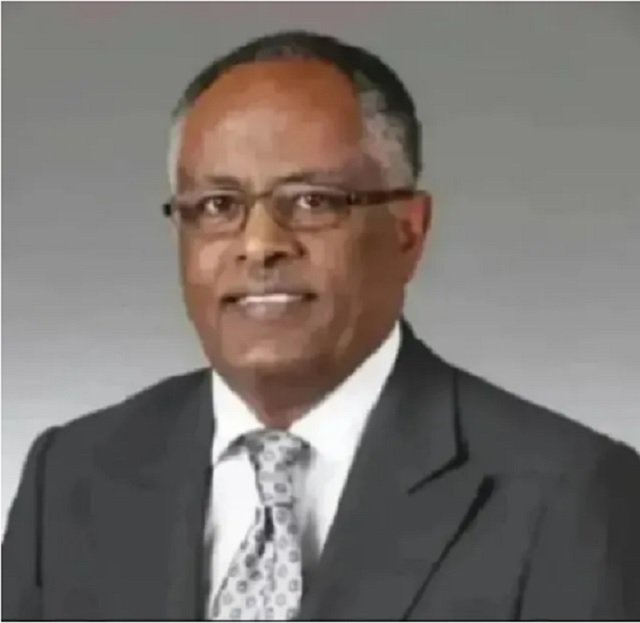
Yonas Biru, PhD
Preface
Before going to the substance of my exposé, I ask for your indulgence to preface it with two important caveats.
First, traditionally, Oromummaa embodies a sociocultural identity cherished by Oromos as their essence. Regrettably, extremist ethno-nationalist intellectuals have co-opted this heritage, using fabricated history and divisive tactics to advance an anti-Ethiopia agenda. I critique this extremist version, not the broader Oromo identity. I am not alone in distinguishing cultural Oromummaa from political Oromummaa. In 2021, Abba Gadaa Boru Guyyo of Karayu publicly stated: “Gadaa is nagaa (peace). Oromummaa today is war. They stole our name for their politics.” The Honorable Bulcha Demeksa, the founder of the Oromo Federalist Democratic Movement and former World Bank Board member, added: “Oromummaa is not Oromo. It is a party ideology wearing cultural clothes.”
Second, to inoculate the article against Oromummaa’s signature defense of labeling its critics as “Oromo-phobic nafxanya,” I have limited my references to the following: Ethno-nationalist Oromos (Asafa Jalata, Mohammed Hassen, Gemechu Megersa and Jawar Mohammed), founders of Oromo political parties (Bulcha Demeksa and Lencho Batti), the high priest of Gadaa studies (Asmarom Legesse), and European authors who are praised and widely cited by the Oromummaa establishment (P.T.W. Baxter and Marco Bassi).
I. Oromummaa’s Narrative is a Lie
After thirty years, an institutionalized lie hardens into history. After fifty years, it turns into a sacred article of faith with cult-like fervor. This epitomizes Oromummaa’s trajectory.
Ambassador Lencho Batti, a founding member and former Deputy Secretary General of the Oromo Liberation Front (OLF), did not mince words when he said in a televised speech: “Most of the Oromo victimhood narrative was purposefully concocted to deconstruct and weaken the Ethiopian power status quo so that Oromo can get a foothold on central power.”
The ideology operates through a three-pronged mythology. The first myth romanticizes the Gadaa tradition as a sanctified “egalitarian democracy” anchored in safuu (moral order and accountability) and nagaa (peace and reconciliation).
The second myth whitewashes or utterly denies atrocities committed during Gadaa military expansion, including slave raids and trades and mass murders and cultural erasure of over two dozen tribal communities.
The third mythology vilifies Ethiopia as an evil empire replete with a “genocidal and racist” history of colonizing the Oromo nation and portrays Oromos as eternal victims.
The purpose of this article is to lay bare and repudiate Oromummaa’s political ideology, whose ecocentric core and extremist ecosystem have defined and framed Ethiopia’s political space as a battleground between victims (Oromos) and victimizers (Ethiopian leaders).
I.1. A Myth of Pure Gadaa Democracy
The Gadaa system is anchored on two foundational pillars – its democratic features and its violent invasions of non-Oromo communities, both of which operated on overlapping eight-year cycles.
The celebrated democratic features included: a system of checks and balances, power-sharing mechanisms and rotational leadership transitions that occurred peacefully every eight years, popular participation in public decision-making grounded in consensus-building, and moral and legal codes of safuu and nagaa that served as a mechanism for enforcing ethical conduct, building social cohesion, and expressing core Oromo cultural values.
The romanticized narrative clouds the truth and hides Gadaa’s darker foundations. The saying “Salgan Borana, sagaltamman Garba” underscores a two-class society classified as “nine Borana” (pure Oromos) and “ninety Gabbaro,” representing the majority of assimilated Oromos who were relegated to second-class citizenship. The concepts of Safuu and nagaa were segregated values, reserved luxuries only for pure Oromos. For Gabbaros, the Gadaa system was at best the source of their subjugation as tribute-paying subordinates, or at worst the source of their institutionalized slavery.
I.2. Amnesia of Oromo Atrocities
In parallel to a peaceful power transfer, the eight-year cycle included ritualized Buttaa ceremonies involving Buttaa wars that must be waged by the incoming governing class. This eight-year cycle of wars served three purposes.
First and foremost was to demonstrate the strength, courage, capability, and brutality of the incoming leadership class. This involved killing enemies and collecting trophies, such as severed genitals (phallic symbols), which were displayed as proof of manhood. This is documented in Asmarom Legesse’s “Gada: Three Approaches to the Study of African Society” (pages 89-90) and P.T.W. Baxter’s “Oromo Blessings and Greetings” in the Journal of the International Oromo Studies Association, Vol. 1, No. 2.
In The Oromo of Ethiopia, 1500-1850, Mohammed Hassen succinctly documented the excesses of Oromo invasion, stating: “The Oromo warrior classes terrorized the populace. The vanquished people were subjected to slavery and servitude… People who had earlier submitted with little or no resistance found that they were no longer equal members of a clan within which they were incorporated, but slaves who were used as gifts and commodities for sale.”
The second purpose of the Buttaa wars was economic pillage and plunder. Mohammed Hassen described this succinctly in The Oromo of Ethiopia: A History 1570-1860: “When new areas were attacked, the men were killed, and animals were captured… Once the newly conquered areas were turned into safe bases coupled with the increase of animal population, extra hands were needed for herding the cattle, producing grain, and contributing fighting men. Enslaving the vanquished people was an economic as well as military necessity.”
The third purpose was geographic expansion. At the beginning of Gadaa military expansion, the Oromo people were largely concentrated in the southern highlands and plains. By the end of the expansion period, Oromo communities were dominant across a vast swath of territory, including parts of Wello and Gojam on the northern front and northern Kenya on the southern front.
This duality of the Gadaa democratic system and brutal invasions was not a contradiction but a core and integrated feature of the system, designed to ensure both internal order and peace for pure Oromos and external strength to subjugate others.
I.3. The Demonic Ethiopia: A Myth of Eternal Colonization
The third mythical pillar in Oromummaa’s narrative is the construction of Ethiopia as an ever-present oppressor. Jalata frames Menelik as a uniquely genocidal tyrant who murdered 5 million Oromos, which he claimed represented 50% of the Oromo population at the time. This was an utter fabrication. During Menelik’s reign, the estimate for the total population of Ethiopian was 10 to 12 million. This puts the total Oromo population at 3 to 4 million.
Using such fabricated accusations, Jalata expressed deference to Italian colonialism over Menelik’s expansionary invasion. In Oromia and Ethiopia: State Formation and Ethnonational Conflict 1868–1992, he wrote: “The Italians attempted to win the Oromo to their side by abolishing slavery and the nafxanya-gabbar system, … but all these were eliminated when Ethiopian colonialism was restored.”
I.4. The Strategy to Shield Oromummaa’s Lies: Fusing Culture, Identity, and Politics
Oromummaa uses two strategies to advance its agenda and silence its critics. First is retrofitting Ethiopian history to fit Oromummaa’s ideological straitjacket. Second is fusing its political ideology with Oromo identity and culture.
Jalata declares: “It is practically impossible to dichotomize Oromummaa because it includes Oromo culture, politics, ideology, and philosophy… Oromummaa is the totality of Oromo life and is here to stay.” He goes on to declare “attacking Oromummaa is obliterating Oromo history, culture, and identity.” His venomous attack is reserved for Oromos who reject his mythology. He accuses them of being “haters of the Oromo history, culture, institutions” and revokes their Oromo heritage, labeling them “former Oromos.”
His ideology is embraced lock, stock and barrel by the young generation but rejected by the older generation. Impressionable younger Oromos, shaped by decades of ethno-nationalist indoctrination, increasingly define their identity through Oromummaa. Jawar Mohammed’s assertion that he prioritizes “Oromoness” over religion and nationality is a case in point.
I.5. Oromummaa is an Agent of Violence
Lies are not the only tools in the Oromummaa political arsenal. Violence perpetrated by the Oromo Liberation Army (OLA) is its nuclear option.
In The Present Phase of the Oromo National Movement, Jalata champions the OLA, stating: “every Oromo has a moral and national obligation to support the Oromo Liberation Army (OLA) financially, ideologically, and intellectually. ” In The Path to Freedom, he stresses: “We must double our support for the OLA that is engaging in implementing the Oromummaa mission.”
Here are some international headlines about the OLA that Jalata praises and promotes as an integral part of Oromummaa. “The horrific killings of 400 in Tole, allegedly at the hands of the OLA, reveal its perpetrators’ utter disregard for human life” (Amnesty International, July 21, 2022). “OLA has been engaging in kidnapping activity, with 20 reported incidents claimed by the group in Oromia in 2022. Kidnap ransoms have helped to raise financial resources to fund the OLA.” (SRM, April 13, 2023). “As many as 320 dead in Ethiopia gun attack, witnesses say victims of massacre in country’s western Oromia region were ethnic Amharas” (The Guardian, June 20, 2022). “At least 54 killed [by OLA] in Ethiopia massacre” (Amnesty International, November 2, 2020).
II. Gadaa is Part Apartheid
Apartheid was a 20th-century racial ideology designed to maintain white supremacy and relegate the Black population to secondary citizenship. Gadaa, by contrast, was a 16th-century genealogical and ritual system anchored in lineage purity, ritual status, and inherited hierarchy. Despite operating in fundamentally different eras, with distinct historical, cultural, and racial foundations, there is an unavoidable parallel between their structural dependence on a subjugated and segregated underclass to sustain their economic and social hierarchies.
The comparison is based on the Borana chapter of Gadaa, which was the cradle and pinnacle of the Gadaa establishment, where the system’s core governance principles, sacred rituals, and legislative practices were preserved and transmitted across regions and generations.
The apartheid system was democratic to White South Africans who constituted 13 to 15% of the total population, but oppressive to Black South Americans. Similarly, the concepts of Safuu and nagaa in the Gada system were sacred luxuries reserved to pure Oromos. Gabbaros were oppressed and bought and sold like cattle.
II.1. Core Pillars of Apartheid
Apartheid was built on interlocking laws designed to secure white supremacy including:
• The Group Areas Act: sanctioned spatial segregation, dividing residential areas for whites and Blacks.
• The Population Registration Act: institutionalized dual citizenship and relegated Black people to permanent second-class status.
• The Native Administration Act: established a racially separate and inferior judicial system for Black South Africans while preserving the white Supreme Court as the ultimate authority.
• The Natives Land Act: entrenched economic dominance by limiting Black landholding and turning the majority into a landless servant and laborer class—a law often described as the “original sin” of South African racial rule.
• The Prohibition of Mixed Marriages Act: prohibited interracial marriage to preserve the purity of the dominant racial group.
II.2. Structural Parallels in the Borana Gadaa System and Apartheid
“Sagal Booranaa, sagalonta Gabbaro”
The preponderance of evidence from primary ethnographers affirms that the principle “Sagal Booranaa, sagalonta Gabbaro” (Nine Borana, Ninety Gabbaro) institutionalized social and territorial separation. The Borana constituted the “pure” Oromo lineages with full ritual and political privileges, while the Gabbaro (conquered peoples absorbed into the Oromo tribal polity) served as tribute-paying subordinates.
Legesse and Bassi, two of the most respected authorities on Gadaa, confirm that Gabbaro groups were systematically segregated into separate settlements, regions, or territorially distinct quarters. This spatial separation was not incidental—it was foundational. In effect, it constituted a system of internal colonialism, where assimilated populations remained politically and spatially segregated.
Legesse writes: “The Borana proper control the central territories and the sovereign political institutions… The Gabbaro are attached to the Borana and are given lands to occupy, but these lands are under the ultimate sovereignty of the Borana councils. The Gabbaro territories are, in a sense, peripheral provinces of the Borana state.”
Bassi echoes this in Decisions in the Shade: “Gabbaro groups live in their own distinct settlements, but their rights to land and their political life are mediated through the authority of the dominant Borana lineage of that aanaa. The territorial integration is thus also a structure of political subordination.”
Second-Class Citizenship and Exclusion from Sovereign Institutions
Just as apartheid formally relegated Black South Africans to inferior citizenship, the Borana system created a two-tier political order. The Yaa’a Gabbaro (assembly of the Gabbaro) managed local matters but was structurally barred from participating in sovereign Gada institutions.
Legesse notes: “The institution of the Yaa’a Gabbaro… allows local self-government but prevents them from participating in the sovereign councils such as the Gumi.”
Bassi reinforces this: “The power to declare nagaa (highest peace) and adjudicate serious crimes remains exclusively Borana. The jurisdictional hierarchy is the bedrock of Borana political control.”
This exclusion from the Gumi and related sovereign councils was not incidental—it was the mechanism that codified second-class political status.
Economic Subordination and Tribute Obligations
As apartheid entrenched economic dependency, Gada system institutionalized a tribute economy.
Legesse writes: “The term gabbaro itself means ‘tribute-payers,’ and their primary role in relation to the Borana is an economic one… This patron-client relationship is territorially organized, making the assessment and collection of tribute systematic and efficient.”
Bassi elaborates: “A defined Borana lineage knows precisely which Gabbaro settlements fall under its jurisdiction and from whom to expect tribute. The flow of goods and services… is a fundamental economic pillar of the entire system.”
Economic extraction was thus built into the territorial and lineage architecture of Gadaa.
Marriage Segregation and Genealogical Purity
The final structural parallel lies in the regulation of marriage and lineage purity. Apartheid’s prohibition of mixed marriages sought to preserve racial hierarchy; the Borana system produced a comparable outcome through lineage rules.
Legesse notes: “In cases of intermarriage between a Borana man and a Gabbaro woman, the children traditionally take the status of the mother. This rule effectively prevents the dilution of Borana genealogical status… Separate settlements minimize the frequency of such unions.”
Gemechu Megersa and Assefa Tolera reinforce this: “Marriages are arranged within clan boundaries to preserve the integrity of lineages… offspring are affiliated with the maternal line to protect the ‘pure’ clan’s ritual privileges. Spatial separation further limits these unions.”
Marriage rules therefore operated as gatekeeping mechanisms for genealogical purity, structurally analogous to apartheid’s racial boundary laws.
The structural parallels between apartheid and the classic Borana Gadaa system are real and striking. These parallels must, however, be appropriately qualified. Apartheid was a modern, racial, statutory system deliberately designed to be rigid and permanent, with no legal pathway out of Blackness.
In contrast, selected Gabaro lineages could, after two to four generations of loyalty and tribute (roughly 80–160 years), be adopted into full Borana status. Spatial separation was also far less absolute than under Apartheid’s Group Areas Act.
These differences in moral character, ideological foundation, historical function, and degree of rigidity are notable. Yet they did not erase the central historical fact: for several centuries, the overwhelming majority of Gabbaro lived and died as tribute-paying subordinates excluded from Gumi Gayo. The slow and highly selective pace of assimilation did nothing to undermine the structural segregation the Gabbaro community endured.
The comparison between Gada and apartheid is, therefore, legitimate when offered with these qualifications. What it conclusively and unequivocally exposes is the Oromummaa narrative’s systematic romanticization and distortion of Gadaa as an egalitarian, democratic order.
III. Why Reconciliation Proves Difficult: The Solomon Paradigm
Oromummaa’s subterfuge is to create a political environment where Ethiopia will not see peace until it accepts Oromummaa’s false and radical narratives as the truth and concedes to its maximalist demands. The assumption is that if pushed hard enough, Ethiopians will oblige to save the nation from disintegration.
Jawar Mohammed made this clear in a now-deleted 2019 message: “We will not allow competition within Oromo parties… The Prime Minister cannot tell us or his party what it chooses to do. We will not allow that. If he takes action to undermine our agenda, we will hand him a calendar with Ethiopia’s expiration date.”
In a sort of subversive blackmail, this epitomizes King Solomon’s parable in the Old Testament, where the king was faced with the conundrum of rendering judgment for two women, each claiming to be the mother of a baby in contention. The King exposed the false mother by ordering the disputed baby to be cut in half. The real mother chose to lose her child rather than see it die; the impostor agreed to the killing.
Oromummaa elites play the role of the false mother. They threaten to tear the nation apart unless they are granted hegemonic control, proving through their posture that it is hegemonic power, not the country’s survival, that they value.
IV. Conclusion
A strong rebuke of the Oromummaa ideology in no way undermines the historical marginalization and cultural suppression of the Oromo people. Nor does it minimize the atrocities inflicted on Oromo communities during Menelik’s power consolidation campaigns. What is in contention is the romanticization of the Gadaa system and the portrayal of the Oromo as eternal victims of Ethiopian colonialism, coupled with the reduction of Ethiopia’s entire history to its era of imperial expansion.
The Oromummaa establishment is disinterested in honest dialogue and is, therefore, fundamentally incompatible with a pluralistic nation. Any effort to placate it in the hope of reconciliation is a fool’s play. There is, however, a silver lining in the dark cloud. Some of its leading figures have jumped off the bandwagon. Chief among them is Jawar Mohammed. This was evident in his January 2024 interview with Dereje Haile of Arts TV World. He acknowledged that while tribal politics may be effective for mobilizing dissent, it is entirely unsuitable for democratic governance. Later, in an interview with Moges Teshome of Buffet of Ideas, he stated emphatically: “If Ethiopia is disintegrated, there will be no Oromia…”
The idea of deconstructing Ethiopia to construct Oromia is a self-destructive delusion, not a strategy. This is something Jawar himself now appears to recognize. The Oromo people must choose a different course. This must start with the realization that there is no peace without reconciliation, and no reconciliation can be achieved before establishing the truth.
First and foremost, rejecting the adulteration of Oromo culture and history by the Oromummaa narrative must be the priority of fist order. The Oromo community must reclaim its history and heritage before a meaningful reconciliation process can begin. Nothing short of a total rejection of Oromummaa as a political doctrine will lead the Oromo people and Ethiopians at large out of the existential crisis they now face.
Editor’s Note : Views in the article do not necessarily reflect the views of borkena.com
__
Support Borkena : https://borkena.com/subscribe-borkena/
Join our Telegram Channel : t.me/borkena
Like borkena on Facebook
Borkena Ethiopian News Youtube Channel
To submit Press Release, send submission to info@borkena.com
Add your business to Ethiopian Business Listing / Ethiopian Business Directory
Join the conversation. Follow us on X (Formerly Twitter) @zborkena to get the latest Ethiopian News updates regularly.
Note that the late journalist and writer Tesfaye G/Ab was one of the major contributors to the `Oromo studies association` which is used as a forum for false narrative advancement as known. Irrespective of this, Oromia is the gift of Tigray to the Oromo people and the regional power Tigray will keep its solidarity with them.
One issue I have with this author is that he constantly fails to balance his critique of the Oromo/Oromuma with almost identical trajectory Amhara groups have taken. Both groups have exploited grievances and imagined histories/mythologies to claim or bring back a power structure that gave them the upper-hand at the expense of the rest. I notice the author also relishes provoking even when the action worsens conditions he pretends to address.
The brother is so obsessed with this ‘umma’ thing that he acquired from his buddy Jalata that he can’t stop talking about it. It even pushed him to a point where he lost his own ‘Ness’. He has completely shed himself bare that he is not sure whether he has Amhara-ness in him or not. He forced himself to lose his Amhara-ness or whatever ‘concoction-ness’ he was born with that he does not want to talk about that his probable hero/idol Emperor Tedros was throwing innocent entire families including toddlers, pregnant women and bed ridden elderly into thatched roof huts and burned them alive while they were begging for mercy. He even enjoyed throwing burning embers at the huts himself. Tedros ain’t a Shoshone. The obsessed brother knows very well that Tedros was not an Oromo either. He is so blinded by this ‘ness’ boogeyman that he does not want me nor anyone else to talk about how the infant Menelik sought refuge among Oromos from the bloodthirsty Tedros himself. Don’t start with me talking about what Tedros did to my Barentu Oromos in present day Wallo and my longtime friend’s Amharas in Shewa regions. May be Tedros was a Janjaweed of his time.
‘እጅግ አስደሳች ሠበር ዜና’ :- እነሆ – ዶ/ር ዮናስን ከያዛቸው “የኦሮሙማ ጋኔን” የሚያስለቅቃቸው ፀበል ተገኝቷል!
‘Disclaimer’: I don’t read articles like this with keywords like ‘Oromuma/ፋኖ/ሸኔ…’ They insult ‘my intelligence’! ለለውጥ ያህል እንኳን እንደማመጥ →ምሁር – የመንደር ወረኞች ጋር ወሬ ሲሰልቅ ሲውል – ራሱን መስደብ አይሆንበትም ወይ? በጣም ያሳፍራል!
ፀበሉን ከመስጠቴ በፊት ግን አንድ ጥያቄ አለኝ:- If the ‘Oromuma’ crap is to bundle Abiy/Adanech/etc. with the OLF-IFLO & Co., why did the OLF-IFLO try to assassinate Abiy at his first ever Mesqel Square rally appearance? Would they kill one of their own?
Regardless of what the Oromuma crap is all about, I have never met any Oromo in Gojjam & Gonder [over many years of sojourns there]. Yet, there are over 15 million Amaras living & working in the Oromo Zone: youtu.be/IXBVqbOe9uY?t=2321
NB: In the early 1990s, the head of the OLF-IFLO [where I lived] & her elder daughter were trying to get me killed [at the university I enrolled (in the West)]. If I became the top agenda at their meetings, then, the OLF-IFLO has had No Oromo Agenda at all.
Anyway, I have been wondering why those kind of Anti-Oromo OLF-IFLO ‘Oromos’ never answer Oromo-Bashers like Dr. Yonas & Co. Do they all play for the same team wearing different jerseys? Well, ፀበሉ እነሆ:- youtu.be/gjAQzvYA2CE?t=10