
By Yihenew Ewnetu
Sweden
Introduction
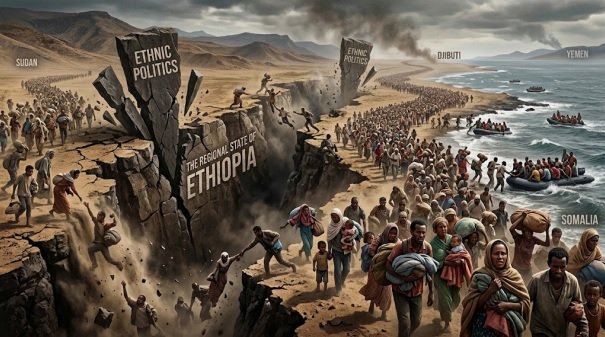
The protracted land disputes and violent conflicts in the Moyale district of southern Ethiopia represent a profound case study in the history, demography, and politics of the Horn of Africa. Specifically, Moyale exemplifies the use of borderland communities (BLCs) as political tools and serves as a stark illustration of the destructive potential of ethnic politics and ethnic federalism. The recurring clashes between the indigenous Borana (Oromo) and Somali communities are not merely localized resource disputes; they are the direct result of a century of foreign colonial disruption and the calculated political maneuvering of successive Ethiopian regimes. The institutionalization of ethnic federalism in 1991 by the Ethiopian People’s Revolutionary Democratic Front (EPRDF) fundamentally transformed these historical tensions into systemic, permanent, zero-sum territorial warfare. This dynamic demonstrates how regimes routinely sacrifice peace and societal coexistence to secure demographic hegemony and political survival (Tache & Oba, 2009, p. 410). Under the current dominant and expansionist posture assumed by the Oromo Prosperity Party (PP) at both the regional and national levels, the conflict has grown significantly more complex and deadly.
Historical Roots of the Moyale Conflict
The foundational roots of the Moyale conflict trace back to the late nineteenth and early twentieth centuries. Historically, the Borana exercised dominant customary control over the vast rangelands spanning southern Ethiopia and northern Kenya. However, toward the end of the nineteenth century, Somali-affiliated groups, notably the Garri, initiated a westward expansion into the easternmost Borana grazing territories (Bassi, 2018, p. 112). Early twentieth-century British-Ethiopian border surveys, such as those conducted by Zaphiro, definitively recognized the Borana as the primary indigenous inhabitants of critical water-rich areas like Qadaduma, documenting that the Garri utilized these resources primarily as clients during seasonal dry periods.
This dynamic shifted dramatically under Italian colonial occupation. The Italian authorities implemented a strict “divide and rule” strategy, systematically favoring Islamic and Somali-speaking groups to undermine the central Ethiopian state (Bassi, 2018, p. 114). Through extensive colonial armament, the Garri were empowered to militarily challenge Borana customary governance, successfully capturing critical eastern Dirre pastoral resources and vital dry-season water points like Eel Deer (Bassi, 2018, p. 115). Following the defeat of the Italians, local Garri leadership actively negotiated with Ethiopian and British transitional authorities to legitimize their retention of these newly acquired territories.
By the 1960s, under Emperor Haile Selassie, these diplomatic frictions deteriorated into full-scale armed proxy conflicts driven by the geopolitical shockwaves of Somali irredentism. Garri factions shifted allegiances to fight under the banner of Somali nationalism, supporting the invading Barre regime’s territorial pushes into the Sidamo and Bale provinces. This culminated in severe regional clashes in 1969, during which Ethiopian Borana militias played a decisive military role in repelling Mogadishu-allied guerrilla advances (Bassi, 2018, p. 117; Tache & Oba, 2009, p. 415).
Subsequently, the Derg regime (1974–1991) introduced an era of authoritarian centralization that temporarily suppressed the overt politicization of ethnic borders. The Derg delineated internal administrative boundaries based strictly on natural geographic features rather than ethno-linguistic identities (Engidashet & Shiferaw, 2023, p. 5). Under this rigid administrative framework, the Moyale district was administered exclusively within the Borana Awraja (Province). This allowed the Borana to maintain relatively uncontested administrative control over their traditional wells and rangelands (Bassi, 2018, p. 118). While localized resource conflicts persisted, they were managed through indigenous mechanisms, preventing escalation into formal territorial disputes until the Derg’s collapse in 1991 (Engidashet & Shiferaw, 2023, p. 6; Tache & Oba, 2009, p. 416).
The EPRDF Era: Transnational Repression and Demographic Engineering (1991–2018)
The fall of the Derg in 1991 unsealed these historical conflicts, coinciding directly with the rise of the Tigray People’s Liberation Front (TPLF) and EPRDF regime led by Meles Zenawi. The political trajectory of Meles and the TPLF was deeply intertwined with the Somali Republic under Siad Barre. During the armed struggle, the TPLF and the Somali state shared a mutual enemy in the Derg. This strategic alignment led the TPLF to openly endorse and benefit from the Somali invasion of Ethiopia during the 1977–1978 Ogaden War (Tareke, 2009, p. 250). In return for this support, Barre’s government provided Meles Zenawi with political favors, including a luxury bungalow in Mogadishu, diplomatic and economic assistance, and a Somali state passport used to travel internationally and build vital networks (Clapham, 1998, p. 7).
Upon assuming state control, Meles leveraged these historical ties to Somali factions to neutralize political opposition. Following the collapse of Siad Barre’s government, massive influxes of displaced populations—including former military officers, security operatives, and active allies of Barre’s previous invasions of Sidamo and Bale—flooded into northern Kenyan refugee camps such as Walda, Sololo, and Isiolo (Oromia Support Group, 1997, p. 8). Meles deployed these armed Somali factions, many personally known to him, as proxy squads to systematically harass, extort, and assassinate Ethiopian dissidents who had sought refuge in Kenya.
The security situation in these camps rapidly deteriorated. Refugees and aid workers faced constant threats from armed bandits (shiftas), local militias, and cross-border incursions (Wagacha & Guiney, 2008, p. 16). A 1993 Human Rights Watch report noted that in January 1993 alone, 53 bandit attacks in Kenyan refugee camps resulted in the deaths of 38 refugees and 9 security personnel (Human Rights Watch, 1993, p. 18). Operating under the military direction of the Southern Command led by Hayelom Araya, EPRDF intelligence operatives functioned as assassination squads in Nairobi and border towns. The Kenyan government largely responded with diplomatic appeasement. This complicity peaked on July 2, 1992, when Ethiopian operatives assassinated the renowned Borana politician and former provincial governor, Jatani (Janani) Ali, in Nairobi. Under intense diplomatic pressure from Meles Zenawi’s government, Kenyan authorities quietly released the apprehended assassins without trial, triggering massive riots by the Ethiopian diaspora in Nairobi (Oromia Support Group, 1997, p. 5). This assassination campaign continued with the killing of Afewerki Asegid, a former official from Tigray province, within a UNHCR refugee camp in Thika.
The extreme insecurity in camps like Walda and Isiolo forced the UNHCR to relocate refugees to the malaria-infested Kakuma and Dadaab camps (O’Sullivan, 2026, p. 538). Walda camp was officially closed in March 1993 (Wagacha & Guiney, 2008, p. 17). The relocation to Kakuma had severe health implications for Ethiopian refugees, evidenced by a staggering malaria incidence rate of 936 per 1,000 children at the time (World Scientific Public Health Compendium, 2002, p. 54).
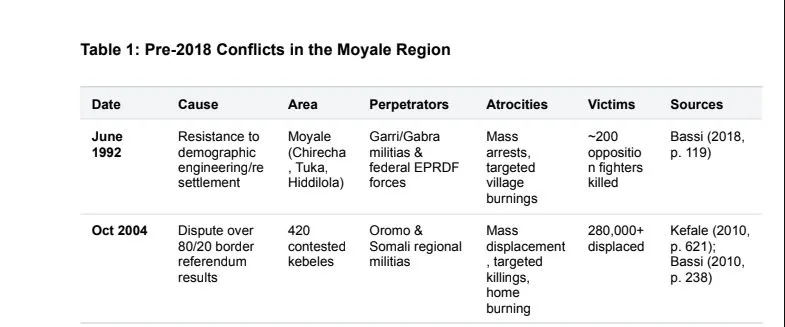
Simultaneously, to secure the southern borderlands from armed political opponents, the Meles administration utilized UNHCR resources to enact a massive campaign of demographic engineering. Between 1991 and 1993, the federal government officially resettled tens of thousands of Somalis from Kenyan camps directly into the contested Moyale district. This included transferring 44,294 people from the Walda refugee camp alongside an additional 35,000 Garri individuals registered at the Banissa camp (UNHCR, 1992, pp. 12-15; Bassi, 2018, p. 119). Borana leaders vehemently protested, demonstrating that these resettled populations were effectively Somali nationals or political operatives tied to the fallen Siad Barre regime with no prior history of residence, land ownership, or property in the Moyale area (Bassi, 2018, p. 119; Oromia Support Group, 1997, p. 8). Through this calculated political maneuver, the regime successfully grafted a heavily armed, loyalist demographic into southern Ethiopia, deliberately diluting the political dominance of the indigenous Borana community who had historically defended the southern part of the country. The state deliberately traded local stability for central control, proving that in the calculus of ethnic politics, peaceful coexistence is entirely expendable if it secures a geopolitical advantage (Tache & Oba, 2009, p. 418).
This southern demographic engineering mirrored parallel TPLF strategies in the Amhara territories of Wolkait (Welkait) and Humera. In northern Ethiopia, the TPLF systematically weaponized refugee repatriation and demobilization programs to alter ethnic compositions and secure political hegemony. Between 1985 and 1987, the Relief Society of Tigray (REST) coordinated the return of an estimated 154,000 to 170,000 Tigrayan refugees from Sudan (Hendrie, 1996, p. 35). Instead of returning them to their arid regions of origin in central Tigray, the TPLF redirected them into the fertile, newly annexed Amhara territories of Wolkait, Humera, Dansha, and Tselemt (World Bank, 1993, p. 42). This shift was augmented by relocating 25,000 to 30,000 demobilized combatants and over 100,000 internal settlers, alongside 15,000 to 20,000 Tigrayans previously settled in the southwest (Young, 1997, p. 145). This engineered influx, coupled with the violent displacement of the indigenous Amhara populace, achieved a rapid demographic “tipping point.” By the 1994 census, the population of Humera, Wolkait, and Tsegede was recorded as 92.2% Tigrayan and a mere 6.3% Amhara (Central Statistical Agency, 1996, p. 12; Kassaw & Veneranda, 2024, Section 1).
In both the north and the south, the EPRDF successfully co-opted international humanitarian frameworks to subsidize its ethno-political gerrymandering. The UNHCR served as the primary logistical and financial vehicle through its Special Emergency Programmes, while the World Bank provided critical post-civil war development funds meant for integrating redundant ex-combatants into civilian life (World Bank, 1993, p. 42). Instead, the TPLF utilized these international resources to finance massive settler-colonial projects, embedding ethnic federalism through federally funded demographic erasure.
Administrative Demarcation and the 2004 Referendum
It is true that there have always been Somali communities adjacent to the Borana Oromos. The fact that tens of thousands of Somalis were resettled in the area doesn’t mean that they were the only Somalis in the area. However the massive resettlements of the 1990s ensured that the geographic area of Moyale could no longer be governed by a single, unified local administration. The TPLF/EPRDF did not intend for its resettlement to create political balance, but rather to construct permanent conflict as a built-in feature of the ethnic federal system, ultimately making the Somali Regional State inherit the problem created by the demographic engineering project.
Under the ethnic federalism system, the town and its surrounding pastoral lands were violently bifurcated: the Oromia Regional State administers its own Moyale district (woreda) under the Borena Zone, while the Somali Regional State administers a parallel Moyale district under the Liben (now Dawa) Zone.
In October 2004, the federal government conducted a highly controversial referendum across the 1,400-kilometer Oromia-Somali border. Officially, the results overwhelmingly favored Oromia, with the National Election Board of Ethiopia (NEBE) awarding the Oromia Regional State administrative control of roughly 80% of the contested kebeles, leaving 20% to the Somali Regional State (Kefale, 2010, p. 621). The Somali regional government and local clan elders outright rejected the results, accusing the Oromo People’s Democratic Organization (OPDO) of utilizing federal military backing, voter intimidation, and prior demographic manipulation to secure the outcome (Bassi, 2010, p. 238). Because the results were fiercely contested, local militias refused to vacate territories, rendering the referendum a paper exercise and transforming traditional resource competition into zero-sum border warfare (Tache & Oba, 2009, p. 420).
The long-term impact of the demographic engineering was mirrored in the 2007 census. Projecting the baseline resettled population using Ethiopia’s national average population growth rate of 2.6%, the 80,000 resettled Somalis would grow to approximately 118,158 individuals over a 15-year period. This combined impact of initial mass resettlement and subsequent natural population growth was ultimately
codified in the 2007 Census. The census recorded a massive population disparity reflecting this demographic shift: 254,137 residents in the Somali-administered Moyale district compared to only 31,162 in the adjacent Oromia-administered district (Central Statistical Agency of Ethiopia, 2010).
The Escalation of Violence Under the Oromo-PP (Post-2018)
Following the political transition in 2018, the Oromo political elite—led by Prime Minister Abiy Ahmed—assumed an expansionist posture of absolute dominance at both national and regional levels. This consolidation of power by the Oromo Prosperity Party (PP) structurally emboldened Oromo nationalists, regional paramilitaries, and local vigilante groups to violently reclaim administrative and territorial hegemony in Moyale (Engidashet & Shiferaw, 2023, p. 12).
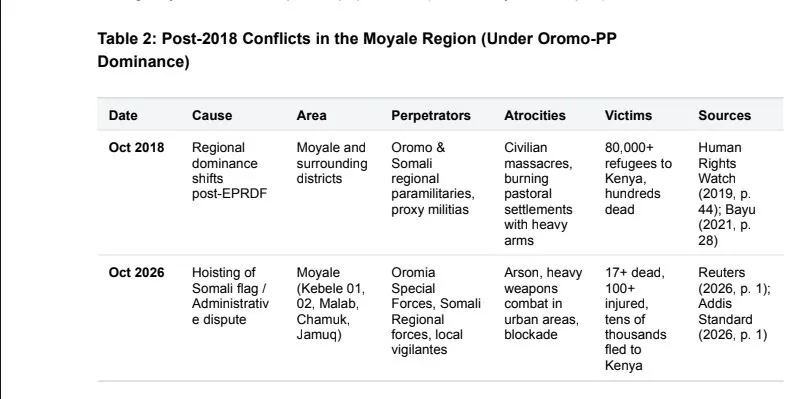
Prior to 2018, violence in the area was largely characterized by sporadic, albeit deadly, clashes between local militias utilizing light arms. However, the Oromo-PP’s consolidation of power and expansionist posture militarized the dispute to an unprecedented level. The conflict transformed into state-sponsored urban warfare, drawing in heavily armed Oromo regional paramilitaries acting as ethnic armies. The introduction of heavy weaponry, coordinated military offensives, and the full involvement of the Oromia regional state apparatuses meant that local disputes over flags or municipal boundaries could immediately trigger massive civilian casualties and systematic arson. The silence of the Oromo-led PP government regarding the conflict, and its tacit approval of the heavy-handedness of Oromo paramilitaries, continues to be the source of death and displacement for tens of thousands of residents. Consequently, citizens have lost hope and can no longer rely on the federal state for protection (Human Rights Watch, 2019, p. 45; Bayu, 2021, p. 28).
The catastrophic escalation in October 2026 perfectly illustrates this dynamic. The immediate catalyst was an administrative and territorial dispute triggered by the opening of a new administrative office and the hoisting of a Somali Regional State flag in a contested area on October 18, 2026 (Borkena, 2026, p. 1). The raising of the flag sparked immediate resistance and protests by Oromo groups, resulting in the fatal shooting of a 13-year-old girl (Horn of Africa News, 2026, p. 1). While local elders and security representatives temporarily negotiated the lowering of the flag, counter-protests by Somali residents in Kebele 02 rapidly deteriorated into full-scale urban combat by October 21 (Reuters, 2026, p. 1).
Rather than acting as a neutral arbiter, the state apparatus under the Oromo-PP routinely utilized regional and local forces to project muscle. Heavily armed Oromia regional special forces, operating alongside local Oromo vigilante militias, launched heavy offensives into Somali-inhabited districts. They engaged in intense, sustained gun battles with Somali regional security forces and local Somali combatants who were fiercely defending the demographic and administrative footholds they had secured through federal intervention in the 1990s (Capital FM, 2026, p. 1).
The atrocities and socio-economic devastation from these politically engineered clashes have been severe. According to hospital officials cited by international media, the late October 2026 fighting left at least nine people dead and over 30 injured by heavy weapons (Reuters, 2026, p. 1). The violence featured the targeted torching of buildings, the suspension of critical cross-border transport to Nairobi and Addis Ababa, and the total paralysis of commercial activities. Unable to rely on the Ethiopian state for protection, tens of thousands of civilians—predominantly women and children—were forced to flee across the border into Marsabit County, Kenya, entering through points such as Sessi, Kore, Biashara, Foundation, and Miti (Capital FM, 2026, p. 1). This massive refugee influx prompted immediate Kenyan troop movements and heightened police surveillance along the border to secure Kenyan territory against militia spillover, while the Kenya Red Cross scrambled to provide emergency relief to the displaced populations (Pulse Kenya, 2026, p. 1).
The Politicization of Borders and Permanentization of Conflict
The protracted violence in the Moyale district serves as a tragic and profound case-in-point of how political greed, ethnic politics, and ethnic federalism can fundamentally destroy the organic coexistence of societies. The Ethiopian state’s approach to the southern BLCs illuminates a dark reality: regimes will readily sacrifice the long-term good and security of their citizens to secure their own political survival and demographic hegemony.
The introduction of ethnic federalism by the EPRDF in 1991, later codified in the 1995 Constitution, weaponized these newly engineered demographics. Ethnic federalism inextricably linked land ownership, political representation, regional budgets, and resource access directly to ethnic identity (Kefale, 2010, p. 616). In doing so, the system politicized every local administrative border, transforming fluid, pastoral zones of interaction into rigid, militarized frontiers.
Furthermore, ethnic politics ensures that the central government operates as a partisan entity. It does not matter whether a cunning minority ethnic regime like the TPLF—which ensures its political survival through satellite ethnic organizations—or an ethnocratic dictatorial regime like the Oromo-PP, which claims a majority base, controls the central government. Such governments are inherently partisan to their power base. Under ethnic federalism, demographic dominance equates to the control of resources, political dominance, and state budget allocation. A community could no longer simply share a water well or a grazing tract; it had to claim exclusive, sovereign administrative control over it to exploit it. This structurally incentivized zero-sum territorial ownership criminalized the exploitation of resources by the “other” ethnic group on the wrong side of that line (Engidashet & Shiferaw, 2023, p. 14).
Ultimately, the Moyale conflict illustrates how state-sponsored demographic engineering and ethnic federalism lead to the permanentization of ethnic conflicts. What were once localized, seasonal disputes over water and pasture—manageable through indigenous conflict resolution mechanisms—have mutated into intractable, state-level border wars (Bassi, 2010, p. 235). Today, under the dominance of the Oromo-PP, these disputes are fought not with spears and elders, but with regional special forces, heavy artillery, and state-backed vigilante militias. The concomitant socio-economic devastation of this permanentized conflict is absolute.
Conclusion: The Imperative for Post-Ethnic Governance
The devastation of Moyale—culminating in the heavy artillery warfare, civilian massacres, and mass displacement of October 2026—proves that ethnic politics is incompatible with peace and human security. When a constitution imposes a rigid ethno-linguistic identity onto both geographic regions and individual citizens, it strips society of its natural, pluralistic coexistence. In a system where land and political
rights belong to an ethnic collective rather than to the individual citizen, violent territorial maximalism becomes a structural necessity.
To break the perpetual cycle of violence, the institutional framework that mandates ethnic federalism must be dismantled. The survival of the state and the security of its diverse populations require a paradigm shift toward a civic, rather than ethnic, conception of citizenship. Administrative boundaries must be re-delineated based on geographic, economic, and administrative efficiency, explicitly divorcing land ownership and local governance from ethnic identity. Only by abolishing the constitutional codification of ethnic politics—and prioritizing individual civil rights over collective ethnic hegemonies—can regions like Moyale transition from permanent battlegrounds into zones of shared economic and social prosperity.
References
● Addis Standard. (2026). Report on the October 2026 Moyale conflict escalations. Addis Standard.
● Bassi, M. (2010). The politics of space and the Oromo-Somali border conflict. Journal of Eastern African Studies.
● Bassi, M. (2018). Historical dimensions of the Borana-Garri conflict.
● Bayu, T. (2021). Ethnic conflict and state complicity in post-2018 Ethiopia.
● Borkena. (2026, October). Administrative dispute sparks clashes in Moyale. Borkena News.
● Capital FM. (2026, October). Heavy clashes in Moyale displace thousands into Kenyan territory. Capital FM Kenya.
● Central Statistical Agency. (1996). The 1994 Population and Housing Census of Ethiopia: Results for Tigray Region. Addis Ababa, Ethiopia.
● Central Statistical Agency of Ethiopia. (2010). The 2007 Population and Housing Census of Ethiopia: Statistical Report. Addis Ababa, Ethiopia.
● Clapham, C. (1998). The political economy of the TPLF and the Ethiopian state.
● Engidashet, B., & Shiferaw, Y. (2023). Ethnic federalism and borderland violence in southern Ethiopia.
● Hendrie, B. (1996). The Tigrayan refugee repatriation: Demographic engineering and political consolidation.
● Horn of Africa News. (2026, October). Fatal shooting in Moyale amid flag dispute. Horn of Africa News.
● Human Rights Watch. (1993). Insecurity in Kenyan refugee camps. Human Rights Watch.
● Human Rights Watch. (2019). State-sponsored violence and displacement in Oromia. Human Rights Watch.
● Kassaw, A., & Veneranda, M. (2024). Demographic shifts and territorial claims in Northern Ethiopia.
● Kefale, A. (2010). Federalism and ethnic conflict in Ethiopia: A comparative regional study. African Affairs.
● O’Sullivan, K. (2026). Refugee camp relocations and regional security dynamics. Journal of Refugee Studies.
● Oromia Support Group. (1997). Transnational repression and the assassination of Ethiopian dissidents in Kenya. Oromia Support Group.
● Pulse Kenya. (2026, October). Kenya Red Cross responds to Moyale refugee influx. Pulse Kenya.
● Reuters. (2026, October 21). Gun battles in Ethiopian border town leave several dead, trade paralyzed. Reuters.
● Tache, B., & Oba, G. (2009). Policy-driven conflicts over pastoral resources in southern Ethiopia. Human Ecology.
● Tareke, G. (2009). The Ethiopian Revolution: War in the Horn of Africa. Yale University Press.
● UNHCR. (1992). Special Emergency Programmes and mass repatriation data for southern Ethiopia. United Nations High Commissioner for Refugees.
● Wagacha, J., & Guiney, P. (2008). Security and violence in Kenyan refugee camps.
● World Bank. (1993). Post-civil war development and ex-combatant integration in Ethiopia. World Bank Group.
● World Scientific Public Health Compendium. (2002). Health implications of refugee relocations in East Africa.
● Young, J. (1997). Peasant Revolution in Ethiopia: The Tigray People’s Liberation Front, 1975-1991. Cambridge University Press.