
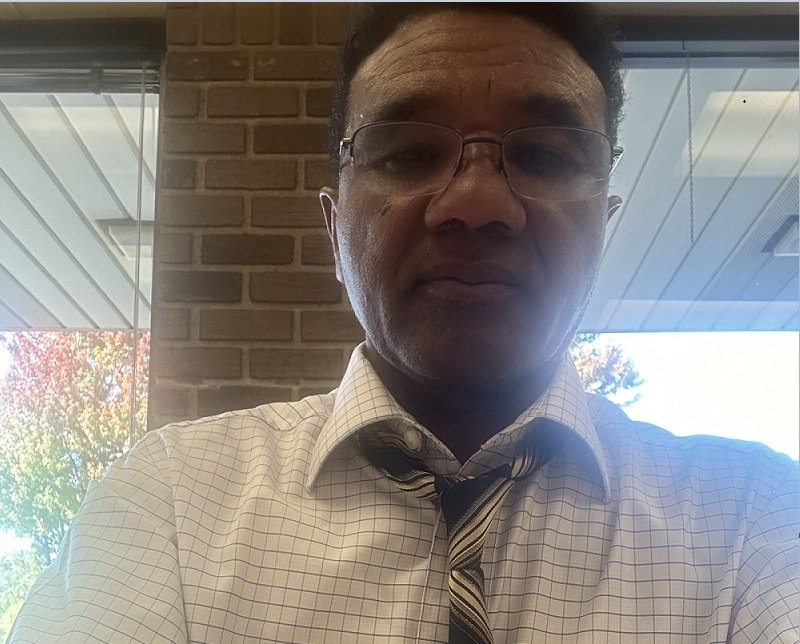
By Bekele Hergo
Why I Am Asking This Painful Question
I love Ethiopia. I respect its history, admire the strength of its people, and take pride in the extraordinary contributions our country has made to human civilization. But loving a country does not mean closing our eyes to its suffering. Sometimes, genuine love requires us to ask difficult questions, especially when innocent people are paying the price for political conflict, injustice, and the abuse of power.
That is why I ask: Why has human dignity become so cheap in Ethiopia?
I do not ask this question because Ethiopian lives are worth less than the lives of people in other countries. I ask it precisely because every Ethiopian life is priceless.
I ask it because too many families have experienced the pain of losing loved ones to violence. I ask it because people have been forced to leave their homes, children have grown up surrounded by fear, and communities have suffered while those entrusted with protecting them have too often failed to provide the security and justice they deserve.
How many mothers must bury their children before we recognize the true cost of violence?
How many families must lose their homes before displacement becomes a national moral emergency?
How many innocent people must suffer before political leaders understand that human life is more important than political power?
And how can we celebrate Ethiopia’s ancient civilization while failing to consistently protect the dignity of people living in our country today?
These questions are not intended to condemn the Ethiopian people. They are a call to examine our political institutions, our national priorities, and our collective responsibility toward one another.
Ethiopia has a remarkable history, but history alone cannot guarantee a just future.
Our country has survived invasions, political upheavals, economic hardships, and devastating conflicts. Yet survival should not be our highest national ambition. We must also build a society where people can live safely, freely, and with dignity.
A nation cannot measure its greatness only by what it achieved centuries ago. It must also be judged by how it treats its people today.
When I say human dignity has become cheap, I am describing the painful gap between the value of human life and the protection that people actually receive.
A human being should never become a political bargaining chip. A civilian’s death should never be dismissed because of ethnicity. A family’s suffering should never become acceptable because those responsible hold political or military power.
This article is not an attack on Ethiopia. It is an appeal to Ethiopia’s conscience.
It is a call for a country where the life of an Amhara farmer matters just as much as the life of an Oromo student; where a Tigrayan child’s safety is valued equally with that of a Somali child; and where an Afar family enjoys the same rights and protections as every other family.
No Ethiopian should have to prove political loyalty to deserve protection.
No community should have to beg for recognition of its humanity.
And no government should expect the respect of its citizens without accepting responsibility for their safety and fundamental rights.
Introduction: Human Dignity Is Not a Gift From Government
Every human being is born with dignity.
Dignity does not come from government officials, political parties, religious institutions, or ethnic identity. It belongs to every person simply because they are human.
A government may recognize and protect human rights, but it does not create the fundamental worth of a human being.
Whether someone is rich or poor, educated or uneducated, politically powerful or powerless, their life deserves equal respect.
Unfortunately, societies sometimes forget this simple truth.
When political power becomes more important than justice, when ethnicity becomes more important than humanity, and when silence becomes easier than confronting injustice, human dignity begins to lose its place in public life.
This is one of the most painful challenges Ethiopia must confront.
Our country is blessed with extraordinary cultural diversity, deep religious traditions, and a proud history of independence. Yet these achievements mean little to a mother whose child has been killed, a farmer driven from his land, or a young person detained unlawfully for expressing an opinion.
What does national greatness mean to someone who cannot sleep peacefully in their own home?
What does freedom mean to someone who fears speaking openly?
And what does justice mean when the powerful appear protected while ordinary people struggle to have their voices heard?
These are questions that every responsible government, political leader, religious institution, and citizen should take seriously.
1. Human Life Must Always Come Before Political Power
The most basic responsibility of the government is to protect human life.
A government exists to serve the people, not the other way around. Political authority should be exercised to promote public safety, protect rights, uphold the law, and create conditions in which citizens can live with dignity.
No political ideology, ethnic ambition, military objective, or struggle for power should ever justify deliberately attacking innocent civilians.
Yet throughout Ethiopia’s recent history, political and armed conflicts have brought enormous suffering to ordinary people.
Families have been separated. Communities have been displaced. Lives and livelihoods have been destroyed. Many people have been left searching for safety, answers, and justice.
The tragedy is that ordinary citizens frequently bear the greatest burden of political decisions over which they have little control.
A farmer wants to cultivate his land.
A mother wants to raise her children safely.
A student wants to attend school and build a future.
A family wants to live peacefully without fearing violence because of its identity or location.
These are not unreasonable demands. They are basic human needs.
Political leaders may disagree about governance, territory, constitutional arrangements, or national identity. Such disagreements must never erase their responsibility to protect civilians.
A mother’s grief does not become less painful because she belongs to a different ethnic community.
A child’s death does not become more acceptable because it occurred in a politically contested region.
No political victory is worth celebrating if it is achieved by unlawfully sacrificing innocent human lives.
The real measure of leadership is not simply the ability to acquire or maintain power. It is the willingness to protect human life, including the lives of people who oppose those in authority.
2. Ethiopia’s Human Rights Crisis Is a National Moral Challenge
Ethiopia has experienced serious human rights challenges, including armed conflict, large-scale displacement, allegations of unlawful killings, arbitrary detention, torture, and restrictions on fundamental freedoms.
Human rights investigations and reports have raised concerns about abuses attributed to different parties in conflicts across the country.
These concerns should not be reduced to arguments about which political group is right or which ethnic community has suffered most.
Every credible allegation of a serious violation deserves careful, impartial investigation.
The suffering of civilians in Tigray matters.
The suffering of civilians in Amhara matters.
The suffering of civilians in Oromia matters.
The suffering of people in Afar, Somali, Benishangul-Gumuz, Gambella, and every other region matters equally.
Human rights are not regional privileges.
They are universal protections.
A government has the legitimate responsibility to maintain public order and protect national security. But that responsibility must be exercised within the law.
Security cannot become an excuse for arbitrary detention, torture, collective punishment, or unlawful attacks on civilians.
Likewise, armed opposition groups have obligations to respect civilian life and comply with applicable humanitarian law.
The question should never be whether the victims belong to our political or ethnic community.
The question should be whether their rights were violated and whether those responsible will be held accountable.
When we defend human rights only for people who resemble us or agree with us, we are no longer defending universal human rights. We are defending selective privilege.
Ethiopia needs a national commitment to human dignity that does not change according to political circumstances.
3. Ethnicity Must Never Become More Important Than Humanity
Ethiopia is home to many ethnic communities, languages, cultures, and religious traditions.
This diversity should be one of our greatest strengths.
Every community deserves the freedom to preserve its identity, practice its traditions, speak its language, and participate fully in national life.
But ethnic identity must never become a weapon used to divide people into categories of greater and lesser human worth.
No person should be treated as guilty simply because they belong to the same ethnic group as a political leader, military commander, or armed organization.
Collective blame is unjust.
Collective punishment is unacceptable.
And hatred directed at an entire community because of the actions of individuals is morally indefensible.
We must learn to separate political responsibility from ethnic identity.
An individual accused of committing a crime should be investigated according to the evidence. An entire community should never be condemned for that individual’s actions.
The pain of an Amhara mother is not different in human value from the pain of an Oromo mother.
The hopes of a Tigrayan child are no less important than those of a Somali child.
An Afar family’s right to security is equal to the right of every other Ethiopian family.
Our differences should enrich our common humanity, not destroy it.
We can celebrate our identities without denying the identities of others.
We can disagree politically without becoming enemies.
And we can defend the rights of our own communities while standing equally firmly against injustice committed against others.
Before we belong to any ethnic group or political organization, we belong to the human family.
Ethiopia belongs to all Ethiopians.
No ethnic group owns the country. No political party owns its people. And no leader has the moral right to place personal authority above the dignity of the population.
4. Without Accountability, Justice Becomes an Empty Promise
Perhaps one of Ethiopia’s greatest challenges is the gap between promises of justice and the actual delivery of accountability.
When people suffer serious abuses, they deserve more than political speeches, expressions of sympathy, or promises that are never fulfilled.
They deserve the truth.
They deserve an impartial investigation.
They deserve access to justice.
And where responsibility is established, they deserve appropriate remedies and measures to prevent further violations.
Accountability is not revenge. It is not an attempt to humiliate political opponents or punish entire communities.
Accountability means that no individual, regardless of political position, military rank, ethnic identity, or personal influence, is above the law.
Government Authority Must Come With Responsibility
Political power carries serious moral and legal obligations. A government that claims the authority to govern must also accept responsibility for protecting the rights and safety of the people.
When credible allegations of unlawful killings, enforced disappearances, torture, arbitrary detention, or attacks on civilians arise, authorities must ensure that those allegations are investigated promptly, independently, and impartially.
It is not enough for institutions simply to deny wrongdoing.Public confidence requires transparent processes, credible evidence, and meaningful opportunities for victims to seek justice.
Government institutions should not be permitted to investigate serious allegations involving their own personnel without appropriate safeguards for independence.
A uniform does not place a person above the law. A political title does not erase legal responsibility. And loyalty to a ruling authority cannot excuse criminal conduct.
The purpose of government power is to protect the public, not to shield those who abuse authority.
Senior Leaders and Military Commanders Must Also Face Scrutiny
Justice becomes meaningless when responsibility is placed only on individuals at the lowest levels while those exercising greater authority are automatically protected.
Where credible evidence exists, investigations must examine the conduct of officials, commanders, and others who may bear legal responsibility.
Under applicable international criminal law, commanders and other superiors may be held responsible for crimes committed by subordinates when the relevant legal requirements are met.
However, responsibility must always be established through evidence, independent proceedings, and due process.
No one should be convicted because of political hostility or public anger.
Equally, no one should escape investigation simply because of political influence or military authority.
A fair justice system follows the evidence wherever it leads.
Victims Need Justice, Not Empty Sympathy
Imagine a mother who has lost her child.
Imagine a family whose home has been destroyed.
Imagine a young person who has survived torture or unlawful detention.
What does justice mean to them?
It means knowing what happened.
It means having their suffering acknowledged.
It means having access to an independent process capable of identifying those responsible.
It means receiving appropriate support, rehabilitation, and reparations where warranted.
And it means being able to live without constant fear that the same abuse will happen again.
Condolences may express compassion, but they cannot replace justice.
A public apology may be meaningful, but it cannot substitute for legal accountability when serious crimes have been committed.
A nation cannot truly heal by asking victims to forget while refusing to confront what happened to them.
Selective Justice Destroys Public Trust
Justice cannot depend on the identity of the victim or the political affiliation of the accused.
If one community’s suffering is taken seriously while another community’s suffering is ignored, people begin to lose confidence in the institutions responsible for protecting them.
If political allies are protected from investigation while opponents face punishment, the justice system risks becoming an instrument of power rather than a safeguard of rights.
That is why impartiality is essential.
Every victim deserves equal consideration.
Every accused person deserves due process.
Every credible allegation deserves appropriate examination.
And every institution must remain subject to the rule of law.
Justice must never be used as a political weapon.
Ethiopia Needs Independent Institutions
Meaningful accountability requires more than individual promises from political leaders.
It requires institutions capable of acting independently, even when investigations involve powerful officials.
Ethiopia needs a judiciary protected from political interference, professional investigative institutions, effective oversight, and reliable safeguards for witnesses, victims, journalists, and human rights defenders.
Investigators must be able to gather evidence without intimidation.
Courts must be able to make decisions based on law rather than political pressure.
Victims must be able to report violations without fear of retaliation.
And the public must have access to credible information about how serious allegations are addressed.
Where domestic mechanisms cannot provide credible and independent accountability, appropriate international assistance and cooperation should be considered in accordance with applicable law.
The purpose should not be to undermine Ethiopia’s sovereignty, but to strengthen the protection of human rights and ensure that serious violations do not go unanswered.
There Can Be No Lasting Peace Without Justice
Peace is more than the absence of gunfire.
A ceasefire may stop immediate violence, but it cannot automatically heal the wounds left behind.
Families who have lost loved ones still need answers.
Displaced people still need safety and opportunities to rebuild their lives.
Survivors still need recognition, support, and justice.
Communities that have experienced violence still need reasons to trust one another and the institutions meant to protect them.
Reconciliation is important, but it cannot be forced upon victims.
Forgiveness is deeply personal. It should never be used as an excuse to avoid legal responsibility.
Peace agreements, political dialogue, truth-seeking, reparations, institutional reform, and lawful accountability should work together.
Peace without justice leaves wounds open. Justice without impartiality creates new grievances. And reconciliation without truth risks becoming another form of silence.
Ethiopia deserves more than temporary political settlements.
It deserves a peace built on dignity, fairness, and respect for human life.
5. The Responsibility of Society: Silence Must Not Become Acceptance
The government bears primary responsibility for protecting rights within its jurisdiction, but society also has an important role in defending human dignity.
Religious leaders, teachers, journalists, intellectuals, community elders, civil society organizations, and ordinary citizens all help shape the values of a nation.
We must ask ourselves difficult questions.
Do we speak against injustice only when the victims belong to our own community?
Do we excuse harmful actions when they are committed by political leaders we support?
Do we share unverified information because it confirms our existing beliefs?
Do we remain silent when people from another ethnic or religious community suffer?
These questions matter because injustice is sustained not only by those who commit violations, but also by institutions and social attitudes that normalize, excuse, or ignore them.
However, opposing injustice does not mean encouraging hatred or violence.
Our response must be grounded in truth, compassion, lawful action, and respect for the rights of others.
Religious leaders should remind communities of the sacred worth of human life.
Educators should teach young people that disagreement does not justify dehumanization.
Journalists should report responsibly and challenge misinformation.
Political leaders should reject inflammatory language and collective blame.
Citizens should resist the temptation to turn every tragedy into an ethnic or political competition.
We must develop the moral courage to say that injustice is wrong, even when acknowledging it makes us uncomfortable.
The humanity of another person does not disappear because that person disagrees with us.
6. Building an Ethiopia Where Human Dignity Comes First
Criticizing injustice is necessary, but criticism alone cannot build a better country.
Ethiopia needs practical commitments that place the protection of human life at the center of governance.
Protect Civilians Without Discrimination
Every party involved in armed conflict must respect applicable laws protecting civilians.
Civilian communities must not be deliberately targeted, and humanitarian assistance must be allowed to reach people in need in accordance with applicable law.
The protection of children, women, older people, displaced families, and other vulnerable populations must remain a priority.
Establish Credible and Independent Accountability
Serious allegations of human rights violations must be investigated through fair, transparent, and independent procedures.
Where evidence establishes criminal responsibility, appropriate legal action must follow.
Investigations must not be shaped by political loyalty or ethnic identity.
Guarantee Equal Citizenship
Every Ethiopian should enjoy equal protection under the law.
A person’s rights must not depend on where they were born, what language they speak, which religion they practice, or which political party they support.
Equal citizenship must be a lived reality, not merely a constitutional promise.
Protect Freedom of Expression
Citizens must be able to express political opinions peacefully without fear of unlawful punishment.
Journalists, human rights defenders, civil society organizations, and peaceful critics play essential roles in holding institutions accountable.
A confident government should not fear lawful criticism.
It should recognize criticism as an opportunity to improve governance.
Restore the Rights and Dignity of Victims
People affected by violence and displacement need meaningful assistance.
This includes access to medical care, psychological support, education, livelihoods, documentation, appropriate reparations, and opportunities for safe, voluntary, and dignified return when conditions permit.
Editor’s Note: Views in the article do not necessarily reflect the views of borkena.com
__
Join our Telegram Channel: t.me/borkena
Like borkena on Facebook
To submit a press release, send the submission to info@borkena.com
Add your business to Ethiopian Business Listing / Ethiopian Business Directory
Join the conversation. Follow us on X (formerly Twitter) @zborkena to get the latest Ethiopian news updates regularly
…