
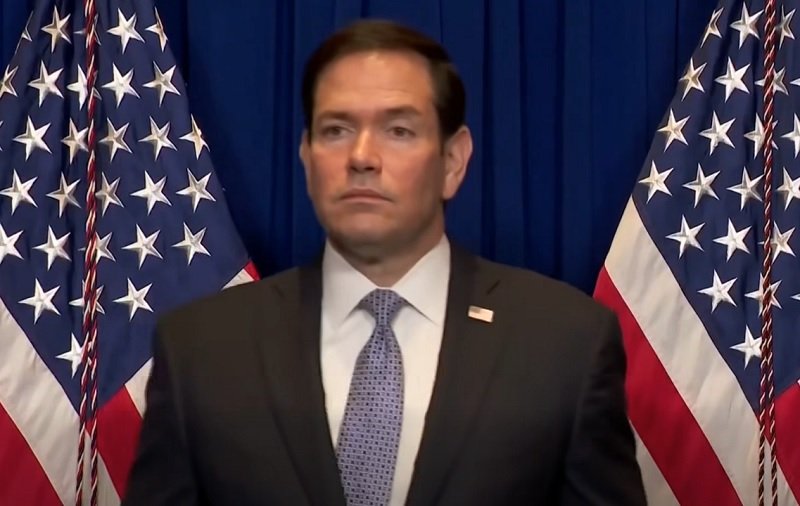
Recently, there have been significant developments in Horn of Africa region which point to renewed American retrenchment under US Secretary of State Marco Rubio, as well as an increased China-India rivalry for Somalia and the new official policy of Turkish neutrality in the upcoming 2027 Somali Presidential Election, pitting the incumbent President Hassan Sheikh Mahmoud against the resurgent former President Mohamed Abdullahi Farmaajo .
Below is an analysis of the primary factors and pressures influencing the United States, China, India and Turkiye’s recent political calculations in the Horn of Africa, as well as the main implications for the local players involved, chiefly Prime Minister Abiy Ahmed Ali’s attempt to reconcile and win back the Amhara opposition in Ethiopia; the active attempts of the long-serving Eritrean ruler President Isaias Afwerki to capitalize on the removal of American economic sanctions; and the prospects of the Somali President Hassan Sheikh Mahmoud’s odds of fending off the inevitable re-election of former President Mohamed Abdillahi Farmaajo in the upcoming 2027 Somalia Presidential Election.
Marco Rubio’s Ethiopia-Eritrea De-escalation
In an unprecedented move in October 2026, US Secretary of State Marco Rubio, a veteran insider of the Horn of Africa from his time in the United States Senate Foreign Relations Committee ( 2011-2025) spoke by phone with both Ethiopian Prime Minister Abiy Ahmed and Eritrean President Isaias Afwerki demanding an immediate de-escalation and pull back of forces from Zalambessa and Rama fronts. Rubio’s active intervention gave both Prime Minister Abiy and President Isaias the much needed face-saving to avert a direct bloody and catastrophic war of mutual destruction in Northern Ethiopia.
While many observers would not expect Marco Rubio the staunch neoconservative war hawk to play the peacemaker in the Horn of Africa, yet the undeniable evidence so far shows that Secretary Rubio’s intervention single-handedly averted not only a direct Ethiopia-Eritrean war but a regional conflagration that would have sucked in warring factions from Sudan and Egypt!
As 2027 approaches, it is clear that Prime Minister Abiy and President Isaias will leverage the deescalation afforded by Secretary Rubio’s intervention to consolidate power inside Ethiopia and Eritrea against mounting national ethnic and religious opposition groups.
Prime Minister Abiy has begun a conciliatory outreach to the Amhara opposition and political elite inside Ethiopia, specifically offering concessions to the Fano to salvage the precarious political and security situation. Yet, it remains to be seen if Fano and the wider Amhara political leadership will accept the Federal Government’s new outreach, especially given the long-list of what Fano and the Amhara community sees as betrayals of the sacrifices in defending Ethiopia from the TPLF and the Oromia separatists of Jawar Mohammed. However, Abiy has always been able to court many supporters within the Amhara community and if he may yet be able to charm enough of the Amhara Fano opposition back into the Federal government’s orbit.
For President Isaias Afwerki who has ruled Eritrea for 33 years the main opportunities afforded by Rubio’s de-escalation with Ethiopia is to access increased foreign financial assistance and removal of US economic and political sanctions. However, the US war against the emerging Houthi-Iranian nexus in the Red Sea offers significant risks as much as opportunities for Eritrea. While more economic assistance means a lifeline for Afwerk in Eritrea’s and a deferral of the inevitable succession crisis among domestic Eritrean factions, it also carries a lot of risks. Specifically, the US and Israel may trigger a proxy war using Eritrean territory against the Yemeni Houthi movement in the Red Sea, something which both Eritrea and the Houthi militia are hoping to avoid at all cost. The Houthi militia, like most Yemenis, have not forgotten how poorly the Yemeni army performed during the military conflict with Eritrea over the Hanish islands in the 1990s.
China-India Open Rivalry Arrives in Mogadishu
As many Western foreign policy experts have been expecting for over a decade, the China-India rivalry over the Federal Republic of Somalia has inevitably arrived in Mogadishu. It was not a matter of “if” but only a question of “when” both India and China would fight over influence inside the Federal Government of Somalia.
This week the “when” in the China-India rivalry in the Indian Ocean and specifically over Somalia finally came out in the open in Mogadishu!
On November 15, 2026, Chinese Ambassador to Somalia Wang Yu attended the foundation stone-laying and groundbreaking ceremony in Mogadishu for Somalia’s National Defence University—a project supported by China to rehabilitate, construct, and equip the institution. In other words, to gain control over the national defense policy and security of the Federal Republic of Somalia.
Within the same week, literally a few hours earlier, on November 14, 2026, a high-level Indian delegation led by India’s Ministry of External Affairs (MEA) Secretary Sripriya Ranganathan unexpectedly arrived in Mogadishu, marking India’s first high-level bilateral visit to Mogadishu. Somalia and India signed a Memorandum of Understanding establishing a structured mechanism for regular bilateral consultations. As well, the India-Somalia bilateral agreement covered trade and investment, health and pharmaceuticals, small and medium enterprises (SMEs), development cooperation, education, medical tourism, counter-terrorism, maritime security, and countering piracy.
These major developments mean that China and India will aggressively vie for influence over the Federal Republic of Somalia and especially in the upcoming presidential elections in 2027.
Yet, it remains to be seen who China and India will respectively support in the 2027 Somalia Presidential Election.
China is seen to be close to the incumbent President Hassan Sheikh Mahmoud, while India like the United States and the European Union increasingly supports the Somali American and Republican Party cardholder, former President Mohamed Abdullahi Farmaajo.
Turkish Neutrality in Somalia’s 2027 Presidential Elections
But what about the Republic of Turkiye’s position regarding the open entry of India and China into its Somalia orbit?
Turkiye remains the dominant power in Mogadishu after two decades of consistent security and economic investments, especially boosted by the anticipated declaration of offshore oil in the Curad-well oil basin off Galmudug.
As India and China aggressively court influence over the Federal Government of Somalia, Türkiye’s ambassador to Somalia, Ambassador Ferhat Alkan, unexpectedly met with former Somali President Mohamed Abdullahi Mohamed (Farmaajo) in Mogadishu on November 9, 2026. During the high profile meeting with President Farmaajo, Turkish Ambassador Alkan made clear Turkiye’s official position of neutrality in the upcoming 2027 Presidential Election. Turkiye has no particular candidate in the election.
Significance: Turkish President Recep Tayyip Erdoğan had already made it clear to visiting President Hassan Sheikh during the COP31 climate summit in Antalya, that Türkiye would remain neutral in the 2027 Somalia election and urged Hassan Sheikh to engage in comprehensive political dialogue with the domestic Somali opposition.
Judging by Hassan Sheikh’s recent angry outburst and denunciation of the United Arab Emirates on 17 November 2026 in supporting the Somali opposition bloc led by Puntland-Jubaland, it seems Hassan Sheikh senses that the walls are closing in on his re-election.
Hassan Sheikh fears the United States, especially with Secretary of State Rubio managing the Horn of Africa file, has already coordinated with Turkiye not to back his re-election bid. Combined with the substantial financial funds that the UAE is giving the domestic Somali opposition factions, the inevitable reality is that Hassan Sheikh might very well lose the 2027 Presidential election.
Former President Mohamed Farmaajo who has kept independent of both Hassan Sheikh and the Emirati-funded Somali opposition bloc benefits directly from Turkiye’s neutrality as well as Rubio’s recent involvement to keep the United States in Somalia.
Farmaajo also politically represents the significant Darood Somali population and anticipates US support under the traditional Republican establishment signified by Marco Rubio reset of Trump’s decision to exit Somalia.
Somali Federal President Hassan Sheikh now hopes that China, which has historically been adverse to backing one domestic faction in all countries that it pursues strategic interest, will make an exception for him and back his re-election bid in Somalia.
In my view, the odds are not on Hassan Sheikh’s side.
Overall, the dominant political thinking in the Horn of Africa remains stuck in a zero sum calculus where the destructive winner-takes-all mentality prevails. The politics of division along ethnic, religious, and clan lines are prioritized whether we are speaking of Prime Minister Abiy versus the various ethnic nationalist opposition factions in Ethiopia, President Afwerki maneuverings in Eritrea against potential Christian and Muslim Eritrean successors, or the decades of clan rivalry, bloodshed and communal distrust symbolized by the contest between Presidents Hassan Sheikh Mahmoud and Mohamed Farmaajo, political heavyweights that represent the wider Darood and Hawiye rivalry over the Federal Republic of Somalia.
As Marco Rubio’s successful intervention with Ethiopia and Eritrea shows, the Horn of Africa and its diverse peoples must reject senseless and destructive politics of division and hateful discourses and instead embrace collective security, ethno-religious reconciliation, the rule of law, and lawful democratic processes in the peaceful sharing of power and natural resources!
The writer can be reached at : wadijir@hotmail.com
Editor’s Note: Views in the article do not necessarily reflect the views of borkena.com
__
Join our Telegram Channel: t.me/borkena
Like borkena on Facebook
To submit a press release, send the submission to info@borkena.com
Add your business to Ethiopian Business Listing / Ethiopian Business Directory
Join the conversation. Follow us on X (formerly Twitter) @zborkena to get the latest Ethiopian news updates regularly