
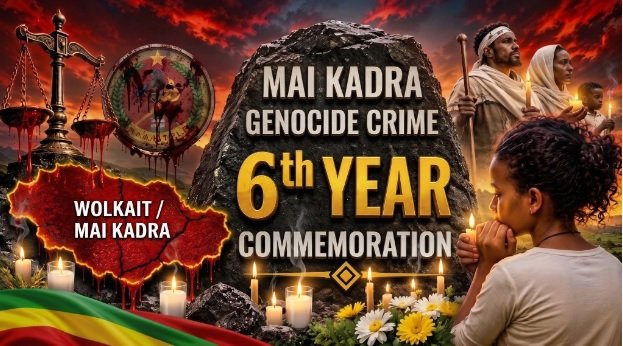
By Dr. Sosena Tadesse (Political and Strategic Studies)
Introduction: The Storm of Destruction and the “Terminal Genocide”
In the modern political history of Ethiopia, the storm of destruction unleashed by the TPLF over the past five decades reached its tragic climax at the end of October 2013 E.C. (November 2020). It entered history as a harrowing chapter of bloodshed, betrayal, and the agonizing cries of women and children.
This occurred while the entire world was gripped by the COVID-19 pandemic and Western nations were racing toward vaccine development. While the global community focused on scientific research to save human lives, Ethiopia’s former TPLF autocratic rulers were conspiring and preparing a feast of war for mutual destruction.
Their destructive plan unfolded in a orchestrated sequence:
- October 22, 2013 E.C. (November 1, 2020): In West Wollega, at the Gawa Qanqa school compound, over 200 innocent Amhara civilians were brutally massacred by OLA/Oromia Special Forces (Oneg Shene) militants, and entire villages were set ablaze.
- October 24, 2013 E.C. (November 3, 2020): Through a coordinated treasonous attack on the Northern Command in Adigrat, Mekelle, Agula, Seroc, and Dansha, TPLF Special Forces launched a surprise assault on the Ethiopian National Defense Force, brutally murdering thousands of dedicated Ethiopian soldiers.
The storm of destruction pressed forward. The TPLF’s ship of destruction, which had sailed for 50 years, selected its final destination to commit a “Terminal Genocide” on October 30, 2013 E.C. (November 9, 2020) in the historic town of Mai Kadra—before abandoning a land it knew was never its historical patrimony.
1. Mai Kadra: From “Terminal Genocide” to Historical Reality
Starting in the early 1990s, Mai Kadra developed into a town located 30 km from Humera—a fertile land of “white gold” (sesame) serving as a strategic gateway to Sudan. In 1995 E.C., the TPLF forcibly resettled thousands of Tigrayans across the Tekeze River, replacing refugees returning from Sudan (Lajins), while systematically dispossessing, expelling, and killing the indigenous Amhara landowners to strip them of their land and identity.
Settlers from the rocky Samre region of Tigray established what became known as the “Samre District,” while dispossessed Amhara landowners were forced into the “Ginb District,” surviving as daily laborers and farm hands. A distinct atmosphere separated these neighborhoods—a contrast that inflicted profound suffering on the native landowners, exciting feelings beyond words for the Amhara elders.
The decades-long struggle of the Wolkait-Tegede Amhara is divided into two distinct historical chapters:
- Before Mai Kadra: The era of occupation, where indigenous Amharas endured mass arrests, displacement, exile, and killings while continuously fighting for their sheer survival.
- After Mai Kadra: The ultimate peak of atrocity, where the TPLF’s ship of destruction anchored in the Samre District. Within just six hours, between 1,600 and 2,000 Amhara civilians and daily laborers were slaughtered with machetes, axes, knives, clubs, and ropes.
This atrocity stands as TPLF’s definitive crime of Terminal Genocide.
2. Eyewitness Accounts, Human Rights Reports, and Amnesty Evidence
On November 9, 2020, from 3:00 PM to 9:00 PM, a 6-hour systematic genocide targeted Amhara residents in Ginb District, leaving 1,600 to 2,000 dead.
Haymanot Ashenafi, a investigator from the Ethiopian Human Rights Commission (EHRC), recalled the horrific scene upon arriving in the town:
“When we reached the town, the asphalt was littered with burnt belongings, abandoned shoes, and stretchers. A disturbing stench of decomposing bodies hung in the air… In the compound of the Abune Aregawi Church, we saw mass graves where victims were buried; the burials took days to complete.”
Survivors provided testimonies confirming the targeted nature of the attack:
- Mrs. Tirfay Girmay (of Tigrayan ethnicity): Watching her Amhara husband of 12 years slaughtered before her eyes, stated: “My husband committed no crime; he was killed solely because he was Amhara.”
- Mrs. Yeshi Laqem: When the “Samri” youth dragged her husband, Ayenew Mulat, and his brother from their home, she pleaded for their lives. The attackers replied: “Today we only want the men; your turn will come,” before executing them in front of her children.
- Mr. Tilahun Atalay & Mr. Gebremeskel Mengistu: Confirmed that attackers checked IDs to isolate Amharas, organized transport using tractors, and systematically slaughtered workers—collecting up to 20 bodies from single residences.
Amnesty International verified the massacre using satellite imagery and photo evidence of mass stretchers, while joint UN OHCHR and EHRC reports formally classified the attack as a Crime Against Humanity and War Crime.
3. From Mai Kadra to Sudan: The Evolution of “Samri” (Army 70) into Proxy Mercenarism
The trajectory of the “Samri” group did not end in Mai Kadra. After carrying out the massacre, the group fled across the border to Sudan. Supported by regional actors and elements of the Sudanese armed forces (Al-Burhan faction), they received military training in refugee camps and reconstituted themselves as “Army 70”—a proxy armed force.
During the recent rainy season, this “Samri / Army 70” force attempted an invasion through the Sheraro front but suffered a decisive defeat. From a political science perspective, this confirms two structural realities:
- The TPLF Armed Structure is an Existential Threat to the Amhara People: Regardless of its moniker or location, its core objective remains the destruction and subjugation of the Amhara population.
- Proxy Mercenarism: External regional actors utilize the perpetrators of the Mai Kadra genocide as third-tier proxies to destabilize Amhara and broader Ethiopia.
4. The “Fish” and Zemene Kasse Coalition: The Heights of Self-Hatred and Moral Collapse
Historical records confirm that the Mai Kadra genocide was trained, organized, and directed under the command of General Fisseha Kidanu (alias “Fisseha Manjus”).
In recently circulated audio recordings, Zemene Kasse—leader of the self-styled “Tsimdo” coalition—was heard repeatedly addressing General Fisseha Kidanu by the affectionate nickname “Fish,” confirming that this chief architect of the Mai Kadra massacre serves as the military head of the Tsimdo alliance.
Examined through political science and social psychology frameworks, this alignment reveals:
- The Denial of Justice: Aligning with “Fish” and TPLF’s Debretsion before the blood of over 1,600 Mai Kadra martyrs has dried represents a betrayal of the Amhara survival struggle and the commercialization of martyrs’ sacrifices.
- Self-Hatred and Slave Mentality: A faction that acts dictatorially toward its own people while bowing to the chief butchers of the Amhara (Fisseha Manjus and Debretsion) for political validation demonstrates complete moral bankruptcy and psychological self-hatred.
5. Political Science Recommendations and the Future Legal Path
The Mai Kadra massacre is legally documented as a Crime Against Humanity and Genocide under international law. To redress five decades of suffering endured by the people of Wolkait, Tegede, Telemte, and Raya, the following strategic actions must be pursued:
- International Legal Accountability: Ensure that members of “Samri / Army 70” hiding in Sudanese camps, their commander General Fisseha Kidanu (“Fish”), and TPLF senior leaders are indicted under international war crimes frameworks and brought to justice.
- Claims for Reparations and Restitution: Engage legal experts to formulate international legal claims for restitution, compensation, and formal apologies for the genocide committed against the Amhara people over the past 50 years.
- Dismantling the Treasonous “Tsimdo” Path: The fighting forces on the ground and the broader Amhara public must formally reject the political brokers of “Tsimdo” who traded the blood of Mai Kadra for power, anchoring the survival struggle strictly on principled Amhara nationalism.
Conclusion
Atrocities committed against humanity may be temporarily concealed through political maneuvering and opportunistic propaganda, but justice can never be permanently buried! The blood of the Mai Kadra martyrs will not be in vain. Mai Kadra—the final port of the TPLF’s ship of destruction—will also serve as the political graveyard for opportunistic politicians who entered into the “Tsimdo” trap with perpetrators of genocide!
Truth and history remain on our side; victory belongs to the righteous struggle of the Amhara people!
Justice for the Mai Kadra Martyrs!
Justice for the Amhara and Orthodox Martyrs Killed for Their Identity!
Editor’s Note: Views in the article do not necessarily reflect the views of borkena.com
__
Join our Telegram Channel: t.me/borkena
Like borkena on Facebook
To submit a press release, send the submission to info@borkena.com
Add your business to Ethiopian Business Listing / Ethiopian Business Directory
Join the conversation. Follow us on X (formerly Twitter) @zborkena to get the latest Ethiopian news updates regularly