
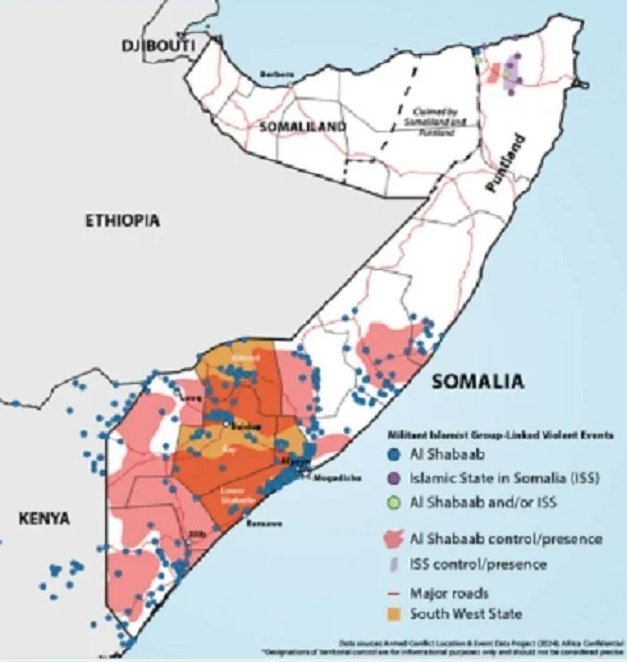
With the formal end of the United Nations Mission in Somalia which lasted over 31 years (from the start of the UN Political Office for Somalia in 1995 until its final closure on October 31, 2026) this neo-trusteeship not only kept Somalia in political and security dependency but served as the main financier of the ineffectual and deeply flawed African Union mission.
I have always opposed the United Nations and African Union dependence mentality as not only inherently self-serving but keeping Somalia in a state of permanent emergency.
The United Nations and the African Union represented the literal security and political dependency of Somalia for three decades. With the dual withdrawal of these two external actors, there is much for President Hassan Sheikh Mahmoud, the Federal Government of Somalia and the Somali people to celebrate in regaining political and security independence.
Somalia today is independently responsible for its own security and free to make sovereign decisions over its natural resources and more importantly regarding its political and security than at any time since the Fall of the Siad Barre Dictatorship in 1991.
Under the guidance of President Hassan Sheikh and Prime Minister Hamza Abdi Barre, Somalia is on course to develop its own sovereign future free from interference and destabilization by retrograde forces who see the peace and prosperity of Somalia as a threat to their interests.
While President Hassan Sheikh Mohamud and Prime Minister Hamza Abdi Barre should be accorded much of the credit and acclaim as the official heads of state of the Federal Republic of Somalia for this victory, I strongly believe that Commander Mahad Mohamed Salad, Director of the National Intelligence and Security Agency (NISA) is the key player who secured the prerequisite victory over the Al Shabaab terrorists in Mogadishu which directly made this momentous end of the United Nations and African Union dependency in Somalia possible.
If Commander Mahad Salad had not secured Mogadishu from Al Shabaab terrorists attacks, bombings, extortion and daily assassinations then the duplicitous agents would have argued that Somalia continued to be unsafe and in need of UN-AU neo-trusteeship and security dependency.
However, the irrefutable peace and stabilization of Mogadishu by NISA and local Somali security forces trained and equipped by the Republic of Turkiye utterly disproved this self-serving decades-old lie. With the expected extraction of massive reserves of offshore hydrocarbons off of Galmudug’s coast, the Federal Government of President Hassan Sheikh will have added economic power to forge a new political sovereign future.
The Strategic Winners
First, the strategic winners of Somalia regaining national sovereignty are of course the Somali people who deserve every right to be free from UN and African Union security and political dependency.
Second, the Federal Government of Somalia is a major winner since it can now negotiate with domestic Somali opposition factions from a place of strength and independence.
Third, the Republic of Turkiye which is poised to massively benefit from the dividends of its two decades of investments and sacrifices in the nation building of Somalia and its security since President Recep Tayyip Erdogan’s courageous visit in 2011.
Fourth, a new diverse group of African and Asian countries who have wisely transitioned to signing bilateral economic and strategic agreements with Somalia in recent years. Just recently, Uganda, which itself forms the bulk of the departing African Union forces, signed a strategic economic and educational partnership with the Federal Government of Somalia in October 2026.
China already signed a strategic partnership with the Federal Government of Somalia in September 2024 outside of the UN and AU missions, during a meeting between Chinese President Xi Jinping and Somali President Hassan Sheikh Mohamud at the Forum on China-Africa Cooperation (FOCAC) Summit in Beijing.
In fact, Ethiopia under Prime Minister Abiy Ahmed Ali already began to pivot and transition to bilateral agreements with the Federal Government of Somalia in 2023 in anticipation of the end of the African Union and UN political mission.
Similarly, Kenya in May 2024 set up with the Federal Government of Somalia a Joint Commission for Cooperation (JCC) during the 3rd Session of the Kenya–Somalia JCC in Nairobi signed by Prime Minister Hamza Abdi Barre and Kenyan officials. The Somalia-Kenya comprehensive bilateral agreements covered foreign relations, security, defense, trade, economy, education, health, and social services. A follow-up review meeting took place in February 2025 to push these commitments into active implementation
The UAE and Al Shabaab As Strategic Losers in Somalia
The strategic losers are all groups and malignant actors, foremost the terrorist Al Shabaab who invested in the chaos, fragmentation and destabilization of Mogadishu and Somalia for the past three decades.
In particular, the United Arab Emirates has suffered a crucial setback in Somalia regaining its political and security independence. The UAE has been unable to influence the Federal Government of Somalia and the re-election of President Hassan Sheikh, despite its substantial investments in the security sector and ongoing support for the local Somali domestic opposition.
More importantly, the UAE has been completely forced out of Galmudug State by the Republic of Turkiye since 2019 and presently is unable to influence the extraction of the offshore Curad-1 ( which the UAE and Qatar both oppose). The UAE has been unable to prevent the election of the new state president of Galmudug Liban Ahmed Hassan.
The UAE will of course continue to leverage Israeli and Ethiopian influence in Somaliland, along with continued financial dependency of Puntland and Jubaland States to safeguard its interests. However, the UAE will remain unable to regain any influence in Mogadishu.
Some Caution is Warranted
President Hassan Sheikh Mahmoud should not use the exit of the UN and African Union to consolidate power. Rather, I urge President Hassan Sheikh to genuinely open an inclusive Somali political settlement process with domestic Somali opposition groupings and factions from those led by former President Mohamed Abdullahi Farmaajo to Somaliland, Puntland and Jubaland.
Specifically, President Hassan Sheikh should immediately appoint Mahad Salad as his Special Envoy for Political Engagements with Domestic Opposition and Regional States.
This is a historic moment that truly provides a rare opportunity for all Somalis to engage in a real dialogue over political representation, security and crucially the sharing of natural resources. It should not be squandered. Yet, will President Hassan Sheikh and the Federal Government of Somalia capitalize on this new chapter for Somalia and the Horn of Africa region?
The writer can be reached at : wadijir@hotmail.com
Editor’s Note: Views in the article do not necessarily reflect the views of borkena.com
__
Join our Telegram Channel: t.me/borkena
Like borkena on Facebook
To submit a press release, send the submission to info@borkena.com
Add your business to Ethiopian Business Listing / Ethiopian Business Directory
Join the conversation. Follow us on X (formerly Twitter) @zborkena to get the latest Ethiopian news updates regularly.